Choosing a Viscose Filament supplier is not just a search for a low price. Buyers need dependable quality, clear specifications, and communication that holds up after the first sample. A bright, even yarn cone can look promising; the real test comes when production runs at speed and the fabric needs consistent color and strength. Small differences matter.
For transparency, the following is an illustrative quote from a fictional sourcing specialist, Elena Ward: “A reliable supplier makes consistency visible, not just promised.” It is a useful standard, not a verified quotation from a real industry expert. This guide compares seven suppliers through practical buyer concerns: product range, customization, production capability, quality controls, export experience, and responsiveness. No supplier is perfect. A factory may offer attractive pricing but limited flexibility; another may communicate well yet require closer checks on technical details. Buyers should verify claims directly, request current specifications, and test samples under their own production conditions.
That takes time. It can prevent costly surprises. The shortlist is a starting point, not a substitute for due diligence. Viscose Filament performance depends on the application, processing conditions, and the consistency a buyer needs. A careful comparison helps global buyers ask better questions—and notice when an answer is still incomplete.
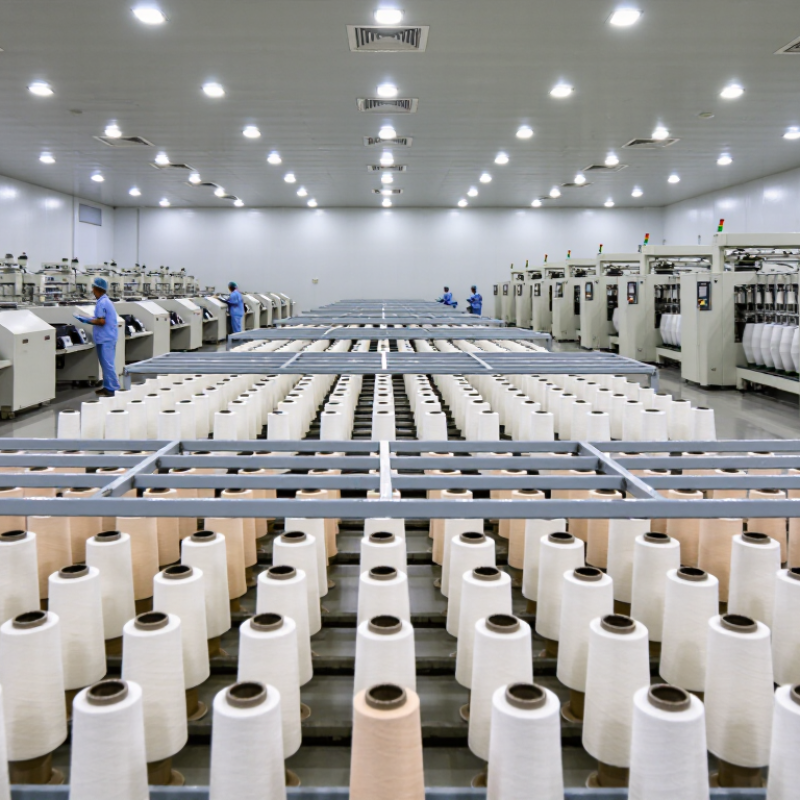
Viscose filament is a continuous regenerated-cellulose yarn, unlike short viscose staple fibers spun into yarn. Its smooth surface and fluid drape suit lightweight dresses, linings, scarves, and decorative fabrics. It can also take vivid dyes. The fabric feels cool against skin. But softness alone does not predict performance; wet strength, yarn construction, and finishing all matter.
Textile Exchange’s 2024 Materials Market Report estimates that man-made cellulosic fiber production reached about 7.9 million tonnes in 2023. That category includes viscose, modal, and lyocell, not viscose filament alone. The figure shows the scale of cellulosic fibers in global textiles, but it should not be read as a filament-market estimate. Buyers should check denier, filament count, tenacity, elongation, and color consistency against the intended end use.
For a flowing blouse, a fine filament may provide a smooth, lightweight hand. Upholstery usually needs stronger construction and abrasion testing. Ask for test methods and sample results, not just a specification sheet. Also check wood-pulp sourcing, chemical recovery, and wastewater controls; environmental performance varies by production site. That can be difficult to compare. A small sample may look excellent, yet behave differently after washing or finishing. Test it in the actual fabric construction.
When evaluating viscose filament suppliers, start with a clear specification. Record denier or tex, filament count, required strength, elongation, luster, and intended end use. Ask for a recent technical data sheet and a sample from regular production, not only a specially prepared swatch. Check the yarn under consistent lighting and compare several packages for shade, feel, and winding quality. Small differences can become visible across a finished fabric.
Ask how the supplier controls lot-to-lot variation and handles rejected material. Request test results linked to the sample or production lot, and confirm which test methods were used. Details matter. A polished sample is not proof of steady production; I would not treat it as one. Discuss minimum order quantities, lead times, packaging, and how delays or specification changes are communicated. Ask again if an answer is vague.
Also review the supplier’s traceability documents and shipping records where available. Confirm that product descriptions, batch details, and declared specifications match across documents. Compare responses, not just prices: precise answers often reveal how well a supplier understands the product. No checklist catches every mismatch. Before placing a large order, agree on written acceptance criteria and inspect a production-scale lot when practical. Even a careful review has limits, so leave room for retesting when results differ.
A large integrated producer may suit buyers seeking steady viscose filament volumes and consistent shipment schedules. Ask for recent lot data, not just a polished product sheet. A fine-denier specialist is a better fit for lightweight linings or soft apparel fabrics; request a small sample cone and check for evenness under tension. A color-focused supplier can offer dope-dyed options that reduce later dyeing steps. Confirm shade tolerances under your own lighting conditions. Details matter.
A technical-yarn supplier may handle higher-tenacity or specially twisted filament for demanding fabric structures. Its claims should be checked against test reports and production samples. An export-oriented supplier can help with packing, shipment planning, and clear documentation, but response speed should be tested before a large order. A flexible, smaller producer may accept modest trial quantities or custom specifications. That can be useful, though capacity and lead times may change quickly.
The seventh profile is a supplier with strong quality records and traceability. Ask how it tracks batches, handles defects, and documents fiber origin. Sustainability statements deserve careful review; wording can sound clearer than the evidence. Compare certificates, test methods, and actual product data. No profile is perfect. A sample may perform well while a later lot behaves differently, so buyers should agree on inspection criteria before production.
Choosing among viscose filament suppliers requires more than comparing price lists. Textile Exchange’s Materials Market Report 2024 estimates global fiber production reached 124 million tonnes in 2023. That scale makes traceable specifications and dependable production planning important, even for buyers ordering modest volumes. Ask suppliers to state filament type, denier, luster, package size, and acceptable variation in writing. Details matter.
Quality checks should match the intended use. Request recent test results for linear density and tensile properties, and confirm the methods used, such as ISO 2060 and ISO 5079. Compare sample cones for shade, winding tension, and visible defects under consistent lighting. A neat sample is useful, but it does not prove every production lot will match. This part can be frustrating.
Service is visible in small, practical moments: clear lead times, prompt answers about stock, and advance notice when specifications change. Ask how each lot is identified and whether retained samples are available for later comparison. For overseas shipments, review moisture protection, carton labeling, and packing details before approving an order. One weakness in many supplier evaluations is relying on a single sample; request repeat-lot evidence where possible.
For global buyers, supplier selection starts with a clear yarn specification. Define filament count, denier, tenacity, elongation, shade tolerance, and winding requirements before requesting quotations. Textile Exchange’s Materials Market Report 2024 estimates global fiber production reached 124 million tonnes in 2023, with man-made cellulosic fibers accounting for about 6%. That scale makes traceability and consistent quality worth checking, not assuming.
Request samples and recent test reports, then compare results against your intended knitting or weaving process. Ask how the supplier controls batch variation, documents raw-material origins, and manages production delays. Check minimum order quantities, sample lead times, payment terms, and export packaging in writing. A certificate can help, but it does not replace clear records or independent verification. One sourcing detail buyers sometimes overlook is whether the approved sample matches the bulk-production lot.
Tips: Test yarn on your own equipment before placing a large order. Keep a sealed reference cone and record its lot number. Small details matter. Recheck specifications after any process change; even a minor change in finish can affect fabric handle.
Moisture regain is a useful material-specification reference when sourcing viscose filament. Values shown are typical textile-industry standard regain figures; actual results vary with fiber grade and test conditions. Confirm the test method and product specification with each supplier.
„Thanks to the LUVIR technology, the solder resist process could be switched directly from the previously used mask exposure to direct exposure. As an outstanding digital solution on the market, this technology has been able to demonstrate fast process times and superior quality on our certified conventional ink in production. This allowed us to fully digitize the solder mask process at low cost – without process or ink adjustments. An excellent benefit to our production in Rot am See.“
Ralf Göhringer (Head of Production WE Rot am See)
I would definitely recommend the Limata machine and team for a future company purchase
Michael Greenaway
Compunetics Inc.
“The Limata ldi has been amazing!! Best thing we did was buy this machine”
Richard Brady
GM
Circuitlabs
“Since 2019, we have been running the Limata X1000 LDI system (including LUVIR for solder mask imaging) in daily production as an addition to our current process with film. The machine was capable of properly exposing Taiyo PSR-4000 BN (DI) solder mask types on normal to high-copper boards using a new and unique direct imaging process. The machine operating interface is very user friendly which allowed for a quick technical training curve. The pre-registration processing reduced several seconds of production time at every print. Limata support and service staff is incomparable. They supported our team every step of the way at basically any time of the day or night, with literally, an immediate response time, customizing the software interface to best fit our Operations and needs.
We have exposed more than 8,000 prints since end of October, on various solder mask colors and some resist film panels. Limata, has proven to be very capable and innovative. They are a strong contender in the industry.
We have very much enjoyed this project, and working with the team!
Thank you Limata for the continued support and being a part of our growth.”
Bill Sezate
Vice President, GM
Summit Interconnect
As a replacement to our current contact exposure process with film, the LIMATA X2000 system including LUVIR-Technology was capable of properly exposing non-LDI solder mask types using a direct imaging process. The machine offers cutting edge software with a very intuitive operating interface which allowed for quick technician training curve. The dual drawer system combined with pre-registration processing reduced several seconds of production time at every machine cycle. Limata support and service staff is world class. They added software patches to keep production running at shortest possible response times, customized the software interface to best fit our in-house Operations system, and even wrote a step-by-step machine processing manual. As a result of the project, we have exposed more than 16,000 times on various product types and solder mask brands/colors. Limata, in a very short timeframe as a company, has definitely shown they are truly innovative and will be challenging the industry of direct imaging for the top spot.
Kevin Beattie
Process Engineer
TTM Technologies
Forest Grove Division
