Walking Escalators are transforming public spaces, enhancing accessibility and efficiency. According to a report by the International Association of Public Transport, implementing walking escalators can increase foot traffic flow by up to 30%. This innovation caters to the needs of diverse populations, including the elderly and those with disabilities.
Despite their benefits, some challenges persist. Maintenance is crucial, as neglect can lead to operational failures. Regular inspections are essential to ensure safety and reliability. Data from the National Safety Council indicates that improperly maintained escalators are a common source of accidents.
The design of walking escalators plays a role in their effectiveness. Research shows that optimal speed settings contribute to user comfort and efficiency. Yet, determining this speed can be tricky, as preferences may vary. Thus, continuous evaluation and user feedback are necessary for improvement. Walking escalators represent progress, but ongoing efforts are needed to maximize their potential in urban environments.
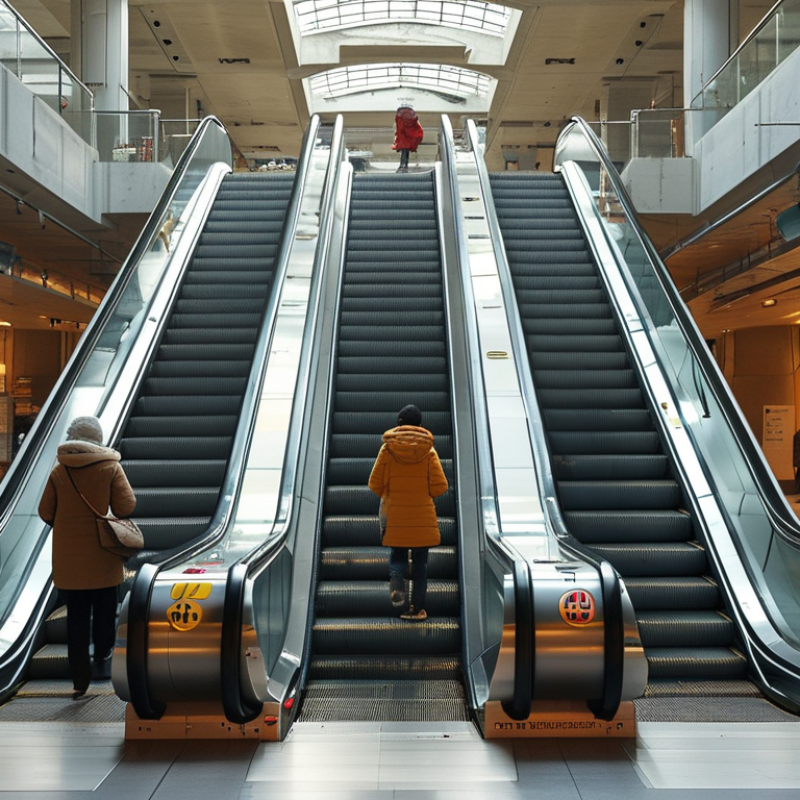
Walking escalators are an innovative solution designed for busy public spaces. They facilitate efficient movement, helping people navigate through crowded areas with ease. These escalators allow for both standing and walking, encouraging foot traffic while reducing congestion. They are commonly found in airports, shopping malls, and metro stations. The design balances speed and safety, ensuring user comfort.
When using walking escalators, consider a few helpful tips. Stand to the right if you are not walking. This allows others to pass on the left. Always hold onto the handrail, especially if you're moving quickly. It’s important to pay attention while using these escalators. Distractions can lead to accidents.
While walking escalators are efficient, they have limitations. Some users might feel unsure about walking on them. It can be challenging for those with mobility issues. The technology also requires regular maintenance to ensure safety and smooth operation. This means occasional outages, which can lead to frustration in busy environments. Users should be mindful of these factors while enjoying the benefits of walking escalators.
Walking escalators have become a popular solution for enhancing movement in public spaces. They provide a unique benefit: they allow people to walk at their own pace while benefiting from the mechanical assistance of an escalator. According to a report from the International Elevation and Escalator Manufacturers Association, these devices can improve pedestrian flow by up to 30%. This can be especially advantageous in crowded areas such as airports, shopping malls, and train stations.
The use of walking escalators also promotes physical activity in daily routines. Research by the American Journal of Preventive Medicine indicates that even small increases in everyday movement can significantly impact public health. By encouraging people to walk rather than stand still, these escalators may help combat sedentary lifestyles. However, one must consider that not all individuals will use them as intended. Some may prefer to rest, while others may be uncertain about their proper use, leading to potential congestion.
Accessibility is another key aspect. While walking escalators are designed for efficiency, they also need to be user-friendly for everyone. According to user surveys, many people find the operation of these escalators confusing. Recognizing this, designers must continually seek to improve signage and instructions. Balancing efficiency with user experience is a challenge that requires ongoing attention and refinement.
When considering walking escalators for public spaces, several key features can enhance user experience. The design should facilitate smooth and safe movement. A width of at least 1.2 meters is often recommended to accommodate high traffic areas. Studies indicate that wider escalators can increase user capacity by up to 30%, minimizing congestion.
Safety features are equally crucial. Non-slip surfaces and integrated side barriers significantly reduce accidents. According to the American National Standards Institute, safety measures can decrease the risk of falls by around 45%. Additionally, speed adjustments based on peak and off-peak times can optimize efficiency. An ideal speed of 0.5 to 0.75 meters per second is known to balance safety and movement.
Energy efficiency is another significant consideration. Many modern escalators utilize regenerative drives to lower energy consumption by up to 30%. Such systems not only promote sustainability but also reduce operational costs in the long run. Choosing escalators that meet or exceed industry energy standards can also enhance the reputation of public spaces. Reflecting on these features can lead to improvements in user flow and overall satisfaction.
Walking escalators are becoming essential in busy public spaces. These innovative solutions enhance pedestrian flow, reduce congestion, and improve overall user experience. Leading urban areas are leveraging this technology, showing a noticeable increase in foot traffic efficiency. For example, a report from the Urban Mobility Institute highlights that implementing walking escalators in transit stations can boost user satisfaction by 30%.
Cities like Tokyo, Hong Kong, and Paris have successfully integrated walking escalators into their infrastructure. These installations not only facilitate the movement of pedestrians but also promote accessibility for people with mobility challenges. Research indicates that more than 80% of users prefer walking escalators to traditional staircases or elevators. However, the challenge remains in optimizing their placement and ensuring regular maintenance.
Tips: When considering the installation of walking escalators, evaluate the flow of foot traffic. Analyze peak usage times and identify bottleneck areas. A strategic placement can enhance efficiency dramatically. Also, consider public awareness campaigns to educate users on effectively utilizing these escalators. Proper signage can aid in compliance and encourage smooth movement.
When discussing walking escalators, maintenance and safety are crucial. Regular inspections are vital to ensure functionality. Check the handrails, belts, and overall structure frequently. Look for wear and tear, as these can lead to malfunctions. Unscheduled maintenance can result in accidents or extended downtime.
Safety features must also be prioritized. Emergency stop buttons should be accessible and clearly marked. Ensure the lighting is adequate for visibility. Slip-resistant materials should be employed for surfaces. Even with all precautions, accidents can happen. Users might rush, causing falls or injuries. Operators need to educate patrons about safe usage.
Feedback from users can provide insights into improvements. Regularly assess the effectiveness of safety measures. Maintenance records should be transparent for accountability. A commitment to safety and upkeep builds trust within communities. Implementing user-centered design can enhance both safety and functionality.
„Thanks to the LUVIR technology, the solder resist process could be switched directly from the previously used mask exposure to direct exposure. As an outstanding digital solution on the market, this technology has been able to demonstrate fast process times and superior quality on our certified conventional ink in production. This allowed us to fully digitize the solder mask process at low cost – without process or ink adjustments. An excellent benefit to our production in Rot am See.“
Ralf Göhringer (Head of Production WE Rot am See)
I would definitely recommend the Limata machine and team for a future company purchase
Michael Greenaway
Compunetics Inc.
“The Limata ldi has been amazing!! Best thing we did was buy this machine”
Richard Brady
GM
Circuitlabs
“Since 2019, we have been running the Limata X1000 LDI system (including LUVIR for solder mask imaging) in daily production as an addition to our current process with film. The machine was capable of properly exposing Taiyo PSR-4000 BN (DI) solder mask types on normal to high-copper boards using a new and unique direct imaging process. The machine operating interface is very user friendly which allowed for a quick technical training curve. The pre-registration processing reduced several seconds of production time at every print. Limata support and service staff is incomparable. They supported our team every step of the way at basically any time of the day or night, with literally, an immediate response time, customizing the software interface to best fit our Operations and needs.
We have exposed more than 8,000 prints since end of October, on various solder mask colors and some resist film panels. Limata, has proven to be very capable and innovative. They are a strong contender in the industry.
We have very much enjoyed this project, and working with the team!
Thank you Limata for the continued support and being a part of our growth.”
Bill Sezate
Vice President, GM
Summit Interconnect
As a replacement to our current contact exposure process with film, the LIMATA X2000 system including LUVIR-Technology was capable of properly exposing non-LDI solder mask types using a direct imaging process. The machine offers cutting edge software with a very intuitive operating interface which allowed for quick technician training curve. The dual drawer system combined with pre-registration processing reduced several seconds of production time at every machine cycle. Limata support and service staff is world class. They added software patches to keep production running at shortest possible response times, customized the software interface to best fit our in-house Operations system, and even wrote a step-by-step machine processing manual. As a result of the project, we have exposed more than 16,000 times on various product types and solder mask brands/colors. Limata, in a very short timeframe as a company, has definitely shown they are truly innovative and will be challenging the industry of direct imaging for the top spot.
Kevin Beattie
Process Engineer
TTM Technologies
Forest Grove Division
