Choosing the right China Best Bus Handrail Manufacturer Supplier requires more than comparing catalog prices. A reliable supplier should understand daily passenger movement, vehicle vibration, cleaning routines, and installation limits. A well-designed Bus Handrail can improve stability without blocking aisles or creating sharp contact points. Materials may include stainless steel, aluminum, coated steel, or durable engineering plastics. Each option affects weight, grip, corrosion resistance, and maintenance.
Look for a manufacturer with practical production experience and clear quality procedures. Ask for material details, dimensional drawings, surface-treatment information, and sample approval records. Factory audits, traceable inspections, and consistent packaging can reduce avoidable delivery problems. Testing should consider load strength, repeated use, connection security, and resistance to common cleaning chemicals. Small details matter. Welds should look even. Edges should feel smooth. Mounting holes must align accurately with the vehicle structure.
Customization is often important for city buses, coaches, school transport, and rail-connected vehicles. An experienced supplier can adjust tube diameter, bend shape, flange design, color, and logo placement. However, customization needs disciplined communication. A beautiful sample is not enough if mass production changes the finish or tolerance. Some suppliers describe themselves as experienced, yet provide limited evidence. That deserves careful questioning. No supplier is perfect, and even good manufacturers may miss a detail without a documented review. Compare samples, technical responses, production capacity, and after-sales support together. The best partnership combines engineering knowledge, honest communication, stable quality, and realistic delivery commitments. Reliability is built gradually, not promised in one sentence.
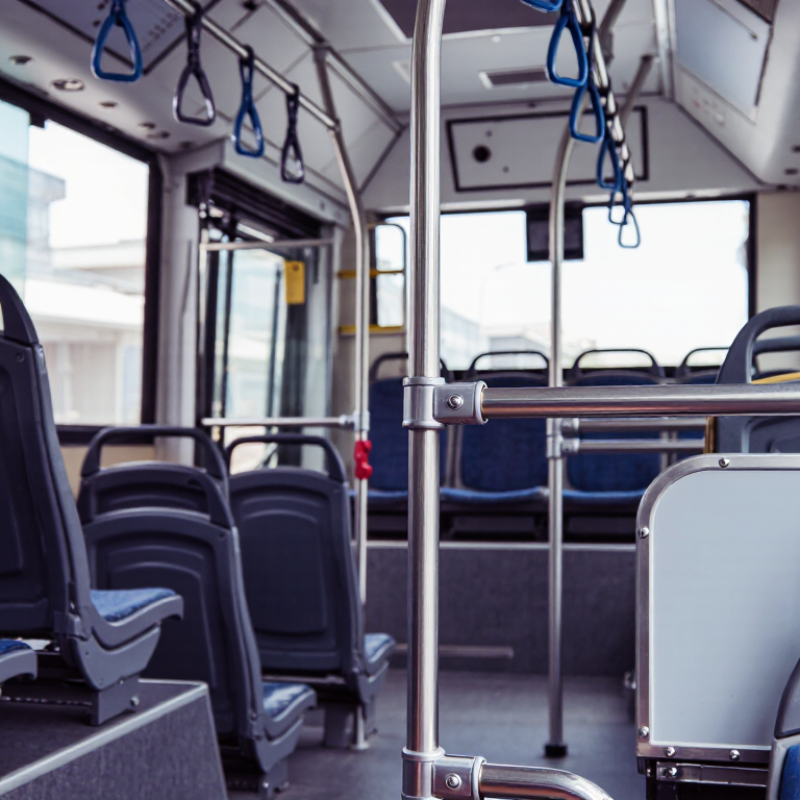
A reliable bus handrail manufacturer in China should prove quality through repeatable evidence, not attractive samples. The World Health Organization’s Global Status Report on Road Safety 2023 recorded about 1.19 million road deaths in 2021. This reminds buyers that small interior components can influence passenger stability during sudden braking.
Experience appears in practical details. A capable factory tests grip strength, joint security, surface smoothness, corrosion resistance, and dimensional tolerance. It should provide batch records, material certificates, inspection photos, and load-test results. ISO’s Survey 2023 listed more than 1.26 million ISO 9001 certificates worldwide. Certification helps, but it does not replace factory audits or product testing. A certificate alone is not enough.
The manufacturer should understand UNECE Regulation No. 107 and the buyer’s local vehicle requirements. It must also control stainless steel grades, aluminum profiles, plastic compounds, and fasteners consistently. Ask how failed samples are isolated and corrected. Ask for production traceability. Real expertise includes admitting limitations; a polished sample can still hide weak welding or poor fit. No supplier is perfect. The honest ones measure defects, explain risks, and improve their process. A reliable Chinese supplier also checks installation conditions, passenger contact points, cleaning chemicals, and long-term vibration before mass production.
| Evaluation Dimension | Reliable Manufacturer Benchmark | Relevant Data or Standard | Recommended Buyer Verification | Importance |
|---|---|---|---|---|
| Quality Management | Operates a documented quality management system covering incoming materials, production, inspection, corrective action, and traceability. | ISO 9001:2015 certification is a useful management-system reference, but the certificate scope should include the relevant manufacturing activities. | Request a valid certificate, certification scope, issuing body, and recent audit information. Compare the certificate details with the actual production site. | High |
| Material Traceability | Can identify the material grade, supplier batch, production date, and inspection result for each major component. | Common bus handrail materials include stainless steel, aluminum alloy, engineering plastics, rubber, and coated steel; the exact grade must match the approved drawing. | Ask for material certificates, incoming inspection records, batch labels, and a sample traceability report. | High |
| Ergonomic Dimensions | Provides a cross-section and grip design suitable for the vehicle layout, passenger use, and applicable transport regulations. | For many accessible bus applications in the United States, ADA guidance references handrail diameters of approximately 32–38 mm (1.25–1.50 in); local regulations and vehicle specifications may differ. | Approve dimensioned drawings, grip clearance, bend radius, mounting position, and accessibility requirements before mass production. | High |
| Load and Structural Performance | Validates the complete handrail assembly, including tube, bracket, fastener, joint, and vehicle mounting interface. | The required load, direction, duration, and safety factor depend on the bus manufacturer, destination market, and applicable vehicle standard. There is no universal single load value for every bus handrail. | Request a test plan and report showing test fixtures, loading direction, deformation, failure mode, and acceptance criteria. | High |
| Corrosion Resistance | Selects materials and finishes appropriate for humidity, rainwater, cleaning chemicals, road salt, and frequent passenger contact. | Stainless steel, anodized aluminum, powder coating, and other finishes have different corrosion behavior. Salt-spray duration should be specified by the project rather than assumed as a universal pass/fail value. | Review coating thickness, surface-treatment specification, salt-spray method, exposure duration, and post-test photographs. | High |
| Chemical and UV Durability | Confirms that plastic, rubber, coating, and adhesive materials tolerate routine cleaning agents, sunlight, temperature changes, and interior wear. | Performance depends on the chemical formulation and operating environment; cleaning-agent compatibility must be confirmed using the buyer’s actual or representative products. | Conduct compatibility tests with approved cleaners and request UV, aging, hardness, color-retention, and adhesion test results where applicable. | Medium–High |
| Regulatory and Chemical Compliance | Maintains technical files and declarations for the destination market, including restricted-substance and material-compliance documentation. | Depending on the market, buyers may request compliance with REACH Regulation (EC) No 1907/2006 and RoHS Directive 2011/65/EU, where applicable to the product and supply chain. | Request declarations, bills of materials, supplier compliance statements, and third-party laboratory reports for restricted substances. | High |
| Production Capacity | Has sufficient equipment, tooling, skilled operators, inspection resources, and capacity for both samples and repeat orders. | Capacity should be evaluated using the buyer’s required monthly volume, product variants, lead time, and tooling requirements rather than a generic factory claim. | Request a process-flow chart, equipment list, monthly capacity calculation, production schedule, and current lead-time commitment. | High |
| Inspection and Testing | Uses controlled inspection at incoming, in-process, final, and pre-shipment stages. | Typical checks include dimensions, surface finish, color, hardness, coating adhesion, assembly fit, weld quality, and functional or load performance. | Review inspection standards, sampling plans, calibrated-equipment records, inspection reports, and nonconformance procedures. | High |
| Customization Capability | Can manage custom tube diameters, bends, brackets, mounting holes, finishes, plastics, packaging, and vehicle-specific drawings. | A controlled engineering-change process should record drawing revisions, sample approvals, tooling changes, and customer sign-off. | Start with a prototype or first-article sample and confirm that the approved drawing is linked to the purchase order. | Medium–High |
| Packaging and Logistics | Protects finished handrails from scratches, deformation, moisture, and contamination during domestic and international transport. | Packaging design should reflect handrail length, bend geometry, surface finish, stacking limits, container loading, and destination conditions. | Approve packaging drawings, drop or handling tests where needed, carton markings, packing lists, and export documentation. | Medium |
| After-Sales Support | Provides prompt communication, replacement procedures, root-cause analysis, and corrective action for quality issues. | A practical supplier should define response times, warranty terms, claim evidence, replacement responsibility, and corrective-action deadlines in writing. | Include quality clauses, warranty conditions, escalation contacts, and corrective-action requirements in the supply agreement. | Medium–High |
Choosing the best bus handrail manufacturer or supplier starts with understanding materials and design. In daily workshop inspections, stainless steel remains a dependable choice. It resists moisture, frequent cleaning, and surface corrosion. Aluminum is lighter and easier to shape, but it may dent under harsh impact. Coated steel offers strength at a controlled cost. However, damaged coatings can expose the metal beneath. Some handrails use nylon or reinforced plastic covers. These materials feel warmer in winter and improve grip.
Design affects passenger safety as much as material selection. Vertical poles support standing passengers during sudden stops. Horizontal rails help riders maintain balance while moving through the aisle. Curved corners reduce snagging risks near seats and doors. Textured surfaces, rubber sleeves, and knurled sections can improve control with wet hands. Mounting plates should feel solid, with no visible movement or sharp edges. Clearance matters too. A rail placed too close to a wall may be difficult to hold.
Tips: Check handrail samples under dry and wet conditions. Inspect welds, joints, and fasteners closely. Ask suppliers for load-test records and corrosion-test details. Do not trust appearance alone. A polished rail may look excellent but feel slippery. I have also seen textured surfaces become uncomfortable after long use. This detail deserves more passenger testing. Confirm that the design supports local accessibility requirements and regular cleaning routines.
China Best Bus Handrail Manufacturer Supplier?
How Are Bus Handrails Manufactured and Quality Tested?
Reliable bus handrails begin with material selection. Stainless steel, aluminum, and reinforced polymers are common choices. Each material must balance strength, corrosion resistance, weight, and passenger comfort. In our production experience, small surface defects often reveal larger process problems. Tubes are cut, bent, welded, polished, and cleaned under controlled procedures. Welding seams receive visual inspection and dimensional checks. Some factories still rely too heavily on appearance alone. That is not enough.
Quality testing follows vehicle safety requirements and customer specifications. UNECE Regulation No. 107 provides detailed requirements for bus interior safety and passenger protection. Manufacturers commonly test handrails for static load, pull-out resistance, joint strength, and repeated fatigue. A calibrated force gauge records deformation and permanent displacement. Salt-spray testing also evaluates corrosion resistance, especially around welded areas. Samples should be tested after coating, not before it. This detail is easy to miss.
The World Health Organization’s Global Status Report on Road Safety 2023 reports approximately 1.19 million annual road deaths worldwide. Handrails cannot prevent every injury, but secure gripping points support safer passenger movement. Production records should include material certificates, inspection results, batch numbers, and corrective actions. Independent laboratory verification adds credibility. Still, testing one perfect sample proves little. Consistent batch control matters more.
Bus handrails are commonly produced from stainless-steel or coated steel tubing. Tube diameter and wall thickness are selected according to passenger grip comfort, structural requirements, available space, and installation design.
The chart shows common engineering reference dimensions for bus handrail tubing. During quality control, manufacturers typically verify outer diameter, wall thickness, straightness, surface finish, weld quality, coating condition, and resistance to applied loads before shipment.
Chinese bus handrail manufacturers often provide customization from the first drawing to the final packing. Buyers can select stainless steel, aluminum alloy, coated steel, or antimicrobial plastic components. Each material changes weight, grip comfort, corrosion resistance, and maintenance needs. Surface finishes may include brushed, polished, powder-coated, or colored treatments.
Small details matter.
Suppliers can adjust tube diameter, bending angle, mounting plate shape, and overall length. They may also produce straight rails, curved rails, vertical poles, ceiling rails, and seat-back handles. For passengers with limited mobility, textured grips and high-visibility colors can improve confidence.
Some factories offer laser engraving, printed markings, or molded logos, subject to technical review. Samples are usually available before mass production.
In practical projects, I would request a 2D drawing, a 3D file, material certificates, load-test records, and finish samples. Ask about weld quality, dimensional tolerance, salt-spray testing, and packaging protection.
A reliable supplier should explain what is achievable, not promise everything immediately. Early prototypes sometimes reveal uncomfortable bends or weak mounting points. That step can feel slow, but it prevents expensive changes later.
Clear communication about vehicle models, installation space, and expected passenger use is essential. Supplier capability still needs independent verification.
Selecting a China bus handrail supplier requires more than comparing low quotations. In practical sourcing, inspect material control, production consistency, and vehicle application experience.
The IEA’s Global EV Outlook 2024 reports that electric buses represented nearly half of global urban bus sales in 2023. This trend increases demand for lightweight, durable, and easy-to-clean interior components. Ask for alloy specifications, surface-treatment details, dimensional drawings, and batch test records.
“Export quality” is not evidence. Evidence matters.
Request production samples before approving large orders. Check grip comfort, tube diameter, joint alignment, weld appearance, and coating adhesion.
Test the handrail after repeated cleaning, vibration, and impact exposure. Where applicable, require testing against UNECE Regulation No. 107 and relevant local vehicle rules.
An ISO 9001 certificate helps, but it does not guarantee every shipment. The ISO Survey 2023 recorded more than 1.26 million ISO 9001 certificates worldwide, so verification remains essential.
Confirm certificate validity, factory ownership, and inspection scope.
Review the supplier’s traceability system. Each batch should connect to raw materials, operators, inspection results, and packing records. Ask how defects are handled, not only how quality is described.
Compare tooling costs, replacement-part support, packaging strength, and realistic lead times. A polished factory visit can still hide weak final inspection.
Start with samples. No checklist is perfect; site audits and independent testing may reveal problems that documents miss.
„Thanks to the LUVIR technology, the solder resist process could be switched directly from the previously used mask exposure to direct exposure. As an outstanding digital solution on the market, this technology has been able to demonstrate fast process times and superior quality on our certified conventional ink in production. This allowed us to fully digitize the solder mask process at low cost – without process or ink adjustments. An excellent benefit to our production in Rot am See.“
Ralf Göhringer (Head of Production WE Rot am See)
I would definitely recommend the Limata machine and team for a future company purchase
Michael Greenaway
Compunetics Inc.
“The Limata ldi has been amazing!! Best thing we did was buy this machine”
Richard Brady
GM
Circuitlabs
“Since 2019, we have been running the Limata X1000 LDI system (including LUVIR for solder mask imaging) in daily production as an addition to our current process with film. The machine was capable of properly exposing Taiyo PSR-4000 BN (DI) solder mask types on normal to high-copper boards using a new and unique direct imaging process. The machine operating interface is very user friendly which allowed for a quick technical training curve. The pre-registration processing reduced several seconds of production time at every print. Limata support and service staff is incomparable. They supported our team every step of the way at basically any time of the day or night, with literally, an immediate response time, customizing the software interface to best fit our Operations and needs.
We have exposed more than 8,000 prints since end of October, on various solder mask colors and some resist film panels. Limata, has proven to be very capable and innovative. They are a strong contender in the industry.
We have very much enjoyed this project, and working with the team!
Thank you Limata for the continued support and being a part of our growth.”
Bill Sezate
Vice President, GM
Summit Interconnect
As a replacement to our current contact exposure process with film, the LIMATA X2000 system including LUVIR-Technology was capable of properly exposing non-LDI solder mask types using a direct imaging process. The machine offers cutting edge software with a very intuitive operating interface which allowed for quick technician training curve. The dual drawer system combined with pre-registration processing reduced several seconds of production time at every machine cycle. Limata support and service staff is world class. They added software patches to keep production running at shortest possible response times, customized the software interface to best fit our in-house Operations system, and even wrote a step-by-step machine processing manual. As a result of the project, we have exposed more than 16,000 times on various product types and solder mask brands/colors. Limata, in a very short timeframe as a company, has definitely shown they are truly innovative and will be challenging the industry of direct imaging for the top spot.
Kevin Beattie
Process Engineer
TTM Technologies
Forest Grove Division
