Choosing a manufacturer for Fusion Bonded Epoxy Pipe means examining more than price and catalog size. The term usually refers to steel pipe protected by a fusion-bonded epoxy coating. That coating’s performance depends on surface preparation, application control, and inspection—not just its color or stated thickness.
Pipeline investment makes this choice increasingly relevant. The International Energy Agency’s Global Hydrogen Review 2024 reports that announced hydrogen pipeline projects could reach about 40,000 kilometres by 2035, but only a small share had reached a final investment decision. This is a planning signal, not a guarantee of orders. Still, it highlights why buyers should check whether a supplier’s coating systems suit the intended service and project conditions.
A useful manufacturer comparison starts with verifiable production evidence. Ask for coating-thickness records, holiday-test results, adhesion data, batch traceability, and documented inspection procedures. Check applicable specifications, such as ISO 21809-2 for external pipeline coatings or AWWA C213 for steel water pipelines. Requirements differ by application, so a certificate alone cannot establish suitability. Not enough.
The strongest suppliers explain their process clearly and provide project-specific documentation. Look for controlled blasting, recorded steel temperatures, and consistent coating coverage around weld areas and pipe ends. Independent inspection can add confidence, especially on large orders. Yet even a detailed checklist has limits: actual field handling and installation can expose weaknesses that factory tests miss. This guide introduces manufacturers through evidence buyers can verify, while treating unsupported rankings with caution.
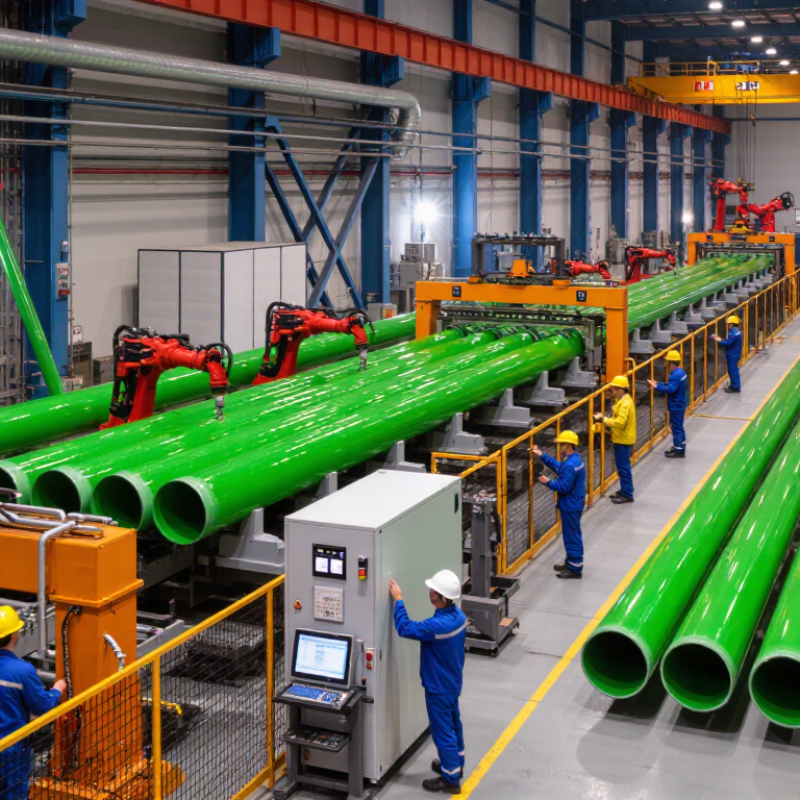
Fusion bonded epoxy pipes are steel pipes coated with a protective layer of thermosetting epoxy. The coating helps limit corrosion by separating the steel from water, soil, and other surrounding conditions. The pipe itself still provides the structural strength. The epoxy is a barrier, not a replacement for sound steel.
During production, the pipe surface is cleaned, often by abrasive blasting, then heated. Fine epoxy powder is applied to the hot steel, where it melts and cures into a continuous coating. Surface cleanliness and temperature matter. Poor preparation can weaken adhesion, even when the finished coating looks smooth. Coating thickness and coverage should be checked against the project specification.
FBE coatings are used on pipelines and water infrastructure, with suitability depending on the service conditions and coating design. At bends, joints, and handling points, damage deserves close attention. Small defects can expose steel and may need repair before installation. A coating is not magic. It can reduce corrosion risk, but inspection, careful transport, and proper joint protection still matter. The details are easy to overlook.
Fusion bonded epoxy pipe manufacturing starts with steel inspection and surface preparation. Mill scale, rust, and oil must be removed before coating. ISO 8501-1 defines Sa 2½ as very thorough abrasive blast cleaning. Plants commonly target a surface profile around 50–100 micrometres, subject to the project specification. Cleanliness matters. Dust or moisture can weaken adhesion. The pipe is then heated, often to about 200–250°C, before electrostatic spray guns apply dry epoxy powder. The powder melts and cures into a continuous film.
Typical specified FBE thickness is about 300–500 micrometres, but the actual requirement depends on service conditions and project documents. ISO 21809-2:2014 addresses qualification and application of single-layer FBE pipeline coatings; CSA Z245.20-18 includes tests such as adhesion, impact resistance, and cathodic disbondment. These checks help confirm coating performance, not just appearance. Inspectors may use holiday detectors to find pinholes, then repair defects before dispatch. Small process variations matter: uneven heating can create thin spots or poor cure. The awkward part is that a glossy finish can still hide a defect, so visual inspection alone is not enough.
Fusion-bonded epoxy (FBE) coated steel pipes are used where corrosion protection matters. They commonly carry water through buried mains, treatment plants, and pump stations. Wastewater networks also use them, provided the lining and coating suit the fluid. Often underground.
Fire-protection systems use FBE-coated pipes for buried firewater lines around industrial facilities and commercial sites. In oil, gas, and process industries, these pipes may serve selected transmission or utility lines. The choice depends on pressure, temperature, soil conditions, and the chemicals inside. A coating is not a cure-all.
On site, crews should check coating damage near lifting points, bends, and welded joints. Those small areas can become weak spots if repairs are rushed. Internal linings need separate consideration from exterior coatings, especially for drinking water. Confirm that the materials meet the project’s service requirements. I would not assume one specification fits every pipeline; that detail is easy to miss.
China Best Fusion Bonded Epoxy Pipe Manufacturers?
How to Evaluate Chinese FBE Pipe Manufacturers
Choosing a Chinese FBE pipe manufacturer takes more than comparing quotations. Match its production range to your pipe diameter, steel grade, and service conditions. Ask how it controls surface preparation, preheating, powder application, and curing. These steps influence coating adhesion and continuity. Request recent inspection records, including coating-thickness readings and holiday-test results. Confirm that the test methods meet your project specification. A polished brochure is not proof. Check whether pipe records remain traceable from steel heat number to finished product.
Tips: Request a sample quality dossier and an inspection report. Verify applicable standards with your project engineer, since requirements vary by application. If practical, arrange a factory audit or independent pre-shipment inspection. Keep questions specific.
Look beyond technical paperwork. Compare production capacity, delivery estimates, defect-handling procedures, and communication when orders change. Ask for references from comparable projects and verify what was supplied. A small trial order can expose packaging or documentation gaps, but it cannot establish long-term coating performance. The evaluation process is imperfect. Records may not reveal every shop-floor issue, so compare documents with samples and direct observations.
Suggested evaluation weights for comparing fusion-bonded epoxy (FBE) pipe manufacturers. These are illustrative scoring priorities—not measured ratings of any company or market-wide statistics.
How to use: Request supporting evidence for each area, such as applicable qualification documents, process-control records, inspection and test reports, material traceability, delivery references, and technical support arrangements. Confirm relevant requirements against the project specification and applicable standards.
China’s leading fusion bonded epoxy pipe manufacturers are defined by process control, not attractive catalogues. Their work begins with steel surface preparation, where blasting removes mill scale and creates a consistent profile. Pipes are heated before epoxy powder is applied, then checked for coating thickness, adhesion, and visible defects. Small process variations matter. Uneven heating can weaken coverage near welds or pipe ends.
Experienced manufacturers can explain how they control these steps and provide inspection records for specific production batches. Buyers should compare test methods, coating specifications, pipe dimensions, and delivery capacity before making a choice. Ask how damaged coating is repaired and how pipes are protected during storage and transport. No brochure tells everything. A factory visit or sample review can reveal practical details, such as clean handling areas and clear identification marks. Some suppliers may offer less documentation than expected; that deserves a closer look, not an assumption of poor quality. Reliable communication and traceable quality checks help distinguish capable producers from sales-focused intermediaries.
„Thanks to the LUVIR technology, the solder resist process could be switched directly from the previously used mask exposure to direct exposure. As an outstanding digital solution on the market, this technology has been able to demonstrate fast process times and superior quality on our certified conventional ink in production. This allowed us to fully digitize the solder mask process at low cost – without process or ink adjustments. An excellent benefit to our production in Rot am See.“
Ralf Göhringer (Head of Production WE Rot am See)
I would definitely recommend the Limata machine and team for a future company purchase
Michael Greenaway
Compunetics Inc.
“The Limata ldi has been amazing!! Best thing we did was buy this machine”
Richard Brady
GM
Circuitlabs
“Since 2019, we have been running the Limata X1000 LDI system (including LUVIR for solder mask imaging) in daily production as an addition to our current process with film. The machine was capable of properly exposing Taiyo PSR-4000 BN (DI) solder mask types on normal to high-copper boards using a new and unique direct imaging process. The machine operating interface is very user friendly which allowed for a quick technical training curve. The pre-registration processing reduced several seconds of production time at every print. Limata support and service staff is incomparable. They supported our team every step of the way at basically any time of the day or night, with literally, an immediate response time, customizing the software interface to best fit our Operations and needs.
We have exposed more than 8,000 prints since end of October, on various solder mask colors and some resist film panels. Limata, has proven to be very capable and innovative. They are a strong contender in the industry.
We have very much enjoyed this project, and working with the team!
Thank you Limata for the continued support and being a part of our growth.”
Bill Sezate
Vice President, GM
Summit Interconnect
As a replacement to our current contact exposure process with film, the LIMATA X2000 system including LUVIR-Technology was capable of properly exposing non-LDI solder mask types using a direct imaging process. The machine offers cutting edge software with a very intuitive operating interface which allowed for quick technician training curve. The dual drawer system combined with pre-registration processing reduced several seconds of production time at every machine cycle. Limata support and service staff is world class. They added software patches to keep production running at shortest possible response times, customized the software interface to best fit our in-house Operations system, and even wrote a step-by-step machine processing manual. As a result of the project, we have exposed more than 16,000 times on various product types and solder mask brands/colors. Limata, in a very short timeframe as a company, has definitely shown they are truly innovative and will be challenging the industry of direct imaging for the top spot.
Kevin Beattie
Process Engineer
TTM Technologies
Forest Grove Division
