Choosing the right Greenhouse Flower Cart can improve daily handling, reduce plant damage, and support smoother nursery operations. For global buyers, China offers a broad range of greenhouse carts, from simple rolling benches to adjustable transport units. The best choice depends on crop height, aisle width, wheel quality, and working conditions.
This guide explores how experienced growers evaluate Chinese flower carts before placing an order. Key details include galvanized steel frames, stainless-steel fasteners, load capacity, caster size, braking systems, and corrosion resistance. A cart may look strong in product photos, yet weld quality and wheel alignment require closer inspection. Ask for drawings, material specifications, test videos, and sample measurements. Small details matter.
Reliable suppliers should explain production processes, quality checks, packaging methods, and after-sales support clearly. They should also understand export documentation and provide practical information about container loading. A well-packed cart should arrive with protected wheels, secured frames, and readable assembly instructions. This is not always guaranteed. Buyers should verify every claim.
The discussion also considers greenhouse flooring, humidity, temperature changes, and long-distance shipping. A lightweight cart may suit seedling work but fail under heavy flower trays. A larger model may carry more, but it can restrict narrow aisles. There is no universal winner. Careful comparison is essential.
With practical buying guidance and realistic evaluation, global buyers can identify a dependable Greenhouse Flower Cart for their facilities, budgets, and long-term production needs. Reliability takes evidence.
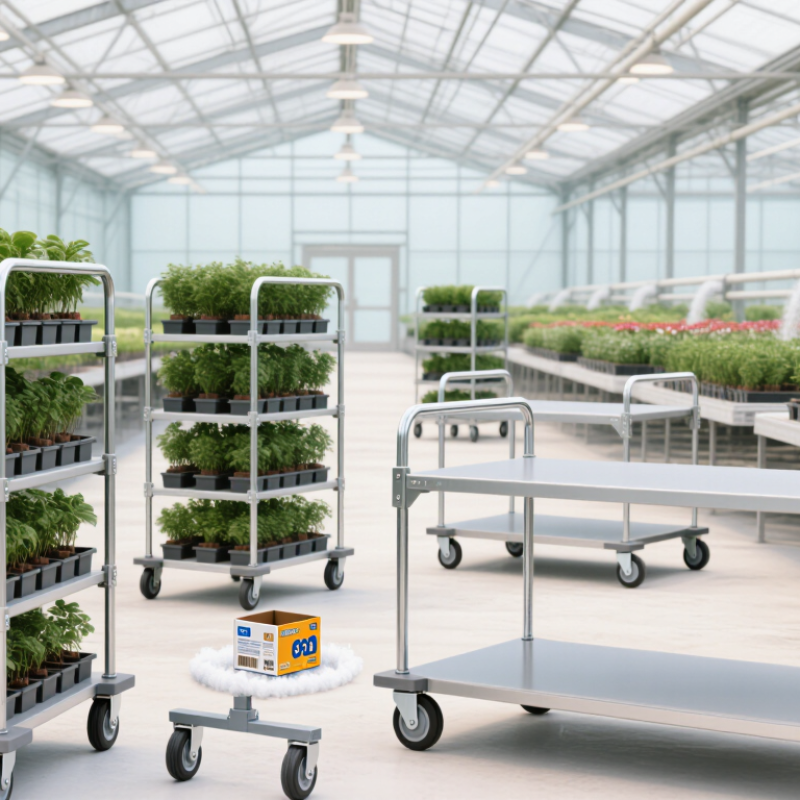
A greenhouse flower cart is a mobile platform used to move, display, and care for potted plants. Workers can push several flower trays instead of carrying each pot by hand. Most carts include a steel or aluminum frame, lockable wheels, and one or more flat shelves.
In daily greenhouse work, the cart travels between growing rows, packing areas, and loading points. Its shelf height should match the worker’s waist. This reduces repeated bending during watering and plant inspection. Some designs use mesh shelves, which allow drainage and improve airflow around the pots. Others use solid platforms for heavier containers.
A reliable cart needs smooth movement on wet concrete. Its wheels should resist moisture, soil, and fertilizer residue. Brakes matter too. A cart without stable brakes may shift beside a bench or sloped aisle. Measure the narrowest passage before ordering. Small details matter.
Buyers should check load capacity, frame thickness, wheel diameter, and surface treatment. Galvanized steel can help resist corrosion, but poor welds still weaken the structure. Aluminum is lighter, though it may flex under heavy loads. In my experience, greenhouse layouts rarely match the catalog perfectly. A cart that works well in one nursery may turn poorly in another. Test the turning radius, shelf clearance, and braking action before placing a large order.
High-quality flower carts should protect stems, reduce handling, and move smoothly through narrow greenhouse aisles. The cart frame needs corrosion-resistant steel or aluminum, especially around irrigation zones. Lockable wheels should roll quietly and hold position on damp floors. A stable platform also prevents trays from sliding during sharp turns.
Grand View Research valued the global floriculture market at approximately USD 55.8 billion in 2022. This growth increases demand for durable, labor-saving transport equipment. Yet market size alone cannot prove cart quality.
Look for welded joints, rounded edges, replaceable wheels, and washable surfaces. A useful cart should carry a clear rated load, not an optimistic estimate. Adjustable shelves can separate cut flowers from potted plants and reduce crushing. Ergonomic handle height matters during repeated movement.
The International Ergonomics Association links poor workplace design with higher fatigue and injury risks. Buyers should request wheel-load tests, brake tests, and corrosion-test records. I would still inspect the cart personally. Catalog images often hide weak welds and awkward turning angles.
Tips: Measure aisle width before ordering. Test a fully loaded cart on wet flooring. Check whether spare wheels are available locally. Compare the rated capacity with your heaviest tray, not your average tray. A small design flaw may become expensive after months of daily use.
Reliable greenhouse flower carts begin with practical engineering, not attractive photographs. Chinese manufacturers usually select galvanized steel or aluminum frames for humid growing areas. Powder-coated surfaces can improve corrosion resistance, but coating thickness must be checked. Welds need smooth finishing because rough joints can snag sleeves and damage stems.
Before shipping, factories should test wheel load, tray balance, and handle strength. A loaded cart must roll smoothly across wet concrete. Workers often inspect caster alignment with simple gauges. They also verify each tray’s level, spacing, and drainage path. This matters when flowers move between benches and packing areas. Batch records, material certificates, and inspection photos improve traceability. Still, no factory process is perfect. A loose fastener may escape inspection during rushed production. Reliable suppliers respond with corrective records, replacement parts, and clearer sampling plans.
Tips: Ask for a sample cart before ordering in volume. Measure aisle width and turning space on your site. Request load-test results, coating details, spare-wheel options, and an assembly guide. Check whether the cart stays stable when one side carries more weight. That small test often reveals more than a polished catalog.
China Best Greenhouse Flower Cart for Global Buyers
How to Choose the Best Cart for Your Greenhouse
Choosing a greenhouse flower cart starts with your actual working space, not its appearance. Measure aisle width, door height, bench spacing, and turning areas before comparing models. A cart should carry trays safely without blocking workers or damaging stems. For wet environments, select a corrosion-resistant frame and sealed wheel bearings. Large pneumatic wheels move smoothly over uneven floors, while smaller solid wheels need less maintenance. Both options have limitations.
Test the cart with real flower trays. Check whether the handle feels comfortable after repeated pushing. A practical load capacity should exceed your normal weight by at least 20 percent. This allowance protects stability during sudden stops. Brakes matter on sloped floors, especially when transporting tall plants. I have seen attractive carts become difficult to control because their upper shelves were too high. That detail is easy to overlook.
Tips: Keep at least 10 centimeters of clearance on both sides in narrow aisles. Choose adjustable shelves for different plant heights. Inspect welds, wheel fasteners, and brake cables every month. Ask for replacement parts and clear maintenance instructions before purchasing. A short trial inside your greenhouse can reveal more than a specification sheet. Do not rely on the lowest price alone. Sometimes, a simpler cart works better.
Global purchasing starts with the crop, not the catalog photograph. A flower cart should match aisle width, tray size, load weight, and floor conditions. For delicate stems, smooth shelves reduce bruising during movement. Locking casters help workers position carts safely near benches. Galvanized steel usually handles humid greenhouse air better than uncoated metal. Still, coating thickness and weld quality need physical verification. Ask for load test records, material specifications, and clear dimensional drawings before ordering.
Shipping decisions can change the real purchase cost. Compare packed volume, container loading plans, insurance, and destination handling fees. Request export packaging that protects casters and shelf corners. Wooden components may require compliant treatment documents for some markets. Confirm carton labels, spare parts, and assembly instructions before production. A pre-shipment inspection should check wheel alignment, brake function, surface finish, and actual measurements. Photos alone are not enough.
Quality is more than appearance. Sample one cart and test it on a wet, uneven aisle. Record how easily it turns when fully loaded. A low quotation may hide thin tubing, weak wheels, or expensive replacement parts. I have seen purchasing plans focus heavily on unit price and overlook local service capacity. That is a costly gap. Delivery schedules also need flexibility because port delays and seasonal demand can disrupt greenhouse projects. Buyers should compare several factories, review recent inspection evidence, and keep written acceptance criteria. Small details matter.
„Thanks to the LUVIR technology, the solder resist process could be switched directly from the previously used mask exposure to direct exposure. As an outstanding digital solution on the market, this technology has been able to demonstrate fast process times and superior quality on our certified conventional ink in production. This allowed us to fully digitize the solder mask process at low cost – without process or ink adjustments. An excellent benefit to our production in Rot am See.“
Ralf Göhringer (Head of Production WE Rot am See)
I would definitely recommend the Limata machine and team for a future company purchase
Michael Greenaway
Compunetics Inc.
“The Limata ldi has been amazing!! Best thing we did was buy this machine”
Richard Brady
GM
Circuitlabs
“Since 2019, we have been running the Limata X1000 LDI system (including LUVIR for solder mask imaging) in daily production as an addition to our current process with film. The machine was capable of properly exposing Taiyo PSR-4000 BN (DI) solder mask types on normal to high-copper boards using a new and unique direct imaging process. The machine operating interface is very user friendly which allowed for a quick technical training curve. The pre-registration processing reduced several seconds of production time at every print. Limata support and service staff is incomparable. They supported our team every step of the way at basically any time of the day or night, with literally, an immediate response time, customizing the software interface to best fit our Operations and needs.
We have exposed more than 8,000 prints since end of October, on various solder mask colors and some resist film panels. Limata, has proven to be very capable and innovative. They are a strong contender in the industry.
We have very much enjoyed this project, and working with the team!
Thank you Limata for the continued support and being a part of our growth.”
Bill Sezate
Vice President, GM
Summit Interconnect
As a replacement to our current contact exposure process with film, the LIMATA X2000 system including LUVIR-Technology was capable of properly exposing non-LDI solder mask types using a direct imaging process. The machine offers cutting edge software with a very intuitive operating interface which allowed for quick technician training curve. The dual drawer system combined with pre-registration processing reduced several seconds of production time at every machine cycle. Limata support and service staff is world class. They added software patches to keep production running at shortest possible response times, customized the software interface to best fit our in-house Operations system, and even wrote a step-by-step machine processing manual. As a result of the project, we have exposed more than 16,000 times on various product types and solder mask brands/colors. Limata, in a very short timeframe as a company, has definitely shown they are truly innovative and will be challenging the industry of direct imaging for the top spot.
Kevin Beattie
Process Engineer
TTM Technologies
Forest Grove Division
