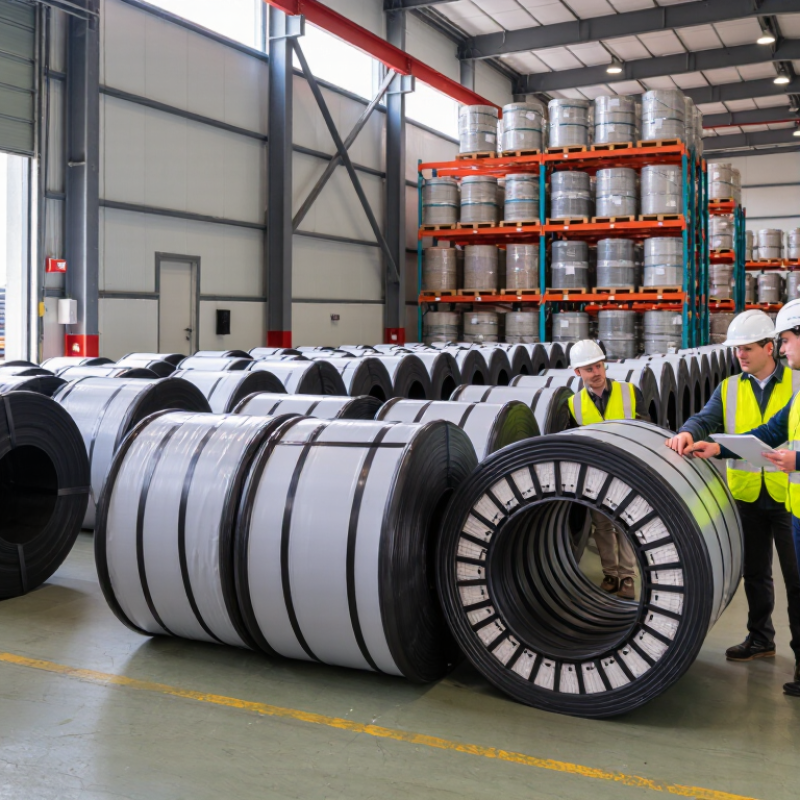
Choosing China’s best Plastic blind drain supplier starts with performance, not polished product photos. A roll may look substantial on a warehouse floor, yet compress under soil and lose drainage capacity. Small details matter: core shape, filter-fabric compatibility, joint design, and quality consistency between batches.
The Federal Highway Administration’s Geosynthetic Design and Construction Guidelines, FHWA-NHI-07-092, distinguishes drainage from filtration as separate geosynthetic functions. That distinction matters on retaining walls, foundations, and road projects. A drain must carry water; its filter must limit soil intrusion. Both functions need checking under project-specific conditions. ASTM D4439 also provides standard terminology for geosynthetics, helping buyers compare technical claims more consistently. These references are useful starting points, not substitutes for project testing.
Robert M. Koerner is a recognized geosynthetics author whose work emphasizes evaluating products within their engineered system. In paraphrase, his practical lesson is this: assess drainage performance with the surrounding soil and loading conditions in mind, not from appearance alone. A supplier should provide clear specifications, test methods, and traceable production records. Ask how flow capacity changes under compression, and request data relevant to your installation. Some catalogs leave these points vague. That deserves scrutiny.
This guide compares Chinese suppliers through product evidence, manufacturing capability, and communication quality. No single factory is automatically best for every project. The right choice depends on site conditions, verified performance, and honest technical support.
A plastic blind drain is a buried drainage channel that collects excess water without an open surface ditch. It commonly uses a perforated plastic pipe surrounded by clean gravel and wrapped, where appropriate, in filter fabric. The pipe’s openings let water enter, while the surrounding stone creates pathways through the soil. Water moves quietly. Gravity carries it toward a suitable outlet, such as a lower drainage point or approved collection system.
Its performance depends on more than the pipe. A steady fall along the trench helps prevent standing water; the exact slope and pipe size should match site conditions. Soil type matters, too. Fine silt can clog openings if the filter layers are poorly selected or installed. Details matter. Before covering the trench, check that the pipe is seated evenly and that gravel surrounds it without large gaps. A common mistake is assuming every damp area needs the same layout. It does not. Groundwater level, rainfall, soil, and outlet position all affect results, so a site assessment is worth the effort. Even a well-built drain may need occasional inspection, especially after heavy storms.
Plastic blind drains typically combine a molded polymer core with a filter geotextile. The core is often made from high-density polyethylene or polypropylene, while the fabric commonly uses polypropylene or polyester. The core’s channels create pathways for water; the fabric helps limit soil entry. Small details matter.
Check core thickness, compressive strength, and in-plane flow capacity under the expected load. Flow capacity can fall when the core is compressed, so an unloaded laboratory figure may not reflect installed performance. Ask for test results with the applied pressure and gradient stated. Filter fabric should be selected for the surrounding soil, considering apparent opening size and permeability. A fabric that is too open may admit fines; one that is too tight can slow drainage.
Roll width, length, and connection details affect installation and waste. For a foundation wall, inspect whether the fabric fully covers the drainage core and stays secure at seams. I would not choose a product by thickness alone; that shortcut is tempting, but incomplete. Compare test methods, design loads, soil conditions, and required flow rates before specifying a system. There is no single specification that fits every site.
Plastic blind drains help collect and redirect water where open channels would be difficult to install. They are commonly placed behind retaining walls, beside building foundations, and beneath landscaped areas. In these locations, trapped water can add pressure to structures or leave soil soggy after rain. A drainage layer gives water a defined route toward an outlet.
On sports fields, roads, and planted roofs, drainage strips can help move excess water through compact spaces. The exact layout depends on soil, slope, expected water volume, and the available discharge point. A drain that looks suitable on a drawing may perform poorly if its outlet is blocked. Small details matter. Installation should follow the project design, with suitable filtration to limit soil entering the drainage core.
Tips: Check the outlet route before installation, and keep it accessible for inspection. Match the drain’s capacity and compressive strength to site conditions. Don’t assume one product fits every soil. A qualified drainage professional can help assess the design.
China Best Plastic Blind Drain Supplier?
How to Evaluate Plastic Blind Drain Suppliers in China
When evaluating plastic blind drain suppliers in China, start with the product’s intended use. A drain for a landscaped slope may need different flow capacity and crush resistance than one installed beside a road. Ask for drawings that show dimensions, slot layout, and connection details. Check whether the stated material and performance data match the product you will receive. Request a sample, then inspect its edges, joints, and flexibility. Small details matter. A neat sample alone, however, does not prove consistent production.
Ask how the supplier checks dimensions and drainage performance during manufacturing. Useful records may include test methods, inspection reports, and batch identification. Confirm how the drain is packed; crushed corners or distorted sections can complicate installation. Discuss order quantities, production timing, and what happens if a batch fails inspection. Ask clear questions. Compare written specifications, not just price or polished photographs. A low quote can be tempting, but omitted testing or vague tolerances may create costs later. Even a careful checklist can miss something, so keep approval samples and agreed specifications on file before production begins.
A plastic blind drain must perform under the conditions of its installation, not just look sound in a sample. Compare its core dimensions, drainage capacity, compressive strength, and geotextile coverage. Ask for test results that state the testing method and load conditions. “High strength” alone tells you very little. Details matter. Check whether the product suits the soil, water flow, and pressure expected on your project. A sample can help reveal uneven edges, weak fabric bonding, or damage after handling, but it cannot prove consistent production.
Compare suppliers by reviewing quality records, batch traceability, production capacity, and realistic lead times. Ask how they inspect dimensions and drainage performance, and whether they can provide recent records from actual production. Clear answers are useful; vague promises are not. Also check packaging, since crushed or wet rolls can create problems before installation. Communication deserves attention, too. Can the supplier confirm specifications in writing and flag details that need clarification? No comparison is perfect, and one overlooked detail can matter. I would treat an attractive sample as a starting point, not a guarantee.
„Thanks to the LUVIR technology, the solder resist process could be switched directly from the previously used mask exposure to direct exposure. As an outstanding digital solution on the market, this technology has been able to demonstrate fast process times and superior quality on our certified conventional ink in production. This allowed us to fully digitize the solder mask process at low cost – without process or ink adjustments. An excellent benefit to our production in Rot am See.“
Ralf Göhringer (Head of Production WE Rot am See)
I would definitely recommend the Limata machine and team for a future company purchase
Michael Greenaway
Compunetics Inc.
“The Limata ldi has been amazing!! Best thing we did was buy this machine”
Richard Brady
GM
Circuitlabs
“Since 2019, we have been running the Limata X1000 LDI system (including LUVIR for solder mask imaging) in daily production as an addition to our current process with film. The machine was capable of properly exposing Taiyo PSR-4000 BN (DI) solder mask types on normal to high-copper boards using a new and unique direct imaging process. The machine operating interface is very user friendly which allowed for a quick technical training curve. The pre-registration processing reduced several seconds of production time at every print. Limata support and service staff is incomparable. They supported our team every step of the way at basically any time of the day or night, with literally, an immediate response time, customizing the software interface to best fit our Operations and needs.
We have exposed more than 8,000 prints since end of October, on various solder mask colors and some resist film panels. Limata, has proven to be very capable and innovative. They are a strong contender in the industry.
We have very much enjoyed this project, and working with the team!
Thank you Limata for the continued support and being a part of our growth.”
Bill Sezate
Vice President, GM
Summit Interconnect
As a replacement to our current contact exposure process with film, the LIMATA X2000 system including LUVIR-Technology was capable of properly exposing non-LDI solder mask types using a direct imaging process. The machine offers cutting edge software with a very intuitive operating interface which allowed for quick technician training curve. The dual drawer system combined with pre-registration processing reduced several seconds of production time at every machine cycle. Limata support and service staff is world class. They added software patches to keep production running at shortest possible response times, customized the software interface to best fit our in-house Operations system, and even wrote a step-by-step machine processing manual. As a result of the project, we have exposed more than 16,000 times on various product types and solder mask brands/colors. Limata, in a very short timeframe as a company, has definitely shown they are truly innovative and will be challenging the industry of direct imaging for the top spot.
Kevin Beattie
Process Engineer
TTM Technologies
Forest Grove Division
