China has become an important sourcing base for buyers evaluating Three Phase Transformer manufacturers. Yet supplier selection should go beyond factory price. A transformer may look competitive on a quotation and still miss a project’s operating conditions.
The International Energy Agency’s Electricity Grids and Secure Energy Transitions (2023) says annual grid investment must nearly double to more than US$600 billion by 2030. This figure covers grids broadly, not transformer sales alone. It nevertheless signals the scale of network upgrades ahead. IEA Executive Director Fatih Birol warned, “The world is not investing enough in grids.” His point matters to buyers: delivery schedules, dependable capacity, and documented testing deserve careful attention.
Details make the difference. Ask manufacturers for rated voltage, capacity, impedance, cooling method, loss data, and routine test records. Check whether stated standards match the project specification. Request clear evidence of production controls, material traceability, and after-sales support. A polished brochure is not proof. Nor is the lowest bid always the best value.
This guide introduces three Chinese manufacturers for global buyers and outlines practical comparison points. It does not treat any supplier as universally suitable. Project conditions vary, and published claims still require verification. That caveat is easy to overlook. A factory visit, sample documents, and direct technical questions can reveal gaps before procurement begins.
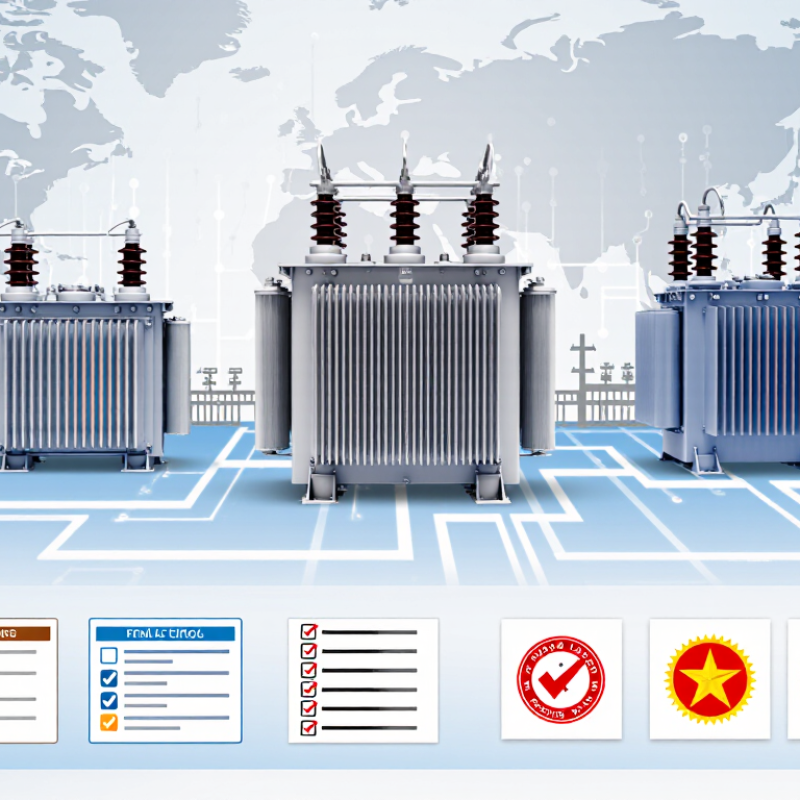
A three-phase transformer transfers electrical power between circuits and raises or lowers voltage. It serves three alternating-current phases together, making it a practical choice for high-capacity systems. At a power station, a step-up unit raises voltage for transmission. Near a factory or neighborhood, step-down units bring it to usable levels. That matters. Lower transmission current can reduce conductor losses, while voltage conversion helps equipment receive power within its specified range.
You will find these transformers in substations, manufacturing plants, water-treatment facilities, hospitals, commercial buildings, and renewable-energy connections. A factory floor may use one to supply large motors; a solar or wind project may need one to connect output to the grid. The International Energy Agency’s Electricity 2024 report projects global electricity demand growth averaging about 3.4% annually from 2024 to 2026. Its 2023 report, Electricity Grids and Secure Energy Transitions, says annual grid investment must more than double to over $600 billion by 2030 to meet transition needs. These trends increase the need for dependable voltage conversion. Not a cure-all. Correct sizing still depends on load profiles, cooling, installation conditions, and expected expansion. Those details are easy to underestimate, and a transformer cannot compensate for poor system planning.
China’s three-phase transformer industry is organized around more than finished-unit manufacturers. It includes electrical steel processors, winding-wire suppliers, insulation producers, tank fabricators, and testing services. Some manufacturers manage most production in-house. Others rely on qualified partners for components or specialized processes. The difference matters. A factory visit can reveal whether winding, assembly, and routine testing happen at the same site. Look for practical details, such as coil-winding equipment, drying ovens, and documented test procedures. These observations help buyers understand production control, but they do not replace technical audits.
Manufacturers also serve different voltage ranges, power ratings, and operating environments. One plant may focus on distribution units, while another handles larger industrial projects or custom designs. Export teams often coordinate drawings, packing, shipping, and technical documents, though their engineering depth can vary. Ask who reviews load data and ambient conditions. Request routine test records and clarify which standards apply to the project. Details matter. The industry is not neatly divided into “large” and “small” suppliers; capability depends on the specific design and verified process. I would not assume that a polished catalog proves consistent quality. Check how deviations are recorded, how replacement parts are handled, and who answers technical questions after delivery.
| Industry Segment | Typical Three-Phase Products | Common Voltage or Capacity Context | Typical Applications | What Global Buyers Should Check |
|---|---|---|---|---|
| Distribution transformer manufacturers | Oil-immersed and dry-type distribution transformers | Common Chinese distribution classes include 10 kV and 20 kV; secondary voltage and ratings depend on the project and destination grid. | Commercial buildings, factories, utilities, and local distribution networks | Rated frequency, primary and secondary voltages, vector group, impedance, cooling, losses, and local utility requirements |
| Power transformer manufacturers | Three-phase transformers for transmission substations and large industrial systems | Often designed for high-voltage networks, including 110 kV and above; capacity and configuration are project-specific. | Grid substations, power plants, and major industrial facilities | Design capability for the specified voltage level, short-circuit withstand, insulation coordination, factory testing, and reference projects |
| Dry-type transformer manufacturers | Cast-resin and other air-cooled three-phase transformers | Commonly used in medium-voltage distribution applications; ratings, enclosure, and cooling arrangement vary by design. | Indoor installations, buildings, transport facilities, and locations where oil-filled equipment is unsuitable | Insulation system, temperature rise, enclosure protection, ventilation, fire-safety requirements, and applicable dry-type standards |
| Renewable-energy and project-oriented suppliers | Three-phase step-up transformers and packaged substation solutions | Configured to match the generator, inverter, collection system, and grid connection; there is no single universal rating. | Solar and wind projects, energy storage systems, and grid interconnections | Harmonic performance, duty cycle, inverter interface, environmental conditions, monitoring, and grid-code compliance |
| Special-purpose transformer manufacturers | Rectifier, furnace, traction, grounding, and other application-specific transformers | Electrical characteristics are tailored to the load and operating profile rather than a standard general-purpose specification. | Metallurgy, electrochemical processes, rail systems, and industrial power conversion | Load profile, duty cycle, harmonic content, cooling, insulation, protection scheme, and acceptance-test scope |
| Component and system suppliers | Transformer cores, windings, bushings, tap changers, enclosures, and integrated substations | Components are selected to suit the transformer design; system suppliers may coordinate equipment from multiple manufacturers. | Transformer production, retrofit work, and turnkey electrical projects | Responsibility boundaries, component traceability, interface drawings, warranty coverage, and spare-parts support |
| Testing and compliance across the industry | Design verification, routine tests, type tests, and project-specific inspections | Requirements depend on the product, contract, destination market, and purchaser’s technical specification. | All transformer categories | Confirm the applicable IEC or national standards, test reports for the proposed design, independent inspection needs, and export-market approvals. |
| Buyer note: This is an industry-structure overview, not a supplier ranking. Transformer ratings and designs are project-specific; verify technical data, standards, test evidence, and delivery scope against the purchase specification. | ||||
Choosing a three-phase transformer manufacturer in China requires more than comparing quoted prices. Define the operating conditions: voltage ratio, rated capacity, frequency, cooling method, installation altitude, and expected load profile. Specifics matter. A unit serving a dusty indoor plant may need different protection from one installed near a coastal substation. Ask how these conditions shape the design, and review drawings and technical schedules before production begins.
Check how quality is controlled on the factory floor. Ask about conductor and insulation traceability, winding inspections, and routine test records linked to the finished unit’s serial number. Useful reports may cover winding resistance, insulation performance, and ratio checks. For specialized designs, clarify whether supporting type-test evidence is available and applies to the proposed configuration. A polished brochure is not proof. Confirm test equipment calibration and agree on inspection points before shipment.
Service capability also matters. Ask who handles commissioning questions, what spare parts are practical to stock, and how quickly technical staff respond across time zones. Request references for projects with similar voltage levels and operating conditions, while respecting client confidentiality. One easy mistake is treating a low initial price as the full cost; freight, installation, losses, and maintenance can change the comparison. Even a careful checklist has limits, so record assumptions and revisit them when the site data is incomplete.
The chart presents an illustrative buyer-priority framework, not measured ratings of manufacturers or a market survey. Verify applicable requirements against the IEC 60076 series, review quality-management documentation, and assess factory acceptance testing, customization, delivery capability, and after-sales support.
Global buyers should compare Chinese three-phase transformer suppliers against the same technical specification, not just the same price sheet. The IEA’s 2023 report, Electricity Grids and Secure Energy Transitions, says annual grid investment must rise from about USD 300 billion to more than USD 600 billion by 2030. It also estimates that 80 million kilometres of grids need adding or refurbishing by 2040. That expansion makes dependable transformer supply and documented performance increasingly important.
Ask suppliers for routine and type-test reports, guaranteed losses, temperature-rise results, and clear delivery schedules. Check that test documents match the offered design, voltage, cooling method, and accessories. Request material traceability for core steel and winding conductors, then confirm how design changes are controlled. A video call can show the test bay, but it cannot replace an independent factory audit. Small details matter. Compare service response, spare-parts availability, packing methods, and export experience alongside price. One spreadsheet score is useful, but not enough; weighting criteria can hide real project risks. A low quote can still be expensive if loss figures, inspection scope, or commissioning support remain vague. Suppliers may provide polished files, yet buyers should verify key claims against test records and agreed acceptance criteria.
For global buyers, export readiness begins with clear technical documents, not a promise of compliance. A three-phase transformer quotation should state rated voltage, frequency, capacity, connection group, cooling method, and applicable test requirements. Request routine test reports, a legible nameplate draft, installation instructions, and packing details before production is complete. Destination standards differ, so buyers should confirm requirements with local engineers and import specialists. Keep the approved specifications beside the final inspection records. Small details matter.
Logistics need the same attention. Confirm the unit’s dimensions, lifting points, gross weight, and center of gravity before booking transport. Moisture barriers, bracing, and visible shock or tilt indicators can help protect equipment on a long route. Check the details. Agree on delivery responsibilities, customs paperwork, and who handles damage claims before dispatch. After arrival, ask for commissioning guidance, spare-parts availability, and a named technical contact. Even careful packing cannot prevent every delay; port handling and site access can still disrupt schedules. A realistic delivery plan leaves room for those problems and records each handover.
„Thanks to the LUVIR technology, the solder resist process could be switched directly from the previously used mask exposure to direct exposure. As an outstanding digital solution on the market, this technology has been able to demonstrate fast process times and superior quality on our certified conventional ink in production. This allowed us to fully digitize the solder mask process at low cost – without process or ink adjustments. An excellent benefit to our production in Rot am See.“
Ralf Göhringer (Head of Production WE Rot am See)
I would definitely recommend the Limata machine and team for a future company purchase
Michael Greenaway
Compunetics Inc.
“The Limata ldi has been amazing!! Best thing we did was buy this machine”
Richard Brady
GM
Circuitlabs
“Since 2019, we have been running the Limata X1000 LDI system (including LUVIR for solder mask imaging) in daily production as an addition to our current process with film. The machine was capable of properly exposing Taiyo PSR-4000 BN (DI) solder mask types on normal to high-copper boards using a new and unique direct imaging process. The machine operating interface is very user friendly which allowed for a quick technical training curve. The pre-registration processing reduced several seconds of production time at every print. Limata support and service staff is incomparable. They supported our team every step of the way at basically any time of the day or night, with literally, an immediate response time, customizing the software interface to best fit our Operations and needs.
We have exposed more than 8,000 prints since end of October, on various solder mask colors and some resist film panels. Limata, has proven to be very capable and innovative. They are a strong contender in the industry.
We have very much enjoyed this project, and working with the team!
Thank you Limata for the continued support and being a part of our growth.”
Bill Sezate
Vice President, GM
Summit Interconnect
As a replacement to our current contact exposure process with film, the LIMATA X2000 system including LUVIR-Technology was capable of properly exposing non-LDI solder mask types using a direct imaging process. The machine offers cutting edge software with a very intuitive operating interface which allowed for quick technician training curve. The dual drawer system combined with pre-registration processing reduced several seconds of production time at every machine cycle. Limata support and service staff is world class. They added software patches to keep production running at shortest possible response times, customized the software interface to best fit our in-house Operations system, and even wrote a step-by-step machine processing manual. As a result of the project, we have exposed more than 16,000 times on various product types and solder mask brands/colors. Limata, in a very short timeframe as a company, has definitely shown they are truly innovative and will be challenging the industry of direct imaging for the top spot.
Kevin Beattie
Process Engineer
TTM Technologies
Forest Grove Division
