Wooden Window Frames remain a practical choice for buyers seeking warmth, natural character, and design flexibility. China’s manufacturing market offers a broad range of styles, timber options, finishes, and production capabilities. Yet a polished catalogue does not tell the whole story. Buyers need to look closely at construction details, documented quality controls, and the supplier’s experience with similar projects.
This guide explains how to assess Chinese manufacturers and compare products with care. It covers timber selection, frame design, glazing compatibility, surface treatment, customization, packaging, and communication during production. Ask for clear specifications and recent project references. Request samples when appearance and finish matter. Check whether test reports and product documents match the exact model being quoted; requirements can differ by destination and project. Details matter.
A lower quotation may leave important items unclear, such as hardware, coating layers, or delivery protection. Even experienced buyers can overlook these gaps when comparing prices quickly. No single factory is right for every order. By asking focused questions and verifying claims independently, global buyers can make a more informed shortlist of Wooden Window Frames suppliers and judge whether a proposed product suits their climate, building design, and purchasing needs.
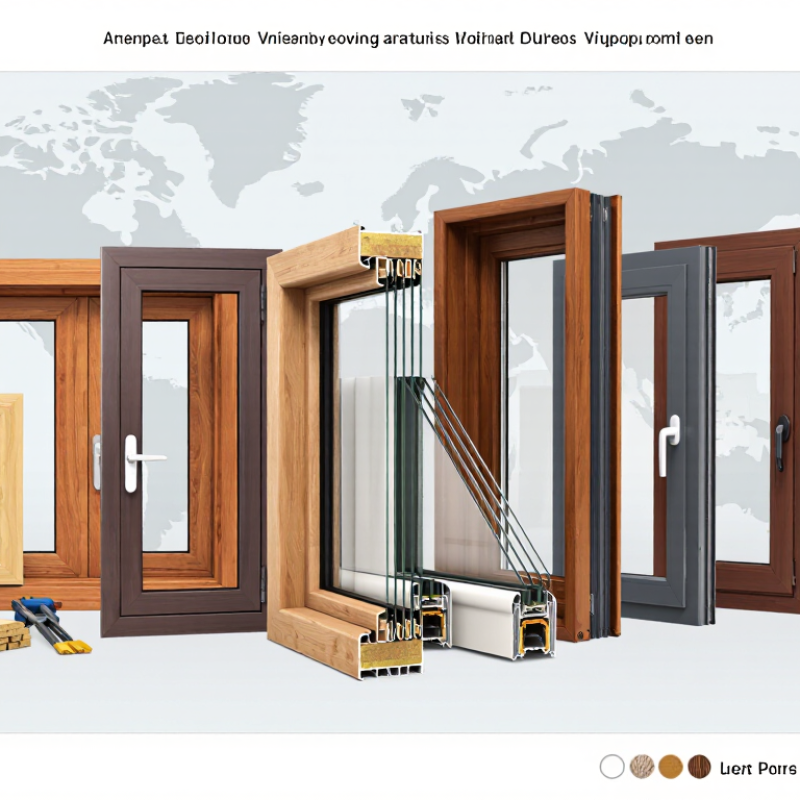
A high-quality wooden window frame begins with timber suited to its intended climate and use. The wood should be properly dried, with moisture levels checked before fabrication. Wood moves. Large swings in humidity can cause swelling, gaps, or sticking, even in a carefully made frame. Ask how the timber is selected and dried, rather than judging quality by color alone.
Look closely at the corners and joints. They should meet evenly, without open seams or rough, exposed end grain. A consistent coating protects the surface, but it should not conceal cracks or poorly fitted joints. Check that drainage paths are clear and that seals sit evenly around the glass. Small details matter. They help keep rain out and make the sash easier to operate over time.
Quality also depends on honest specifications and practical checks. Request information on timber type, finish, glazing compatibility, and care requirements for your local climate. A sample can reveal sanding marks, coating thickness, and how smoothly the frame opens. Natural grain differences are normal; they are not automatically flaws. Still, a polished sample may not represent every production unit, so inspection procedures deserve attention. No frame is maintenance-free. A realistic care schedule is part of good quality.
Chinese wooden-window makers commonly work with pine, fir, larch, oak, and ash. Pine and fir are relatively light and easy to machine, making them practical for many frame designs. Their softer surfaces, however, can dent more readily, so finishing and handling deserve attention.
Larch is denser and often has visible grain and resin pockets. These details may suit a natural look, but they can affect paint consistency. Oak offers a firm feel and distinct grain, while ash is valued for its clear pattern and workability. Both are heavier than many softwoods.
Species names can mislead. A “pine” frame may vary by growing region, drying method, and whether its components are solid or laminated. Ask for the exact species, a finish sample, and moisture details. Samples matter. Check joints and corners, too; a beautiful grain cannot compensate for uneven assembly. Even careful checks leave some uncertainty, since wood responds to humidity after installation.
Wooden window frames begin with timber selection and moisture control. Manufacturers inspect boards for knots, splits, and grain direction, then kiln-dry them before cutting. The USDA Forest Products Laboratory’s Wood Handbook (2021) explains that wood exchanges moisture with surrounding air and can change dimension as its moisture content shifts. That movement matters. Poorly controlled drying may cause twisting or gaps after installation.
Next, machines shape rails and stiles, and workers cut joints, fit hardware, and assemble the frame. They sand the surfaces and apply primer, paint, or stain, paying special attention to end grain and corners where water can enter. Coatings need proper curing time. A glossy surface alone proves little. The U.S. Department of Energy’s Energy Saver guidance says heat gain and loss through windows account for about 25–30% of residential heating and cooling energy use; frame quality is only one part of overall window performance. Buyers should ask for moisture-control records, finish details, and test data for the complete window assembly. One detail is easy to overlook: a careful finish cannot compensate for poor drainage or inaccurate installation.
Global buyers should compare tested performance, not just timber species or frame thickness. The U.S. Department of Energy estimates that windows account for 25–30% of residential heating and cooling energy use (Energy Saver, “Update or Replace Windows”). Ask for whole-window thermal transmittance, reported as a U-factor, and check the calculation method. ISO 10077-1:2017 covers thermal transmittance calculations for windows and doors. Details matter.
For European projects, EN 14351-1 sets product-performance requirements for windows and external doors. Air permeability, watertightness, and wind resistance are commonly tested under EN 1026, EN 1027, and EN 12211. In North America, ASTM E2112-23 covers installation practice. These standards are not interchangeable; confirm the required editions and local project criteria before comparing certificates. A test result for one size or configuration may not represent a larger unit.
Wood needs separate scrutiny. Ask for documented frame moisture content, joint details, coating specifications, and maintenance guidance. The EN 927 series addresses coating materials and systems for exterior wood. A certificate alone is not enough; verify that the tested product matches the offered glazing, hardware, and dimensions. This step is easy to overlook, and paperwork can look reassuring when it is not.
Evaluating Chinese wooden-window suppliers starts with evidence, not polished catalog photos. Ask for the exact timber species, frame profile, glazing system, finish schedule, and hardware specifications. Request recent test reports and confirm that each report matches the quoted configuration. A report for another model proves little. Check how the supplier controls timber moisture and dimensional tolerances; these details affect movement, sealing, and fit after shipping.
Review a sample with a tape measure. Inspect corner joints, coating coverage, drainage paths, and gasket continuity. Ask how samples are packed and how transit damage is recorded. For larger orders, clarify inspection stages, acceptable defects, replacement terms, and delivery milestones in writing. Video calls can help, but they do not replace independent inspection when the order justifies it. Samples can mislead. I would not treat one attractive unit as proof of consistent production.
Tips: Compare at least three suppliers using the same written checklist. Keep an approved sample and signed drawings as references. Ask direct questions, then record vague answers. Sometimes the buyer’s own specification is incomplete, too.
„Thanks to the LUVIR technology, the solder resist process could be switched directly from the previously used mask exposure to direct exposure. As an outstanding digital solution on the market, this technology has been able to demonstrate fast process times and superior quality on our certified conventional ink in production. This allowed us to fully digitize the solder mask process at low cost – without process or ink adjustments. An excellent benefit to our production in Rot am See.“
Ralf Göhringer (Head of Production WE Rot am See)
I would definitely recommend the Limata machine and team for a future company purchase
Michael Greenaway
Compunetics Inc.
“The Limata ldi has been amazing!! Best thing we did was buy this machine”
Richard Brady
GM
Circuitlabs
“Since 2019, we have been running the Limata X1000 LDI system (including LUVIR for solder mask imaging) in daily production as an addition to our current process with film. The machine was capable of properly exposing Taiyo PSR-4000 BN (DI) solder mask types on normal to high-copper boards using a new and unique direct imaging process. The machine operating interface is very user friendly which allowed for a quick technical training curve. The pre-registration processing reduced several seconds of production time at every print. Limata support and service staff is incomparable. They supported our team every step of the way at basically any time of the day or night, with literally, an immediate response time, customizing the software interface to best fit our Operations and needs.
We have exposed more than 8,000 prints since end of October, on various solder mask colors and some resist film panels. Limata, has proven to be very capable and innovative. They are a strong contender in the industry.
We have very much enjoyed this project, and working with the team!
Thank you Limata for the continued support and being a part of our growth.”
Bill Sezate
Vice President, GM
Summit Interconnect
As a replacement to our current contact exposure process with film, the LIMATA X2000 system including LUVIR-Technology was capable of properly exposing non-LDI solder mask types using a direct imaging process. The machine offers cutting edge software with a very intuitive operating interface which allowed for quick technician training curve. The dual drawer system combined with pre-registration processing reduced several seconds of production time at every machine cycle. Limata support and service staff is world class. They added software patches to keep production running at shortest possible response times, customized the software interface to best fit our in-house Operations system, and even wrote a step-by-step machine processing manual. As a result of the project, we have exposed more than 16,000 times on various product types and solder mask brands/colors. Limata, in a very short timeframe as a company, has definitely shown they are truly innovative and will be challenging the industry of direct imaging for the top spot.
Kevin Beattie
Process Engineer
TTM Technologies
Forest Grove Division
