China’s door industry spans large export factories, specialist workshops, and brands with broad product catalogs. This guide introduces ten manufacturers of French and patio doors, with attention to materials, glazing, hardware, customization, and documented quality controls. The name on a brochure is only a starting point. Buyers should also examine product specifications, sample construction, and after-sales support.
Architect Frank Lloyd Wright wrote, “The space within becomes the reality of the building.” That design principle helps explain why French Doors Patio Doors deserve more than a quick style comparison. A pair of glazed doors can brighten a room, frame a garden, and change how people move between indoor and outdoor spaces. It can also expose weak seals or poorly aligned panels. Small details matter.
The companies ahead should be assessed against the same practical questions: What frame options do they offer? How do their doors perform in the intended climate? Can they provide clear test records, installation guidance, and consistent communication? A polished showroom is useful, but it is not proof of long-term performance. Product ranges and manufacturing capabilities may also vary by order, factory, and destination market. This overview is a starting point, not a substitute for checking current specifications and samples. Some comparisons may remain imperfect, especially when brands disclose different levels of technical detail. That limitation is worth keeping in view.
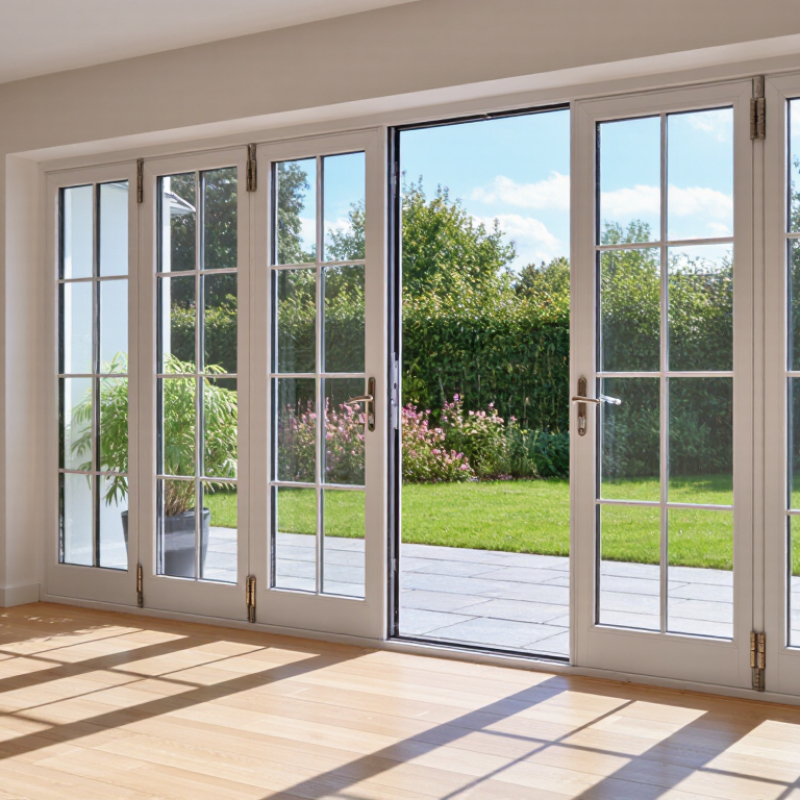
French door and patio door manufacturing in China covers a wide range of materials, opening styles, and production scales. Factories may work with aluminum, uPVC, timber, or hybrid frames. The process often includes profile cutting, corner joining, glazing, hardware installation, and surface finishing. A frame can look precise on a showroom floor yet bind after installation if its dimensions are slightly off. Small tolerances matter.
Production quality depends on more than machinery. Buyers should ask how suppliers check frame squareness, coating consistency, glass fit, and lock operation. Useful evidence includes written inspection records and sample testing for water and air leakage. Ask for the actual test configuration, since results can vary with panel size and hardware. Details matter. A polished sample is not proof that every batch will match it.
Specifications also shape manufacturing decisions. Coastal projects may need finishes suited to salty air, while large glass panels require careful support and handling. Confirm dimensions, glazing type, screen options, and opening direction before production begins. Packaging deserves attention too: corner protectors and separated hardware can reduce damage during shipping. Not every factory communicates limitations clearly, so direct questions help. Even then, one specification may need revision after a sample review. That is worth acknowledging early.
French and patio doors overlap, but their opening styles differ. French doors usually have two hinged leaves that swing inward or outward. They suit wide entries and create a clear central opening. Sliding patio doors move along a track, saving floor space beside furniture. Multi-panel and folding systems can open wider, though their tracks and hardware need careful upkeep. Frames may be wood, aluminum, vinyl, or composites; glass options include double glazing and low-emissivity coatings. A broad glass panel feels bright, but may feel cold beside a sofa. The trade-off is easy to overlook.
The U.S. Department of Energy’s Energy Saver guidance estimates that heat gain and loss through windows account for about 25%–30% of residential heating and cooling energy use. This is window data, not a door-specific measurement, but it highlights why glazing, orientation, and airtight seals matter. Compare whole-unit U-factor and solar heat gain coefficient, not just the glass description. Also check the sill height and drainage details. Small gaps matter.
Tip: Before choosing, measure the finished opening and nearby furniture clearance. Ask how the threshold handles rain, how the panels lock, and whether replacement seals are available. Test the handle in person if possible; specifications rarely describe how heavy a door feels.
The chart shows common example panel counts: French and sliding patio doors often use two panels, multi-slide doors commonly use three or more, and folding doors often use four or more. Actual configurations vary by product and opening size; these counts are illustrative, not industry standards.
Selecting a Chinese French-door or patio-door manufacturer starts with evidence, not catalogue photography. The International Energy Agency’s 2023 Global Status Report estimates that buildings use about 30% of global final energy. The U.S. Department of Energy estimates windows account for 25–30% of residential heating and cooling energy use. Ask for test results covering the exact frame, glass, and hardware combination. Check U-factor, solar heat-gain coefficient, air leakage, and water penetration. Numbers matter.
Request reports from independent testing laboratories, and confirm the tested sample matches your planned door size and configuration. Review production controls for frame-weld consistency, drainage paths, glass-spacer quality, corrosion resistance, and hardware-cycle testing. Ask how defects are recorded and how batches can be traced. A factory visit can reveal storage conditions and inspection routines that brochures miss. One weakness: a polished sample may hide variation across a full production run. Check several units, and clarify packaging, lead times, and responsibility for transit damage before approving an order.
The ten manufacturer profiles examine more than product range. They consider how each producer approaches French doors and patio doors, from frame materials to glazing and hardware options. Some focus on large sliding panels, while others offer hinged designs suited to narrower openings. Details matter. A sturdy-looking frame is not enough; buyers should ask about corner joints, drainage paths, weather seals, and the tested size of each door system.
Production scale and customization also shape these profiles. A factory may handle standard dimensions efficiently but need extra time for unusual finishes or oversized glass. Others may support project-specific specifications, though buyers should confirm tolerances and sample approval procedures in writing. Clear drawings help. So do consistent measurements. The profiles look at quality checks, installation guidance, export experience, and responsiveness during specification changes, rather than treating catalog images as proof of performance. No single maker fits every project, and public information can be incomplete. That limitation deserves attention. Before choosing a supplier, request current test documentation, material details, packaging standards, and references for comparable installations. A small seal detail can affect comfort, maintenance, and long-term performance.
The profiles below describe ten common product and manufacturing specializations found in China’s French door and patio door sector. They are industry-level categories, not rankings or verified profiles of named companies. Specifications and available options vary by manufacturer and project.
| Profile | Product Focus | Common Frame Materials | Typical Glazing Options | Common Opening Styles | Typical Applications | Common Customization |
|---|---|---|---|---|---|---|
| Profile 1 Aluminum sliding-door specialist | Sliding patio doors for wide openings | Aluminum; thermal-break aluminum is available in some product lines | Single glazing or insulating glass units, depending on the system | Two-panel and multi-panel sliding configurations | Balconies, patios, and connections between indoor and outdoor spaces | Frame finish, panel layout, glass specification, and hardware |
| Profile 2 Thermal-break aluminum system specialist | French and patio doors designed for improved thermal separation through the frame | Thermal-break aluminum | Insulating glass units; low-emissivity glass may be specified | Sliding, hinged, or multi-panel systems, depending on the range | Residential projects where thermal performance is a design consideration | Glass build-up, frame color, dimensions, and screen options |
| Profile 3 uPVC door specialist | uPVC French doors and sliding patio doors | uPVC profiles, often reinforced where required by the system design | Insulating glass units are commonly offered | Hinged French doors and sliding configurations | Housing and renovation projects | Profile color, glazing, hardware, screens, and opening direction |
| Profile 4 Lift-and-slide system specialist | Large patio-door panels operated with lift-and-slide hardware | Primarily aluminum systems; other materials depend on the supplier’s range | Insulating glass units, with glass thickness and composition set by the system | Sliding panels that lift for movement and lower into position when closed | Large openings in homes, apartments, and hospitality projects | Panel arrangement, track configuration, glass, and operating hardware |
| Profile 5 Bi-fold door specialist | Folding patio doors that open up a wider passage | Aluminum is common; timber and composite options may also be available | Single or insulating glass, subject to panel and hardware limits | Multiple hinged panels folding to one or both sides | Patios, terraces, and openings where a broad clear passage is desired | Number of panels, folding direction, threshold, finish, and hardware |
| Profile 6 Hinged French-door specialist | Paired hinged doors, with or without a center post depending on design | Aluminum, uPVC, timber, or clad timber systems | Clear, decorative, or insulating glass options | Inward-opening or outward-opening hinged leaves | Garden entrances, balconies, and traditional-style openings | Door swing, panel design, glazing pattern, handles, and finish |
| Profile 7 Timber and wood-aluminum specialist | French and patio doors combining timber interiors with protective exterior cladding in some systems | Engineered timber, solid timber, or timber with aluminum cladding | Insulating glass units are commonly used in exterior door systems | Hinged French doors and selected sliding systems | Projects prioritizing a natural interior finish or a traditional appearance | Timber species, stain or paint, cladding finish, and glazing |
| Profile 8 Multi-material door manufacturer | French and patio door ranges in more than one frame material | A selection of aluminum, uPVC, and/or timber-based systems | Options vary by material and product series; insulating glass is widely available | Hinged, sliding, and sometimes folding styles | Projects requiring a choice of materials across different openings | Material, color, opening type, glass, and hardware by product series |
| Profile 9 Project and OEM supplier | Made-to-order doors produced to project drawings or buyer specifications | Material depends on the product line and project requirements | Glass type and configuration are specified for each order | Selected from the supplier’s available door systems | Construction projects, private-label orders, and export supply | Drawings, dimensions, finishes, packaging, and hardware specifications |
| Profile 10 Custom-design and architectural door specialist | Made-to-measure French and patio doors for distinctive designs | Aluminum, timber, uPVC, or combinations offered by the manufacturer | Decorative, tinted, clear, or insulating glass, subject to system suitability | Hinged, sliding, lift-and-slide, or folding styles where offered | Custom homes, renovations, and architect-led projects | Non-standard dimensions, colors, glazing patterns, thresholds, and hardware |
Note: Door performance depends on the complete installed system, including frame, glazing, seals, hardware, installation, and applicable local requirements. Confirm product-specific test reports, certifications, and technical specifications directly with the supplier.
For a French door or patio door, quality begins with the frame, glass, and hardware working together. Check test evidence for air leakage, water penetration, structural strength, and thermal performance—not just a catalogue photograph. The U.S. Department of Energy estimates that windows account for about 25–30% of residential heating and cooling energy use. Glazed doors can also affect energy bills, especially where large panels face strong sun or cold winds. NFRC ratings make U-factor and solar heat gain easier to compare. Look for traceable test reports and confirm that the tested size and configuration match the product being quoted. Details matter.
Certifications help, but they are not the whole story. Ask whether test results come from an accredited laboratory, and whether production checks cover seals, corner joints, locks, and glass installation. A perfect certificate cannot fix careless packing. For export orders, request clear specifications, protected corner guards, moisture-resistant wrapping, and a realistic shipping schedule. The World Bank’s 2023 Logistics Performance Index assesses customs, infrastructure, tracking, and delivery timeliness—useful dimensions when comparing export support. Also confirm who prepares shipping documents and handles damage claims. Small gaps in responsibility can become expensive. I would still sample-check a shipment; paperwork alone can feel reassuring, but it cannot show how a door arrives after weeks at sea.
„Thanks to the LUVIR technology, the solder resist process could be switched directly from the previously used mask exposure to direct exposure. As an outstanding digital solution on the market, this technology has been able to demonstrate fast process times and superior quality on our certified conventional ink in production. This allowed us to fully digitize the solder mask process at low cost – without process or ink adjustments. An excellent benefit to our production in Rot am See.“
Ralf Göhringer (Head of Production WE Rot am See)
I would definitely recommend the Limata machine and team for a future company purchase
Michael Greenaway
Compunetics Inc.
“The Limata ldi has been amazing!! Best thing we did was buy this machine”
Richard Brady
GM
Circuitlabs
“Since 2019, we have been running the Limata X1000 LDI system (including LUVIR for solder mask imaging) in daily production as an addition to our current process with film. The machine was capable of properly exposing Taiyo PSR-4000 BN (DI) solder mask types on normal to high-copper boards using a new and unique direct imaging process. The machine operating interface is very user friendly which allowed for a quick technical training curve. The pre-registration processing reduced several seconds of production time at every print. Limata support and service staff is incomparable. They supported our team every step of the way at basically any time of the day or night, with literally, an immediate response time, customizing the software interface to best fit our Operations and needs.
We have exposed more than 8,000 prints since end of October, on various solder mask colors and some resist film panels. Limata, has proven to be very capable and innovative. They are a strong contender in the industry.
We have very much enjoyed this project, and working with the team!
Thank you Limata for the continued support and being a part of our growth.”
Bill Sezate
Vice President, GM
Summit Interconnect
As a replacement to our current contact exposure process with film, the LIMATA X2000 system including LUVIR-Technology was capable of properly exposing non-LDI solder mask types using a direct imaging process. The machine offers cutting edge software with a very intuitive operating interface which allowed for quick technician training curve. The dual drawer system combined with pre-registration processing reduced several seconds of production time at every machine cycle. Limata support and service staff is world class. They added software patches to keep production running at shortest possible response times, customized the software interface to best fit our in-house Operations system, and even wrote a step-by-step machine processing manual. As a result of the project, we have exposed more than 16,000 times on various product types and solder mask brands/colors. Limata, in a very short timeframe as a company, has definitely shown they are truly innovative and will be challenging the industry of direct imaging for the top spot.
Kevin Beattie
Process Engineer
TTM Technologies
Forest Grove Division
