China’s oil and gas equipment sector is becoming more influential across global energy supply chains. The Energy Institute Statistical Review of World Energy 2024 reports that China remains a major oil importer and a leading energy consumer. The International Energy Agency’s World Energy Outlook 2024 also highlights continued investment in gas infrastructure, even as energy systems gradually transition toward lower-carbon sources.
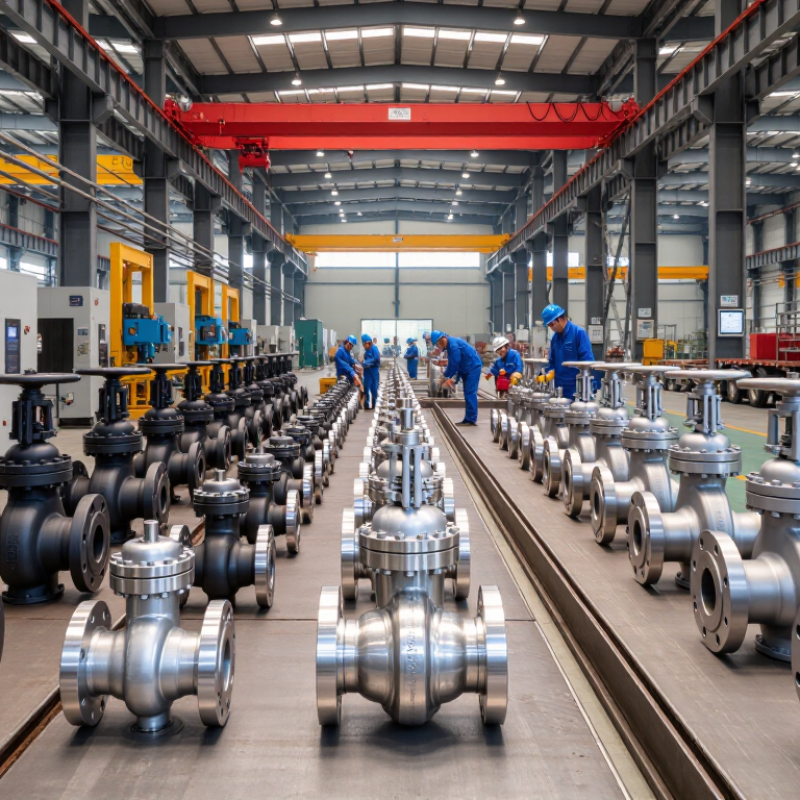
This demand creates strict expectations for every Oil And Gas Valve used in pipelines, refineries, LNG facilities, and storage terminals. A valve may look simple on a drawing. In service, it must withstand pressure, temperature changes, corrosive media, vibration, and repeated operation. Small sealing failures can cause shutdowns, product loss, or serious safety concerns. That matters.
This article examines China’s top 10 oil and gas valve manufacturers through practical and technical criteria. These include manufacturing capability, pressure-class coverage, material traceability, testing facilities, certification records, export experience, and after-sales support. API Spec 6D, API 598, and ISO 14313 provide important reference points for pipeline valve design and inspection. However, certification alone does not prove consistent field performance.
The ranking should therefore be viewed as a useful purchasing reference, not an absolute judgment. Public information can be incomplete, and customer requirements differ by project. A refinery may prioritize fire-safe ball valves, while an LNG terminal may focus on cryogenic performance and fugitive-emission control. Site audits and document reviews remain essential. Some manufacturers look impressive on paper. Their real capabilities deserve closer verification.
China’s oil and gas base remains substantial. In 2023, crude oil output reached 208.9 million tonnes, according to national production data. This volume supports refineries, storage terminals, pipelines, and offshore platforms. Each facility depends on valves that control pressure, flow, isolation, and emergency shutdowns.
A practical review of China’s top ten oil and gas valve manufacturers should examine more than production capacity. Engineers usually check pressure ratings, material traceability, sealing performance, and testing records. Carbon steel, stainless steel, and corrosion-resistant alloys serve different operating conditions.
For offshore service, salt spray and vibration can expose weak designs quickly. For pipelines, low-temperature toughness and reliable actuation deserve close attention.
Factory experience also matters. A capable manufacturer should provide documented testing, clear maintenance guidance, and responsive technical support. Site audits can reveal details that brochures omit, such as machining accuracy and inspection discipline. Some suppliers appear strong on paper but offer limited field evidence. That deserves caution.
Buyers should compare certifications, project references, delivery consistency, and spare-part access before approval. China’s expanding production base creates opportunity, but quality is not automatically uniform. Small design differences can affect shutdown speed, leakage control, and long-term operating costs.
China’s natural gas sector reached 232.4 billion cubic metres of production in 2023. This figure shows why dependable valves matter across gathering stations, transmission lines, storage facilities, and city networks. Every valve must manage pressure, temperature, corrosion, and repeated operation. Small leakage can create energy loss and serious maintenance costs.
A practical review of China’s top 10 oil and gas valve manufacturers should examine more than production capacity. Engineers should check pressure-testing records, material traceability, emergency shutoff performance, and experience with natural gas applications. Gate, ball, check, and control valves serve different duties. A valve designed for clean pipeline gas may perform poorly in sour or contaminated conditions. Standards compliance also needs verification, including applicable Chinese and international requirements.
Factory audits can reveal details that brochures often omit. Look for calibrated test equipment, skilled assembly workers, spare-part planning, and documented inspection procedures. Delivery reliability matters too, especially for remote compressor stations. No ranking is perfect. Public data may be incomplete, and a large supplier may not suit every project. I would compare failure records, service response, and lifecycle cost before selecting a manufacturer. The cheapest quotation can become expensive after one difficult shutdown. Safety margins deserve careful review.
China produced 232.4 billion cubic metres of natural gas in 2023, highlighting sustained demand for gas infrastructure, pipelines, processing facilities and industrial valves.
Annual natural gas production increased from approximately 176.1 bcm in 2019 to 232.4 bcm in 2023. Source: China National Bureau of Statistics.
China’s top 10 oil and gas valve manufacturers should be ranked by verified evidence, not factory size alone. API 6D certification shows whether a manufacturer meets pipeline valve requirements, including design, testing, and documentation controls. ISO 9001 certification supports process consistency, but it does not prove product performance. The API Composite List and valid certificate records provide a stronger starting point than promotional claims. Independent audits still matter.
Capacity should include production lines, pressure-testing stations, machining equipment, and annual output. These details are often self-reported. That is a weakness. Public factory records, audit reports, and procurement disclosures can improve reliability. Export performance can be compared through UN Comtrade data under HS 8481, which covers valves and similar appliances. However, this code includes products beyond oil and gas valves. The ranking must adjust for that limitation.
A practical scoring model could assign 35% to API 6D evidence, 20% to ISO 9001 and related quality systems, 25% to verified manufacturing capacity, and 20% to export value, destination diversity, and shipment continuity. The ISO Survey provides useful context on global ISO 9001 adoption. UN Comtrade adds measurable trade data. Certification alone is not enough. Numbers can mislead.
The strongest candidates show traceable testing records, stable export activity, and realistic capacity claims. That combination is more useful than a glossy catalog. Industry buyers should recheck certificates before placing orders. Data changes.
China Top 10 Oil And Gas Valve Manufacturers?
China has a deep manufacturing base for upstream, midstream, and LNG valve projects. A credible top-ten review should examine more than factory size. It should assess design experience, pressure-class capability, material control, testing depth, and after-sales support. Upstream operators often require gate, globe, check, ball, and choke valves for wellheads and processing units. These products must handle erosion, sour service, pressure cycling, and unstable field conditions.
Midstream projects need dependable pipeline valves, emergency shutdown systems, and pigging-compatible designs. Certification against API 6D, API 6FA, ASME B16.34, and relevant project specifications can strengthen technical confidence. Manufacturing records should include heat-number traceability, positive material identification, non-destructive testing, pressure tests, and documented factory acceptance tests. Small gaps matter.
LNG projects demand stricter control. Cryogenic valves may operate near minus 196 degrees Celsius, where sealing materials and body contraction become critical. Extended bonnets, low-emission packing, cryogenic testing, and clean assembly areas deserve close attention. Engineers should also review ISO 15848 performance and suitable cryogenic test evidence. A ranking is never absolute. Some suppliers excel in large pipeline valves but show weaker LNG experience. Others offer strong engineering yet limited overseas service coverage. That difference should remain visible during vendor evaluation.
China Top 10 Oil and Gas Valve Manufacturers?
Pressure class is only the starting point when comparing oil and gas valves. ASME B16.34 covers pressure-temperature ratings from Class 150 to Class 2500. The correct selection depends on temperature, wall thickness, fluid composition, and body material. A Class 600 valve may perform poorly if corrosion allowance is underestimated.
Pressure is not everything. Carbon steel suits many standard hydrocarbon services, while stainless steel and duplex alloys offer stronger resistance to chlorides and sour environments. NACE MR0175/ISO 15156 provides material guidance for hydrogen sulfide exposure. For pipeline service, API 6D also addresses design, testing, and functional requirements. Small details matter, especially trim hardness and sealing surface finish.
Actuation changes operating risk. Pneumatic systems respond quickly and can support fail-safe shutdowns, while electric actuators simplify remote control. Hydraulic units provide high torque for large valves but require careful fluid management. ISO 15848-1 classifies fugitive emissions, and API 624 or API 641 testing commonly uses methane leakage limits near 100 ppm. The IEA Global Methane Tracker 2024 estimated about 120 million tonnes of methane emissions from fossil fuel operations in 2023. That figure makes packing design and live-loading more than paperwork. Field conditions decide. Testing data can still disappoint after installation, particularly when alignment, vibration, or maintenance quality is weak. Specification sheets often look precise; real plants are messier.
| Valve Category | Primary Oil & Gas Service | Typical Pressure Classes | Common Body Materials | Trim and Seat Materials | Typical Actuation | Applicable Design Standards | Leakage, Fire, and Emission Standards |
|---|---|---|---|---|---|---|---|
| 1. Floating Ball Valve | Process isolation, natural gas, refined products, and general hydrocarbon service. | ASME Class 150, 300, and 600; selected designs are available in higher classes. | ASTM A216 WCB carbon steel; ASTM A351 CF8M stainless steel; ASTM A352 LCC for low-temperature service. | Stainless steel or alloy trim; PTFE, reinforced PTFE, PEEK, or fire-safe graphite seats. | Manual lever, pneumatic quarter-turn, electric quarter-turn, or hydraulic actuator. | API 6D or ASME B16.34; flanged ends commonly to ASME B16.5. | API 598 or ISO 5208 pressure testing; API 6FA or ISO 10497 fire testing; ISO 15848-1 for fugitive emissions where specified. |
| 2. Trunnion-Mounted Ball Valve | Pipeline transmission, custody-transfer isolation, high-pressure gas, and critical block-and-bleed service. | ASME Class 150 through 2500, depending on size, design, and service conditions. | ASTM A216 WCB; ASTM A352 LCC; ASTM A351 CF8M; forged carbon or stainless steel bodies for selected sizes. | Nickel-plated or stainless trim; metal-seated or resilient seats; tungsten carbide or other overlays for severe service. | Manual gearbox, pneumatic, electric, or hydraulic actuator; emergency shutdown systems may use spring-return actuators. | API 6D, ASME B16.34, and applicable pipeline specifications. | API 6D and API 598 testing; API 6FA or ISO 10497 fire-safe qualification; ISO 15848-1 or API 641 for fugitive emissions. |
| 3. Wedge Gate Valve | Mainline isolation, wellhead systems, refineries, petrochemical plants, and high-temperature process lines. | ASME Class 150, 300, 600, 900, 1500, and 2500. | ASTM A216 WCB; ASTM A352 LCC; ASTM A351 CF8M; forged bodies for compact high-pressure designs. | 13% chromium stainless steel, 316 stainless steel, or hardfaced trim; graphite packing and gasket systems. | Handwheel, bevel gearbox, electric actuator, pneumatic actuator, or hydraulic actuator for large sizes. | API 600 for bolted-bonnet steel gate valves; API 6D for pipeline valves; ASME B16.34. | API 598 or ISO 5208; API 6FA or ISO 10497 fire testing; ISO 15848-1 for low-emission packing and stem performance. |
| 4. Forged Gate Valve | High-pressure and high-temperature piping, small-bore process lines, steam, and instrument isolation. | ASME Class 150 through 1500; Class 2500 is used for selected high-pressure designs. | ASTM A105 carbon steel; ASTM A182 F316/F316L stainless steel; ASTM A350 LF2 low-temperature carbon steel. | 13% chromium, 316 stainless steel, or cobalt-based hardfacing for severe applications. | Handwheel, gear operator, electric actuator, or pneumatic actuator. | API 602 and ASME B16.34; socket-weld or threaded ends may follow ASME B16.11. | API 598 or ISO 5208; API 6FA or ISO 10497 when fire-safe service is required; ISO 15848-1 for fugitive emissions. |
| 5. Globe Valve | Throttling, flow regulation, bypass systems, steam service, and pressure-control duties. | ASME Class 150, 300, 600, 900, and 1500; higher classes are available for specialized services. | ASTM A216 WCB; ASTM A217 WC6/WC9 for elevated temperature; ASTM A351 CF8M for corrosive service. | Stainless steel or hardfaced plug and seat; graphite packing for high-temperature service; PTFE options for low-temperature duty. | Handwheel, pneumatic diaphragm or piston actuator, electric actuator, or hydraulic actuator. | ASME B16.34; API 623 for bolted-bonnet steel globe valves; applicable end standards include ASME B16.5 and B16.25. | API 598 or ISO 5208; API 6FA or ISO 10497 where fire-safe qualification is required; ISO 15848-1 for stem emissions. |
| 6. Butterfly Valve | Large-diameter water injection, gas transmission, air, low-pressure hydrocarbon, and utility isolation. | ASME Class 150 and 300 are common; Class 600 and higher are available for selected high-performance designs. | Carbon steel, ductile iron for compatible non-hydrocarbon services, stainless steel, or duplex stainless steel. | 316 stainless steel, duplex stainless steel, nickel alloy, PTFE, elastomer, or metal-seated trim. | Manual lever or gearbox, pneumatic quarter-turn, electric quarter-turn, or hydraulic actuator. | API 609; ASME B16.34; wafer, lug, and flanged dimensions depend on the selected design and piping standard. | API 598 or ISO 5208; API 607 or API 6FA fire testing for applicable designs; ISO 15848-1 for stem emissions when specified. |
| 7. Swing Check Valve | Backflow prevention in pipelines, pump discharge lines, compressors, and refinery process systems. | ASME Class 150, 300, 600, 900, and 1500; higher classes are available for special applications. | ASTM A216 WCB; ASTM A352 LCC; ASTM A351 CF8M; forged or cast alloy steel for severe service. | Stainless steel hinge and disc trim; resilient or metal-to-metal seating; hardfacing for erosive service. | Normally self-actuated by flow; optional hydraulic dashpot, counterweight, or closing assist. | API 594 for wafer and dual-plate check valves; API 6D for pipeline check valves; ASME B16.34. | API 598 or ISO 5208; API 6FA, ISO 10497, or API 607 depending on the valve construction and fire-safe requirement. |
| 8. Dual-Plate Check Valve | Compact backflow protection, pump discharge, offshore modules, and space-limited piping systems. | ASME Class 150 through 1500; Class 2500 designs are available for selected sizes. | Carbon steel, stainless steel, duplex stainless steel, or nickel-alloy body materials. | 316 stainless steel, duplex, nickel alloy, elastomer inserts, or metal seats for high-temperature service. | Self-actuated; spring-assisted closure is common, with optional hydraulic damping for surge control. | API 594 and ASME B16.34; face-to-face dimensions are commonly specified under API 594. | API 598 or ISO 5208; API 6FA or ISO 10497 where fire-safe performance is required; seat leakage class depends on the design. |
| 9. Plug Valve | Gathering systems, dirty service, abrasive hydrocarbons, fuel gas, and frequent isolation operations. | ASME Class 150, 300, 600, and 900; higher classes are available for specialized pipeline applications. | Carbon steel, stainless steel, ductile iron for suitable services, or alloy steel. | Lubricated metal plug, sleeved plug, PTFE, reinforced polymer, or corrosion-resistant alloy overlay. | Manual gearbox, pneumatic quarter-turn, electric actuator, or hydraulic actuator. | API 6D for pipeline plug valves; API 599 for metallic plug valves; ASME B16.34. | API 598 or ISO 5208; API 6FA or ISO 10497 fire testing; ISO 15848-1 or API 641 for fugitive emissions where applicable. |
| 10. Cryogenic Valve | LNG, liquefied gases, low-temperature hydrocarbon storage, and cryogenic transfer systems. | Commonly ASME Class 150, 300, and 600; pressure class and temperature rating must be checked together. | ASTM A351 CF8M or CF3M stainless steel; forged austenitic stainless steel; nickel alloy for selected services. | 316L stainless steel, nickel alloy, PTFE, PCTFE, PEEK, or other qualified low-temperature seat materials. | Extended-stem manual, pneumatic, electric, or hydraulic actuation; stem extensions keep packing above the cold zone. | BS 6364 for cryogenic valves; ASME B16.34; API 6D may apply to pipeline cryogenic designs. | ISO 5208 or API 598 pressure testing; ISO 15848-1 for fugitive emissions; fire testing such as ISO 10497 where required by the project. |
„Thanks to the LUVIR technology, the solder resist process could be switched directly from the previously used mask exposure to direct exposure. As an outstanding digital solution on the market, this technology has been able to demonstrate fast process times and superior quality on our certified conventional ink in production. This allowed us to fully digitize the solder mask process at low cost – without process or ink adjustments. An excellent benefit to our production in Rot am See.“
Ralf Göhringer (Head of Production WE Rot am See)
I would definitely recommend the Limata machine and team for a future company purchase
Michael Greenaway
Compunetics Inc.
“The Limata ldi has been amazing!! Best thing we did was buy this machine”
Richard Brady
GM
Circuitlabs
“Since 2019, we have been running the Limata X1000 LDI system (including LUVIR for solder mask imaging) in daily production as an addition to our current process with film. The machine was capable of properly exposing Taiyo PSR-4000 BN (DI) solder mask types on normal to high-copper boards using a new and unique direct imaging process. The machine operating interface is very user friendly which allowed for a quick technical training curve. The pre-registration processing reduced several seconds of production time at every print. Limata support and service staff is incomparable. They supported our team every step of the way at basically any time of the day or night, with literally, an immediate response time, customizing the software interface to best fit our Operations and needs.
We have exposed more than 8,000 prints since end of October, on various solder mask colors and some resist film panels. Limata, has proven to be very capable and innovative. They are a strong contender in the industry.
We have very much enjoyed this project, and working with the team!
Thank you Limata for the continued support and being a part of our growth.”
Bill Sezate
Vice President, GM
Summit Interconnect
As a replacement to our current contact exposure process with film, the LIMATA X2000 system including LUVIR-Technology was capable of properly exposing non-LDI solder mask types using a direct imaging process. The machine offers cutting edge software with a very intuitive operating interface which allowed for quick technician training curve. The dual drawer system combined with pre-registration processing reduced several seconds of production time at every machine cycle. Limata support and service staff is world class. They added software patches to keep production running at shortest possible response times, customized the software interface to best fit our in-house Operations system, and even wrote a step-by-step machine processing manual. As a result of the project, we have exposed more than 16,000 times on various product types and solder mask brands/colors. Limata, in a very short timeframe as a company, has definitely shown they are truly innovative and will be challenging the industry of direct imaging for the top spot.
Kevin Beattie
Process Engineer
TTM Technologies
Forest Grove Division
