Coffee habits are changing, and small tools now matter in kitchens, offices, and travel bags. The International Coffee Organization’s Coffee Report and Outlook estimated global coffee consumption at about 177 million 60-kilogram bags in 2023/24. In the United States, the National Coffee Association’s 2024 National Coffee Data Trends report found that 67% of adults had coffee in the past day. These figures show sustained demand for coffee, though they do not prove demand for any single accessory. That distinction matters.
A Portable Milk Frother offers a quick way to add foam without a countertop machine. For buyers, the useful details are concrete: whisk design, motor consistency, battery type, cleaning access, and packaging protection. A supplier’s product photos may look polished. Ask for test records, sample units, and clear specifications before comparing quotations. Small differences matter. A whisk that is awkward to rinse can become a daily annoyance.
This guide examines ten suppliers in China through practical sourcing questions, not broad promises. It considers product range, customization options, communication, and evidence of quality control. Public company information can help, but it cannot replace independent checks or hands-on testing. Some details may change, and supplier claims deserve scrutiny. The goal is a grounded shortlist for importers, retailers, and brands seeking a reliable frother partner—not a guarantee that every listed product will suit every market.
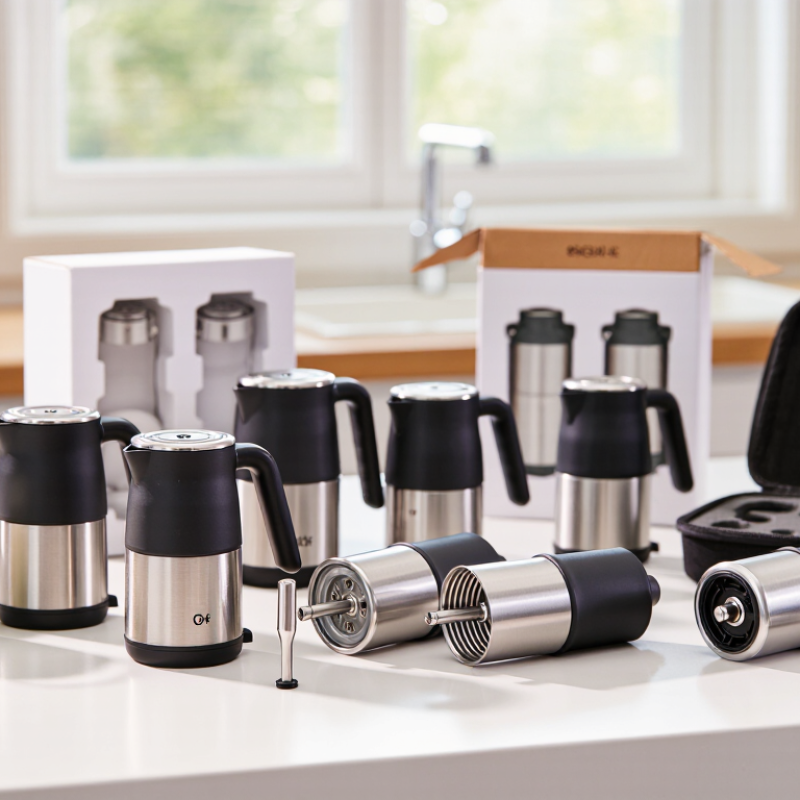
China Top 10 Portable Milk Frother Suppliers
Portable Milk Frothers in China: Product and Industry Overview
China’s portable milk frother sector draws on established small-appliance and component supply networks. Many suppliers offer compact handheld models for home kitchens, cafés, and travel. A typical unit combines a stainless-steel whisk, a slim shaft, and a battery-powered motor. Some models use replaceable batteries; others recharge through a USB port. Small details matter. A comfortable button, balanced grip, and easy-to-clean whisk can make daily use noticeably simpler.
Supplier capabilities vary. Some focus on assembly, while others coordinate motor sourcing, housing production, packaging, and inspection. Buyers should compare more than appearance and quoted price. Ask about motor consistency, battery performance, spare parts, and the checks performed before shipment. A polished sample does not prove that every production batch will perform the same. Not always. Clear specifications and repeatable testing help reduce that uncertainty.
For a practical assessment, run the frother in a cup of cold milk and note the foam texture, vibration, and noise. Check whether the whisk bends during ordinary cleaning and whether the charging connection feels secure. Request product drawings, material details, and written inspection criteria where available. These checks are not glamorous, but they reveal useful differences between suppliers. Some performance claims may still be difficult to compare unless testing conditions are stated.
China Top 10 Portable Milk Frother Suppliers
How to Evaluate Chinese Portable Milk Frother Suppliers
A supplier’s sample should perform beyond a quick countertop demo. Test cold and warm milk, different fill levels, and repeated cycles. Record foam volume, mixing time, noise, battery life, and cleaning effort. Small details matter. Ask for the motor specification, battery capacity, food-contact material declarations, and inspection records. Check whether production samples match the approved sample.
Grand View Research’s Small Kitchen Appliances Market report forecasts 4.8% annual growth from 2024 to 2030. This broader category is not a direct measure of frother demand, but it signals a competitive market where consistent quality matters. Compare suppliers using the same test conditions. Review their defect records, production capacity, lead times, and response to corrective actions. Request relevant test reports, then confirm their scope and validity with the issuing laboratory. Requirements vary by destination market.
Tips: Test at least three units from different production batches, not just hand-picked samples. Ask for a written battery-life method and check the results yourself. I would not overrate polished packaging; it can hide weak whisk performance. A clear, specific answer about a failed test is often more useful than a perfect sales presentation.
Suggested buyer-side evaluation weights (%) for comparing suppliers. These are planning guidelines, not measured ratings of specific companies.
Prioritize product quality and safety, then verify manufacturing capability and relevant compliance documents. Adjust the weighting to fit your product requirements, sales markets, and order volume.
China’s portable milk frother suppliers vary in product focus and manufacturing approach. These ten profiles offer a practical way to compare capabilities without assuming every factory suits every buyer. One supplier type specializes in compact handheld models for home use. Another focuses on stainless-steel shafts and easy-clean attachments. A third offers rechargeable frothers with USB charging. A fourth develops simple battery-powered designs for travel. Small details matter.
A fifth profile emphasizes private-label production and custom packaging. A sixth may support several handle colors and surface finishes. A seventh focuses on accessories, such as stands and replacement whisks. An eighth offers broader kitchen-appliance production, which can help with coordinated product sourcing. A ninth profile is geared toward export orders and routine quality checks. A tenth may be a smaller workshop offering flexible development, though production capacity should be checked carefully.
These descriptions are supplier categories, not verified rankings or claims about specific factories. Request product samples and compare whisk speed, foam texture, noise, battery life, and cleaning effort. Ask for clear specifications and recent inspection records, then confirm that quoted details match the sample. A frother can look polished in photos yet feel unbalanced in hand. That gap deserves attention. Factory visits or independent inspections may provide further evidence, but they take time and add cost. A careful comparison should weigh consistency, communication, and after-sales support alongside price.
| Profile | Typical Supplier Focus | Common Product Configuration | Power Options | Typical Materials | Customization Areas | Best-Fit Buyers | Details to Confirm Before Ordering |
|---|---|---|---|---|---|---|---|
| Profile 1 | Small-appliance OEM with a broad handheld beverage-tool range | Single whisk head; compact handheld body; one- or two-speed designs are commonly offered | Replaceable batteries or USB-rechargeable models, depending on the product design | ABS or PP body; stainless-steel whisk shaft and wire coil | Housing color, logo placement, packaging, speed settings, and accessory selection | Importers seeking a standard everyday frother with private-label options | Battery type, charging method, whisk material, included accessories, and applicable test reports |
| Profile 2 | Kitchenware manufacturer focused on entry-level drink-preparation tools | Lightweight single-button model designed for milk foam, coffee, and simple mixing | Often offered in battery-powered and rechargeable versions | Plastic handle with stainless-steel whisk components | Color matching, logo printing, retail box design, and bundled stands | Value-focused retailers and distributors building a basic kitchen-accessory range | Actual motor performance, operating instructions, packaging dimensions, and carton quantity |
| Profile 3 | Rechargeable personal-appliance supplier | Handheld frother with an integrated rechargeable power source and charging port | USB charging; connector and battery capacity vary by model | ABS or similar molded housing; stainless-steel whisk head | Charging cable, color, logo, gift packaging, and control layout | Online sellers and brands prioritizing cordless convenience | Battery capacity, charging time, runtime, charging-port specification, and shipping requirements |
| Profile 4 | Supplier specializing in multi-speed handheld frothers | Models may offer multiple speed settings for different foaming or mixing tasks | Battery-powered or rechargeable, depending on the selected model | Plastic handle; stainless-steel shaft and whisk coil | Speed controls, colorways, logo application, and bundled whisk options | Buyers looking for more than a basic single-speed product | Speed selection method, usable performance with different liquids, and product-specific test results |
| Profile 5 | Stainless-steel and kitchen-accessory producer offering frother assemblies | Portable motor handle paired with a metal whisk shaft or interchangeable attachments | Configurations vary; confirm whether batteries are included | Stainless-steel whisk components with a molded handle | Attachment design, finish, handle color, and accessory packaging | Kitchenware wholesalers seeking coordinated beverage-preparation accessories | Steel grade declaration, corrosion resistance, attachment fit, and cleaning instructions |
| Profile 6 | Compact-appliance supplier with an emphasis on gift and retail presentation | Portable frother supplied as a single item or as part of a small coffee-accessory set | Battery or USB-rechargeable options may be available | Plastic housing and stainless-steel whisk components | Gift box, color, printed inserts, logo, and accessory bundle | Gift shops, seasonal promotions, and branded merchandise buyers | Packaging artwork approval, bundle contents, labeling, and protection during transport |
| Profile 7 | OEM/ODM supplier supporting customized product appearance | Portable handheld format with product details dependent on the selected platform | Power system is model-specific and should be confirmed in the quotation | Commonly molded plastic body with metal whisk components | Industrial design, color, logo, packaging, and selected functional features | Established brands seeking a differentiated private-label product | Tooling ownership, development schedule, sample approval, and production-change controls |
| Profile 8 | Export-oriented small-appliance supplier | Portable frother models intended for retail or distributor orders | Available power configuration depends on the chosen SKU | Plastic body; stainless-steel whisk shaft and coil are common | Export packaging, manuals, labels, color, and logo placement | Importers requiring export documentation and market-specific packaging | Destination-market compliance, plug or charging details where relevant, and carton specifications |
| Profile 9 | Supplier combining handheld frothers with other coffee-preparation accessories | Frother offered alongside items such as coffee tools or small kitchen accessories | Battery-powered and rechargeable product types may appear in the range | Materials vary by model; metal whisk components are commonly used | Accessory bundles, coordinated colors, logo, and retail packaging | Distributors seeking a broader coffee-accessory assortment from one sourcing channel | Whether products are made in-house or sourced, component consistency, and combined-order terms |
| Profile 10 | Flexible supplier serving small-batch customization and product sampling requests | Existing portable-frother platform adapted to the buyer’s selected options | Confirm the exact battery or charging configuration for each quoted model | Typically a molded handle with a stainless-steel whisk assembly | Sample configuration, logo, color, packaging, and selected accessories | Start-ups and smaller buyers validating a product before larger orders | Minimum order quantity, sample charges, lead time, customization limits, and repeat-order consistency |
| These are anonymized, representative supplier capability profiles rather than named or independently ranked companies. Product configurations and materials are common market options, not verified specifications for any individual supplier. Confirm model-level specifications, certifications, pricing, minimum order quantities, and production capability directly with each prospective supplier. | |||||||
When comparing China’s portable milk frother suppliers, look beyond advertised speed and price. Ask for the whisk head’s diameter, shaft material, battery capacity, and measured operating time. A frother that spins quickly may still leave large bubbles in a small cup. Small details matter.
Manufacturing capability shows in repeatability. Request samples from different production batches and test them with cold milk, warm milk, and a full battery charge. Check whether the motor slows under load, the button feels secure, and the shaft stays straight. Ask how incoming parts are inspected and how finished units are tested. Ask for evidence. A supplier’s stated monthly capacity is useful, but confirm lead times for your order size and packaging requirements.
Certifications should match the product and destination market. Review current documents, issuing bodies, model numbers, and test scope rather than relying on a logo in a brochure. Quality-management certificates can indicate process controls, but they do not prove every frother performs well. That distinction is easy to miss. Some suppliers may provide detailed records only after a request, so build document checks into your comparison. Even then, a brief factory audit or third-party inspection can reveal gaps that a polished sample will not.
Selecting a portable milk frother supplier in China takes more than comparing catalog photos. Ask whether the supplier manufactures the unit or coordinates production through another factory. Request clear specifications for motor speed, battery capacity, whisk material, charging method, and product dimensions. Small details matter. A neat sample may still hide inconsistent assembly or a weak switch.
Test samples with the drinks your customers are likely to use. Check foam texture, operating noise, charging time, and battery performance over repeated cycles. Ask for a written quality plan, inspection records, and test reports that match the exact model. Verify any required certifications for your destination market with the relevant testing body. This step is easy to rush. I would not treat a general certificate as proof that every version is covered.
Before placing an order, confirm the minimum quantity, production lead time, packaging details, spare-part availability, and agreed defect-handling process. Put product tolerances and inspection criteria in writing. Compare quotations carefully; a lower price may exclude testing, protective packaging, or final inspection. Request a pre-shipment inspection for larger orders, and keep approved samples for comparison. Even then, defects can occur, so leave time for review and rework.
„Thanks to the LUVIR technology, the solder resist process could be switched directly from the previously used mask exposure to direct exposure. As an outstanding digital solution on the market, this technology has been able to demonstrate fast process times and superior quality on our certified conventional ink in production. This allowed us to fully digitize the solder mask process at low cost – without process or ink adjustments. An excellent benefit to our production in Rot am See.“
Ralf Göhringer (Head of Production WE Rot am See)
I would definitely recommend the Limata machine and team for a future company purchase
Michael Greenaway
Compunetics Inc.
“The Limata ldi has been amazing!! Best thing we did was buy this machine”
Richard Brady
GM
Circuitlabs
“Since 2019, we have been running the Limata X1000 LDI system (including LUVIR for solder mask imaging) in daily production as an addition to our current process with film. The machine was capable of properly exposing Taiyo PSR-4000 BN (DI) solder mask types on normal to high-copper boards using a new and unique direct imaging process. The machine operating interface is very user friendly which allowed for a quick technical training curve. The pre-registration processing reduced several seconds of production time at every print. Limata support and service staff is incomparable. They supported our team every step of the way at basically any time of the day or night, with literally, an immediate response time, customizing the software interface to best fit our Operations and needs.
We have exposed more than 8,000 prints since end of October, on various solder mask colors and some resist film panels. Limata, has proven to be very capable and innovative. They are a strong contender in the industry.
We have very much enjoyed this project, and working with the team!
Thank you Limata for the continued support and being a part of our growth.”
Bill Sezate
Vice President, GM
Summit Interconnect
As a replacement to our current contact exposure process with film, the LIMATA X2000 system including LUVIR-Technology was capable of properly exposing non-LDI solder mask types using a direct imaging process. The machine offers cutting edge software with a very intuitive operating interface which allowed for quick technician training curve. The dual drawer system combined with pre-registration processing reduced several seconds of production time at every machine cycle. Limata support and service staff is world class. They added software patches to keep production running at shortest possible response times, customized the software interface to best fit our in-house Operations system, and even wrote a step-by-step machine processing manual. As a result of the project, we have exposed more than 16,000 times on various product types and solder mask brands/colors. Limata, in a very short timeframe as a company, has definitely shown they are truly innovative and will be challenging the industry of direct imaging for the top spot.
Kevin Beattie
Process Engineer
TTM Technologies
Forest Grove Division
