Sensor Street Light systems are reshaping how cities illuminate roads, pathways, parking areas, and public spaces. They combine LED efficiency with motion, radar, infrared, or daylight sensors. The result can be brighter streets with less wasted electricity.
The U.S. Department of Energy reports that LED lighting can reduce energy consumption by 50% or more compared with conventional technologies. Its municipal solid-state lighting guidance also highlights lower maintenance costs and longer service life. The International Energy Agency identifies lighting as a major electricity-use category worldwide. These findings support stronger demand for intelligent street lighting. However, performance depends on installation quality, sensor calibration, weather resistance, and local traffic patterns.
The smart lighting market is expanding rapidly, according to MarketsandMarkets. Its research includes connected controls, networked fixtures, and urban monitoring platforms. This growth creates opportunities for China’s manufacturers and suppliers. It also creates uncomfortable questions about product testing and after-sales support.
Eric Rondolat, CEO of Signify, has described connected lighting as “the backbone of the smart city.” That statement captures the technology’s wider potential. A reliable Sensor Street Light can detect movement, dim empty roads, and report faults remotely. Imagine a quiet industrial road glowing softly until a vehicle approaches.
Small details matter.
A supplier should provide optical data, IP and IK ratings, sensor detection ranges, warranty terms, and compatibility information. Certifications alone are not enough. Buyers need evidence from real projects, not polished catalogues. This guide examines China’s leading Sensor Street Light manufacturers and suppliers through product capability, manufacturing experience, customization, quality control, and export reliability. Some claims remain difficult to verify. Careful comparison is still essential.
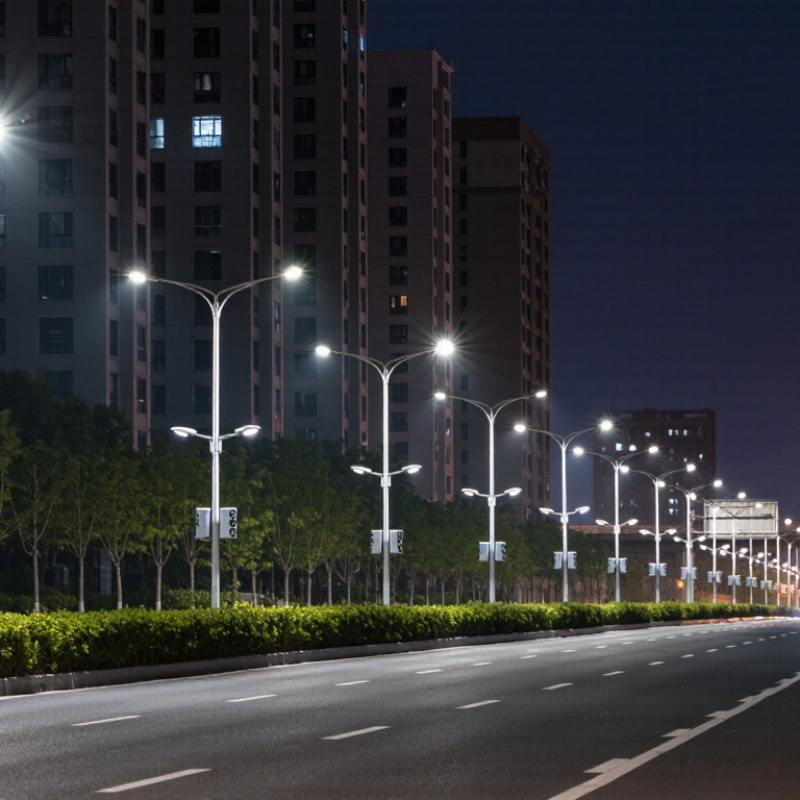
Sensor street lights combine LED luminaires with motion, presence, and daylight sensors. They brighten when pedestrians or vehicles enter a detection zone. They dim during quiet periods.
A passive infrared sensor detects heat movement from people or vehicles. Microwave sensors measure motion through reflected signals. Photocells read ambient brightness and prevent daytime activation. A controller then adjusts output, often through preset dimming levels. The International Energy Agency reports that lighting uses about 15% of global electricity. The U.S. Department of Energy also notes that advanced lighting controls can deliver meaningful energy savings, depending on usage and settings. Results vary by road design, traffic patterns, weather, and maintenance quality.
Tips: Set a short detection delay on narrow residential roads. Use longer delays near intersections and bus stops. Test winter clothing, rain, and cyclists before final installation. Keep sensors away from trees, signs, and reflective surfaces. Poor positioning causes false triggers. That small detail is often overlooked. Sensor systems are not perfectly intelligent. A quiet road may still need steady background lighting for safety and visual comfort. Field testing matters more than attractive specifications. One practical mistake is trusting laboratory detection ranges without checking poles, lane widths, and local night conditions. Sensor street light manufacturers and suppliers should provide tested photometric data, adjustment guidance, and clear maintenance procedures.
Chinese sensor street light manufacturers and suppliers offer a practical mix of engineering depth, production scale, and cost control. Many factories develop housings, optics, controllers, and sensor modules within coordinated supply networks. This shortens design changes. It also reduces communication gaps between mechanical and electrical teams. Buyers can request radar or PIR sensing, adjustable dimming, solar compatibility, and different mounting angles. These options suit residential roads, industrial parks, and rural lanes. Field experience matters here. A sensor that reacts too quickly can brighten for passing animals. A narrow detection zone can leave pedestrians in darkness. Good suppliers test these details, not only the lamp’s appearance.
Chinese suppliers commonly support sample orders before volume production. Buyers can inspect beam distribution, standby power, waterproof performance, and recovery after power interruptions.
Ask for photometric reports, IP test evidence, thermal data, and clear warranty terms. Independent verification remains wise. Factory photographs alone do not prove production capability. A reliable partner explains component tolerances, aging tests, and replacement procedures. It should also provide firmware settings in writing. This protects project teams when installers change or sensors need recalibration.
China’s mature electronics and lighting supply chain can shorten lead times and support competitive pricing. Local access to drivers, batteries, chips, and aluminum processing helps control revisions. Yet low price should not decide the purchase. Some quotations hide testing, packaging, or after-sales costs. That is a real risk. Compare complete landed costs and test samples in the intended climate. Coastal humidity, dust, winter temperatures, and road vibration can expose weaknesses. Even experienced buyers may overlook maintenance access. A thoughtful supplier welcomes those questions.
China Best Sensor Street Light Manufacturers and Suppliers
Key Technologies Used in Modern Sensor Street Lights
Modern sensor street lights combine LED optics, motion detection, ambient-light sensing, and wireless control. Radar and microwave sensors can detect bicycles and vehicles more consistently than passive infrared sensors in cold or windy conditions. Photocells measure dusk and dawn, while controllers adjust brightness automatically. The U.S. Department of Energy reports that networked lighting controls can reduce lighting energy use by up to 50%, depending on operating schedules, traffic, and installation quality.
Adaptive dimming is central to efficient street lighting. A fixture may remain at 30% brightness on an empty road, then rise to 100% when radar detects movement. The International Energy Agency’s Energy Efficiency 2023 report identifies efficient lighting as a major electricity-saving opportunity worldwide. However, the figure is never universal. Poor sensor placement, delayed communication, or glare from nearby signs can create false triggers. Field testing matters.
Modern systems may use wireless protocols, cloud dashboards, fault alerts, and remote power monitoring. Good manufacturers should provide measured data for detection range, response time, ingress protection, and dimming performance. A practical test should include rain, parked vehicles, pedestrians, and low winter temperatures. Specifications look clean on paper. Streets are less predictable.
A reliable evaluation begins with the product, not the sales brochure. Ask for sensor detection range, response time, dimming levels, and operating temperature. Request a working sample for outdoor testing. Check whether motion triggers smooth brightness changes, without sudden flashing. Measure energy use during quiet and busy periods. Small details often reveal engineering quality.
Inspect the supplier’s production controls and testing records. Look for traceable components, aging tests, waterproof checks, and photometric files. Confirm the light’s IP and IK ratings through suitable third-party reports. Verify electrical safety documents for your target market. A factory visit can show assembly discipline, storage conditions, and worker training. Photos are useful, but they are not proof.
Study warranty terms, spare-part access, delivery records, and technical support. Ask how failures are recorded and resolved. A dependable supplier explains limitations instead of promising perfect performance. Sensor lights may react differently in rain, fog, or heavy traffic. That uncertainty deserves field testing. No evaluation is perfect. I would compare at least two samples under identical conditions, because one impressive demonstration can hide inconsistent production.
Sensor street lights support roads, parking areas, residential lanes, and industrial entrances. They brighten only when movement, vehicles, or nearby activity is detected. This reduces energy use and limits unnecessary nighttime glare. Microwave and infrared sensors perform differently in rain, heat, dust, and crowded spaces. A careful site assessment matters more than choosing the most sensitive setting.
Installation should begin with a lighting plan, not a quick pole replacement. Mount the fixture at a suitable height, then aim the sensor toward the expected movement path. Avoid trees, reflective walls, exhaust outlets, and strong artificial lights. These objects may trigger false detection. Confirm cable protection, grounding, sealing, and structural strength before energizing the system. In practice, the first setting is rarely perfect. Traffic patterns change, and a second adjustment may be necessary.
Tips: Set detection range conservatively at first. Test the light during quiet and busy periods. Clean the sensor cover every few months, especially near dusty roads. Inspect bolts, wiring, seals, and battery performance during scheduled maintenance. Replace damaged parts promptly. Keep a simple service record. It reveals repeated faults, although many teams forget this step. Avoid testing only in daylight; nighttime results can expose glare, delayed activation, or dark gaps between fixtures.
„Thanks to the LUVIR technology, the solder resist process could be switched directly from the previously used mask exposure to direct exposure. As an outstanding digital solution on the market, this technology has been able to demonstrate fast process times and superior quality on our certified conventional ink in production. This allowed us to fully digitize the solder mask process at low cost – without process or ink adjustments. An excellent benefit to our production in Rot am See.“
Ralf Göhringer (Head of Production WE Rot am See)
I would definitely recommend the Limata machine and team for a future company purchase
Michael Greenaway
Compunetics Inc.
“The Limata ldi has been amazing!! Best thing we did was buy this machine”
Richard Brady
GM
Circuitlabs
“Since 2019, we have been running the Limata X1000 LDI system (including LUVIR for solder mask imaging) in daily production as an addition to our current process with film. The machine was capable of properly exposing Taiyo PSR-4000 BN (DI) solder mask types on normal to high-copper boards using a new and unique direct imaging process. The machine operating interface is very user friendly which allowed for a quick technical training curve. The pre-registration processing reduced several seconds of production time at every print. Limata support and service staff is incomparable. They supported our team every step of the way at basically any time of the day or night, with literally, an immediate response time, customizing the software interface to best fit our Operations and needs.
We have exposed more than 8,000 prints since end of October, on various solder mask colors and some resist film panels. Limata, has proven to be very capable and innovative. They are a strong contender in the industry.
We have very much enjoyed this project, and working with the team!
Thank you Limata for the continued support and being a part of our growth.”
Bill Sezate
Vice President, GM
Summit Interconnect
As a replacement to our current contact exposure process with film, the LIMATA X2000 system including LUVIR-Technology was capable of properly exposing non-LDI solder mask types using a direct imaging process. The machine offers cutting edge software with a very intuitive operating interface which allowed for quick technician training curve. The dual drawer system combined with pre-registration processing reduced several seconds of production time at every machine cycle. Limata support and service staff is world class. They added software patches to keep production running at shortest possible response times, customized the software interface to best fit our in-house Operations system, and even wrote a step-by-step machine processing manual. As a result of the project, we have exposed more than 16,000 times on various product types and solder mask brands/colors. Limata, in a very short timeframe as a company, has definitely shown they are truly innovative and will be challenging the industry of direct imaging for the top spot.
Kevin Beattie
Process Engineer
TTM Technologies
Forest Grove Division
