Choosing a Dust Proof Mask is not just a matter of comparing prices or counting product models. Buyers need to consider filtration claims, face-seal design, breathing resistance, material quality, and clear instructions for use. A mask that looks sturdy on a product page may still fit poorly around the nose or cheeks. Small details matter.
For this guide to China’s top 10 Dust Proof Mask manufacturers, we will examine publicly available product information, manufacturing capabilities, quality-control practices, and export experience. We will distinguish documented specifications from marketing language. Respiratory-protection specialist Dr. John Howard’s guidance can be summarized in one practical principle: select protection for the hazard, ensure a proper fit, and use it as intended. Fit matters. No supplier should be judged by a single brochure or an unverified ranking. Company information can change, and some details are difficult to confirm from a distance. That limitation deserves attention, not glossing over. The comparisons ahead aim to help procurement teams ask sharper questions, check evidence, and identify manufacturers suited to their needs.
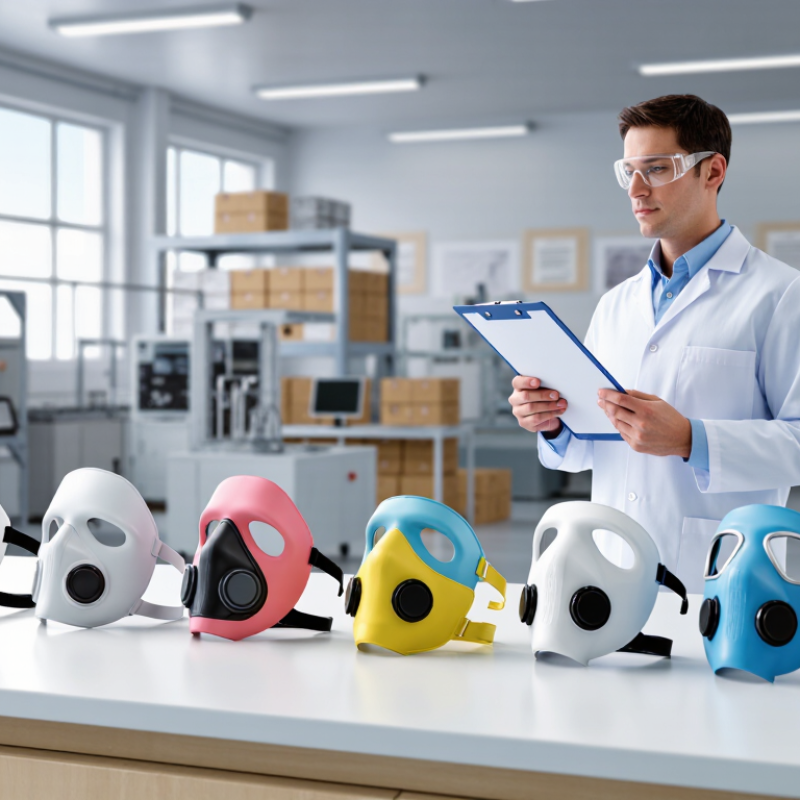
Dust-proof masks are designed to reduce inhalation of airborne particles such as sawdust, cement dust, and soil. They are commonly used in construction, woodworking, agriculture, and cleaning. The right mask depends on the particle type, its concentration, and how long a person is exposed. Fit matters. A mask that feels secure can still leak around the nose or cheeks, especially during movement.
In a workshop, fine particles may hang in the air after sanding, even when surfaces look clean. On a building site, cutting or mixing materials can create heavier clouds of dust. Different jobs call for different protection, so check the mask’s stated filtration level and relevant certification. Dust varies. A dust mask is not automatically suitable for gases, vapors, or every hazardous substance. For unclear risks, consult a qualified safety professional rather than guessing.
Tips: Check the seal before work, and adjust the nose clip and straps. Facial hair can interfere with a close fit. Replace a mask that is damp, damaged, or difficult to breathe through. Small gaps matter. A careful fit check takes seconds, but it is easy to skip when work gets busy.
Choosing among China’s top dust-proof mask manufacturers takes more than comparing unit prices. Check experience with the specific mask type, materials, and production volume you need. Ask for test reports that identify the exact model and testing conditions. A filtration figure without context is hard to assess. Look for documented checks on incoming materials, mask seals, batch coding, and rejected products. Good sign. Request samples from routine production, not a batch prepared only for evaluation. Compare several units for consistent shape, stitching, and fit.
Assess whether the manufacturer can explain its quality process clearly and provide realistic lead times. A factory visit, when practical, can help you observe material storage and production checks firsthand. Verify certificates and test reports with the relevant issuing organization, and confirm that they cover the product under review. Also discuss how complaints, defects, and production changes are handled. Not always simple. A polished presentation does not guarantee consistent output, and a smaller supplier may still have strong controls. Keep written records of questions, sample results, and agreed specifications. That paper trail can expose gaps before a large order is placed.
China Top 10 Dust Proof Mask Manufacturers?
These ten manufacturer profiles highlight different production strengths, rather than claiming a verified ranking. Some focus on molded cup masks; others make fold-flat designs or layered nonwoven products. Several specialize in high-volume orders, while smaller factories may offer more flexible customization. Other useful profiles include suppliers serving construction, woodworking, or general industrial applications. Their capabilities should be checked directly, not assumed from a catalog.
For buyers, compare filtration test documentation, material consistency, stitching or bonding quality, and production controls. Ask how batches are sampled and how defects are handled. The International Labour Organization estimated 2.93 million annual work-related deaths worldwide in its 2023 report, with about 2.6 million linked to work-related diseases. This is broad occupational-health data, not a measure of dust-mask performance. Still, it underlines why product claims need evidence. Fit matters. A well-made mask can still leak if its shape does not suit the wearer.
Tips: Request recent test reports and inspect samples under real working conditions. Check the seam. Confirm that the product’s stated use matches the task, and avoid relying on price alone. Supplier descriptions can be polished; independent documentation is more useful.
China’s Top 10 Dust-Proof Mask Manufacturers: Comparing Product Types, Certifications, and Capacity
A useful comparison starts with mask design, not a supplier’s ranking. Chinese factories commonly produce disposable cup-shaped and flat-fold filtering facepieces, as well as reusable half-masks with replaceable particulate filters. These serve different needs: fit, breathing resistance, service life, and replacement costs vary. Grand View Research valued the global respiratory protective equipment market at about US$11.5 billion in 2023 and forecast growth through 2030. That market figure signals demand, but it does not verify any factory’s performance.
Check product approvals against the destination market. GB 2626-2019 is a key Chinese standard for self-priming filtering respirators; exports may need separate approval, such as NIOSH certification under 42 CFR Part 84 or conformity with EN 149. These schemes are not interchangeable. Ask for current certificates, model numbers, test reports, and matching product labels. Small detail, big difference.
Capacity needs equally careful scrutiny. Compare production lines, monthly output, shift patterns, and documented quality checks; request recent evidence rather than relying on stated maximum capacity. A factory producing millions of units may still struggle with consistent fit or filter performance. Rated capacity can mislead. Site audits and sample testing help, though neither guarantees every shipment will match. The comparison should record what was independently verified and what remains supplier-reported.
When sourcing from a Chinese dust-mask manufacturer, verify the product before comparing prices. Ask for the exact model, intended use, and applicable standard. CDC/NIOSH guidance states that N95 respirators filter at least 95% of airborne particles under prescribed test conditions. For KN95 products, check whether the test report identifies GB 2626-2019 and confirms the required filtration class. These figures describe laboratory performance, not a guarantee of fit on every face.
Request a recent report from an independent, qualified laboratory, then match its model number and manufacturer details to the samples and packaging. Check batch traceability, filter-material specifications, and production records. Ask how the factory controls nose-clip placement and seal quality; small differences can matter. A clean factory tour is reassuring, but it proves little by itself. Review inspection logs and ask to see how rejected units are handled. If a supplier cannot explain a test result plainly, pause. I would also compare multiple production batches, because one good sample may not represent routine output. Keep written specifications and approval samples before placing a large order.
This is a ten-point supplier verification and sourcing checklist, not a ranked list of manufacturers. Requirements vary by destination market, product type, and intended use.
| No. | Verification Area | What to Request | How to Verify | Sourcing Decision |
|---|---|---|---|---|
| 1 | Company identity and manufacturing role | Business license, registered address, factory address, and a written description of which production steps are performed in-house. | Check the company’s registration details through China’s National Enterprise Credit Information Publicity System. Confirm that the legal entity on the license matches the entity on quotations, contracts, and invoices. | Clarify whether the supplier is a manufacturer, trading company, or a combination. Do not treat a trading address as proof of a production site. |
| 2 | Applicable product standard | The exact standard and edition claimed for each model. For Chinese non-powered particulate respirators, ask whether the product is tested to GB 2626-2019 and which class is claimed. | Check that the model, standard, class, manufacturer, and test samples in the supporting documents match the product being quoted. KN95 is a class under GB 2626; it is not the same designation as NIOSH-approved N95. | Specify the destination market and intended protection before comparing quotations. Do not compare products solely by a “95” label. |
| 3 | Test reports and laboratory scope | Complete, current test reports for the exact model, including report number, date, test results, sample identification, and laboratory details. | Contact the issuing laboratory using independently sourced contact details. If accreditation is claimed, check the laboratory’s accreditation scope and status with the relevant accreditation body; an accreditation logo alone is not proof. | Request clarification or independent testing if reports are incomplete, unverifiable, or refer to a different model or factory. |
| 4 | European Union conformity, when applicable | EU Declaration of Conformity, applicable EU type-examination certificate, and details of the conformity-assessment route for the respirator. | For PPE placed on the EU market, check the applicable requirements of Regulation (EU) 2016/425. Verify the notified body and its scope in the European Commission’s NANDO database, and confirm certificate details with the issuing body. | Confirm that the documents cover the exact product and that required production-surveillance arrangements are in place. A CE mark by itself does not demonstrate this. |
| 5 | U.S. NIOSH approval, when applicable | The NIOSH approval number and the complete approval details for any product represented as NIOSH-approved. | Search the NIOSH Certified Equipment List (CEL) and compare the approval holder, model, and configuration with the offered product. | Do not accept “N95 equivalent” as evidence of NIOSH approval. N95 is a NIOSH respirator classification; other standards use different test and approval systems. |
| 6 | Product specifications and intended use | Model-specific data sheet covering filtration classification, intended use, limitations, sizes, materials, and storage conditions. | Compare the data sheet with the test report, product labeling, instructions, and samples. Check that claims are consistent across all documents. | Particulate respirators are not automatically suitable for gases or vapors. Select protection based on the hazard assessment and the relevant market requirements. |
| 7 | Fit and wearer compatibility | Samples in the proposed styles and sizes, plus instructions for donning, seal checks, and use limitations. | Evaluate fit on intended users. Respirator fit depends on the wearer and model; a good filtration test result does not establish a good face seal for every person. | Arrange wearer fit testing where required by the applicable workplace rules. Do not rely on appearance or a one-size-fits-all claim. |
| 8 | Quality management and batch controls | Quality procedures, incoming-material checks, production inspection records, finished-product release criteria, and a sample batch record. | Review records during a factory audit or remote assessment. Check that production and inspection records can be linked to a specific model and lot. | Prefer suppliers able to explain and document how nonconforming products are identified, controlled, and corrected. |
| 9 | Traceability, packaging, and labeling | Artwork and packaging samples showing manufacturer details, model, applicable standard, lot or batch identification, date information where required, and instructions. | Cross-check the packaging and product markings against the approved documents and the destination market’s labeling rules. Confirm how a production lot can be traced back to records. | Approve final artwork and product identification before mass production. Treat unexplained differences between samples and shipment packaging as a hold point. |
| 10 | Commercial terms and pre-shipment controls | Written quotation, sample approval process, minimum order quantity, lead time, inspection terms, packaging details, and agreed remedies for nonconformity. | Place a small trial order where practical. Use a written purchase specification and consider independent pre-shipment inspection against the approved sample and documents. | Release bulk orders only after product, documentation, quality criteria, and delivery terms are agreed in writing. |
„Thanks to the LUVIR technology, the solder resist process could be switched directly from the previously used mask exposure to direct exposure. As an outstanding digital solution on the market, this technology has been able to demonstrate fast process times and superior quality on our certified conventional ink in production. This allowed us to fully digitize the solder mask process at low cost – without process or ink adjustments. An excellent benefit to our production in Rot am See.“
Ralf Göhringer (Head of Production WE Rot am See)
I would definitely recommend the Limata machine and team for a future company purchase
Michael Greenaway
Compunetics Inc.
“The Limata ldi has been amazing!! Best thing we did was buy this machine”
Richard Brady
GM
Circuitlabs
“Since 2019, we have been running the Limata X1000 LDI system (including LUVIR for solder mask imaging) in daily production as an addition to our current process with film. The machine was capable of properly exposing Taiyo PSR-4000 BN (DI) solder mask types on normal to high-copper boards using a new and unique direct imaging process. The machine operating interface is very user friendly which allowed for a quick technical training curve. The pre-registration processing reduced several seconds of production time at every print. Limata support and service staff is incomparable. They supported our team every step of the way at basically any time of the day or night, with literally, an immediate response time, customizing the software interface to best fit our Operations and needs.
We have exposed more than 8,000 prints since end of October, on various solder mask colors and some resist film panels. Limata, has proven to be very capable and innovative. They are a strong contender in the industry.
We have very much enjoyed this project, and working with the team!
Thank you Limata for the continued support and being a part of our growth.”
Bill Sezate
Vice President, GM
Summit Interconnect
As a replacement to our current contact exposure process with film, the LIMATA X2000 system including LUVIR-Technology was capable of properly exposing non-LDI solder mask types using a direct imaging process. The machine offers cutting edge software with a very intuitive operating interface which allowed for quick technician training curve. The dual drawer system combined with pre-registration processing reduced several seconds of production time at every machine cycle. Limata support and service staff is world class. They added software patches to keep production running at shortest possible response times, customized the software interface to best fit our in-house Operations system, and even wrote a step-by-step machine processing manual. As a result of the project, we have exposed more than 16,000 times on various product types and solder mask brands/colors. Limata, in a very short timeframe as a company, has definitely shown they are truly innovative and will be challenging the industry of direct imaging for the top spot.
Kevin Beattie
Process Engineer
TTM Technologies
Forest Grove Division
