Choosing a Gps Tracker Device in 2026 is less about finding the smallest box and more about matching its capabilities to a real need. A vehicle owner may care about reliable live updates, while a family may value a clear location history and a battery that lasts through a weekend trip. GPS pioneer Dr. Bradford Parkinson has described GPS as “a global utility.” That perspective is useful: location technology matters most when it works consistently in ordinary conditions.
Start by checking coverage, update frequency, battery life, and the full subscription cost. A tracker that refreshes every few seconds can drain power faster than one designed for occasional checks. Look closely at the app, too. Can you read the map outdoors in bright sunlight? Are alerts easy to understand? Small details matter. So does setup. A device that takes an hour to configure may not suit someone who needs a quick, dependable solution.
The sections ahead compare tracker types, connectivity, accuracy, privacy features, and ownership costs. They also explain how to judge specifications without treating impressive numbers as guarantees. Real-world performance can vary with buildings, terrain, network coverage, and device placement. No tracker is perfect. That deserves honest attention, not a footnote. By weighing practical tests and transparent product information, readers can choose a device suited to their routine rather than the boldest claim on a product page.
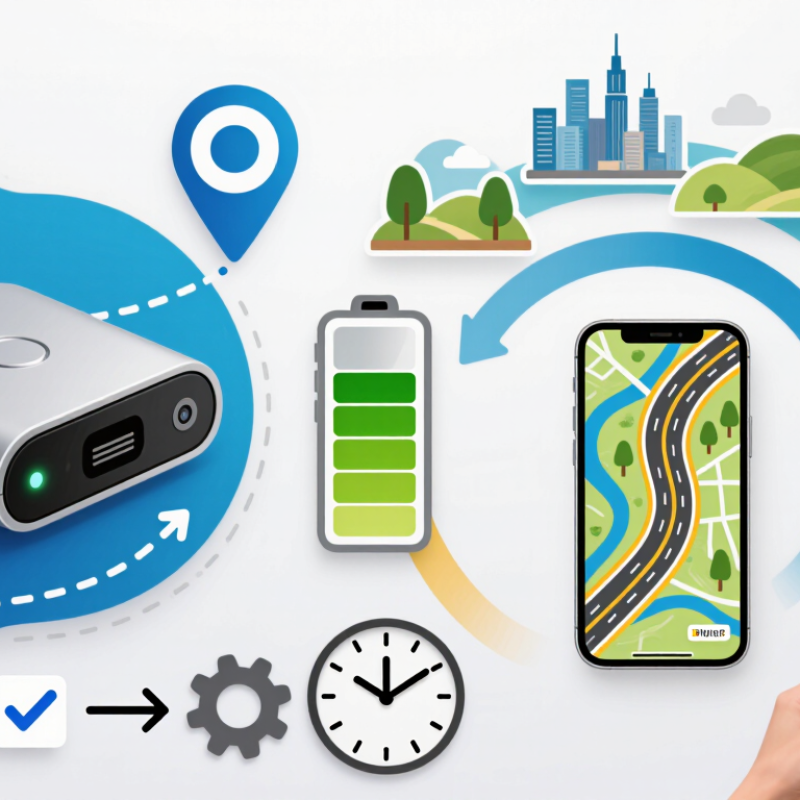
Before comparing GPS tracker devices in 2026, decide what you need to locate and how often. A tracker for a delivery vehicle may need frequent updates and reliable power. A small bag tracker may need to be lightweight, discreet, and easy to recharge. For outdoor equipment, check whether its casing can handle rain, dust, and bumps. Be specific. “Keep track of my gear” is less useful than “find a tool case across a large worksite.”
Think through the conditions, too. Will the device usually be indoors, on the road, or in areas with weak mobile coverage? How quickly must a location update arrive? Faster updates can use more battery, so the longest advertised battery life may not match your settings. Decide who needs access to location history and how long you actually need to keep it. It is tempting to want every feature, but extra complexity can make daily use harder. Reconsider your priorities before buying.
Tips: Write down three requirements and one deal-breaker. Estimate how often you can charge the device. Check its size beside the item it will track, and test the app’s location details before relying on them. Small details matter. A tracker that is accurate but left uncharged is not much help.
How to Choose a GPS Tracker Device in 2026
A GPS receiver calculates location; a connection sends that location to you. They are different jobs. Cellular trackers report through mobile networks and suit vehicles or equipment moving between covered areas. Check network availability, subscription costs, and battery life before choosing one. Frequent updates can drain a small battery quickly.
Bluetooth trackers use nearby phones or gateways to relay a location. They work best in busy places, not on isolated roads. Satellite-connected devices can report from remote areas, though plans and hardware may cost more. Dead zones happen. Some trackers combine connections, but added options do not guarantee uninterrupted updates.
Connectivity is expanding, but broad IoT figures are not tracker-specific. IoT Analytics’ State of IoT 2024 estimated 18.8 billion connected IoT devices worldwide by the end of 2024, up 13% year over year. GSMA Intelligence’s The Mobile Economy 2024 projected 5.8 billion licensed cellular IoT connections by 2030. These figures show a growing connected-device landscape, not a promise of coverage at your location. Compare the tracker’s supported networks with your actual routes, update needs, and charging routine. A small detail matters: a device reporting every few minutes may be less useful than one with a longer battery life and reliable coverage.
Compare tracker connectivity options by their representative peak link rates.
Rates show representative technology peak specifications, not typical field performance. BLE shows its 2M physical-layer rate; cellular figures show representative peak downlink rates. Actual speeds vary by device, network, and conditions. BLE needs a nearby phone or gateway to relay location data, while cellular trackers can connect directly where supported coverage is available. For most tracking updates, coverage, battery life, and reporting frequency matter more than peak speed.
How to Choose a GPS Tracker Device in 2026
Assess Coverage, Accuracy, Battery Life, and Durability
Check coverage where the tracker will actually be used, not just on a provider’s map. A device may work well outdoors but lose connection inside a vehicle, warehouse, or thick-walled building. Ask which networks it uses and whether coverage varies by region. Test it on your usual routes before relying on it. A short trial can reveal gaps that a map misses.
Accuracy depends on more than the tracker’s advertised specifications. Tall buildings, tree cover, and indoor use can shift location readings. Compare the device’s reported position with known landmarks at different times of day. Look for both the distance error and how quickly updates arrive. Don’t expect every reading to land on the exact spot.
Battery life is a trade-off. Frequent location updates can drain a small battery faster than occasional checks, so compare expected runtime under your planned settings. Check how easy it is to recharge or replace the battery. Then consider durability: inspect the water-resistance rating, casing, and charging-port cover. Think about rain, dust, vibration, and drops in everyday use. A rating alone is not a field test. One easy detail to overlook: a sturdy tracker is less useful if its battery is difficult to access.
A GPS tracker can reveal more than a route. It may store home addresses, daily routines, and timestamps. Before buying, check what data the provider collects, how long it keeps records, and whether you can delete them. Look for encryption, account access controls, and clear breach policies. That matters. A polished dashboard cannot prove every data path is secure, so read the privacy terms carefully.
Compare the full subscription cost, not just the device price. Check renewal dates, cancellation steps, roaming fees, and what happens when service ends. Some trackers lose features without a plan. Confirm coverage where you expect to use it, since weak signals can leave gaps. Use tracking only with clear permission and in ways allowed where you live. Rules vary by location and situation; check current local requirements before activating a device.
Tips: Test the tracker on a familiar trip and compare its timestamps with your phone. Review account permissions, use a unique password, and turn on extra sign-in protection if available. Keep only the history you need. One detail is easy to miss: shared accounts may expose location data to more people than intended.
Choosing a GPS tracker starts with the job, not the feature list. For a car, check motion alerts, trip history, and a reliable power source. For a trailer or equipment case, battery life and tamper alerts matter more. A tracker used on long routes needs dependable cellular coverage and clear roaming terms. IoT Analytics’ State of IoT 2024 report forecast 18.8 billion connected IoT devices worldwide by year-end 2024. More connected devices do not guarantee better tracking. They do make network and platform compatibility worth checking.
Confirm which cellular networks and bands the device supports, then compare them with coverage where it will travel. Check whether its SIM or eSIM works in those regions, and whether the app supports your phone’s operating system. GPS.gov notes that GPS-enabled phones can typically locate within about 4.9 meters under open sky; buildings, bridges, and trees can reduce accuracy. Indoors, expect gaps. I would not choose a tracker from a map screenshot alone.
Before buying, test the setup: place the device where it will actually sit, then check its update interval, alert delay, and battery use over several days. Read the data plan limits closely. A low-cost device can become inconvenient if location updates are slow or service requires an incompatible subscription. I still find battery estimates hard to judge from specifications alone. Check real-world reports, but treat them as clues, not guarantees.
„Thanks to the LUVIR technology, the solder resist process could be switched directly from the previously used mask exposure to direct exposure. As an outstanding digital solution on the market, this technology has been able to demonstrate fast process times and superior quality on our certified conventional ink in production. This allowed us to fully digitize the solder mask process at low cost – without process or ink adjustments. An excellent benefit to our production in Rot am See.“
Ralf Göhringer (Head of Production WE Rot am See)
I would definitely recommend the Limata machine and team for a future company purchase
Michael Greenaway
Compunetics Inc.
“The Limata ldi has been amazing!! Best thing we did was buy this machine”
Richard Brady
GM
Circuitlabs
“Since 2019, we have been running the Limata X1000 LDI system (including LUVIR for solder mask imaging) in daily production as an addition to our current process with film. The machine was capable of properly exposing Taiyo PSR-4000 BN (DI) solder mask types on normal to high-copper boards using a new and unique direct imaging process. The machine operating interface is very user friendly which allowed for a quick technical training curve. The pre-registration processing reduced several seconds of production time at every print. Limata support and service staff is incomparable. They supported our team every step of the way at basically any time of the day or night, with literally, an immediate response time, customizing the software interface to best fit our Operations and needs.
We have exposed more than 8,000 prints since end of October, on various solder mask colors and some resist film panels. Limata, has proven to be very capable and innovative. They are a strong contender in the industry.
We have very much enjoyed this project, and working with the team!
Thank you Limata for the continued support and being a part of our growth.”
Bill Sezate
Vice President, GM
Summit Interconnect
As a replacement to our current contact exposure process with film, the LIMATA X2000 system including LUVIR-Technology was capable of properly exposing non-LDI solder mask types using a direct imaging process. The machine offers cutting edge software with a very intuitive operating interface which allowed for quick technician training curve. The dual drawer system combined with pre-registration processing reduced several seconds of production time at every machine cycle. Limata support and service staff is world class. They added software patches to keep production running at shortest possible response times, customized the software interface to best fit our in-house Operations system, and even wrote a step-by-step machine processing manual. As a result of the project, we have exposed more than 16,000 times on various product types and solder mask brands/colors. Limata, in a very short timeframe as a company, has definitely shown they are truly innovative and will be challenging the industry of direct imaging for the top spot.
Kevin Beattie
Process Engineer
TTM Technologies
Forest Grove Division
