Every business faces unique challenges when it comes to maintaining cleanliness and air quality. Air Filtration Filter Paper offers a practical solution. This essential material effectively captures dust, allergens, and other contaminants. It plays a critical role in promoting a healthier workplace environment.
Choosing the right air filtration system is not always straightforward. Many factors influence its effectiveness, including filter material and design. Air Filtration Filter Paper stands out due to its superior performance and durability. Many professionals rely on its innovative features for optimal air quality.
Understanding your specific needs can enhance decision-making. While Air Filtration Filter Paper provides numerous benefits, continuous evaluation is crucial. You may find variability in performance across different environments. Adapting your approach based on real-world experiences could lead to better results.
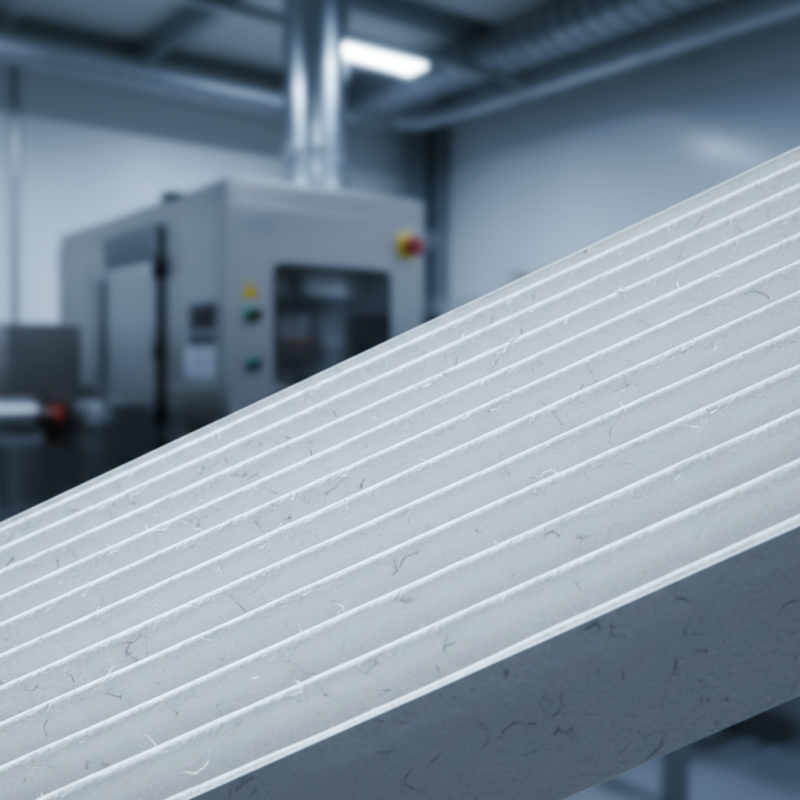
Air filtration filter paper is becoming essential in various industries. This material is designed to capture airborne particles efficiently. According to a report by the Environmental Protection Agency, indoor air can be five times more polluted than outdoor air. For industries focused on health and safety, such as healthcare and food processing, clean air is non-negotiable.
In the manufacturing sector, air filtration systems with high-quality filter paper can improve air quality. A study indicated that improving air quality can boost employee productivity by up to 15%. This is crucial for companies looking to enhance workforce efficiency while maintaining a safe working environment. Filter paper effectively traps dust, pollen, and even microbials, which can lead to improved product quality and reduced contamination risks.
However, it’s important to choose the right filter material for specific applications. Not every filter paper is suitable for all industrial needs. Some may face challenges in high-dust environments, becoming clogged quickly. Businesses must balance initial costs with long-term benefits, ensuring the filter paper aligns with operational demands. A thoughtful selection process can mitigate these pitfalls, driving better outcomes for air quality and safety.
| Industry | Application | Benefits | Filtration Efficiency |
|---|---|---|---|
| Healthcare | Air purification in hospitals | Reduces airborne pathogens | 99.97% at 0.3 microns |
| Manufacturing | Dust control in production areas | Improves equipment lifespan | 95% at 10 microns |
| Food Industry | Air quality control in processing | Prevents contamination | 99% at 5 microns |
| Automotive | Air filtration in manufacturing plants | Enhances product quality | 98% at 2.5 microns |
| Electronics | Cleanroom applications | Minimizes static and contamination | 99.9999% at 0.1 microns |
Choosing air filtration filter paper for your business means investing in quality and efficiency. A key feature of this product is its high dust holding capacity. This ensures that the air is consistently purified, reducing the number of particles in the environment. Cleaner air can lead to healthier workplaces.
Another important aspect is its compatibility with various filtration systems. The filter paper can fit a range of devices, improving versatility. This allows businesses to customize their air filtration solutions. When selecting filter paper, consider the thickness and material. Thicker paper often traps more pollutants, but may require more maintenance.
Tips: Regularly replace your air filters to maintain optimal performance. Monitor the air quality in your workspace to decide when to change them. For businesses, investing in reliable filter paper could directly impact productivity. Remember, not every filter paper performs the same. It's vital to choose wisely. Always reflect on past choices. What worked? What didn’t? Your air quality matters.
Air quality plays a crucial role in health and productivity. According to the World Health Organization, poor indoor air quality can lead to respiratory diseases, affecting millions globally. Air filtration filter paper is an effective solution for improving this crucial aspect of indoor environments. High-efficiency filter papers capture a range of airborne particles, including dust, pollen, and harmful bacteria. As a result, they greatly reduce allergens and irritants in the air we breathe.
Using air filtration filter paper can lead to a significant reduction in particulate matter. The Environmental Protection Agency (EPA) notes that effective air filtration can lower indoor particulate levels by up to 40%. This can help create a healthier workspace for employees, promoting better concentration and overall productivity. Additionally, cleaner air contributes to fewer sick days and reduced healthcare costs for businesses.
Tips: Regularly replace your filter paper to maintain optimal performance. Monitor air quality levels to ensure filters are doing their job. Always consider the specific needs of your environment when selecting filtration solutions. Not all filters are created equal, and careful selection is crucial for achieving the desired air quality. These small efforts can lead to substantial improvements.
The chart above demonstrates the average concentration of various indoor air pollutants before and after using air filtration filter paper. Implementing filter paper helps significantly improve indoor air quality by reducing the levels of particulate matter, volatile organic compounds, carbon dioxide, and bacteria.
Air filtration filter paper is a smart investment for businesses focused on cost-effectiveness. It plays a critical role in maintaining air quality. High-quality filter paper can trap dust, pollen, and other contaminants. This leads to cleaner environments, which enhances productivity. Employees work better when they breathe clean air. The initial cost may seem high, but the long-term savings are valuable.
Switching to air filtration filter paper reduces maintenance costs. Cheaper filters may require frequent replacements. This leads to increased labor and material costs over time. In contrast, a reliable filter system lasts longer and operates efficiently. Additionally, a clean air system can lower healthcare costs by minimizing sick days due to airborne issues.
While investing in quality filter paper is essential, businesses must analyze their specific needs. Not every filter is suitable for every environment. It’s crucial to choose the right grade and style for your space. Rushing into a purchase could lead to wasted resources. Careful consideration can turn a necessary expenditure into a strategic advantage.
Choosing the right air filtration filter paper is crucial for businesses that prioritize air quality. Various industries, from manufacturing to healthcare, require effective filtration solutions. A report by the Environmental Protection Agency (EPA) indicates that poor indoor air quality can lead to a 20% decrease in worker productivity. Thus, selecting filter paper that meets specific needs can greatly enhance operational efficiency.
When evaluating filter paper, consider factors like particle retention and airflow resistance. The ASHRAE Standard 52.2 categorizes filters based on their efficiency. Filter papers with a high MERV rating can capture smaller particles, improving air quality. However, high-efficiency filters may also increase energy costs. It’s vital to strike a balance between performance and operating expenses.
Tips: Regular maintenance and timely replacement of filter paper are vital. Neglecting these can lead to decreased efficiency. Additionally, consult with suppliers to identify the right specifications for your industry. Invest time in researching the latest filtration technologies; they can yield significant long-term benefits, even if initial costs are higher.
„Thanks to the LUVIR technology, the solder resist process could be switched directly from the previously used mask exposure to direct exposure. As an outstanding digital solution on the market, this technology has been able to demonstrate fast process times and superior quality on our certified conventional ink in production. This allowed us to fully digitize the solder mask process at low cost – without process or ink adjustments. An excellent benefit to our production in Rot am See.“
Ralf Göhringer (Head of Production WE Rot am See)
I would definitely recommend the Limata machine and team for a future company purchase
Michael Greenaway
Compunetics Inc.
“The Limata ldi has been amazing!! Best thing we did was buy this machine”
Richard Brady
GM
Circuitlabs
“Since 2019, we have been running the Limata X1000 LDI system (including LUVIR for solder mask imaging) in daily production as an addition to our current process with film. The machine was capable of properly exposing Taiyo PSR-4000 BN (DI) solder mask types on normal to high-copper boards using a new and unique direct imaging process. The machine operating interface is very user friendly which allowed for a quick technical training curve. The pre-registration processing reduced several seconds of production time at every print. Limata support and service staff is incomparable. They supported our team every step of the way at basically any time of the day or night, with literally, an immediate response time, customizing the software interface to best fit our Operations and needs.
We have exposed more than 8,000 prints since end of October, on various solder mask colors and some resist film panels. Limata, has proven to be very capable and innovative. They are a strong contender in the industry.
We have very much enjoyed this project, and working with the team!
Thank you Limata for the continued support and being a part of our growth.”
Bill Sezate
Vice President, GM
Summit Interconnect
As a replacement to our current contact exposure process with film, the LIMATA X2000 system including LUVIR-Technology was capable of properly exposing non-LDI solder mask types using a direct imaging process. The machine offers cutting edge software with a very intuitive operating interface which allowed for quick technician training curve. The dual drawer system combined with pre-registration processing reduced several seconds of production time at every machine cycle. Limata support and service staff is world class. They added software patches to keep production running at shortest possible response times, customized the software interface to best fit our in-house Operations system, and even wrote a step-by-step machine processing manual. As a result of the project, we have exposed more than 16,000 times on various product types and solder mask brands/colors. Limata, in a very short timeframe as a company, has definitely shown they are truly innovative and will be challenging the industry of direct imaging for the top spot.
Kevin Beattie
Process Engineer
TTM Technologies
Forest Grove Division
