Choosing the right Drip Line Irrigation Hose can make a significant difference in your garden’s health. Expert horticulturist, Dr. Emily Green, states, "An efficient drip system is vital to optimizing water use." Her insights emphasize the importance of effective irrigation.
Drip Line Irrigation Hoses distribute water directly to the root zone. This method minimizes waste and promotes healthy plant growth. However, not all hoses are created equal. You should consider factors like material, emitters, and length. Each option can impact the overall efficiency of your system.
By understanding these aspects, gardeners can enhance their irrigation practices. Remember, even small choices can lead to significant changes. Reflecting on your current setup may reveal areas for improvement. Embracing the right Drip Line Irrigation Hose could transform your gardening experience into a more fruitful endeavor.
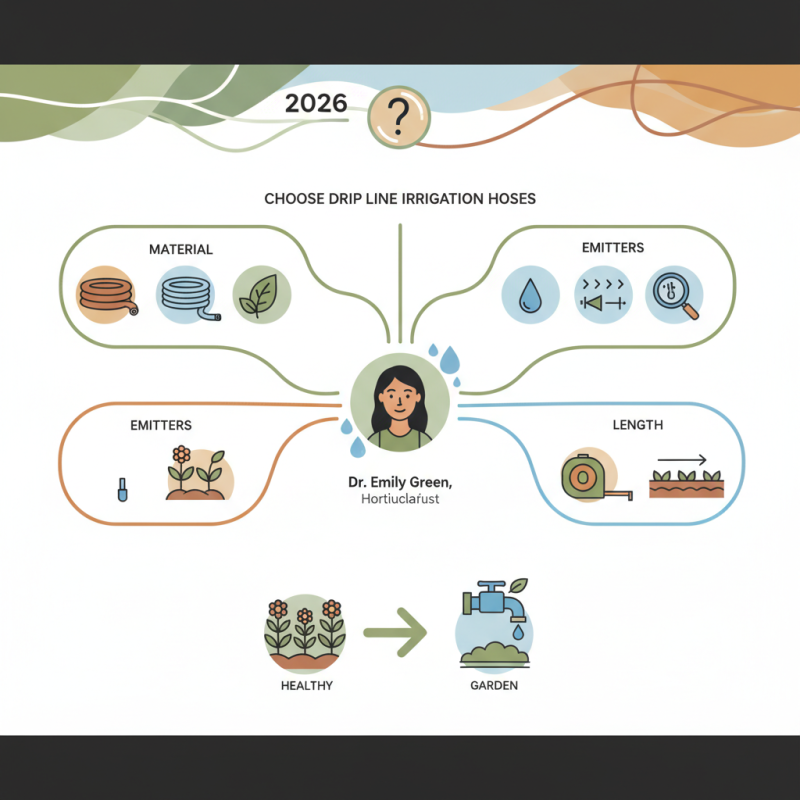
Choosing the right drip line irrigation hose requires careful consideration of several key factors. One important aspect is the material of the hose. Flexible materials like polyethylene are common due to their durability. However, they may not withstand extreme temperatures as effectively. Thicker hoses may be more resilient but can be less manageable.
Another crucial factor is the diameter of the hose. A smaller diameter may save on water but can limit flow rates. Conversely, larger diameters may provide better coverage but can lead to overwatering. It's vital to match the hose diameter to your landscape's specific needs. Additionally, the spacing of emitters is essential. Closer emitter spacing can provide more precise watering, ideal for sensitive plants.
Consider the total length of the hose you need. Sometimes, longer hoses can lead to pressure loss, affecting water flow. It’s also worth reflecting on your watering schedule and plant types. Not all plants benefit from the same moisture levels. Take the time to assess your garden’s unique environment. This could save you from costly mistakes in hose selection later on.
When choosing a drip line irrigation hose, understanding the materials is crucial. Different types of materials can impact the durability and effectiveness of your irrigation system. Plastic and rubber are common choices, but they each offer unique pros and cons. Plastic hoses are lightweight and affordable, but they may wear down faster under harsh conditions. Rubber, on the other hand, is more resilient and can withstand extreme temperatures, making it a better option for long-term use.
Tips: Check for UV resistance. This quality can significantly extend the life of your hose, especially in sunny climates. Additionally, consider the thickness of the hose. A thicker wall often indicates better durability, but it may be less flexible.
It’s worth reflecting on the maintenance of your hose. Regular inspections can help identify leaks or weaknesses early. Over time, even the best materials can degrade, especially when exposed to constant moisture and sunlight. Assessing your specific landscape needs will also guide your choice. Think about the layout and types of plants you are irrigating. Adjusting your approach can lead to more effective water delivery.
When selecting a drip line irrigation hose, understanding flow rate and pressure requirements is crucial. Different plants have varying water needs. For instance, delicate seedlings need lower pressure to avoid damage, while established crops may thrive under higher pressure. Measure your water supply pressure to ensure compatibility. A flow rate too high can result in uneven watering, whereas too low may hinder plant growth.
Evaluate your garden layout. Consider the distance from your water source to the plants. Long runs require higher pressure to maintain adequate flow. Look for hoses with adjustable emitters. These can help achieve the desired flow for different areas. Test your system after installation. Monitor water delivery closely, especially in the early days of use.
Adjustments may be necessary. Some regions experience fluctuating water availability. Seasons change, and so do irrigation needs. Being aware of these variables enhances the overall effectiveness of your irrigation system. Engage with local gardening communities for tips and experiences. An informed choice leads to thriving plants.
When selecting a drip line irrigation hose, understanding emitters and spacing is crucial. Emitters are devices that control water flow to plants. They come in various types, including pressure compensating and non-pressure compensating. A report from the Irrigation Association suggests that pressure compensating emitters can improve efficiency by up to 20%, especially on sloped terrain. This is due to their ability to deliver a consistent output, which is essential in maintaining plant health.
Emitter spacing is also vital for effective irrigation. Most experts recommend spacing emitters 12 to 18 inches apart for optimal water distribution. However, this can vary based on plant types and soil conditions. Recent studies indicate that tighter spacing can benefit plants with high water needs. Conversely, some gardeners may opt for wider spacing to conserve water, but this can lead to under-irrigated plants. Understanding local climate and soil characteristics is essential in determining the right spacing.
While many choose pre-manufactured drip lines, customized solutions often yield better results. However, customizing can introduce challenges, such as improper emitter selection or uneven water distribution. Gardeners must be mindful of these factors while balancing cost, efficiency, and plant needs.
| Feature | Description | Recommended Spacing | Emitter Flow Rate |
|---|---|---|---|
| Emitter Type | Inline emitters, pressure compensating emitters | 12-24 inches | 0.5 - 2.0 GPH |
| Material | UV-resistant polyethylene, PVC | Varies with plant type | N/A |
| Inner Diameter | Common sizes: 1/4", 1/2" | 18-30 inches | 0.5 - 1.0 GPH |
| Consistency | Uniform water distribution across the emitter line | 12-24 inches | 1.5 - 3.0 GPH |
| Cost | Price per length, installation cost | Depends on overall area | N/A |
Investing in a drip line irrigation hose involves careful consideration of costs versus long-term benefits. Initial expenses can be high. Equipment like hoses and emitters requires upfront investment. However, the savings in water usage can be substantial. Properly designed systems reduce water waste by delivering moisture directly to plant roots. This targeted approach conserves water and ensures healthier plants.
Over time, the reduced water bills add up, often outweighing the initial costs. For example, a well-planned drip irrigation system might lower your water consumption by up to 50%. That means substantial savings annually. Homeowners often overlook these savings in the rush to install irrigation systems. Research indicates that many neglect to calculate their full potential for cost-effectiveness.
However, not every system is perfect. Some may fail due to poor installation or maintenance. Regular monitoring is crucial for ensuring efficiency and avoiding wasted resources. The long-term benefits hinge on consistent upkeep and adjustments as plants grow. Making decisions based solely on initial costs can lead to regrets later. Balancing upfront investments with potential savings is key for sustainable gardening.
„Thanks to the LUVIR technology, the solder resist process could be switched directly from the previously used mask exposure to direct exposure. As an outstanding digital solution on the market, this technology has been able to demonstrate fast process times and superior quality on our certified conventional ink in production. This allowed us to fully digitize the solder mask process at low cost – without process or ink adjustments. An excellent benefit to our production in Rot am See.“
Ralf Göhringer (Head of Production WE Rot am See)
I would definitely recommend the Limata machine and team for a future company purchase
Michael Greenaway
Compunetics Inc.
“The Limata ldi has been amazing!! Best thing we did was buy this machine”
Richard Brady
GM
Circuitlabs
“Since 2019, we have been running the Limata X1000 LDI system (including LUVIR for solder mask imaging) in daily production as an addition to our current process with film. The machine was capable of properly exposing Taiyo PSR-4000 BN (DI) solder mask types on normal to high-copper boards using a new and unique direct imaging process. The machine operating interface is very user friendly which allowed for a quick technical training curve. The pre-registration processing reduced several seconds of production time at every print. Limata support and service staff is incomparable. They supported our team every step of the way at basically any time of the day or night, with literally, an immediate response time, customizing the software interface to best fit our Operations and needs.
We have exposed more than 8,000 prints since end of October, on various solder mask colors and some resist film panels. Limata, has proven to be very capable and innovative. They are a strong contender in the industry.
We have very much enjoyed this project, and working with the team!
Thank you Limata for the continued support and being a part of our growth.”
Bill Sezate
Vice President, GM
Summit Interconnect
As a replacement to our current contact exposure process with film, the LIMATA X2000 system including LUVIR-Technology was capable of properly exposing non-LDI solder mask types using a direct imaging process. The machine offers cutting edge software with a very intuitive operating interface which allowed for quick technician training curve. The dual drawer system combined with pre-registration processing reduced several seconds of production time at every machine cycle. Limata support and service staff is world class. They added software patches to keep production running at shortest possible response times, customized the software interface to best fit our in-house Operations system, and even wrote a step-by-step machine processing manual. As a result of the project, we have exposed more than 16,000 times on various product types and solder mask brands/colors. Limata, in a very short timeframe as a company, has definitely shown they are truly innovative and will be challenging the industry of direct imaging for the top spot.
Kevin Beattie
Process Engineer
TTM Technologies
Forest Grove Division
