Choosing the right Floor Polishing Pad can be overwhelming. With various options available, it's vital to understand what suits your needs best. Expert Jonathan Miller, a veteran in the floor care industry, states, “Selecting the right pad can make or break your polishing effort.” His experience underscores the importance of exploring different pad types and materials.
Floor polishing pads vary in grit, composition, and intended use. Some pads work well on concrete, while others excel on hardwood or terrazzo. Choosing the wrong pad can lead to poor results, requiring extra effort and wasted resources. Additionally, the wrong choice may damage your flooring, leading to costly repairs.
Understanding your specific requirements is crucial. Take the time to analyze your floor type and its current condition. This can help you select a pad that fits your objectives. Don’t shy away from asking for recommendations. A knowledgeable supplier can guide you to the most reliable products available, ensuring lasting satisfaction. Consider your options carefully; the right floor polishing pad could significantly enhance your flooring aesthetic.
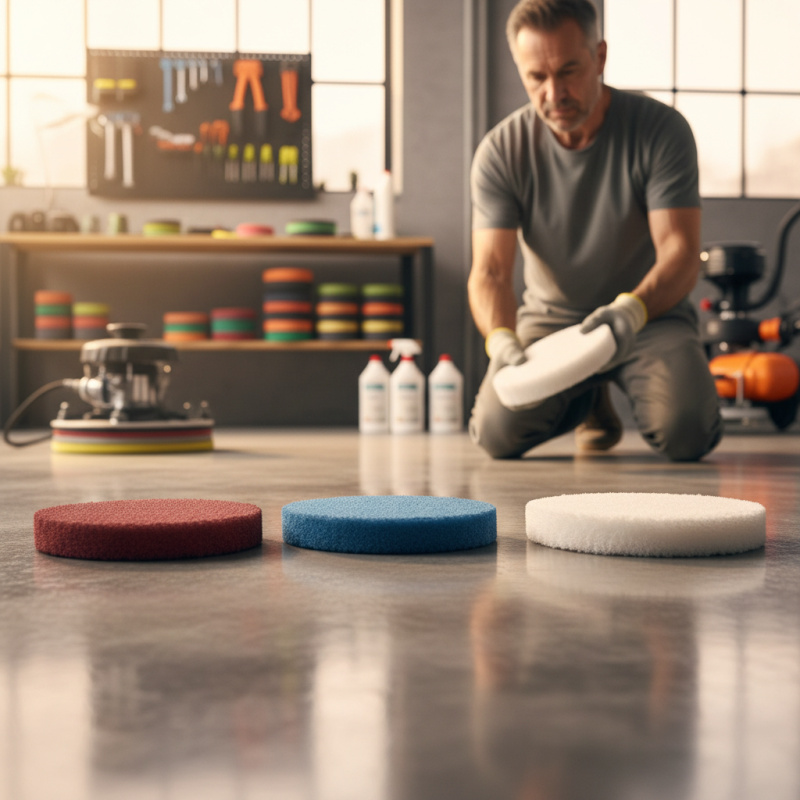
When choosing the right floor polishing pad, it's essential to understand the various types available. Floor polishing pads come in several materials, such as diamond, fiber, and sponge. Each type serves unique purposes and suits different floor surfaces. Research shows that diamond pads are highly effective for harder surfaces, achieving a shine that can last longer than traditional pads. Conversely, fiber pads perform well on softer surfaces and are more environmentally friendly.
When considering your needs, reflect on the area of use. For example, diamond pads can be more costly upfront but may save money in the long term. It's worth noting that improper pad selection can lead to surface damage. A recent industry report indicated that 30% of floor maintenance issues stem from using the wrong polishing pad.
Tips: Always test a small area first. This helps avoid costly mistakes. Keep in mind the frequency of use. Daily polisher users should invest in durable pads. Finally, consider the pad’s grit level. Finer grits offer a glossy finish but may require additional steps for maintenance.
Choosing the right floor polishing pad can greatly enhance your cleaning results. Several key factors come into play. The type of flooring you have is crucial. For example, hardwood and tile surfaces require different pads. Selecting the right material helps ensure effectiveness without causing damage.
The pad's grit level also matters. Options vary from coarse to fine. Coarse pads can remove stubborn dirt, while finer pads give a polished finish. Test different pads on a small area first. This helps avoid potential pitfalls. Remember, even the best pad can underperform if used incorrectly.
Durability is another consideration. A good pad should withstand multiple uses yet still maintain its effectiveness. Look for pads that offer a balance between longevity and performance.
Reflecting on past choices can lead to better decisions. Think about the performance of pads you have used before. Consider what worked and what did not. This reflection will guide you in making a more informed choice.
Selecting the right floor polishing pad hinges on the material composition. Different pads are made from various materials, each offering unique benefits. For instance, pads made of diamond are exceptionally durable and efficient on tough surfaces. They can restore a floor's shine but may be too aggressive for softer materials.
On the other hand, pads crafted from synthetic fibers provide a gentler touch. They are suitable for delicate floors but may lack longevity. This compromise can lead to more frequent replacements.
Moreover, knowing the finish of your floor matters greatly. A pad suited for hardwood might not perform well on tile.
It's essential to consider your specific cleaning needs. Assess the type of flooring in your space. Observe the wear patterns and what level of gloss you want to achieve. Sometimes, the right choice isn't obvious, and experimentation could be necessary. Not every pad will yield perfect results on the first try, prompting further evaluation and adjustments.
When it comes to floor polishing, choosing the right pad is essential. Different floor surfaces require specific pad types. For instance, hardwood floors may need gentler pads to avoid scratches. In contrast, concrete surfaces can handle more aggressive grits.
Understanding the grit level of polishing pads is crucial. Rougher pads, with lower grit numbers, are ideal for significant abrasion. They work well on surfaces that have heavy wear or stains. Conversely, finer pads polish and shine the surface after the heavy-duty work is done. A balance between these grits is often necessary.
Testing various pads can reveal what works best for your floor type. Not every pad will yield perfect results on each surface. Observing how different pads perform will help refine your process. Often, trial and error is part of ensuring the best outcome for your flooring needs.
Choosing the best floor polishing pad involves careful consideration of cost versus benefit. According to industry reports, the price range for floor polishing pads varies significantly, from as low as $0.50 to upwards of $5.00 per pad. While cheaper options may seem attractive, they often lack durability and efficacy. Investing in higher-quality pads can yield better results, leading to longer-lasting shine and reduced labor time.
Cost analysis reveals that using a more expensive pad might initially seem unjustified. However, when factoring in the number of uses before replacement, more expensive pads often prove to be more cost-effective. High-performance pads can last up to 50% longer than their cheaper counterparts, reducing frequent replacements and operational downtime. A report from the National Floor Safety Institute suggests that proper finishing with quality pads can enhance floor safety and decrease maintenance costs over time.
It's essential to evaluate the specific requirements of your flooring type. Not every pad suits every surface. Some may scratch delicate finishes, while others might not cleanse effectively. Understanding your flooring material is crucial. Taking time to analyze these factors can help you make a more informed purchase that balances quality and budget. Remember, it’s not always about the lowest price but the best value for your unique needs.
This chart displays the cost and durability of various types of floor polishing pads. The cost is represented in dollars, while the durability shows the expected lifespan in months. Analyzing these factors helps in selecting the right pad for your specific needs.
„Thanks to the LUVIR technology, the solder resist process could be switched directly from the previously used mask exposure to direct exposure. As an outstanding digital solution on the market, this technology has been able to demonstrate fast process times and superior quality on our certified conventional ink in production. This allowed us to fully digitize the solder mask process at low cost – without process or ink adjustments. An excellent benefit to our production in Rot am See.“
Ralf Göhringer (Head of Production WE Rot am See)
I would definitely recommend the Limata machine and team for a future company purchase
Michael Greenaway
Compunetics Inc.
“The Limata ldi has been amazing!! Best thing we did was buy this machine”
Richard Brady
GM
Circuitlabs
“Since 2019, we have been running the Limata X1000 LDI system (including LUVIR for solder mask imaging) in daily production as an addition to our current process with film. The machine was capable of properly exposing Taiyo PSR-4000 BN (DI) solder mask types on normal to high-copper boards using a new and unique direct imaging process. The machine operating interface is very user friendly which allowed for a quick technical training curve. The pre-registration processing reduced several seconds of production time at every print. Limata support and service staff is incomparable. They supported our team every step of the way at basically any time of the day or night, with literally, an immediate response time, customizing the software interface to best fit our Operations and needs.
We have exposed more than 8,000 prints since end of October, on various solder mask colors and some resist film panels. Limata, has proven to be very capable and innovative. They are a strong contender in the industry.
We have very much enjoyed this project, and working with the team!
Thank you Limata for the continued support and being a part of our growth.”
Bill Sezate
Vice President, GM
Summit Interconnect
As a replacement to our current contact exposure process with film, the LIMATA X2000 system including LUVIR-Technology was capable of properly exposing non-LDI solder mask types using a direct imaging process. The machine offers cutting edge software with a very intuitive operating interface which allowed for quick technician training curve. The dual drawer system combined with pre-registration processing reduced several seconds of production time at every machine cycle. Limata support and service staff is world class. They added software patches to keep production running at shortest possible response times, customized the software interface to best fit our in-house Operations system, and even wrote a step-by-step machine processing manual. As a result of the project, we have exposed more than 16,000 times on various product types and solder mask brands/colors. Limata, in a very short timeframe as a company, has definitely shown they are truly innovative and will be challenging the industry of direct imaging for the top spot.
Kevin Beattie
Process Engineer
TTM Technologies
Forest Grove Division
