When embarking on a project, the choice of components significantly impacts its success. HEX BOLTS are a critical fastening option in various industries. According to a recent industry report, over 70% of construction and manufacturing professionals opt for HEX BOLTS due to their strength and reliability.
Selecting the right HEX BOLT requires understanding the specific needs of your project. Factors such as material, diameter, and finish play a crucial role. Reports indicate that incorrect selection can lead to structural failures, costing companies thousands. Therefore, it’s vital to assess the load requirements and environmental conditions your project will face.
Moreover, the vast range of HEX BOLTS available can overwhelm users. Not all HEX BOLTS are created equal. It’s essential to avoid common pitfalls, like choosing based solely on price. Quality and specifications must guide the selection process. By taking these factors into account, you can ensure that your project is built on a foundation of reliability and durability.
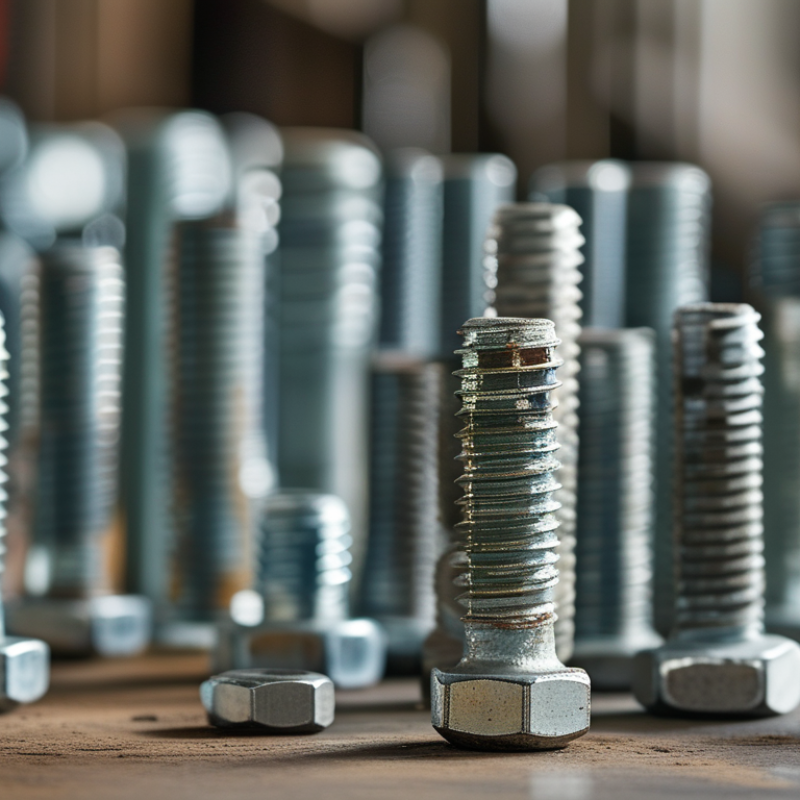
Understanding the types and specifications of hex bolts is crucial for any project. Hex bolts come in various grades, materials, and finishes. The grade indicates the strength of the bolt. Common grades include grade 2, grade 5, and grade 8. Each of these has different yield strengths and applications. Selecting the right grade is essential for load-bearing applications.
Materials also play a vital role in choosing hex bolts. Steel bolts provide good strength, while stainless steel offers corrosion resistance. Depending on the environment, you may need a coated or non-coated option. Finishes such as zinc plating can enhance durability. However, choosing the wrong finish might lead to premature rusting.
Understanding the specifications is a journey of learning. Consider length, diameter, and thread pitch. A mismatch in these can compromise the integrity of your project. It’s beneficial to consult detailed charts and reference materials while selecting your hex bolts. Mistakes in this area can be costly. Experimenting with different specifications allows for better insight into what works best for specific applications. Embrace the learning process and reflect on past choices for improvement.
| Type | Material | Grade | Diameter (mm) | Length (mm) | Finish |
|---|---|---|---|---|---|
| Hex Bolt | Steel | 8.8 | 10 | 50 | Zinc Plated |
| Hex Bolt | Stainless Steel | A2 | 12 | 60 | Passivated |
| Hex Bolt | Carbon Steel | 4.6 | 16 | 75 | Black Oxide |
| Hex Bolt | Alloy Steel | 10.9 | 20 | 100 | Hot-Dip Galvanized |
| Hex Bolt | Boron Steel | 12.9 | 24 | 150 | Black Zinc Plated |
When selecting the right material for hex bolts, consider the environment where they will be used. For outdoor projects, stainless steel offers excellent corrosion resistance. However, in highly acidic environments, even stainless can fail. Carbon steel is another option, often cheaper, but it may rust quickly without proper coatings. Evaluate the specific conditions your bolts will face.
Another key factor is strength. Different materials provide varied tensile strengths. For heavy-load applications, high-strength bolts made of alloy steel might be ideal. However, they can be more brittle, raising concerns about failure under shock loads. Often, people overlook the importance of choosing the right steel grade, which can lead to structural issues later.
Keep in mind the purpose of the project. Aesthetic considerations might lead you to choose a specific finish or color. While this can enhance visual appeal, it shouldn't compromise the bolt's functionality. Balancing aesthetics and performance is challenging and requires careful thought. Ask yourself: Is it worth sacrificing strength for appearance?
Measuring hex bolts accurately is crucial for successful projects. The two main factors to consider are sizing and thread pitch. Sizing involves understanding the diameter and length of the bolt. Use calipers to measure the diameter and a ruler or measuring tape for length. It’s easy to misjudge these measurements. A slight mistake can lead to using the wrong bolt.
Thread pitch is another critical aspect. It refers to the distance between threads. Measuring it can be tricky. You can use a thread gauge or count the number of threads over a specified length. Sometimes, a visual inspection might not reveal subtle differences. Be patient and attentive; even a small miscalculation here can affect the bolt's performance.
Many embrace the challenge of selecting the right hex bolt. However, common missteps often occur due to a lack of attention to detail. Rushing through measurements or assuming standard sizes can lead to frustration down the line. It’s essential to take your time and double-check your work. This approach is key to ensuring your project’s success.
When selecting HEX bolts for your project, consider the specific applications and guidelines for usage. HEX bolts are versatile and widely used in construction, machinery, and automotive sectors. They provide a durable fastening solution that can handle high tension. However, choosing the right one is crucial for safety and effectiveness.
Common applications for HEX bolts include connecting structural components and securing machinery parts. These bolts are often used in construction sites, where strength and durability matter. In automotive applications, they are used to secure engine components and chassis parts. Always assess the load requirements and environmental conditions when selecting a bolt to ensure it meets your project's needs.
Do not overlook the importance of correct installation. Ensure that you use the right tools for tightening. Over-tightening can lead to bolt failure, while under-tightening may compromise joint integrity. It’s also essential to consider the material and finish of the bolt, as these factors influence corrosion resistance and strength. Pay attention to details, as even small oversights can lead to significant issues down the line.
To ensure the longevity of hex bolts in any project, it is essential to focus on proper maintenance practices. Regular inspection is crucial. Look for signs of wear or corrosion. Even minor rust can compromise the integrity of a bolt. Cleaning hex bolts periodically with a wire brush can help remove dirt and contaminants. A clean surface allows for better engagement with nuts and prevents slipping.
Another critical aspect is the application of lubrication. Using a suitable lubricant can reduce friction during installation. This practice not only makes it easier to tighten bolts but also minimizes the risk of galling. Remember, over-tightening can lead to potential damage. Be cautious about the torque specifications. If they are exceeded, bolts may fail prematurely.
Lastly, consider environmental factors. Exposure to moisture, salt, or chemical agents can accelerate degradation. In critical applications, using protective coatings can extend the lifespan of hex bolts. However, remember that coatings can wear off, and regular reapplication might be necessary. Maintaining a schedule for inspections and maintenance can help keep projects secure and efficient.
„Thanks to the LUVIR technology, the solder resist process could be switched directly from the previously used mask exposure to direct exposure. As an outstanding digital solution on the market, this technology has been able to demonstrate fast process times and superior quality on our certified conventional ink in production. This allowed us to fully digitize the solder mask process at low cost – without process or ink adjustments. An excellent benefit to our production in Rot am See.“
Ralf Göhringer (Head of Production WE Rot am See)
I would definitely recommend the Limata machine and team for a future company purchase
Michael Greenaway
Compunetics Inc.
“The Limata ldi has been amazing!! Best thing we did was buy this machine”
Richard Brady
GM
Circuitlabs
“Since 2019, we have been running the Limata X1000 LDI system (including LUVIR for solder mask imaging) in daily production as an addition to our current process with film. The machine was capable of properly exposing Taiyo PSR-4000 BN (DI) solder mask types on normal to high-copper boards using a new and unique direct imaging process. The machine operating interface is very user friendly which allowed for a quick technical training curve. The pre-registration processing reduced several seconds of production time at every print. Limata support and service staff is incomparable. They supported our team every step of the way at basically any time of the day or night, with literally, an immediate response time, customizing the software interface to best fit our Operations and needs.
We have exposed more than 8,000 prints since end of October, on various solder mask colors and some resist film panels. Limata, has proven to be very capable and innovative. They are a strong contender in the industry.
We have very much enjoyed this project, and working with the team!
Thank you Limata for the continued support and being a part of our growth.”
Bill Sezate
Vice President, GM
Summit Interconnect
As a replacement to our current contact exposure process with film, the LIMATA X2000 system including LUVIR-Technology was capable of properly exposing non-LDI solder mask types using a direct imaging process. The machine offers cutting edge software with a very intuitive operating interface which allowed for quick technician training curve. The dual drawer system combined with pre-registration processing reduced several seconds of production time at every machine cycle. Limata support and service staff is world class. They added software patches to keep production running at shortest possible response times, customized the software interface to best fit our in-house Operations system, and even wrote a step-by-step machine processing manual. As a result of the project, we have exposed more than 16,000 times on various product types and solder mask brands/colors. Limata, in a very short timeframe as a company, has definitely shown they are truly innovative and will be challenging the industry of direct imaging for the top spot.
Kevin Beattie
Process Engineer
TTM Technologies
Forest Grove Division
