Choosing the right irrigation pipe hose can be a daunting task. Experts emphasize its importance in effective agriculture. John Smith, a renowned irrigation specialist, once said, “The right hose can save water and enhance crop yield.”
When selecting an irrigation pipe hose, consider your specific needs. Materials vary, impacting durability and flexibility. A heavier hose may resist damage but can be cumbersome to handle. Lighter hoses are easy to maneuver but may wear out faster.
Furthermore, assess the length and diameter carefully. An inadequate size can hinder water flow. mismatched hoses can lead to inefficiencies, making it vital to measure correctly. Ultimately, finding the best irrigation pipe hose requires a balance between practicality and quality. Every decision impacts your irrigation setup.
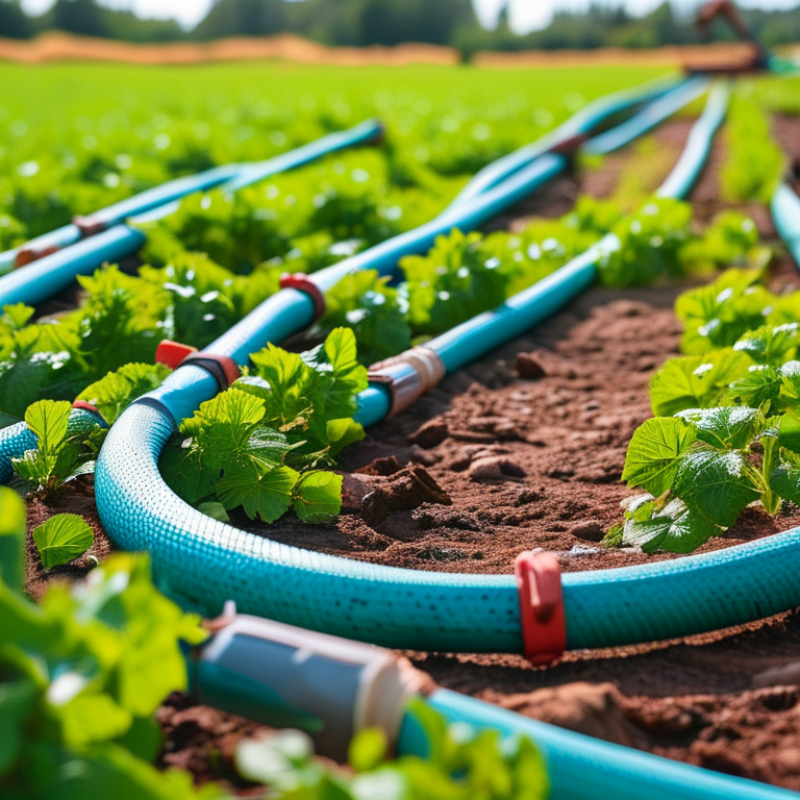
When it comes to irrigation, selecting the right pipe or hose is critical. Different types serve diverse needs. Common options include PVC, polyethylene, and drip hoses. Each type has unique properties that affect performance. For instance, PVC pipes are sturdy and suitable for fixed systems. In contrast, flexible polyethylene hoses are ideal for temporary setups.
Understanding the specific use of each type helps you choose wisely. According to industry reports, drip irrigation can save up to 60% more water than traditional methods. This can lead to significant cost savings. However, improper selection can lead to leaks or pressure drops, impacting efficiency.
Tips: Assess your landscape's size and the type of plants you have before buying. Consider weather resistance and pressure ratings. Lastly, check reviews and consult professionals for insights. Making an informed choice can greatly enhance your irrigation effectiveness.
When choosing an irrigation pipe hose, the material plays a crucial role. The flexibility and durability of various materials should be evaluated carefully. Common choices include PVC, rubber, and polyethylene, each presenting unique advantages and drawbacks. PVC offers resilience but can be stiff in colder weather. Conversely, rubber is flexible and withstands various temperatures but may degrade over time.
Polyethylene hoses are lightweight and easy to maneuver. However, they may lack the strength needed for high-pressure systems. Consider the environmental conditions in your area. The choice between a durable or flexible material can impact the system's longevity. Reflect on how often the hose will be moved and if it needs to adapt to different landscapes.
While evaluating these materials, think about the tasks you need to perform. Are you watering a small garden or a larger agricultural area? Different needs require different strengths. You might find that a combination of materials works best for your situation. Being aware of the trade-offs helps in making informed decisions. Keep in mind that what works for some might not match your specific requirements.
| Material | Durability (Years) | Flexibility (1-10) | Weight (lbs/100 ft) | Cost ($/100 ft) |
|---|---|---|---|---|
| PVC | 10-25 | 4 | 14 | $30 |
| Polyethylene | 5-15 | 7 | 10 | $25 |
| Rubber | 10-20 | 9 | 15 | $35 |
| Polyvinyl Chloride (PVC) Reinforced | 15-30 | 6 | 12 | $40 |
| Drip Tape | 3-8 | 8 | 5 | $15 |
Choosing the right diameter and length for your irrigation pipes is crucial. Studies show that a properly designed irrigation system can improve water efficiency by up to 30%. Many factors influence these choices, including the type of crops and soil conditions. For example, a larger diameter pipe can deliver more water faster, but it may not be necessary for smaller gardens or low-demand areas.
Length matters too. Longer hoses may lead to increased pressure loss due to friction. Research indicates that every 100 feet of pipe adds pressure loss equivalent to one vertical foot of elevation. So, going for excessive lengths can waste energy and reduce efficiency. It's vital to calculate the distance from your water source and consider the elevation changes in your landscape.
Don't overlook the importance of flow rate, measured in gallons per minute (GPM). An irrigation system must match the flow rate with the diameter. A mismatch can lead to under or over-watering, affecting plant health. Be aware that trial and error may be necessary. Reflect on your system's performance over time to make informed adjustments. Fine-tuning these elements will ultimately lead to a more effective irrigation system.
When selecting an irrigation pipe hose, assessing flow rate and pressure needs is crucial. Each garden or farm has unique requirements. A small vegetable garden may require less pressure compared to a large agricultural field. Understanding your specific needs is the first step toward optimizing irrigation performance.
Consider measuring the water flow in your current system. This will give you a baseline for your flow rate. Use a container to measure how much water flows in a specific timeframe. Keep records for reference. If the flow is too low, it may lead to insufficient watering. On the other hand, high pressure can cause damage to plants.
It's essential to gauge how much pressure your hose can handle. A hose that cannot withstand pressure may burst or degrade over time. Opting for hoses designed for high-pressure situations might be prudent. However, more pressure isn’t always better. Too much pressure can disrupt soil structure, leading to poor water absorption. Reflecting on your irrigation needs can prevent costly mistakes. Take time to evaluate your system carefully before making a decision.
Choosing the right irrigation pipe hose is crucial for effective water management. When considering your budget, think carefully about the long-term investment. A lower-priced option might save money upfront. However, it may lead to frequent replacements. This can end up being more costly over time. Look for hoses with durable materials that withstand wear and tear. They may have a higher initial cost but provide reliable service.
Maintenance is another key factor. Some hoses require more attention than others. For example, heavy-duty hoses can resist kinking but may need regular cleaning to prevent clogs. Consider your ability and willingness to maintain the system. Simplicity often favors ease of use. Installation should be straightforward. If your chosen hose demands complex setup, it may not be worth the hassle. Evaluate how much time you can dedicate to maintenance tasks. Understanding these factors will guide you to a more suitable choice.
„Thanks to the LUVIR technology, the solder resist process could be switched directly from the previously used mask exposure to direct exposure. As an outstanding digital solution on the market, this technology has been able to demonstrate fast process times and superior quality on our certified conventional ink in production. This allowed us to fully digitize the solder mask process at low cost – without process or ink adjustments. An excellent benefit to our production in Rot am See.“
Ralf Göhringer (Head of Production WE Rot am See)
I would definitely recommend the Limata machine and team for a future company purchase
Michael Greenaway
Compunetics Inc.
“The Limata ldi has been amazing!! Best thing we did was buy this machine”
Richard Brady
GM
Circuitlabs
“Since 2019, we have been running the Limata X1000 LDI system (including LUVIR for solder mask imaging) in daily production as an addition to our current process with film. The machine was capable of properly exposing Taiyo PSR-4000 BN (DI) solder mask types on normal to high-copper boards using a new and unique direct imaging process. The machine operating interface is very user friendly which allowed for a quick technical training curve. The pre-registration processing reduced several seconds of production time at every print. Limata support and service staff is incomparable. They supported our team every step of the way at basically any time of the day or night, with literally, an immediate response time, customizing the software interface to best fit our Operations and needs.
We have exposed more than 8,000 prints since end of October, on various solder mask colors and some resist film panels. Limata, has proven to be very capable and innovative. They are a strong contender in the industry.
We have very much enjoyed this project, and working with the team!
Thank you Limata for the continued support and being a part of our growth.”
Bill Sezate
Vice President, GM
Summit Interconnect
As a replacement to our current contact exposure process with film, the LIMATA X2000 system including LUVIR-Technology was capable of properly exposing non-LDI solder mask types using a direct imaging process. The machine offers cutting edge software with a very intuitive operating interface which allowed for quick technician training curve. The dual drawer system combined with pre-registration processing reduced several seconds of production time at every machine cycle. Limata support and service staff is world class. They added software patches to keep production running at shortest possible response times, customized the software interface to best fit our in-house Operations system, and even wrote a step-by-step machine processing manual. As a result of the project, we have exposed more than 16,000 times on various product types and solder mask brands/colors. Limata, in a very short timeframe as a company, has definitely shown they are truly innovative and will be challenging the industry of direct imaging for the top spot.
Kevin Beattie
Process Engineer
TTM Technologies
Forest Grove Division
