Choosing the right LED Control Board for your project is crucial. With numerous options available, it can feel overwhelming. An ideal board enhances your LED experience and meets your specific project needs. The right choice can impact both functionality and efficiency.
Understanding the technical specifications is vital. You must consider factors like power output and control capabilities. A board that lacks sufficient power may lead to performance issues. On the other hand, too much power can waste energy. It’s a balancing act that requires careful thought.
Compatibility is another critical aspect. Will your chosen board work well with your LEDs? Many boards support different types, but not all do. Research thoroughly to avoid potential problems. A mismatched setup could lead to malfunction. Ultimately, the best LED Control Board will align with your goals, ensuring reliability and effectiveness in your project.
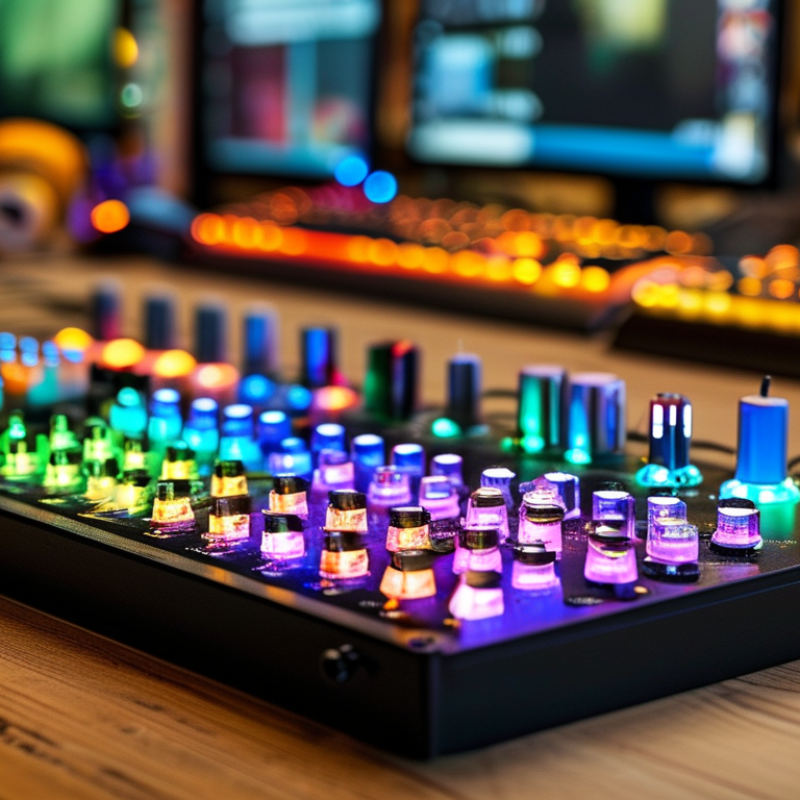
LED control boards play a vital role in various lighting projects. Understanding their basics allows for better decision-making. These boards manage LED lighting systems by controlling brightness, color, and dynamic effects. They can continuously adjust settings, ensuring optimal performance.
When selecting a control board, consider its compatibility with your LED lights. Different boards support varying voltages and wattages. Look at the number of outputs; this affects how many LEDs you can connect. Some boards allow for individual control of each light, while others operate in groups. This choice impacts how creative you can get with your design.
Keep in mind that not all control boards are user-friendly. Some may require programming expertise. If you're a beginner, finding a board with intuitive software can save you time. Thoughtful selection is crucial; a poor choice may lead to frustration. Balancing functionality with ease of use is essential.
| Parameter | Description | Importance | Rating (1-5) |
|---|---|---|---|
| Input Voltage | Voltage range supported by the control board. | Essential for compatibility with power sources. | 5 |
| Output Channels | Number of distinct outputs for controlling LEDs. | Important for controlling multiple LED sets. | 4 |
| Control Protocols | Communication methods like DMX, SPI, etc. | Crucial for integration with other systems. | 5 |
| Programming Options | Flexibility to write custom programs or scripts. | Highly important for bespoke applications. | 5 |
| User Interface | Ease of use and accessibility for users. | Important for effective control and setup. | 4 |
| Size & Form Factor | Physical dimensions of the control board. | Relative importance based on installation space. | 3 |
When selecting an LED control board for your project, understanding your specific requirements is crucial. Different applications demand various features. Will your setup need extensive automation or simple on-off controls? The type of LED lights you use also plays a role. For instance, RGB LEDs require boards capable of managing color mixing. The height of your ambitions may determine your board's complexity.
Consider power consumption and compatibility. Some boards support a wide range of voltage inputs, while others are limited. This can impact overall performance. It's essential to evaluate heat dissipation. A design that overheats can fail, so ensure your chosen board can handle extended use. Pay attention to connectivity options, too. Do you need wireless capabilities or direct connections? Reflecting on these details helps streamline your project.
Don't overlook the importance of programming flexibility. Some projects may require programmable features. If you want to run animations, for example, ensure your board supports that. However, simpler boards might be easier for beginners. It’s essential to balance complexity with skill levels. Assess whether your team can troubleshoot potential issues down the line. This reflective approach can lead to better outcomes.
When selecting an LED control board, it's essential to compare various types. The most common categories include analog, digital, and smart control boards. Each type offers unique features tailored for specific projects. For instance, digital control boards often excel in precision and versatility. According to industry reports, around 60% of professionals now prefer digital options due to their adaptability with modern lighting technology.
Some LED control boards come with advanced features, such as color mixing and programmable effects. These capabilities enable designers to create intricate visual displays. However, these boards can also be more complex. They require a steeper learning curve and sometimes demand more power. This complexity might discourage beginners or those on a tight budget. Many projects can succeed with simpler analog options, especially for straightforward installations.
Cost is another factor to weigh. Analog boards typically have lower costs but may lack the advanced capabilities of their digital counterparts. According to recent industry surveys, 45% of users have reported needing to reconsider their initial choice due to unexpected project requirements. Evaluating your project needs is essential. An informed decision leads to a smoother implementation and optimal results.
When selecting an LED control board, assessing its features and specifications is crucial. Optimal performance hinges on several factors. Flexibility in control options, such as PWM (Pulse Width Modulation) and DMX512, can significantly impact functionality. According to industry reports, more than 70% of LED projects now incorporate advanced dimming techniques. This increases energy efficiency and prolongs LED life.
Compatibility should not be overlooked. Many projects require integration with existing systems or components. Control boards that support various protocols can alleviate integration challenges. Data shows that boards with universal compatibility reduce installation time by nearly 30%. Additionally, the power handling capacity must be carefully evaluated. A control board's ability to handle varying loads is vital for achieving desired brightness levels without compromising safety.
Evaluating user interface features is also essential. An intuitive interface can ease troubleshooting and enhance user experience. Research indicates that boards with user-friendly features can decrease downtime by 40%. However, it’s important to reflect on the limitations of certain control boards. In some cases, lower-cost options may lack essential features, resulting in performance issues over time. Ensuring that the chosen board meets specific project requirements is a critical step in the decision-making process.
When choosing an LED control board, compatibility is crucial. Ensure that your control board matches the specific LED components you plan to use. Different LEDs have varying power requirements and configurations. Knowing the voltage, current, and control signal types is essential. Mismatches can lead to inefficiencies or even damage.
Evaluate your existing systems too. Consider how the control board will integrate with current hardware. Look for features like dimming capabilities or color changing options. Sometimes, a control board may lack support for certain protocols, limiting its functionality. Test compatibility in different scenarios. Often, components work well together on paper but may face issues in real-world applications.
Don’t overlook the importance of user feedback. Read reviews, but stay critical. Personal experiences can reveal compatibility issues that specs do not cover. Collaborate with others in your field. Discussing with experienced professionals can provide insights that lead to better choices. The learning process is ongoing. Embrace the challenges as opportunities to refine your project.
„Thanks to the LUVIR technology, the solder resist process could be switched directly from the previously used mask exposure to direct exposure. As an outstanding digital solution on the market, this technology has been able to demonstrate fast process times and superior quality on our certified conventional ink in production. This allowed us to fully digitize the solder mask process at low cost – without process or ink adjustments. An excellent benefit to our production in Rot am See.“
Ralf Göhringer (Head of Production WE Rot am See)
I would definitely recommend the Limata machine and team for a future company purchase
Michael Greenaway
Compunetics Inc.
“The Limata ldi has been amazing!! Best thing we did was buy this machine”
Richard Brady
GM
Circuitlabs
“Since 2019, we have been running the Limata X1000 LDI system (including LUVIR for solder mask imaging) in daily production as an addition to our current process with film. The machine was capable of properly exposing Taiyo PSR-4000 BN (DI) solder mask types on normal to high-copper boards using a new and unique direct imaging process. The machine operating interface is very user friendly which allowed for a quick technical training curve. The pre-registration processing reduced several seconds of production time at every print. Limata support and service staff is incomparable. They supported our team every step of the way at basically any time of the day or night, with literally, an immediate response time, customizing the software interface to best fit our Operations and needs.
We have exposed more than 8,000 prints since end of October, on various solder mask colors and some resist film panels. Limata, has proven to be very capable and innovative. They are a strong contender in the industry.
We have very much enjoyed this project, and working with the team!
Thank you Limata for the continued support and being a part of our growth.”
Bill Sezate
Vice President, GM
Summit Interconnect
As a replacement to our current contact exposure process with film, the LIMATA X2000 system including LUVIR-Technology was capable of properly exposing non-LDI solder mask types using a direct imaging process. The machine offers cutting edge software with a very intuitive operating interface which allowed for quick technician training curve. The dual drawer system combined with pre-registration processing reduced several seconds of production time at every machine cycle. Limata support and service staff is world class. They added software patches to keep production running at shortest possible response times, customized the software interface to best fit our in-house Operations system, and even wrote a step-by-step machine processing manual. As a result of the project, we have exposed more than 16,000 times on various product types and solder mask brands/colors. Limata, in a very short timeframe as a company, has definitely shown they are truly innovative and will be challenging the industry of direct imaging for the top spot.
Kevin Beattie
Process Engineer
TTM Technologies
Forest Grove Division
