Choosing the right RFID Reader for your business can seem daunting. There are many factors to consider. The technology is evolving rapidly. Each type has unique features, advantages, and limitations.
An RFID Reader can streamline your operations. It can enhance inventory management, asset tracking, and customer experiences. Still, you need to reflect on your specific business needs. For example, will you require handheld or fixed RFID Readers? Do you need long-range or short-range capabilities?
Making the right choice requires careful evaluation. You might want to consult with industry experts or seek out customer reviews. Each business is unique, and the best RFID Reader for one may not suit another. Engaging with professionals can provide valuable insights. This helps build confidence in your decision-making process, ensuring your investment pays off effectively.
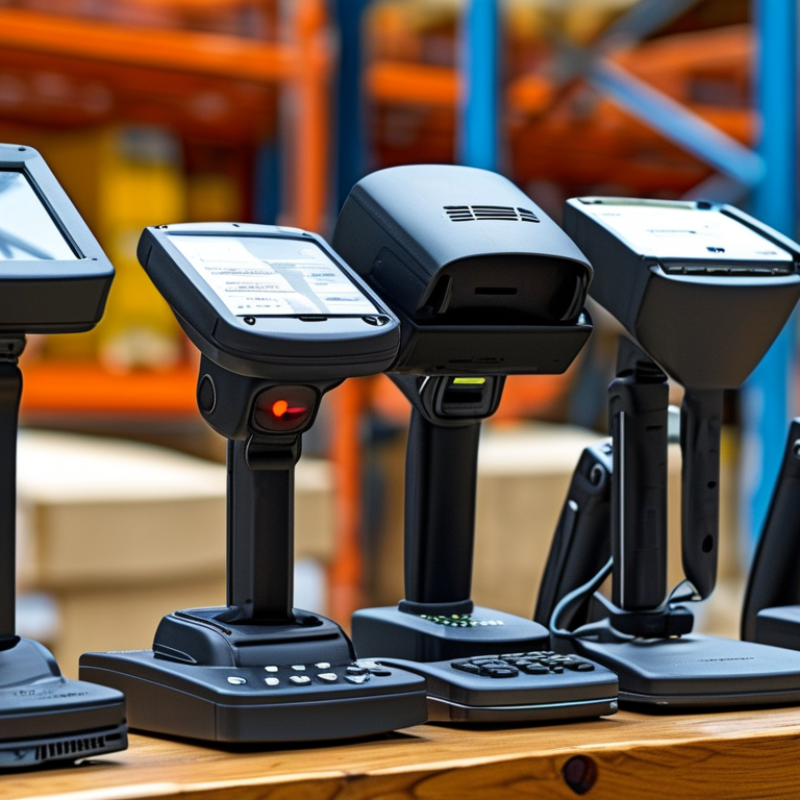
RFID technology has transformed various industries. It uses radio waves for data transfer. This allows businesses to track items efficiently. In retail, RFID Tags help manage inventory in real-time. They help reduce stockouts and overstock situations. RFID systems improve operational efficiency and customer satisfaction.
Understanding how RFID works is crucial. Passive tags do not have their own power source. They rely on the RFID reader to activate them. Active tags have built-in batteries and can transmit data over longer distances. Each type has its advantages and limitations. Businesses must evaluate what fits their specific needs.
Integration challenges are common. Some businesses struggle with the transition to RFID systems. Training staff becomes essential. They must understand how to use new technology effectively. Evaluating current processes is necessary. This ensures the RFID implementation aligns with overall goals. Continuous feedback can help businesses refine their uses of RFID technology.
When considering RFID readers for your business, understanding your specific needs is essential. Your industry, inventory size, and operational environment all play crucial roles in determining the right equipment. Each business has unique requirements. A retail operation may require handheld readers, while a manufacturing site might benefit from fixed readers. Carefully analyzing these factors is vital for effective implementation.
Tips: Consider your operational scale. Will you manage a few items or hundreds? This impacts the reader’s range and capabilities. Assess whether portable readers are necessary for your team.
Navigating technology options can be overwhelming. Document your goals clearly. This aids in communication with suppliers and ensures the right match for your business. Seek advice from experienced professionals in the RFID field. Their insights could guide you in making an informed choice.
Tips: Don’t overlook the technical support available with the reader. Sometimes, it can be the deciding factor. Research the quality of customer service offered. Quality support contributes to long-term success. Evaluate your decisions frequently. An RFID reader that works today may not fit tomorrow’s demands.
When selecting an RFID reader for your business, understanding the pros and cons of different types is essential. Handheld RFID readers are versatile and portable. They can scan items quickly in various settings. However, their battery life may limit usage, requiring frequent recharging. Fixed RFID readers offer continuous scanning. They work well in warehouses, enabling real-time inventory tracking. Yet, installation can be complex and may demand skilled labor.
Mobile RFID readers are another option. They can be used anywhere, adding flexibility to operations. On the downside, the software may require updates, which could disrupt workflows.
Tips: Assess your unique business needs before deciding. Consider your environment and whether you move items frequently. Think about how many items you need to scan and how often. If your inventory fluctuates, manual scanning might not suffice. Always review user feedback on performance over time for real insights.
Choosing the right RFID reader can enhance operational efficiency. Several key features should guide your decision-making process. Consider read range, as most business needs vary from a few inches to several feet. According to industry reports, a reader with a range of 10 feet can significantly reduce scanning times.
Processing speed is another crucial feature. Look for readers with faster data processing capabilities; this ensures real-time inventory tracking. Studies show that businesses using high-speed RFID readers experience a 30% reduction in inventory management time. Your choice can make a visible difference in productivity.
Tips: Always test different models in your environment. This helps gauge their performance and reliability. Don't underestimate durability. In a warehouse setting, the reader needs to withstand potential damage. Analyze these aspects before making a final choice. Remember, the right RFID reader fits your specific requirements.
Budgeting for RFID reader acquisition and maintenance is crucial for any business. According to a recent report by Grand View Research, the global RFID market is expected to reach $40 billion by 2026. However, understanding costs associated with these devices can be complex.
When budgeting, consider initial purchase costs, which may vary based on specifications. Purchasing basic RFID readers might range from $1,000 to $3,000, while advanced models can exceed $10,000. Additionally, maintenance costs often account for 10-15% of the initial investment annually. Proper budget planning can prevent unexpected expenses and ensure resources are allocated effectively.
Training employees is another often-overlooked cost. A survey by Zebra Technologies reveals that companies that invest in training can see a 20% improvement in operational efficiency. Thus, allocate funds for training. Though it’s easy to overlook these hidden costs, ignoring them can lead to budget overruns and inefficiencies. Prioritize budgeting carefully to maximize the benefits of RFID technology.
„Thanks to the LUVIR technology, the solder resist process could be switched directly from the previously used mask exposure to direct exposure. As an outstanding digital solution on the market, this technology has been able to demonstrate fast process times and superior quality on our certified conventional ink in production. This allowed us to fully digitize the solder mask process at low cost – without process or ink adjustments. An excellent benefit to our production in Rot am See.“
Ralf Göhringer (Head of Production WE Rot am See)
I would definitely recommend the Limata machine and team for a future company purchase
Michael Greenaway
Compunetics Inc.
“The Limata ldi has been amazing!! Best thing we did was buy this machine”
Richard Brady
GM
Circuitlabs
“Since 2019, we have been running the Limata X1000 LDI system (including LUVIR for solder mask imaging) in daily production as an addition to our current process with film. The machine was capable of properly exposing Taiyo PSR-4000 BN (DI) solder mask types on normal to high-copper boards using a new and unique direct imaging process. The machine operating interface is very user friendly which allowed for a quick technical training curve. The pre-registration processing reduced several seconds of production time at every print. Limata support and service staff is incomparable. They supported our team every step of the way at basically any time of the day or night, with literally, an immediate response time, customizing the software interface to best fit our Operations and needs.
We have exposed more than 8,000 prints since end of October, on various solder mask colors and some resist film panels. Limata, has proven to be very capable and innovative. They are a strong contender in the industry.
We have very much enjoyed this project, and working with the team!
Thank you Limata for the continued support and being a part of our growth.”
Bill Sezate
Vice President, GM
Summit Interconnect
As a replacement to our current contact exposure process with film, the LIMATA X2000 system including LUVIR-Technology was capable of properly exposing non-LDI solder mask types using a direct imaging process. The machine offers cutting edge software with a very intuitive operating interface which allowed for quick technician training curve. The dual drawer system combined with pre-registration processing reduced several seconds of production time at every machine cycle. Limata support and service staff is world class. They added software patches to keep production running at shortest possible response times, customized the software interface to best fit our in-house Operations system, and even wrote a step-by-step machine processing manual. As a result of the project, we have exposed more than 16,000 times on various product types and solder mask brands/colors. Limata, in a very short timeframe as a company, has definitely shown they are truly innovative and will be challenging the industry of direct imaging for the top spot.
Kevin Beattie
Process Engineer
TTM Technologies
Forest Grove Division
