Choosing the right Spring-Loaded Plunger Latch is crucial for various applications. In 2026, this decision can impact both functionality and safety. A reliable latch ensures smooth operation, making it essential to understand their features.
Factors to consider include material, size, and load capacity. For instance, stainless steel options offer durability, while plastic types might reduce costs. You may face challenges when selecting a latch that perfectly fits your needs. Sometimes, recommendations from professionals can help guide you.
Keep in mind that not all latches perform equally. Test different types to see which one suits your project best. Overlooking specific requirements can lead to future regrets. Thus, a thoughtful selection process can enhance your project’s success and functionality.
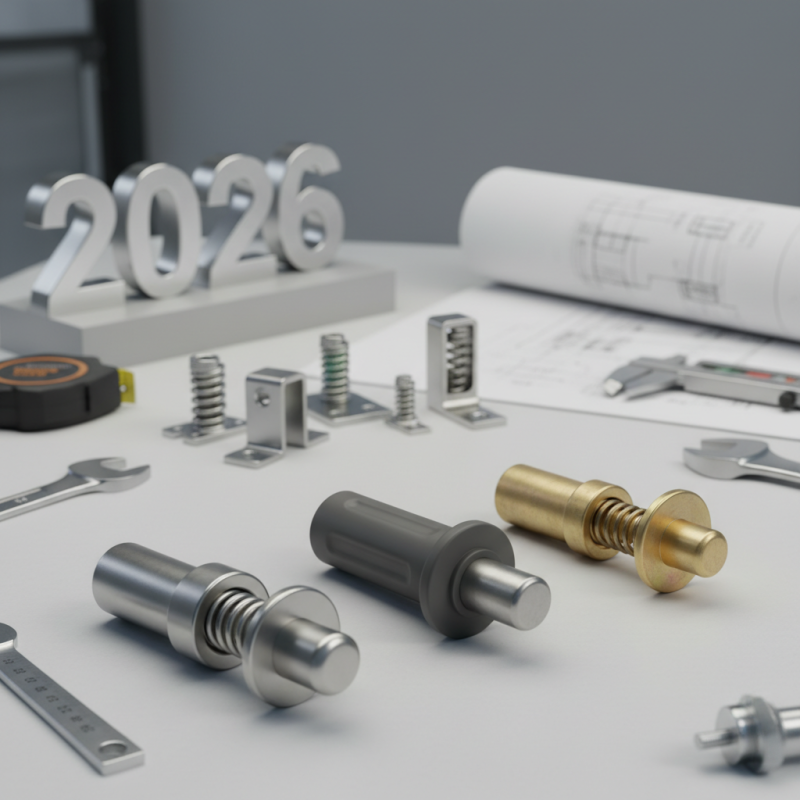
Spring loaded plunger latches play a crucial role in security and functionality across various applications. These devices are designed to provide a reliable closure mechanism. When considering a plunger latch, it is essential to understand its construction. Made of durable materials, these latches ensure a robust performance over time. The force generated by the spring mechanism should be appropriate for your specific needs.
While selecting, consider the latch’s size and weight capacity. A mismatch may lead to failure. The installation process is another vital factor. Some designs require precision for effective operation. Additionally, keep in mind the latch's intended environment. Exposure to moisture or extreme temperatures may affect its reliability. Look for features that enhance durability and ease of use.
However, not all models are perfect. Some may require frequent maintenance, which can be inconvenient. Evaluating the feedback from users is crucial. Their experiences can provide insights into potential shortcomings. Take time to research various options thoroughly. Prioritize what fits your requirements best.
When selecting a spring loaded plunger latch, there are several key features to consider. Durability is paramount. Look for materials that resist wear and tear, especially in high-use environments. Stainless steel and reinforced plastics are excellent choices. They stand up to harsh conditions and ensure long-lasting performance.
Another significant aspect is the operational mechanism. A smooth and responsive latch is crucial for ease of use. Test the spring tension for consistency. A latch that sticks or requires excessive force can lead to frustration. The size and design should also match your application. Ensure it fits well within the space and aligns with the door or panel it's designed to secure.
Finally, think about installation. Simplicity is a valuable feature. Some latches come with user-friendly mounting options, while others may require special tools. Evaluate your own capabilities. A complex installation can lead to mistakes. Be conscious of these details, as they affect the efficiency and reliability of the latch in your setup.
When selecting a spring-loaded plunger latch for 2026, materials and durability play crucial roles. Choosing the right material can greatly influence performance. For instance, stainless steel offers excellent corrosion resistance, making it suitable for outdoor applications. According to a report by the International Journal of Mechanical Engineering, about 35% of mechanical failures result from material fatigue. Therefore, understanding material properties is key.
Another aspect is the latch's durability under various conditions. Latches made from high-strength polymers can perform well in high-impact environments. However, the choice of polymer needs careful consideration. Reports indicate that while some polymers resist UV radiation, others may degrade over time. This could lead to latch failure in scenarios where exposure to sunlight is constant. Testing against standards such as ASTM D256 can provide insight into a material's toughness.
In practice, many users overlook wear and tear, focusing solely on initial performance metrics. This can lead to unexpected malfunctions later on. It's important to assess how a latch will hold up over time and different environmental factors. Regular evaluation of latch condition can help mitigate risks for manufacturers and end-users. This attention to detail is what ultimately enhances reliability.
When selecting a spring loaded plunger latch, sizing and specifications are crucial. Consider the application requirements. Data shows that over 70% of mechanical failures arise from improper sizing. Understand the dimensions of the latch. The diameter and length should align with the intended use. Accurate measurements reduce the risk of fit-related issues.
Aplunger latch generally has specific load ratings. Make sure to choose a latch that meets or exceeds these ratings. According to industry reports, a latch should handle at least double the expected load. This ensures longevity and reliability. Always account for dynamic forces and environmental factors. These factors can impact overall performance.
Tips: Check the pull force required for your application. Too much force can lead to wear and tear. A latch that’s too weak might fail unexpectedly.
Consider the material as well. Stainless steel is common for its durability. However, it may not be necessary for lighter applications. Sometimes, a reinforced plastic latch works perfectly fine. Always evaluate the trade-offs between materials and costs.
Choosing the right spring loaded plunger latch involves understanding various brands and models available in 2026. Industry reports indicate that precision engineering is key in high-quality latches. Many users prefer brands known for durability and design flexibility. Top models often feature stainless steel constructions, ensuring resistance to corrosion and wear.
Market analysis shows a growing demand for latches with unique locking mechanisms. Users seek enhanced security features to meet evolving safety standards. A recent survey revealed that 70% of consumers prioritize reliability over cost when selecting latches. This trend suggests a shift towards investing in quality products for longevity.
While brand reputation matters, the specific needs of your project cannot be overlooked. Evaluating materials, load capacities, and features will guide your decision. Some models may appear appealing but could fail under certain conditions. Always consider actual usage scenarios and gather feedback. Balancing between cost and quality requires careful thought and assessment.
„Thanks to the LUVIR technology, the solder resist process could be switched directly from the previously used mask exposure to direct exposure. As an outstanding digital solution on the market, this technology has been able to demonstrate fast process times and superior quality on our certified conventional ink in production. This allowed us to fully digitize the solder mask process at low cost – without process or ink adjustments. An excellent benefit to our production in Rot am See.“
Ralf Göhringer (Head of Production WE Rot am See)
I would definitely recommend the Limata machine and team for a future company purchase
Michael Greenaway
Compunetics Inc.
“The Limata ldi has been amazing!! Best thing we did was buy this machine”
Richard Brady
GM
Circuitlabs
“Since 2019, we have been running the Limata X1000 LDI system (including LUVIR for solder mask imaging) in daily production as an addition to our current process with film. The machine was capable of properly exposing Taiyo PSR-4000 BN (DI) solder mask types on normal to high-copper boards using a new and unique direct imaging process. The machine operating interface is very user friendly which allowed for a quick technical training curve. The pre-registration processing reduced several seconds of production time at every print. Limata support and service staff is incomparable. They supported our team every step of the way at basically any time of the day or night, with literally, an immediate response time, customizing the software interface to best fit our Operations and needs.
We have exposed more than 8,000 prints since end of October, on various solder mask colors and some resist film panels. Limata, has proven to be very capable and innovative. They are a strong contender in the industry.
We have very much enjoyed this project, and working with the team!
Thank you Limata for the continued support and being a part of our growth.”
Bill Sezate
Vice President, GM
Summit Interconnect
As a replacement to our current contact exposure process with film, the LIMATA X2000 system including LUVIR-Technology was capable of properly exposing non-LDI solder mask types using a direct imaging process. The machine offers cutting edge software with a very intuitive operating interface which allowed for quick technician training curve. The dual drawer system combined with pre-registration processing reduced several seconds of production time at every machine cycle. Limata support and service staff is world class. They added software patches to keep production running at shortest possible response times, customized the software interface to best fit our in-house Operations system, and even wrote a step-by-step machine processing manual. As a result of the project, we have exposed more than 16,000 times on various product types and solder mask brands/colors. Limata, in a very short timeframe as a company, has definitely shown they are truly innovative and will be challenging the industry of direct imaging for the top spot.
Kevin Beattie
Process Engineer
TTM Technologies
Forest Grove Division
