Choosing the best Vacuum Oil Skimmer can be challenging. Many factors play a crucial role in this decision. The right skimmer can significantly improve efficiency in oil recovery. For industrial settings, it’s essential to select one that fits specific requirements.
When examining different models, consider features like pump capacity and efficiency. A high-quality Vacuum Oil Skimmer should excel in various environments. But remember, not all skimmers work the same way. Some may not meet your operational demands, leading to frustration.
Take time to research and weigh your options carefully. Don't rush your decision. Look for trusted reviews and expert recommendations that guide you toward a reliable choice. Your investment should lead to long-term benefits and cost savings, ensuring your processes run smoothly.
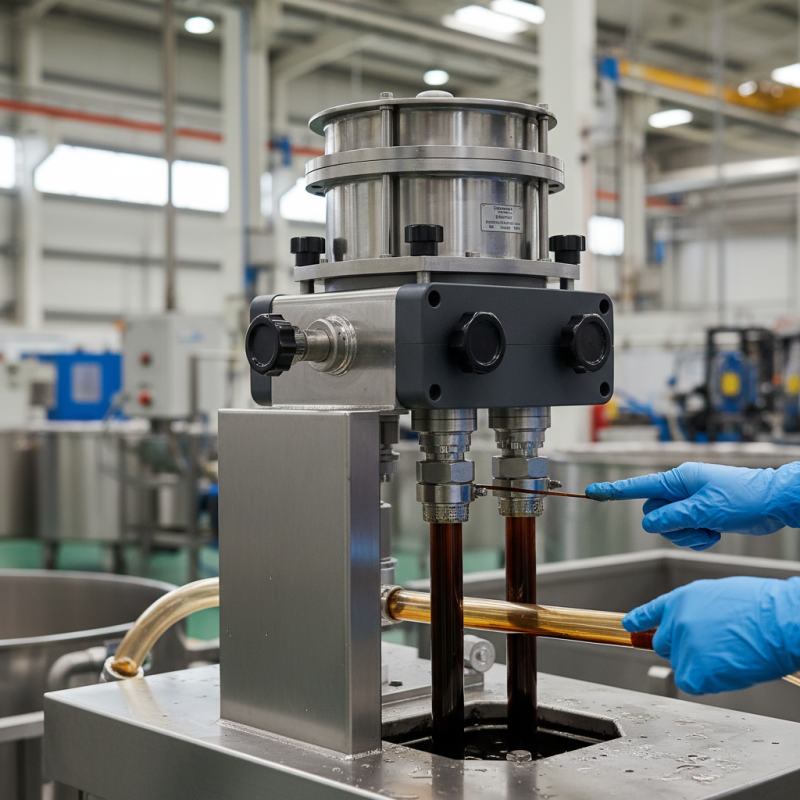
Vacuum oil skimmers are essential tools in industrial settings. They effectively remove harmful oil contaminants from water surfaces. This reduces environmental impact and keeps production processes efficient. Understanding their functionality is the key to making an informed choice.
One primary feature of vacuum oil skimmers is their ability to operate in various conditions. They utilize a vacuum mechanism to draw in oil. This process minimizes water intake, which is crucial for efficient oil separation. Some skimmers are better suited for specific environments, such as high-viscosity oils or fluctuating temperatures.
**Tips:** When selecting an oil skimmer, consider the size of the liquid surface. A larger surface often requires a more powerful skimmer. Assess the specific type of oil encountered in your facility, as this affects the skimmer's performance. Regular maintenance is crucial to maintain efficiency, as worn parts can compromise operation.
Analyzing the quality of materials used in manufacturing skimmers can also guide your decision. High-quality components enhance durability. However, it’s essential to balance cost and performance. While cheaper options might be tempting, consider their long-term effectiveness and reliability.
Choosing the right vacuum oil skimmer requires careful consideration. Understanding your specific needs is essential. Factors such as the type of oil, the volume of liquid to manage, and the available space can influence your decision. A skimmer designed for heavy oil may not work well for lighter oils. Assess the characteristics of your waste oil carefully.
Another crucial aspect involves the technology behind the skimmer. Different models use varying methods for oil extraction. Some rely on suction, while others utilize absorption. Each method has its own advantages and limitations. It’s vital to test these options to see which fits your requirements best.
Don’t overlook maintenance. Some skimmers demand frequent upkeep, while others are low-maintenance. Check for ease of cleaning and parts availability. Sometimes, a skimmer might seem perfect but turns out to be high-maintenance. Reflecting on your past experiences can guide your choice, as past mistakes hold valuable lessons for the future.
Vacuum oil skimmers come in various types and technologies. Understanding these differences is crucial for effective oil recovery. The most common types include belt, disk, and float skimmers. Each has its design and operational principle.
Belt skimmers use a moving belt to collect oil. They are effective in shallow waters. Disk skimmers employ rotating disks to capture oil, making them suitable for larger surface areas. Float skimmers rely on buoyancy to collect oil, which can work well in fluctuating water levels.
When choosing a skimmer, consider factors like water surface conditions, oil type, and recovery efficiency. A skimmer that excels in one environment may underperform in another. It's essential to assess your specific needs carefully. Not every skimmer suits every situation, and trial and error may sometimes lead to better outcomes.
When selecting a vacuum oil skimmer, it's essential to evaluate its effectiveness and efficiency. Performance metrics largely determine how well a skimmer operates under different conditions. A key metric is the removal rate of oil, which can average between 5 to 15 gallons per hour in effective models. Additionally, the skimmer's ability to adapt to varying oil viscosities and surface tensions plays a significant role in efficiency. Reports indicate that skimmers with an adaptable design can improve oil recovery by up to 30%.
Tips: Always assess the skimmer's capacity to handle your specific environment. A lower removal rate might be sufficient for minor spills, while industrial settings may require high-capacity systems.
The energy consumption of the skimmer should not be overlooked. Some models can operate with less than 100 watts, saving energy while maximizing performance. Reports suggest that energy-efficient models can reduce operational costs significantly over time. However, potential users must remember that lower energy use does not always equate to better oil removal efficiency. A balance between energy use and performance is crucial.
Tips: Look for models with dual-function designs. They can offer both oil skimming and cleaning, making them versatile and effective for various tasks.
| Skimmer Type | Effective Skimming Rate (L/hr) | Efficiency (%) | Operating Temperature (°C) | Maintenance Frequency (Months) |
|---|---|---|---|---|
| Belt Skimmer | 150 | 85 | 5-50 | 6 |
| Tube Skimmer | 100 | 90 | 10-60 | 12 |
| Disc Skimmer | 200 | 88 | 0-45 | 8 |
| Coalescing Skimmer | 250 | 92 | 5-50 | 10 |
| Gravity Skimmer | 80 | 75 | 20-70 | 18 |
When choosing a vacuum oil skimmer, understanding industry standards is essential. These standards guide manufacturers in creating effective models. They consider factors like efficiency, safety, and environmental impact. A reliable skimmer must comply with these standards to ensure optimal performance in oil removal.
Best practices for using oil skimmers include regular maintenance and proper setup. Skimmers should be positioned in areas with high oil concentrations. Regular checks on the equipment can prevent unexpected failures. Skimmers may also require adjustments based on oil viscosity and temperature. Users should note how the environment affects skimmer performance. Learning from these observations can lead to improved operations.
Training personnel on effective skimmer operation is crucial. Proper training ensures the team understands how to maximize the skimmer’s capabilities. Mistakes in setup or operation can lead to inefficiencies. Effective communication about best practices can help mitigate issues. Users should continually seek feedback to refine their processes and enhance skimming operations.
„Thanks to the LUVIR technology, the solder resist process could be switched directly from the previously used mask exposure to direct exposure. As an outstanding digital solution on the market, this technology has been able to demonstrate fast process times and superior quality on our certified conventional ink in production. This allowed us to fully digitize the solder mask process at low cost – without process or ink adjustments. An excellent benefit to our production in Rot am See.“
Ralf Göhringer (Head of Production WE Rot am See)
I would definitely recommend the Limata machine and team for a future company purchase
Michael Greenaway
Compunetics Inc.
“The Limata ldi has been amazing!! Best thing we did was buy this machine”
Richard Brady
GM
Circuitlabs
“Since 2019, we have been running the Limata X1000 LDI system (including LUVIR for solder mask imaging) in daily production as an addition to our current process with film. The machine was capable of properly exposing Taiyo PSR-4000 BN (DI) solder mask types on normal to high-copper boards using a new and unique direct imaging process. The machine operating interface is very user friendly which allowed for a quick technical training curve. The pre-registration processing reduced several seconds of production time at every print. Limata support and service staff is incomparable. They supported our team every step of the way at basically any time of the day or night, with literally, an immediate response time, customizing the software interface to best fit our Operations and needs.
We have exposed more than 8,000 prints since end of October, on various solder mask colors and some resist film panels. Limata, has proven to be very capable and innovative. They are a strong contender in the industry.
We have very much enjoyed this project, and working with the team!
Thank you Limata for the continued support and being a part of our growth.”
Bill Sezate
Vice President, GM
Summit Interconnect
As a replacement to our current contact exposure process with film, the LIMATA X2000 system including LUVIR-Technology was capable of properly exposing non-LDI solder mask types using a direct imaging process. The machine offers cutting edge software with a very intuitive operating interface which allowed for quick technician training curve. The dual drawer system combined with pre-registration processing reduced several seconds of production time at every machine cycle. Limata support and service staff is world class. They added software patches to keep production running at shortest possible response times, customized the software interface to best fit our in-house Operations system, and even wrote a step-by-step machine processing manual. As a result of the project, we have exposed more than 16,000 times on various product types and solder mask brands/colors. Limata, in a very short timeframe as a company, has definitely shown they are truly innovative and will be challenging the industry of direct imaging for the top spot.
Kevin Beattie
Process Engineer
TTM Technologies
Forest Grove Division
