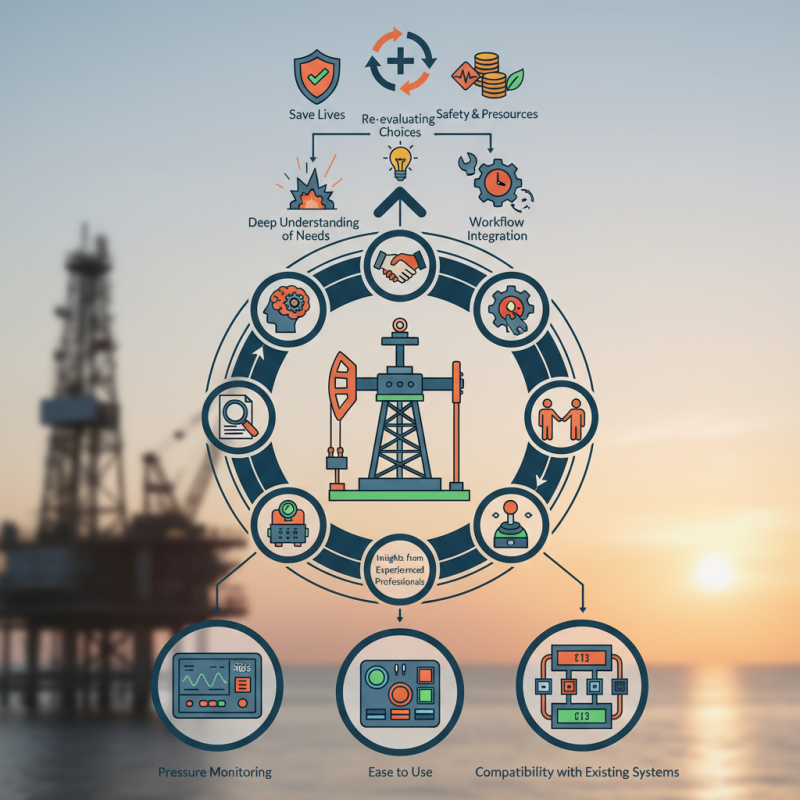
Choosing the right Well Control Box for your operations is crucial. Industry expert Dr. Emily Carter emphasizes, "A well-chosen control box can save lives and resources." This statement highlights the importance of selecting a reliable and efficient Well Control Box.
In the field of oil and gas, a Well Control Box aids in managing pressure and preventing blowouts. However, not all Well Control Boxes are created equal. Companies must consider features like pressure monitoring, ease of use, and compatibility with existing systems. Mistakes in this selection can lead to catastrophic results.
The complexity of drilling operations demands a deep understanding of your specific needs. It's essential to gain insights from experienced professionals and conduct thorough research. A Well Control Box should not only meet safety standards but also integrate seamlessly with your workflow. Re-evaluating your choices can yield significant benefits, ensuring safety and productivity.
Understanding well control is vital for maintaining safety in drilling operations. The well control box plays a crucial role in this process. A recent industry report highlighted that over 80% of blowouts can be attributed to inadequate well control measures. This underscores the importance of understanding the basics of well control systems, which manage the pressures within the wellbore. Properly selected and maintained control systems can significantly reduce risks.
When choosing a well control box, consider the specific needs of your operation. Assess the maximum pressure and temperature your equipment will encounter. Different applications demand varying functionalities. Industry experts recommend selecting a system that features user-friendly interfaces, as this can lead to quicker responses during emergencies.
Tip: Always conduct a thorough inspection of your well control system before each operation. Regular checks can prevent failures during critical moments. Remember, even minor oversights can lead to significant safety issues.
Additionally, ensure your team is well-trained in emergency procedures. The International Association of Drilling Contractors (IADC) suggests that regular training drills enhance preparedness. Keeping your team informed can also help in identifying potential risks early on. Recognizing that complacency can compromise safety is crucial in this industry.
When choosing a well control box, various key features must be evaluated to ensure reliability and efficiency. The design should focus on user-friendly interfaces and straightforward controls. According to industry reports, 78% of operators prefer systems that offer intuitive navigation. This indicates that clarity can significantly impact performance in high-pressure situations.
Another crucial aspect to consider is the box's compatibility with different drilling technologies. A recent survey highlighted that systems capable of integrating with both traditional and advanced drilling methods reduced downtime by 30%. This adaptability is vital for companies aiming to maintain operational efficiency. Moreover, durability plays a central role. Boxes constructed from robust materials withstand extreme conditions, contributing to safety. An estimated 25% of incidents in drilling operations stem from equipment failure. Therefore, investing in a high-quality well control box can mitigate this risk.
Finally, monitoring capabilities cannot be overlooked. Real-time data acquisition and analysis are essential for detecting issues early. Research shows that proactive monitoring can decrease incident occurrences by 40%. Features like automated alerts and performance dashboards empower operators to make informed decisions swiftly. Selecting a well control box with these attributes ensures not just compliance but enhances overall drilling success and safety.
When evaluating your specific well control needs, it’s essential to understand the unique characteristics of your operations. Each well site can present different challenges. Consider factors like the depth of the well and the geological formations involved. This understanding helps in selecting the right well control box.
Another vital aspect is the expected pressures and flow rates during drilling. High-pressure environments demand robust solutions. Assessing your team's expertise is equally important. Do they have the training to operate complex systems? This aspect often gets overlooked but is crucial for safe operations.
Lastly, think about regulatory requirements. Compliance can vary significantly by location. It’s essential to stay updated on the latest industry standards. Regularly reviewing these aspects can help identify potential gaps in your well control strategy. Taking time to reflect on your current equipment's performance is vital. Sometimes, existing systems may need upgrades or adjustments.
| Feature | Importance | Recommended Specifications | Considerations |
|---|---|---|---|
| Pressure Range | High | 0-15,000 psi | Ensure it meets your drilling operations' range. |
| Control System | High | Programmable Logic Controller (PLC) | Consider ease of integration with existing systems. |
| User Interface | Medium | Touchscreen with clear visual indicators | Make sure it is user-friendly for operators. |
| Durability | High | IP67 or equivalent rating | Ensure it can withstand harsh environments. |
| Power Supply | Medium | 110-240 V AC or 12-24 V DC | Consider the availability of power sources at the site. |
| Remote Monitoring | High | Compatible with IoT solutions | Evaluate the connectivity options available. |
When choosing a well control box, brand and model variations matter significantly. Different manufacturers have diverse features, making some boxes more suitable for specific applications. Assessing the design is essential. Some boxes offer robust build quality, while others emphasize portability. The right choice often depends on your operational environment.
Functionality is crucial. Some models focus on advanced technology, such as digital monitoring systems. Others may prioritize simplicity, making them easier to operate. Customer feedback can guide decisions, but it often highlights inconsistencies. Many users find that what works in one scenario might not suit another. Testing various options can reveal unexpected limitations.
Price is another factor to consider. Higher-priced options aren’t always the best. Sometimes, budget-friendly models deliver satisfactory performance. Researching user experiences can uncover these hidden gems. However, some reviews might be biased, and new models can have unforeseen issues. Evaluating warranties and customer service can also provide insights into reliability and support.
Budgeting for a well control box requires careful consideration. It's not just about the price tag. The balance between cost and value is crucial. An expensive tool might offer superior features, but often, more affordable options meet basic needs well. Analyze what functions are essential for your operations. What do you truly need it for?
Consider the industry standards and safety regulations. This adds a layer of value beyond mere cost. Investing in quality equipment can prevent costly mistakes later. A reliable well control box minimizes risks. Look at warranties and support services too. Sometimes, the cheapest option lacks these crucial elements.
Reflect on your specific requirements. Are you facing unique operational challenges? Maybe a basic box won't suffice. In that case, it’s wise to invest a bit more for advanced features. However, resist the urge to overspend on flashy tech that won’t enhance your workflow. Always align your choice with both your budget and real-world applications.
„Thanks to the LUVIR technology, the solder resist process could be switched directly from the previously used mask exposure to direct exposure. As an outstanding digital solution on the market, this technology has been able to demonstrate fast process times and superior quality on our certified conventional ink in production. This allowed us to fully digitize the solder mask process at low cost – without process or ink adjustments. An excellent benefit to our production in Rot am See.“
Ralf Göhringer (Head of Production WE Rot am See)
I would definitely recommend the Limata machine and team for a future company purchase
Michael Greenaway
Compunetics Inc.
“The Limata ldi has been amazing!! Best thing we did was buy this machine”
Richard Brady
GM
Circuitlabs
“Since 2019, we have been running the Limata X1000 LDI system (including LUVIR for solder mask imaging) in daily production as an addition to our current process with film. The machine was capable of properly exposing Taiyo PSR-4000 BN (DI) solder mask types on normal to high-copper boards using a new and unique direct imaging process. The machine operating interface is very user friendly which allowed for a quick technical training curve. The pre-registration processing reduced several seconds of production time at every print. Limata support and service staff is incomparable. They supported our team every step of the way at basically any time of the day or night, with literally, an immediate response time, customizing the software interface to best fit our Operations and needs.
We have exposed more than 8,000 prints since end of October, on various solder mask colors and some resist film panels. Limata, has proven to be very capable and innovative. They are a strong contender in the industry.
We have very much enjoyed this project, and working with the team!
Thank you Limata for the continued support and being a part of our growth.”
Bill Sezate
Vice President, GM
Summit Interconnect
As a replacement to our current contact exposure process with film, the LIMATA X2000 system including LUVIR-Technology was capable of properly exposing non-LDI solder mask types using a direct imaging process. The machine offers cutting edge software with a very intuitive operating interface which allowed for quick technician training curve. The dual drawer system combined with pre-registration processing reduced several seconds of production time at every machine cycle. Limata support and service staff is world class. They added software patches to keep production running at shortest possible response times, customized the software interface to best fit our in-house Operations system, and even wrote a step-by-step machine processing manual. As a result of the project, we have exposed more than 16,000 times on various product types and solder mask brands/colors. Limata, in a very short timeframe as a company, has definitely shown they are truly innovative and will be challenging the industry of direct imaging for the top spot.
Kevin Beattie
Process Engineer
TTM Technologies
Forest Grove Division
