When embarking on a new project, choosing the right materials is crucial. One option that stands out is the Cold Rolled Stainless Steel Coil. This material combines durability and aesthetic appeal, making it ideal for various applications. Its smooth surface and precise dimensions enhance both functionality and design flexibility.
Cold Rolled Stainless Steel Coil is known for its strength and resistance to corrosion. It is widely used in industries such as construction, automotive, and food processing. The manufacturing process ensures a consistent thickness, which is vital for many projects. However, selecting the right grade can be a challenging task. This decision can significantly impact the project’s longevity.
Moreover, while this material offers many advantages, one must also consider its limitations. Cold rolling can introduce stresses, leading to warping if not handled correctly. Researching reliable suppliers and understanding your specific needs can greatly influence your project's success. The Cold Rolled Stainless Steel Coil may seem perfect at first glance, but careful consideration is essential.
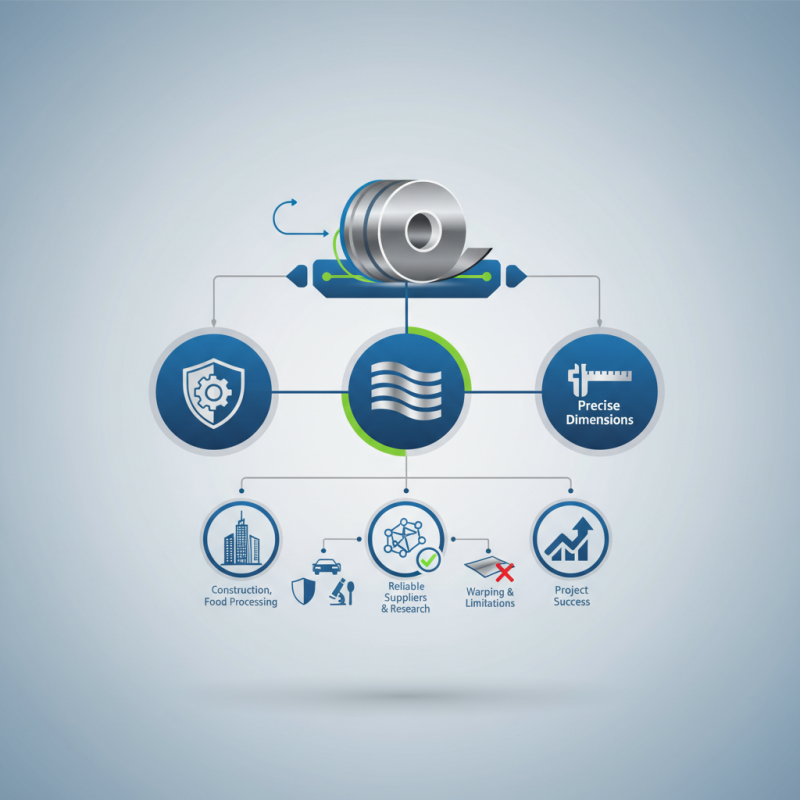
Cold rolled stainless steel coils stand out in manufacturing for several reasons. According to a report from the International Stainless Steel Forum, the demand for cold rolled products has increased by 5% annually since 2018. This material offers superior surface finish and enhanced mechanical properties. The precision in thickness is crucial for applications where tolerances are tight.
Manufacturers appreciate the excellent corrosion resistance of cold rolled stainless steel. The Chromium content typically exceeds 10%, providing inherent durability. For example, in environments with harsh chemicals, cold rolled stainless steel maintains structural integrity better than other materials. Additionally, its formability allows for intricate designs while maintaining strength.
However, challenges exist. Cold rolled stainless steel can be more expensive initially. Some projects may require significant investment. Companies need to assess if long-term benefits justify the costs. Proper storage and handling are essential to prevent surface damage. With careful considerations, utilizing cold rolled stainless steel can lead to innovative and resilient products in diverse industries.
Cold rolled stainless steel offers distinct advantages over hot rolled alternatives. The cold rolling process enhances the strength and hardness of the material. According to industry reports, cold rolled stainless steel can achieve yield strengths up to 80,000 psi, compared to approximately 50,000 psi for hot rolled. This increase in strength is crucial for structural applications.
The surface finish of cold rolled stainless steel is also superior. It features a smooth and polished surface, which not only looks appealing but is also ideal for environments requiring hygiene, such as food processing and medical equipment. In a study conducted by the Steel Recycling Institute, companies reported a 20% reduction in maintenance costs due to the durability of cold rolled stainless steel surfaces. These properties make it a preferred choice in high-demand settings.
Despite these benefits, cold rolled stainless steel may have limitations. It can be more expensive initially than its hot rolled counterpart. Additionally, its increased hardness may complicate fabrication processes. Projects requiring extensive bending or machining may find cold rolled steel challenging. A careful evaluation of specific project needs is essential for the best outcomes.
Cold rolled stainless steel coils are widely used across various industries due to their unique properties. They offer improved strength and a smooth finish. These characteristics make them ideal for applications in automotive manufacturing. The automotive sector accounts for approximately 25% of the global stainless steel market, with a significant focus on durability and corrosion resistance.
In the construction industry, cold rolled stainless steel coils are crucial for building facades and structural components. Their aesthetic appeal and low maintenance requirements attract architects and engineers. According to industry reports, the architectural applications of stainless steel are projected to grow by around 5% annually. This growth reflects a rising demand for sustainable and long-lasting materials.
The food processing sector also benefits from cold rolled stainless steel. Its resistance to harsh chemicals and high temperatures is vital for equipment used in food production. According to industry surveys, nearly 40% of food processing equipment is made from stainless steel. However, challenges in sourcing high-quality materials persist, prompting a need for continuous improvement in supply chain practices.
Choosing cold rolled stainless steel coil for your project is a smart decision due to its cost-effectiveness and durability. Cold rolling alters the steel's properties, enhancing its strength and surface finish. This process results in a smooth, attractive surface, which is ideal for many applications.
Durability is another key factor. Cold rolled stainless steel is resistant to corrosion and wear, making it a reliable choice for outdoor and industrial settings. Projects that require long-lasting materials benefit greatly. However, not all projects need this level of durability.
It's important to consider specific project needs. For some applications, the initial cost may seem high. Yet, when factoring in long-term performance, cold rolled stainless steel often proves more economical. It requires less maintenance and replacement over time, making it a worthy investment despite its upfront costs. Always evaluate your project's unique demands before making a final choice.
Cold rolled stainless steel is increasingly recognized for its sustainability. This material boasts recyclability rates over 90%, meaning it can be reclaimed and reused without losing its properties. A report by the International Stainless Steel Forum reveals that the production of stainless steel emits significantly less CO2 when compared to other metals. This reduction contributes to lower overall environmental impact.
Using cold rolled stainless steel can also lessen resource consumption. The manufacturing process requires less energy than hot rolled variations. According to the American Iron and Steel Institute, energy savings can reach up to 30%. As projects increasingly aim for sustainable solutions, cold rolled stainless steel presents a viable option.
Tip: Always consider the lifecycle of materials in your projects. This approach provides a clearer picture of their environmental impact.
Moreover, cold rolled stainless steel tends to resist corrosion better than alternatives, extending the lifespan of products. While upfront costs may seem high, the long-term savings and environmental benefits are substantial. It's important to weigh both initial investment and lasting impact. Not every project will benefit equally, so careful evaluation is essential.
Tip: Engage with sustainability experts for insights tailored to your specific needs. This can help in making informed choices.
„Thanks to the LUVIR technology, the solder resist process could be switched directly from the previously used mask exposure to direct exposure. As an outstanding digital solution on the market, this technology has been able to demonstrate fast process times and superior quality on our certified conventional ink in production. This allowed us to fully digitize the solder mask process at low cost – without process or ink adjustments. An excellent benefit to our production in Rot am See.“
Ralf Göhringer (Head of Production WE Rot am See)
I would definitely recommend the Limata machine and team for a future company purchase
Michael Greenaway
Compunetics Inc.
“The Limata ldi has been amazing!! Best thing we did was buy this machine”
Richard Brady
GM
Circuitlabs
“Since 2019, we have been running the Limata X1000 LDI system (including LUVIR for solder mask imaging) in daily production as an addition to our current process with film. The machine was capable of properly exposing Taiyo PSR-4000 BN (DI) solder mask types on normal to high-copper boards using a new and unique direct imaging process. The machine operating interface is very user friendly which allowed for a quick technical training curve. The pre-registration processing reduced several seconds of production time at every print. Limata support and service staff is incomparable. They supported our team every step of the way at basically any time of the day or night, with literally, an immediate response time, customizing the software interface to best fit our Operations and needs.
We have exposed more than 8,000 prints since end of October, on various solder mask colors and some resist film panels. Limata, has proven to be very capable and innovative. They are a strong contender in the industry.
We have very much enjoyed this project, and working with the team!
Thank you Limata for the continued support and being a part of our growth.”
Bill Sezate
Vice President, GM
Summit Interconnect
As a replacement to our current contact exposure process with film, the LIMATA X2000 system including LUVIR-Technology was capable of properly exposing non-LDI solder mask types using a direct imaging process. The machine offers cutting edge software with a very intuitive operating interface which allowed for quick technician training curve. The dual drawer system combined with pre-registration processing reduced several seconds of production time at every machine cycle. Limata support and service staff is world class. They added software patches to keep production running at shortest possible response times, customized the software interface to best fit our in-house Operations system, and even wrote a step-by-step machine processing manual. As a result of the project, we have exposed more than 16,000 times on various product types and solder mask brands/colors. Limata, in a very short timeframe as a company, has definitely shown they are truly innovative and will be challenging the industry of direct imaging for the top spot.
Kevin Beattie
Process Engineer
TTM Technologies
Forest Grove Division
