Choosing the right flat flex conveyor belt is crucial for efficient operations in various industries. According to the Conveyor Equipment Manufacturers Association (CEMA), conveyor systems contribute to a significant reduction in labor costs and increase productivity by up to 30%. Selecting a suitable flat flex conveyor belt enhances material handling and improves workflow efficiency.
flat flex conveyor belts are versatile and can adapt to different applications. They excel in food processing, packaging, and automotive industries. The right material choice can improve durability and performance. A report from the International Journal of Advanced Manufacturing Technology highlights that using high-quality conveyor belts can prolong system life. This emphasizes the importance of making informed decisions.
Despite their advantages, not all flat flex conveyor belts are created equal. Understanding specifications, weight capacity, and belt design is essential. Poor choices may lead to maintenance issues and downtime. Reflecting on past experiences, many businesses realize the impact of underestimating operational needs. Careful consideration can lead to significant long-term benefits.
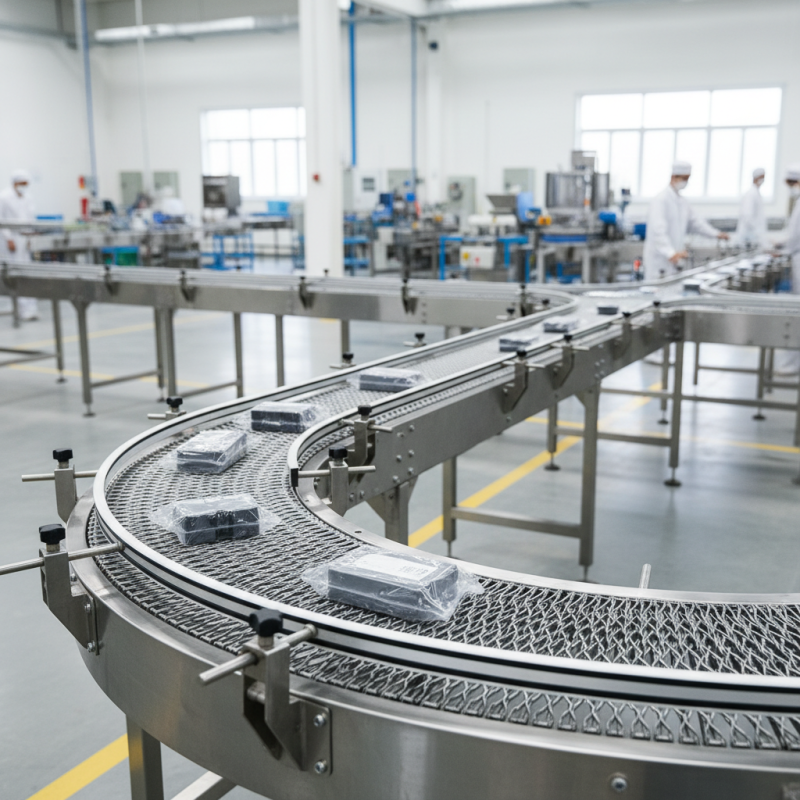
Flat flex conveyor belts are crucial in various industries. They provide efficient transport for products across different stages of production. Understanding their structure is essential for making informed choices.
These belts are made of interlinked strips, allowing flexibility and easy movement. Their design is optimal for conveying small items or irregular shapes. Consider the materials used; some are better for specific applications. For example, certain materials resist chemicals but may not withstand high temperatures.
Choosing the right belt is not always straightforward. Users often overlook the importance of belt width and load capacity. A common misstep is assuming that a standard size will fit all needs. Too often, operators face challenges because of improper belt selection. Regular reviews of performance can lead to improvements over time.
Choosing the right flat flex conveyor belt is crucial for operational efficiency. Several key factors influence this decision. Material type plays a significant role. Consider the products being transported. Different materials offer various levels of durability and flexibility. Selecting a belt that matches the specific needs of your process is vital.
Belt width is another important factor. It should align with the width of your conveyor system. A mismatch can lead to inefficiencies and increased wear. Additionally, the weight capacity of the belt must match the load it will carry. Too heavy a load can result in premature failure. It's essential to carefully assess these requirements to avoid costly mistakes.
Don't overlook the operating environment. Temperature and humidity can affect belt performance. Certain materials may degrade quicker under extreme conditions. Reflect on your specific environment and choose a belt accordingly. While all these factors are important, understanding your unique demands will guide you toward the right choice.
When selecting a flat flex conveyor belt, the choice between stainless steel and plastic materials is crucial. Stainless steel belts are known for their durability and strength. They excel in high-temperature environments and are resistant to corrosion. This makes them ideal for industries like food processing and pharmaceuticals. The high strength can often support heavier loads without sagging.
On the other hand, plastic belts offer flexibility and lightweight designs. They can be easier to handle and install. Plastic materials are typically quieter during operation and can reduce wear on moving parts. However, they may not withstand extreme temperatures or heavy loads as well as stainless steel counterparts. It is important to evaluate the specific needs of your application when choosing between these materials.
Tips for decision-making: Consider the operating environment closely. If your workflow involves heavy loads and extreme conditions, stainless steel may be the better option. For applications requiring lighter materials or flexibility, plastic can be a cost-effective choice. Additionally, remember that both belt types can vary significantly in quality and construction. Always seek trusted suppliers to ensure reliable performance and durability over time.
When selecting a flat flex conveyor belt, understanding load capacity is crucial. Each application has unique demands. The weight and type of materials influence the belt's required strength. If the load exceeds the belt's capacity, it can lead to failures. Testing with actual loads is essential to avoid unexpected breakdowns.
Performance requirements also play a pivotal role. Different environments may require varied resistance levels against chemicals, temperatures, and abrasion. Is the belt running in a wet or dry area? Is it exposed to high heat? These factors should never be overlooked. Customer feedback and case studies can provide insights into how belts perform under similar conditions.
Choosing the right flat flex conveyor belt is complex. Users often express dissatisfaction with their initial choices. Analyzing past mistakes helps ensure better decisions. Engage with industry professionals to gain deeper insights. They possess hands-on experience that can guide your selection process effectively.
Maintaining a flat flex conveyor belt requires attention to various factors. Properly managing load weight can significantly extend its lifespan. Overloading can lead to premature wear. Industry data shows that belts can last several years with appropriate usage. However, misuse often leads to failures within months.
Regular cleaning is essential. Contaminants can accumulate, causing friction and wear. Studies indicate that a clean belt can reduce maintenance costs by up to 20%. Additionally, checking for misalignment is crucial. This issue can cause uneven wear. Misalignment might go unnoticed but can lead to costly downtime.
Lubrication is another critical aspect. The right lubricant decreases friction. It prevents excessive heat buildup. Research indicates that belts using adequate lubrication last 30% longer than those that don’t. Regular inspections can identify potential problems early. This proactive approach helps avoid extensive repairs. Proper maintenance may seem straightforward. Yet, many overlook these essentials. A simple oversight can result in significant issues down the line.
| Dimension | Material | Load Capacity (kg/m²) | Belt Thickness (mm) | Operating Temperature (°C) | Maintenance Frequency (months) |
|---|---|---|---|---|---|
| 1000mm x 100m | Polyurethane | 50 | 4 | -20 to 80 | 6 |
| 1200mm x 50m | PVC | 70 | 5 | -10 to 90 | 12 |
| 1500mm x 75m | Nylon | 60 | 6 | -15 to 85 | 8 |
| 800mm x 200m | Rubber | 80 | 7 | -20 to 100 | 10 |
„Thanks to the LUVIR technology, the solder resist process could be switched directly from the previously used mask exposure to direct exposure. As an outstanding digital solution on the market, this technology has been able to demonstrate fast process times and superior quality on our certified conventional ink in production. This allowed us to fully digitize the solder mask process at low cost – without process or ink adjustments. An excellent benefit to our production in Rot am See.“
Ralf Göhringer (Head of Production WE Rot am See)
I would definitely recommend the Limata machine and team for a future company purchase
Michael Greenaway
Compunetics Inc.
“The Limata ldi has been amazing!! Best thing we did was buy this machine”
Richard Brady
GM
Circuitlabs
“Since 2019, we have been running the Limata X1000 LDI system (including LUVIR for solder mask imaging) in daily production as an addition to our current process with film. The machine was capable of properly exposing Taiyo PSR-4000 BN (DI) solder mask types on normal to high-copper boards using a new and unique direct imaging process. The machine operating interface is very user friendly which allowed for a quick technical training curve. The pre-registration processing reduced several seconds of production time at every print. Limata support and service staff is incomparable. They supported our team every step of the way at basically any time of the day or night, with literally, an immediate response time, customizing the software interface to best fit our Operations and needs.
We have exposed more than 8,000 prints since end of October, on various solder mask colors and some resist film panels. Limata, has proven to be very capable and innovative. They are a strong contender in the industry.
We have very much enjoyed this project, and working with the team!
Thank you Limata for the continued support and being a part of our growth.”
Bill Sezate
Vice President, GM
Summit Interconnect
As a replacement to our current contact exposure process with film, the LIMATA X2000 system including LUVIR-Technology was capable of properly exposing non-LDI solder mask types using a direct imaging process. The machine offers cutting edge software with a very intuitive operating interface which allowed for quick technician training curve. The dual drawer system combined with pre-registration processing reduced several seconds of production time at every machine cycle. Limata support and service staff is world class. They added software patches to keep production running at shortest possible response times, customized the software interface to best fit our in-house Operations system, and even wrote a step-by-step machine processing manual. As a result of the project, we have exposed more than 16,000 times on various product types and solder mask brands/colors. Limata, in a very short timeframe as a company, has definitely shown they are truly innovative and will be challenging the industry of direct imaging for the top spot.
Kevin Beattie
Process Engineer
TTM Technologies
Forest Grove Division
