Choosing the right coil inductor is essential for optimizing electronic circuits. According to Dr. Emily Carter, a leading expert in electromagnetic components, “The right coil inductor can greatly influence the performance and efficiency of your designs.” Her insights underscore the importance of selecting inductors tailored to specific applications.
Coil inductors serve various functions. They can filter signals, store energy, or regulate current in circuits. Understanding your application's needs is crucial. Different inductors vary in inductance values, resistance, and size. Evaluating these components requires careful consideration of both technical specifications and practical implications.
While many engineers rely heavily on datasheets, real-world performance can vary. Testing inductors in actual applications often reveals performance nuances that specifications do not capture. Some may overlook the impact of temperature changes or frequency shifts on inductor behavior. Achieving optimal performance demands attention to these details.
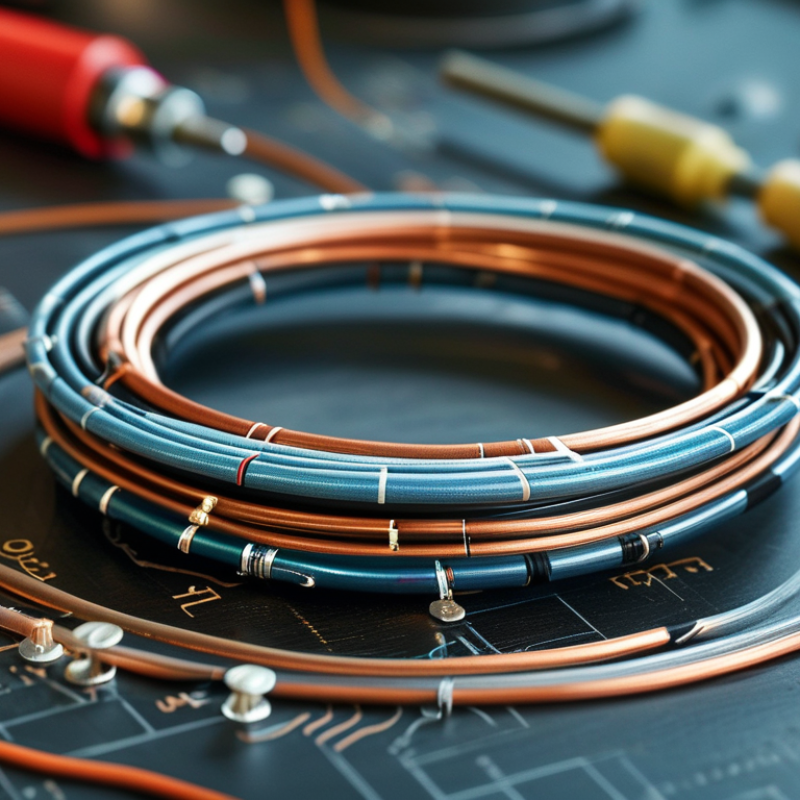
Understanding coil inductors requires grasping key concepts and definitions. At their core, inductors are components that resist changes in current. They store energy in a magnetic field when current flows through them. The inductance value is a critical parameter, typically measured in henries (H). A higher inductance value indicates a stronger ability to store energy. Industry reports indicate that inductors with high inductance values are increasingly sought after in power supply applications.
Coil geometry also plays a significant role in performance. The winding's shape and the core material can greatly influence inductance and current handling. For instance, ferrite cores are prevalent due to their efficiency in high-frequency applications. A recent market study highlighted that inductors with toroidal shapes exhibit less electromagnetic interference compared to traditional designs. This is crucial for applications requiring precision, like RF circuits and audio equipment.
Yet, selecting the right inductor is not always straightforward. Factors such as DC resistance, saturation current, and temperature coefficient may lead users to make suboptimal choices. It’s essential to study these characteristics deeply. Many engineers may overlook these, focusing solely on inductance. Understanding all specifications ensures better performance and reliability in real-world applications.
When selecting a coil inductor for your circuit design, several factors must be considered. The frequency of operation is crucial, as higher frequencies often require inductors with a lower parasitic capacitance. According to a report by the IEEE, inductors rated for high frequencies, typically above 1 MHz, should have core materials optimizing this trait. This selection impacts both efficiency and performance.
Another important factor is the inductance value required for your application. Precision and stability are vital. Tolerance levels of less than 5% can be necessary for critical applications. Various studies indicate that an incorrect inductance value can lead to unexpected circuit behavior, highlighting the importance of careful measurement and selection.
A practical consideration includes the physical size and thermal management of the inductor. Larger inductors may handle more power but can lead to heat generation. Ensuring your inductor can dissipate heat without affecting performance is essential for reliability.
Consider the application's specific environmental conditions. Inductors exposed to humidity or extreme temperatures may require additional protection. Choosing the right coil inductor isn't only about specifications but also about understanding your circuit's entire ecosystem.
Selecting the right coil inductor hinges on understanding its inductance value, which is crucial for your application's performance. To calculate this, you must consider the frequency of operation, the required current, and the voltage. Inductance needs vary by application, so take a close look at the specifications and requirements.
When calculating the inductance value, remember that different types of inductors can lead to varying performance outcomes. Evaluate the circuit design, including load characteristics and power requirements, to determine the most suitable inductor type. It's essential to recognize that ideal values may not always translate directly to real-world applications.
Consider environmental factors too. Temperature and ambient conditions can impact inductance. It's wise to account for potential fluctuations. Understanding these parameters will enhance your design's reliability. Keep in mind that trial and error may be necessary. Testing multiple inductors can reveal unexpected behaviors, helping you refine your choice.
When selecting a coil inductor, understanding the core materials is crucial. Air cores offer a high frequency response. They are lightweight and provide lower inductance values. However, they may not be suitable for applications requiring higher power. Their efficiency diminishes as current increases.
Ferrite cores are a popular choice for many electronic devices. They are effective in reducing eddy currents, making them suitable for RF applications. Ferrite materials can handle moderate power levels well. Still, they may saturate if too much current flows through them. Users must consider these limits carefully.
Iron cores are heavy but can provide high inductance. They perform well under higher power conditions. Nonetheless, they have significant losses at high frequencies. This contributes to inefficiency in certain applications. Choosing the right core involves balancing these trade-offs and understanding the specific needs of your project.
When selecting a coil inductor, quality and reliability are paramount. Industry standards provide benchmarks for assessing inductor performance. For instance, the IEEE 1547 standard emphasizes the importance of durability in inductors used for renewable energy applications. According to a 2022 report from the International Electrotechnical Commission, over 30% of failures in electronic systems are linked to subpar components. This highlights the necessity for rigorous quality checks.
Manufacturers should adhere to AS9100 standards, ensuring a systematic approach to quality management. Such frameworks require consistent testing throughout the production process. For example, temperature stability tests can reveal how an inductor performs under extreme conditions. Data from market research indicates that inductors failing to meet these standards present a risk of thermal runaway, leading to catastrophic failures.
The need for traceability is also critical. Ensuring each component can be tracked back to its production batch can aid in identifying quality issues. Comprehensive reliability testing, including life cycle assessments, has shown that properly tested inductors can last up to ten years under standard operating conditions. However, without such diligence, even a small production error can lead to significant operational disruptions in sensitive applications.
„Thanks to the LUVIR technology, the solder resist process could be switched directly from the previously used mask exposure to direct exposure. As an outstanding digital solution on the market, this technology has been able to demonstrate fast process times and superior quality on our certified conventional ink in production. This allowed us to fully digitize the solder mask process at low cost – without process or ink adjustments. An excellent benefit to our production in Rot am See.“
Ralf Göhringer (Head of Production WE Rot am See)
I would definitely recommend the Limata machine and team for a future company purchase
Michael Greenaway
Compunetics Inc.
“The Limata ldi has been amazing!! Best thing we did was buy this machine”
Richard Brady
GM
Circuitlabs
“Since 2019, we have been running the Limata X1000 LDI system (including LUVIR for solder mask imaging) in daily production as an addition to our current process with film. The machine was capable of properly exposing Taiyo PSR-4000 BN (DI) solder mask types on normal to high-copper boards using a new and unique direct imaging process. The machine operating interface is very user friendly which allowed for a quick technical training curve. The pre-registration processing reduced several seconds of production time at every print. Limata support and service staff is incomparable. They supported our team every step of the way at basically any time of the day or night, with literally, an immediate response time, customizing the software interface to best fit our Operations and needs.
We have exposed more than 8,000 prints since end of October, on various solder mask colors and some resist film panels. Limata, has proven to be very capable and innovative. They are a strong contender in the industry.
We have very much enjoyed this project, and working with the team!
Thank you Limata for the continued support and being a part of our growth.”
Bill Sezate
Vice President, GM
Summit Interconnect
As a replacement to our current contact exposure process with film, the LIMATA X2000 system including LUVIR-Technology was capable of properly exposing non-LDI solder mask types using a direct imaging process. The machine offers cutting edge software with a very intuitive operating interface which allowed for quick technician training curve. The dual drawer system combined with pre-registration processing reduced several seconds of production time at every machine cycle. Limata support and service staff is world class. They added software patches to keep production running at shortest possible response times, customized the software interface to best fit our in-house Operations system, and even wrote a step-by-step machine processing manual. As a result of the project, we have exposed more than 16,000 times on various product types and solder mask brands/colors. Limata, in a very short timeframe as a company, has definitely shown they are truly innovative and will be challenging the industry of direct imaging for the top spot.
Kevin Beattie
Process Engineer
TTM Technologies
Forest Grove Division
