Choosing the best Car Garage Lift in 2026 starts with the work you actually plan to do. A home mechanic changing tires has different needs from a shop servicing vehicles every day. Write down the heaviest vehicle you expect to raise, then compare its weight with the lift’s rated capacity. Do not treat a higher rating as a substitute for correct installation or careful operation. Measure the garage ceiling, door tracks, and clear floor space before choosing a model. A tape measure and a clear sketch can prevent an expensive mismatch. Small details matter.
Consider lift style, power requirements, floor condition, and access around the vehicle. Two-post lifts can provide useful access beneath many vehicles, while four-post models may suit storage or certain service tasks. Neither is automatically right for every garage. Check the manufacturer’s installation instructions, anchoring requirements, maintenance schedule, and safety-lock design. Ask a qualified installer to assess the concrete slab if its condition or thickness is uncertain. That check is worth the time.
Price deserves a closer look, too. Include delivery, installation, electrical work, and future service in your budget, not just the advertised cost. Read the warranty terms and confirm that replacement parts and support are available. Reviews can reveal recurring issues, but individual garages differ, so verify details with the manufacturer or installer. It is easy to focus on lifting height and miss everyday access. Pause and reconsider the layout. The right Car Garage Lift should fit your vehicles, workspace, and experience level, while giving you clear instructions and dependable safety features.
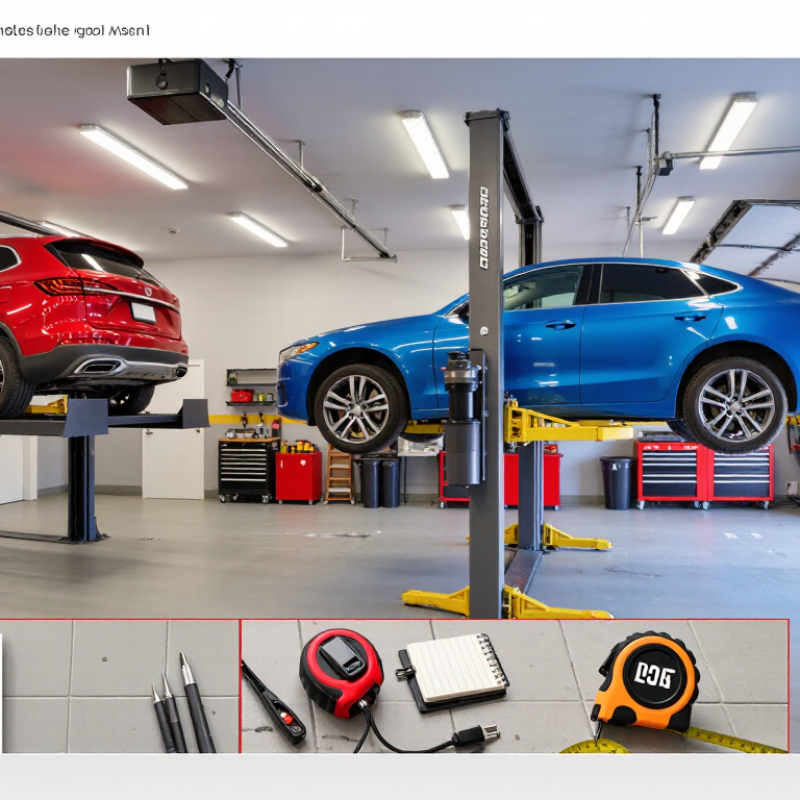
Before comparing lift styles, list every vehicle you expect to raise. Record curb weight, wheelbase, track width, and the manufacturer’s recommended lifting points. Include the heaviest vehicle, not just the one in your driveway today. The U.S. Environmental Protection Agency’s 2023 Automotive Trends Report puts the average new vehicle’s weight at 4,329 pounds for model year 2022. That figure is context, not a safe lift-capacity target. Trucks, electric vehicles, and cargo can add substantial weight. Check each vehicle’s manual and the lift’s rated capacity and arm reach. Measure it empty.
Garage dimensions matter just as much. Measure ceiling height, door tracks, posts, and the clear floor area with the vehicle parked inside. A tall truck may fit beneath a raised lift but leave little room for overhead work. A wider vehicle can also crowd lift arms or nearby walls. Check the floor’s condition and thickness against the lift’s installation requirements; a tape measure cannot assess concrete strength. This is where a quick guess fails. I would recheck the measurements, especially around door hardware, because a few inches can change which lift configuration works. Keep room for safe entry and exit, too. A lift that fits on paper may feel cramped in daily use.
Choosing a garage lift starts with the work you actually do, not the tallest vehicle in a sales photo. A two-post lift leaves wheels free, making brake, tire, and suspension work easier. It needs suitable floor strength, correct vehicle balance, and careful arm placement. Small mistakes matter. For home garages, limited ceiling height or an uneven slab can rule it out.
A four-post lift supports tires on runways and often suits storage, inspections, and fluid service. It feels stable for parking, but the wheels remain loaded unless you add a rolling jack. Check runway length against your longest vehicle, and account for the lift’s footprint when doors open. That detail is easy to miss. Scissor lifts use compact platforms and can fit spaces where posts are awkward. Some designs restrict access beneath the vehicle’s center, so match the lift to your tasks. Not always an easy trade-off.
Portable lifts can be moved or stored, though portability does not remove the need for a level, load-rated surface. Compare rated capacity with the vehicle’s actual weight, including tools or cargo, and follow the specified lifting points. Before buying, measure ceiling clearance, slab dimensions, and available power; ask a qualified installer to assess uncertain floors. I would not choose by capacity alone. Maintenance matters too: inspect locks, cables, and hydraulic lines on the recommended schedule. A little planning feels tedious, but a lift that does not fit your work quickly becomes garage furniture.
How to Choose the Best Car Garage Lift in 2026?
Lift capacity is more than a number on a spec sheet. The U.S. EPA’s 2023 Automotive Trends Report gives the average new light-duty vehicle weight as 4,329 pounds for model year 2022. That average is only a starting point. A loaded pickup or heavier electric vehicle may weigh much more, so check the vehicle’s actual curb weight and the lift’s rated capacity. Do not treat the rating as a target to exceed. Numbers matter. Measure wheelbase, track width, overall height, and door clearance in your own garage. A frequent oversight is the raised garage door: it can interfere with a vehicle on the lift.
Safety features deserve equal attention. Look for secure mechanical locks, arm restraints, clear lock-release controls, and visible capacity information. The ANSI/ALI ALCTV-2022 standard covers vehicle-lift construction, testing, and validation; check that a lift is certified to the applicable standard. Also confirm the floor can support the installation and follow the lift maker’s anchoring instructions. Keep enough room to open doors and move around the vehicle without squeezing past posts. This may feel overly cautious, but a few extra measurements are cheaper than discovering a clearance problem after installation. Recheck dimensions before ordering.
Compare representative rated-capacity ranges for common lift types. Actual capacities vary by model, so check the manufacturer’s specifications before buying.
Selection tip: Choose a lift rated above the heaviest vehicle you plan to service, and confirm its overall dimensions, drive-through width, lifting height, and required ceiling clearance fit your garage. Look for mechanical safety locks and other model-specific safety systems, and follow the manufacturer’s installation and operating instructions.
Choosing a garage lift starts with the bay, not the vehicle brochure. Measure ceiling height, door tracks, floor thickness, and the widest vehicle you expect to service. Check the lift’s rated capacity against real vehicle weights, including tools or added equipment. A few centimetres of clearance can decide whether a vehicle’s doors open safely. Small details matter.
Power needs deserve a site check. Confirm voltage, phase, circuit capacity, and where cables or hydraulic lines will run before ordering. The U.S. Department of Energy’s 2002 Industrial Electric Motor Systems Market Opportunities Assessment estimated that motor-driven systems used about 68% of U.S. industrial electricity. That figure is not lift-specific, but it underlines why electrical planning and efficient equipment matter. Have a qualified electrician verify the actual supply; assumptions here can be costly.
Maintenance access is part of the installation plan. Leave room to reach locks, cables, hydraulic fittings, and controls without working around stored tires. The Automotive Lift Institute’s ANSI/ALI ALOIM standard covers lift operation, inspection, and maintenance; ALI also recommends annual inspection by a qualified lift inspector. Keep a written log of inspections, repairs, and unusual noises. I would revisit the choice if the service mix changes—what fits today may not fit tomorrow.
A car garage lift is a long-term shop investment, so compare more than the sticker price. Ask for an itemized quote covering delivery, installation, electrical work, and any required floor preparation. A low upfront cost can rise quickly if your concrete slab needs evaluation or reinforcement. Check the lift’s rated capacity against the heaviest vehicle you expect to service, not just today’s workload. Small detail, big consequence.
Certifications deserve the same scrutiny as price. Look for documentation from a recognized, independent testing organization, and confirm that the model and configuration match the paperwork. Ask the seller for installation requirements and a clear maintenance schedule. A certificate is useful, but it does not replace proper setup, routine inspections, or trained operation. Some buyers skip these checks when a lift looks sturdy. That is an easy mistake to make.
Read the warranty line by line. Compare coverage for structural parts, hydraulic components, labor, and shipping; these may have different terms. Find out who handles a claim and whether maintenance records are required. Ask what the warranty excludes, including wear items or damage linked to improper installation. Keep the answers in writing. I would also compare the cost of common replacement parts, though this step is easy to overlook when everything is new. A clear warranty and realistic service plan can matter more than a small discount.
„Thanks to the LUVIR technology, the solder resist process could be switched directly from the previously used mask exposure to direct exposure. As an outstanding digital solution on the market, this technology has been able to demonstrate fast process times and superior quality on our certified conventional ink in production. This allowed us to fully digitize the solder mask process at low cost – without process or ink adjustments. An excellent benefit to our production in Rot am See.“
Ralf Göhringer (Head of Production WE Rot am See)
I would definitely recommend the Limata machine and team for a future company purchase
Michael Greenaway
Compunetics Inc.
“The Limata ldi has been amazing!! Best thing we did was buy this machine”
Richard Brady
GM
Circuitlabs
“Since 2019, we have been running the Limata X1000 LDI system (including LUVIR for solder mask imaging) in daily production as an addition to our current process with film. The machine was capable of properly exposing Taiyo PSR-4000 BN (DI) solder mask types on normal to high-copper boards using a new and unique direct imaging process. The machine operating interface is very user friendly which allowed for a quick technical training curve. The pre-registration processing reduced several seconds of production time at every print. Limata support and service staff is incomparable. They supported our team every step of the way at basically any time of the day or night, with literally, an immediate response time, customizing the software interface to best fit our Operations and needs.
We have exposed more than 8,000 prints since end of October, on various solder mask colors and some resist film panels. Limata, has proven to be very capable and innovative. They are a strong contender in the industry.
We have very much enjoyed this project, and working with the team!
Thank you Limata for the continued support and being a part of our growth.”
Bill Sezate
Vice President, GM
Summit Interconnect
As a replacement to our current contact exposure process with film, the LIMATA X2000 system including LUVIR-Technology was capable of properly exposing non-LDI solder mask types using a direct imaging process. The machine offers cutting edge software with a very intuitive operating interface which allowed for quick technician training curve. The dual drawer system combined with pre-registration processing reduced several seconds of production time at every machine cycle. Limata support and service staff is world class. They added software patches to keep production running at shortest possible response times, customized the software interface to best fit our in-house Operations system, and even wrote a step-by-step machine processing manual. As a result of the project, we have exposed more than 16,000 times on various product types and solder mask brands/colors. Limata, in a very short timeframe as a company, has definitely shown they are truly innovative and will be challenging the industry of direct imaging for the top spot.
Kevin Beattie
Process Engineer
TTM Technologies
Forest Grove Division
