Selecting a Plastic Foam Wall Board Mould is a production decision, not just a tooling purchase. The mould affects board thickness, surface finish, dimensional stability, cooling time, and scrap levels. It also needs to match the foam material, target board size, machine capacity, and expected output. Small details matter. A narrow vent, uneven temperature, or weak clamping surface can leave visible marks on finished boards.
Before comparing prices, clarify the product drawings, thickness range, tolerances, and daily production goals. Ask suppliers how they manage heat distribution, venting, material flow, maintenance, and replacement parts. Request technical drawings, relevant project examples, and a clear explanation of what the quotation includes. A polished brochure can still leave questions unanswered. Where possible, review a sample run or inspect comparable moulds under real production conditions. Record defects, cycle times, and adjustment needs rather than relying only on a supplier’s claims. These checks offer stronger evidence, though they cannot guarantee identical results on every production line.
The best choice balances build quality, compatibility, service support, lead time, and total operating cost. A low initial price may be tempting, but repairs and downtime deserve equal attention. This guide outlines practical criteria for comparing options and preparing useful questions for mould makers. Some specifications will remain uncertain until a trial is completed. That is worth admitting. With clear requirements and documented checks, buyers can make a more informed decision and reduce avoidable production problems.
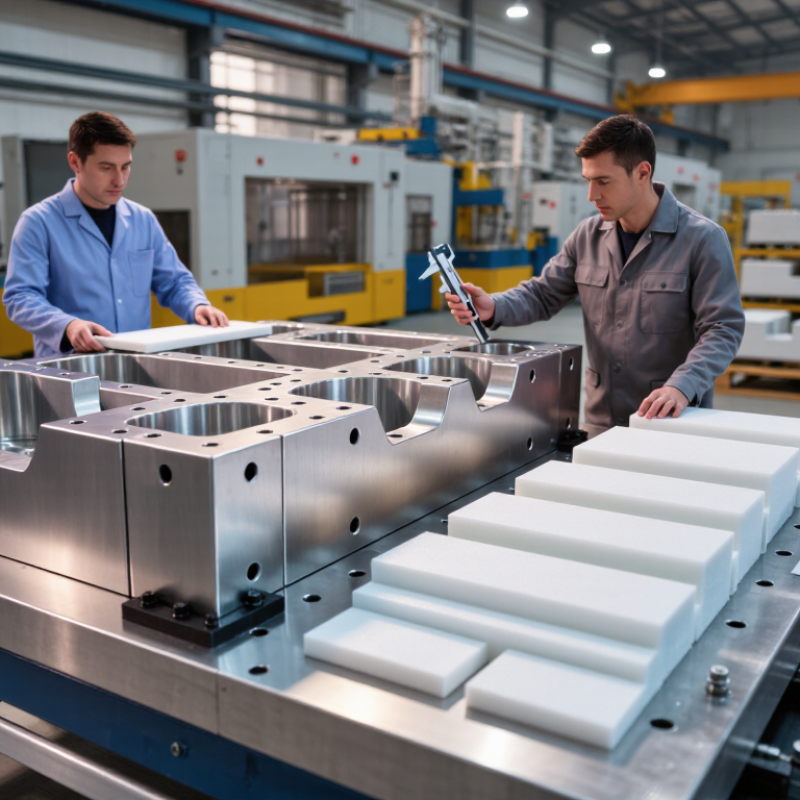
How to Choose the Best Plastic Foam Wall Board Mould
Understanding Plastic Foam Wall Board Moulds and Their Applications
Plastic foam wall board moulds give foam its shape, thickness, surface finish, and edge profile. Their design affects how easily boards release and how consistently they fit together. Expanded polystyrene (EPS) boards are commonly used for insulation and protective construction layers; mould details must suit the required density and dimensions. In building applications, small variations matter. A board that is slightly warped may leave visible gaps at a joint. The United Nations Environment Programme’s 2022 Global Status Report for Buildings and Construction attributes 34% of global energy demand and 37% of energy- and process-related CO2 emissions to buildings and construction. These figures describe the wider sector, not foam boards alone, but they help explain the focus on building performance.
When assessing a mould, check cavity dimensions, vent placement, cooling uniformity, and the finish required on the board face. Ask how the tool handles shrinkage, repeated production, and changes in board thickness. PlasticsEurope’s Plastics—The Fast Facts 2023 reports global plastics production of 400.3 million tonnes in 2022; that broad figure signals the scale of plastics manufacturing, not demand for any specific wall-board mould. A trial run is useful. Inspect the board edges and surface under ordinary site lighting, not just in a showroom. A clean sample can still conceal uneven cooling. I would not assume catalogue tolerances guarantee a reliable fit; actual production conditions deserve a closer look.
| Board type / process | Typical mould configuration | Common applications | Selection priorities | Main trade-offs |
|---|---|---|---|---|
| PVC Celuka foam board | Extrusion die with a sizing and cooling arrangement designed to form a denser outer skin over a foamed core. | Interior wall panels, partitions, cabinetry and boards that need a firmer, more finished surface. | Skin uniformity, board flatness, edge quality, target thickness and the required surface finish. | The denser skin can improve surface durability, but process settings and cooling need close control to limit warping and uneven skin formation. |
| PVC free-foam board | Flat extrusion die and calibrator configured for a relatively uniform foamed structure through the board. | Decorative wall cladding, display boards and lightweight interior panels. | Consistent cell structure, surface smoothness, dimensional stability and easy trimming or machining. | Often offers a lightweight board structure; the surface may be less dense than a Celuka skin and may require finishing for some uses. |
| Co-extruded foam board | Multi-layer die that brings a surface layer and foamed core together during extrusion. | Wall panels requiring a specified surface color, finish or functional layer. | Layer thickness control, bonding between layers, melt-flow balance and compatibility of the materials. | Can combine different layer properties, but requires more complex tooling and tighter control of material feed and processing. |
| Textured or embossed foam board | Extrusion die paired with a patterned roller or downstream embossing equipment. | Decorative wall cladding and panels designed to imitate a surface texture. | Pattern depth and repeat, surface release, board temperature during embossing and texture consistency. | Adds decorative detail without a separate bonded surface layer, but deep or fine patterns may require careful process adjustment. |
| Grooved or profiled wall board | Profiled die opening, often combined with a matched calibrator to hold the cross-sectional shape. | Interlocking wall panels, decorative trims and boards with built-in channels or ribs. | Profile accuracy, corner radii, wall thickness around features, cooling access and ease of installation. | Integrates shape into the board, but complex profiles can increase die design, calibration and maintenance requirements. |
| Custom-size flat wall board | Adjustable or custom flat die with sizing equipment matched to the required board width and thickness. | Projects with non-standard panel dimensions or specific installation requirements. | Usable width, thickness range, dimensional tolerance, expected production volume and changeover needs. | A close match to the product can reduce downstream trimming, while highly specialized dimensions may limit flexibility for other products. |
Final die and calibrator specifications depend on the resin formulation, foaming system, board dimensions, output rate and required finish. Confirm the design with the equipment supplier and validate it through production trials.
Before choosing a plastic foam wall board mould, define the board you need to make. Record its width, thickness, target density, and intended use. A lightweight interior panel may need different cell structure and stiffness than a board used in a damp utility room. Be specific about surface finish, too. A smooth face can reveal small flow marks that a textured finish may hide.
Then match the mould to your production line. Check the extruder output, expected line speed, and the range of board sizes you plan to produce. Measure the available space for the die and calibration equipment. Small details matter. Uneven material flow can leave one edge thicker, while poor cooling may cause warping after cutting. Ask how the mould handles your actual compound and additives, not just a standard sample. That part is easy to overlook.
Set tolerances before discussing tooling. Share acceptable thickness variation, edge quality, and cutting length with the mould maker. If you expect frequent product changes, flexibility may be worth more than maximum output. Still, wider operating ranges can involve trade-offs in consistency. Run a trial with your intended formulation and inspect boards after cooling, not only at the die exit. The first specification may be wrong. Use those results to adjust the design before full production.
Start by defining your production requirements and the finished board specifications.
Example thickness targets: 3 mm for signage, 10 mm for interior panels, and 20 mm for fabrication. These are common nominal sizes, not universal standards. Before selecting a mould, confirm the required thickness range, board width, density, surface finish, and output rate with your production team and material supplier.
The right mould depends on board dimensions, production volume, and the foam process. Aluminum is lighter and transfers heat quickly, which can support shorter cycles. Steel usually handles repeated production well, but adds weight and may need corrosion protection. Material alone does not decide quality. Check the working surface, joints, and expected operating conditions. A small mismatch can leave uneven edges or visible marks.
Tips: Ask for a sample board made with the proposed mould design. Inspect its corners, thickness, and surface after cooling. Confirm that vents and drainage paths suit your process. Small details matter.
Design choices affect both output and maintenance. A simple mould may be easier to clean, while a more complex cavity can form detailed edges or patterns. CNC machining can deliver precise dimensions; fabricated or cast tooling may suit other budgets and production needs. Ask how the manufacturer controls tolerances and checks the finished cavity. I would not choose by price alone. Still, specifications can look better on paper than they perform on a busy production line. Request a trial run, and note cycle consistency, cleaning time, and any sticking or distortion before committing.
When choosing a plastic foam wall board mould, assess the die and calibration tooling under actual production conditions. Check whether board thickness, density, edge shape, and surface finish stay consistent across repeated runs. Ask for trial data, including output rate, dimensional variation, and temperature readings across the tool. A glossy sample is not enough. Inspect the board’s edges and corners, where uneven cooling or calibration may show up first.
Maintenance affects quality over time. Look for accessible vents and cooling channels, replaceable wear parts, and clear cleaning instructions. During inspection, check for residue, blocked passages, corrosion, and uneven clamping. Record cleaning intervals and output measurements; small changes can reveal wear before defects become obvious.
The U.S. EPA’s Advancing Sustainable Materials Management: 2018 Fact Sheet estimated about 600 million tons of construction and demolition debris that year, more than twice the municipal solid waste generated.
That figure is not mould-specific, but it underscores why avoiding defective building materials matters. I would still treat supplier estimates cautiously: published data rarely predicts performance in every plant, so verify the mould with your own resin, line speed, and maintenance schedule.
A reliable mould manufacturer should explain how the mould is designed for your plastic foam wall board’s thickness, surface pattern, and production speed. Ask who handles design changes and how issues are recorded during trial runs. Request recent, relevant project photos or references, then ask what problems arose and how they were corrected. A polished quotation is not proof. Check the proposed steel grade, machining tolerances, cooling layout, and replacement-part availability. Small details matter.
Compare more than the mould’s purchase price. Ask each supplier to separate design, machining, testing, packaging, shipping, and any spare components. A low initial quote may exclude trial adjustments or practical support after delivery. Confirm what the quoted price covers, how revisions are charged, and whether the mould will fit your existing production line. I would be cautious about promises of unusually fast delivery without a clear production schedule. Even an experienced buyer can miss a hidden cost.
Estimate the total cost across the mould’s expected service life, including maintenance and likely downtime. Ask for a written acceptance plan with sample-board dimensions, surface checks, and agreed correction steps. Compare answers, not just numbers. Some questions may feel overly detailed, but vague replies can become expensive later. A spreadsheet helps, though it cannot show whether a manufacturer listens carefully when specifications change.
„Thanks to the LUVIR technology, the solder resist process could be switched directly from the previously used mask exposure to direct exposure. As an outstanding digital solution on the market, this technology has been able to demonstrate fast process times and superior quality on our certified conventional ink in production. This allowed us to fully digitize the solder mask process at low cost – without process or ink adjustments. An excellent benefit to our production in Rot am See.“
Ralf Göhringer (Head of Production WE Rot am See)
I would definitely recommend the Limata machine and team for a future company purchase
Michael Greenaway
Compunetics Inc.
“The Limata ldi has been amazing!! Best thing we did was buy this machine”
Richard Brady
GM
Circuitlabs
“Since 2019, we have been running the Limata X1000 LDI system (including LUVIR for solder mask imaging) in daily production as an addition to our current process with film. The machine was capable of properly exposing Taiyo PSR-4000 BN (DI) solder mask types on normal to high-copper boards using a new and unique direct imaging process. The machine operating interface is very user friendly which allowed for a quick technical training curve. The pre-registration processing reduced several seconds of production time at every print. Limata support and service staff is incomparable. They supported our team every step of the way at basically any time of the day or night, with literally, an immediate response time, customizing the software interface to best fit our Operations and needs.
We have exposed more than 8,000 prints since end of October, on various solder mask colors and some resist film panels. Limata, has proven to be very capable and innovative. They are a strong contender in the industry.
We have very much enjoyed this project, and working with the team!
Thank you Limata for the continued support and being a part of our growth.”
Bill Sezate
Vice President, GM
Summit Interconnect
As a replacement to our current contact exposure process with film, the LIMATA X2000 system including LUVIR-Technology was capable of properly exposing non-LDI solder mask types using a direct imaging process. The machine offers cutting edge software with a very intuitive operating interface which allowed for quick technician training curve. The dual drawer system combined with pre-registration processing reduced several seconds of production time at every machine cycle. Limata support and service staff is world class. They added software patches to keep production running at shortest possible response times, customized the software interface to best fit our in-house Operations system, and even wrote a step-by-step machine processing manual. As a result of the project, we have exposed more than 16,000 times on various product types and solder mask brands/colors. Limata, in a very short timeframe as a company, has definitely shown they are truly innovative and will be challenging the industry of direct imaging for the top spot.
Kevin Beattie
Process Engineer
TTM Technologies
Forest Grove Division
