Choosing a Laser Machine is not simply a matter of buying the highest-wattage model. The right system must suit your materials, production volume, workspace, and staff experience. A fiber laser may handle metal marking or cutting efficiently, while a CO2 system may better fit many wood, acrylic, and fabric applications. Details matter: sheet thickness, required edge quality, work-area dimensions, and daily operating hours can change the best choice.
Automation trends offer useful context, but they do not settle the decision. The International Federation of Robotics reported 541,302 industrial robot installations worldwide in 2023 in its World Robotics 2024 report. That signals continued investment in automated manufacturing—not direct growth in laser-machine sales. The distinction matters. A machine that looks productive in a demonstration may slow your workflow if loading, extraction, maintenance, or operator training are overlooked.
Before comparing quotes, define the jobs the machine must perform and the results you need. Ask suppliers for sample cuts or marks using your actual material, and verify achievable tolerances, cycle times, consumable costs, service response, and warranty terms. Check that the quoted configuration includes suitable ventilation and safety provisions. Small print can hide real costs. Industry reports provide useful context, but your own workload is stronger evidence. Even careful planning has limits; forecasts can shift, and a machine that fits today may not fit next year. Use this guide to compare capability, total ownership cost, and practical support—not just headline power or price.
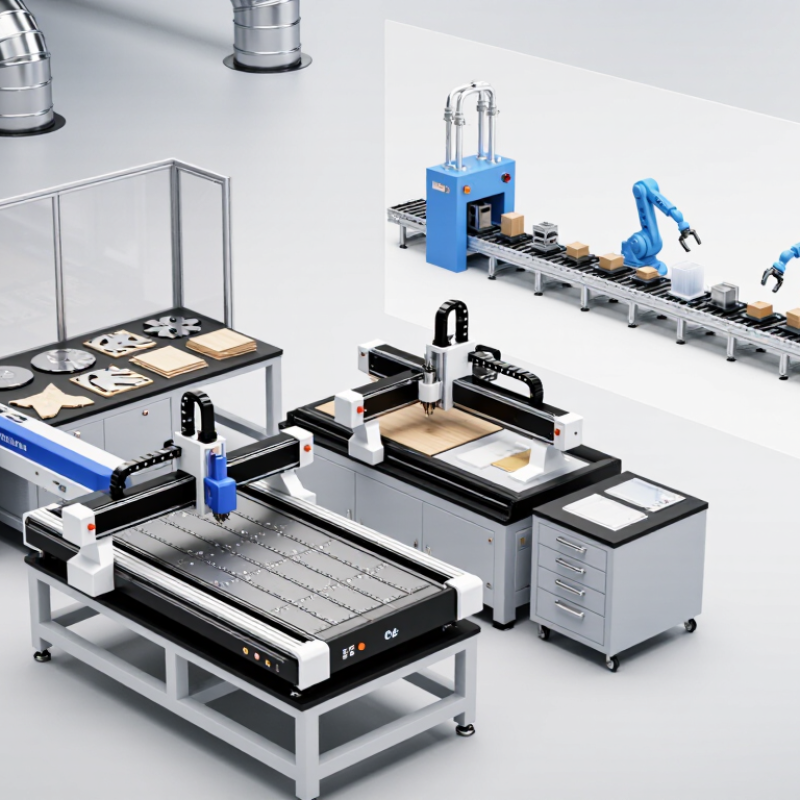
Start with the work you actually sell. List each material, thickness, sheet size, and finish requirement. A 3 mm acrylic sign needs different settings from a batch of stainless-steel brackets. Record your weekly volume, peak-season demand, and acceptable scrap rate too. Start with samples. Test them using the same material suppliers and job files you expect to use in production.
Next, turn “high precision” into a measurable tolerance, such as ±0.1 mm, and check whether that applies to every feature or only critical dimensions. Ask for cut samples, edge-quality checks, and repeatability results—not just maximum speed. MarketsandMarkets estimated the global laser processing market at $23.1 billion in 2023 and projected $37.8 billion by 2028. This growth reflects broad adoption, but it does not mean every business needs a faster or more powerful machine. A published maximum speed may not match your real workload, especially with frequent material changes.
Tips: Bring representative files and material samples to a machine trial. Track cycle time, setup time, and edge quality. Note where results vary; one test rarely tells the whole story. A spreadsheet helps, but it cannot capture every operator habit.
Choosing a laser source starts with the material, not the machine’s advertised speed. The wavelengths in this comparison are 10.6 μm for CO₂, 1,064 nm for fiber, and 355 nm for UV, as specified in Fraunhofer ILT’s laser-material-processing technical publications. CO₂ energy couples well with wood, acrylic, paper, and many fabrics. It can leave a dark edge on wood, though, so test the finish you actually sell.
Fiber lasers suit metals such as stainless steel and aluminum, especially for marking and cutting thin stock. Their near-infrared wavelength is absorbed effectively by many metals, but reflective surfaces can complicate processing. Fraunhofer ILT’s technical reports on laser processing emphasize that results depend on material, wavelength, and process settings—not wavelength alone. A polished metal sample may behave differently from a coated one. Test both.
UV lasers deliver short-wavelength energy and can mark heat-sensitive plastics or fine components with a smaller affected area. The trade-off is often higher equipment cost and lower throughput for larger jobs. For a practical comparison, run the same design on your actual material, then inspect edge quality, cycle time, and reject rate. Keep notes. It is easy to overvalue a clean sample and overlook a slow production run.
Choose laser power around the thickest material you expect to process every week, rather than an occasional order. A machine that cuts 3 mm sheet cleanly may struggle with 10 mm stock at a useful production speed. More power can shorten a cut, but focus, air assist, lens condition, and material consistency also affect edge quality. It is not a simple wattage contest. Test actual offcuts.
Record the settings that produce an acceptable edge, then compare cycle times across several pieces. If a job needs multiple slow passes, estimate the full shift output, not just one successful cut. Leave room for loading, unloading, and cleanup. These minutes count. A small shop may value reliable repeatability more than peak speed, though that trade-off can feel frustrating when orders grow.
Bed size should match the sheets and parts you handle most often. Measure usable travel, not only the advertised work area, and allow clearance for clamps, ventilation, and awkward shapes. A larger bed can reduce trimming and improve nesting, but it also occupies floor space and may tempt you to batch more than staff can finish. Compare a typical day’s material layout with the machine footprint before deciding.
A machine’s advertised laser power does not tell the whole safety story. Check its product classification and the safeguards that limit accessible radiation. IEC 60825-1:2014 classifies accessible laser emission; for continuous-wave visible light, Class 3B covers 5–500 mW, while Class 4 exceeds 500 mW. These figures depend on wavelength and emission conditions, so do not treat them as a simple power-rating shortcut.
Look for a fully enclosed work area, interlocked access doors, a clearly marked emergency stop, and a key or controlled start. Ask what happens if an interlock fails, and whether opening a panel stops the beam. Small detail. Big consequence. Request the classification label, user manual, and test documentation, then compare them with the machine’s actual configuration. A removed panel or altered enclosure can change exposure conditions.
IEC classification is a useful baseline, not proof that every installation is safe. Ventilation, maintenance access, reflective surfaces, and operator training matter too. A glossy metal workpiece can redirect a beam unexpectedly. Ask the supplier how the system was assessed under IEC 60825-1, and have a qualified laser-safety professional review the setup. I would not rely on a sales claim alone; paperwork can be incomplete, and that deserves a second look.
A laser machine’s purchase price is only the beginning. Compare its energy use under your actual workload, not just the rated power on a specification sheet. Ask how much electricity the machine draws while cutting, idling, and running its chiller. Assist gas can also change operating costs: material thickness, cutting speed, and gas choice all affect consumption. A simple monthly log of machine hours, gas cylinder use, and utility bills gives you more useful numbers than a sales estimate.
Tips: Request a sample cut on your common material. Record cycle time, gas use, edge quality, and any extra finishing work.
Maintenance and uptime deserve equal attention. Check which parts need routine replacement, how often service is recommended, and whether trained technicians can support your location. A low-cost machine that sits idle for a day can disrupt orders and staff schedules. Estimate the cost of downtime using your real production rate, then compare that figure across options. Keep the assumptions visible; they are rarely perfect. No spreadsheet captures every bad week. Revisit your estimates after a few months, because actual gas use or maintenance needs may differ from your forecast.
„Thanks to the LUVIR technology, the solder resist process could be switched directly from the previously used mask exposure to direct exposure. As an outstanding digital solution on the market, this technology has been able to demonstrate fast process times and superior quality on our certified conventional ink in production. This allowed us to fully digitize the solder mask process at low cost – without process or ink adjustments. An excellent benefit to our production in Rot am See.“
Ralf Göhringer (Head of Production WE Rot am See)
I would definitely recommend the Limata machine and team for a future company purchase
Michael Greenaway
Compunetics Inc.
“The Limata ldi has been amazing!! Best thing we did was buy this machine”
Richard Brady
GM
Circuitlabs
“Since 2019, we have been running the Limata X1000 LDI system (including LUVIR for solder mask imaging) in daily production as an addition to our current process with film. The machine was capable of properly exposing Taiyo PSR-4000 BN (DI) solder mask types on normal to high-copper boards using a new and unique direct imaging process. The machine operating interface is very user friendly which allowed for a quick technical training curve. The pre-registration processing reduced several seconds of production time at every print. Limata support and service staff is incomparable. They supported our team every step of the way at basically any time of the day or night, with literally, an immediate response time, customizing the software interface to best fit our Operations and needs.
We have exposed more than 8,000 prints since end of October, on various solder mask colors and some resist film panels. Limata, has proven to be very capable and innovative. They are a strong contender in the industry.
We have very much enjoyed this project, and working with the team!
Thank you Limata for the continued support and being a part of our growth.”
Bill Sezate
Vice President, GM
Summit Interconnect
As a replacement to our current contact exposure process with film, the LIMATA X2000 system including LUVIR-Technology was capable of properly exposing non-LDI solder mask types using a direct imaging process. The machine offers cutting edge software with a very intuitive operating interface which allowed for quick technician training curve. The dual drawer system combined with pre-registration processing reduced several seconds of production time at every machine cycle. Limata support and service staff is world class. They added software patches to keep production running at shortest possible response times, customized the software interface to best fit our in-house Operations system, and even wrote a step-by-step machine processing manual. As a result of the project, we have exposed more than 16,000 times on various product types and solder mask brands/colors. Limata, in a very short timeframe as a company, has definitely shown they are truly innovative and will be challenging the industry of direct imaging for the top spot.
Kevin Beattie
Process Engineer
TTM Technologies
Forest Grove Division
