Choosing a 316l Stainless Steel Flat Bar begins with a real service question: what will the bar face each day? Salt spray, cleaning chemicals, heat, or simple indoor use can change the right choice. Small details matter. A wet coastal handrail and a dry machine spacer do not need the same margin of corrosion resistance.
World Stainless reported 58.4 million tonnes of stainless crude steel production worldwide in 2023, showing the scale of this materials market. That figure does not make every grade interchangeable. Grade 316L is valued for molybdenum-bearing chemistry and low carbon content, but buyers should still verify the product specification, dimensions, finish, and mill test certificate. ASTM A276/A276M covers stainless steel bars and shapes; confirm that the supplied bar meets the applicable edition and purchase requirements. A grade name alone is not proof.
Metallurgist John E. Bringas’s standards-focused work offers a useful reminder: compare documented chemistry and mechanical properties, not labels alone. Treat that as guidance, not a substitute for a project-specific review. Ask whether the bar will be machined, welded, polished, or exposed to chlorides. Check tolerances against the drawing. Then confirm traceability with the supplier. One overlooked point: “316L” does not mean corrosion-proof. This guide explains how to assess the details, question broad claims, and choose a flat bar that fits its actual environment.
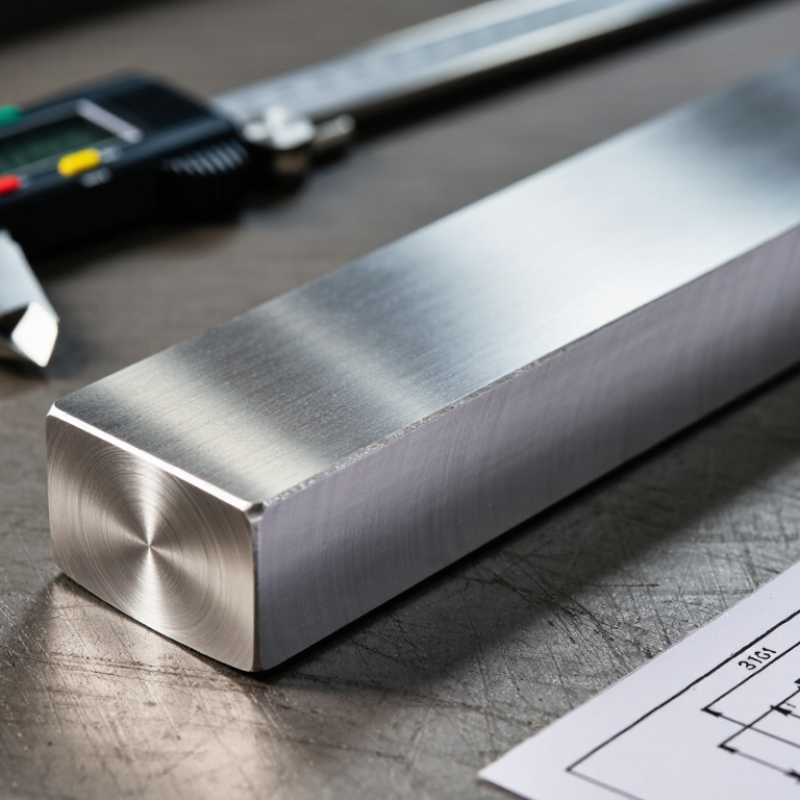
Choosing 316L stainless steel flat bar starts with the actual service environment. Note whether the bar will contact salt spray, cleaning chemicals, food residues, or standing water. The molybdenum in 316L improves resistance to pitting compared with 304, but it does not make the steel immune to chlorides.
That distinction matters. A splash zone and a frequently rinsed indoor surface may need different inspection and maintenance plans.
Then define the work the bar must perform. Record its span, supported edges, expected load, and available thickness before comparing stock sizes. A narrow bar under bending stress may need a different section than a trim strip with little structural duty. Consider welding, drilling, and surface finish, too. Heat tint and rough edges can trap contaminants if they are left untreated.
Ask for material documentation and confirm the specified grade and dimensions against the project requirements. “Marine grade” is not a guarantee; the label can hide important differences. Real installations are rarely as tidy as drawings suggest. Leave room for fabrication tolerances, and review the choice with a qualified materials or design professional when loads or exposure are uncertain.
A 316L label is only a starting point. Ask for the mill test certificate (MTC) and match its heat number to the tag on the flat bar. Check that the certificate identifies the product standard, grade, dimensions, heat treatment, and chemical results. For common ASTM specifications, 316L permits no more than 0.030% carbon; chromium, nickel, and molybdenum ranges should also align with the applicable specification. Details matter.
Use independent checks when the service is critical. Handheld X-ray fluorescence can screen for elements such as chromium, nickel, and molybdenum, but it does not reliably establish the low carbon content that distinguishes 316L from standard 316. A laboratory carbon test may be needed. The World Stainless 2023 production report recorded 58.4 million tonnes of global stainless-steel crude production, reflecting the scale of this market—not proof of any bar’s grade. Match the report to the material in hand. A neat certificate can still be mismatched. Check the heat number, keep the documents, and resolve discrepancies before cutting or welding.
The chart shows typical 316L chemistry limits for chromium, nickel, and molybdenum, in weight percent. Confirm the applicable product standard and edition for the flat bar, then check the material test report (MTR) for heat-specific chemistry and a traceable heat number. Portable X-ray fluorescence (XRF) can help verify chromium, nickel, and molybdenum, but it does not reliably measure carbon; use the MTR or an appropriate laboratory method to verify the low-carbon requirement.
Choosing 316L flat bar starts with the job, not the catalogue. Record the required width, thickness, length, and load direction, then check how the bar will be supported. A wide, thin section may twist during machining or handling. A thicker section adds weight and cost. Measure the space available, too. A few millimetres can decide whether the bar fits a slot or needs rework.
Tolerance depends on product form and manufacturing route. ASTM A276/A276M covers stainless steel bars and shapes, while ASTM A484/A484M gives general requirements and dimensional tolerances. ASTM A480/A480M covers flat-rolled products, so it should not automatically be applied to every flat bar. Check the relevant standard and the supplier’s stated tolerance before ordering. Then confirm whether edges are sheared, sawn, or rolled; edge shape affects fit and finishing.
The Nickel Institute’s Stainless Steel: Tables of Technical Properties reports 316L proof-strength values around 200 MPa for some product conditions; thickness and the governing specification can change the requirement. Do not treat that figure as a design allowance. A tempting shortcut is choosing the nearest stock size. It can be wrong. A little extra width may simplify clamping, but it can also leave a thin, flexible edge after machining. Check the material certificate and inspect a sample if edge finish or flatness is critical.
When choosing 316L stainless steel flat bar, treat surface finish as a performance choice, not decoration. A mill finish may suit hidden supports, while a brushed or polished face can be easier to clean in visible or washdown areas. Check both faces. Fine scratches, pits, and rolled scale can affect appearance, sealing, or later finishing. A glossy surface is not proof of better corrosion resistance; alloy condition, cleaning, and exposure still matter.
Ask for a stated finish and inspect sample stock under bright, angled light. This reveals waviness and scratches that overhead lighting can hide. If appearance matters, agree on an acceptance sample before cutting. It is easy to overvalue a mirror-like finish; it may show fingerprints and handling marks more clearly. Keep the bar away from carbon-steel grinding dust, which can leave embedded iron particles and rust spots.
Fabrication requirements should guide the rest of the choice. For bending, confirm thickness, bend radius, and bar direction with the fabricator; a neat surface can still crack at an unsuitable radius. For welding, specify clean edges and remove oils or debris. 316L’s low carbon content generally supports weldability, but heat tint may need treatment for the service environment. Check straightness, width, thickness, and burrs on delivery. Small details matter. If tolerances are unclear, pause before machining.
A 316L flat bar should arrive with more than a polished surface. Check its width, thickness, straightness, and edge condition against the purchase specification. A straightedge can reveal bowing, while a close look may catch burrs, deep scratches, or uneven scale. Small details matter. Not every mark is damage, but unexplained defects deserve a clear answer.
Ask for a mill test certificate that identifies the heat number and reports the material’s chemical composition and mechanical properties. Confirm that the number matches the bar’s tag and paperwork. If stock is cut, ask how identification follows each piece. Traceability can get weaker after cutting; it is worth checking before the material reaches your shop. A certificate is useful, but it does not replace inspection of the delivered product.
Supplier standards show up in routine practices: documented inspection steps, calibrated measuring tools, controlled storage, and careful packaging. Ask which material specification and dimensional tolerances apply, rather than relying on a general claim of “316L.” Molybdenum helps this grade resist corrosion, but it does not make the steel immune to every environment. A neat datasheet can still leave questions. Request practical answers about surface condition, handling, and replacement procedures, then compare them with your actual use. Keep it simple. The supplier’s records should make the material’s history easier to verify, not harder.
„Thanks to the LUVIR technology, the solder resist process could be switched directly from the previously used mask exposure to direct exposure. As an outstanding digital solution on the market, this technology has been able to demonstrate fast process times and superior quality on our certified conventional ink in production. This allowed us to fully digitize the solder mask process at low cost – without process or ink adjustments. An excellent benefit to our production in Rot am See.“
Ralf Göhringer (Head of Production WE Rot am See)
I would definitely recommend the Limata machine and team for a future company purchase
Michael Greenaway
Compunetics Inc.
“The Limata ldi has been amazing!! Best thing we did was buy this machine”
Richard Brady
GM
Circuitlabs
“Since 2019, we have been running the Limata X1000 LDI system (including LUVIR for solder mask imaging) in daily production as an addition to our current process with film. The machine was capable of properly exposing Taiyo PSR-4000 BN (DI) solder mask types on normal to high-copper boards using a new and unique direct imaging process. The machine operating interface is very user friendly which allowed for a quick technical training curve. The pre-registration processing reduced several seconds of production time at every print. Limata support and service staff is incomparable. They supported our team every step of the way at basically any time of the day or night, with literally, an immediate response time, customizing the software interface to best fit our Operations and needs.
We have exposed more than 8,000 prints since end of October, on various solder mask colors and some resist film panels. Limata, has proven to be very capable and innovative. They are a strong contender in the industry.
We have very much enjoyed this project, and working with the team!
Thank you Limata for the continued support and being a part of our growth.”
Bill Sezate
Vice President, GM
Summit Interconnect
As a replacement to our current contact exposure process with film, the LIMATA X2000 system including LUVIR-Technology was capable of properly exposing non-LDI solder mask types using a direct imaging process. The machine offers cutting edge software with a very intuitive operating interface which allowed for quick technician training curve. The dual drawer system combined with pre-registration processing reduced several seconds of production time at every machine cycle. Limata support and service staff is world class. They added software patches to keep production running at shortest possible response times, customized the software interface to best fit our in-house Operations system, and even wrote a step-by-step machine processing manual. As a result of the project, we have exposed more than 16,000 times on various product types and solder mask brands/colors. Limata, in a very short timeframe as a company, has definitely shown they are truly innovative and will be challenging the industry of direct imaging for the top spot.
Kevin Beattie
Process Engineer
TTM Technologies
Forest Grove Division
