Choosing a Pet Flexible Circuit manufacturer is not just a price comparison. The supplier must turn a thin polymer film, copper traces, and adhesive layers into a circuit that performs consistently. A sample may look clean under bright inspection lights. The real test comes after bending, lamination, and repeated electrical checks.
Manufacturing quality expert W. Edwards Deming is widely associated with the reminder, “Quality is everyone’s responsibility.” That principle applies here: material selection, artwork review, process control, and final testing all shape the result. It is a general quality principle, not a PET-specific endorsement. Ask how the manufacturer controls film thickness, copper adhesion, line width, and registration. Request test records, not only a polished brochure. Check whether prototypes and production runs follow the same documented process.
Details matter. A misplaced trace near a connector can cause trouble. So can an adhesive that creeps under heat. Discuss bend radius, operating temperature, chemical exposure, and expected service life before approving a design. Then review the manufacturer’s inspection plan and defect-handling process.
A low quote can be tempting. It may also leave important questions unanswered. No supplier is flawless, and a confident sales call cannot replace evidence. Compare capabilities against your actual drawings and test conditions. This guide explains how to evaluate those points, verify a supplier’s experience, and choose a partner whose process fits the circuit—not just the purchase order.
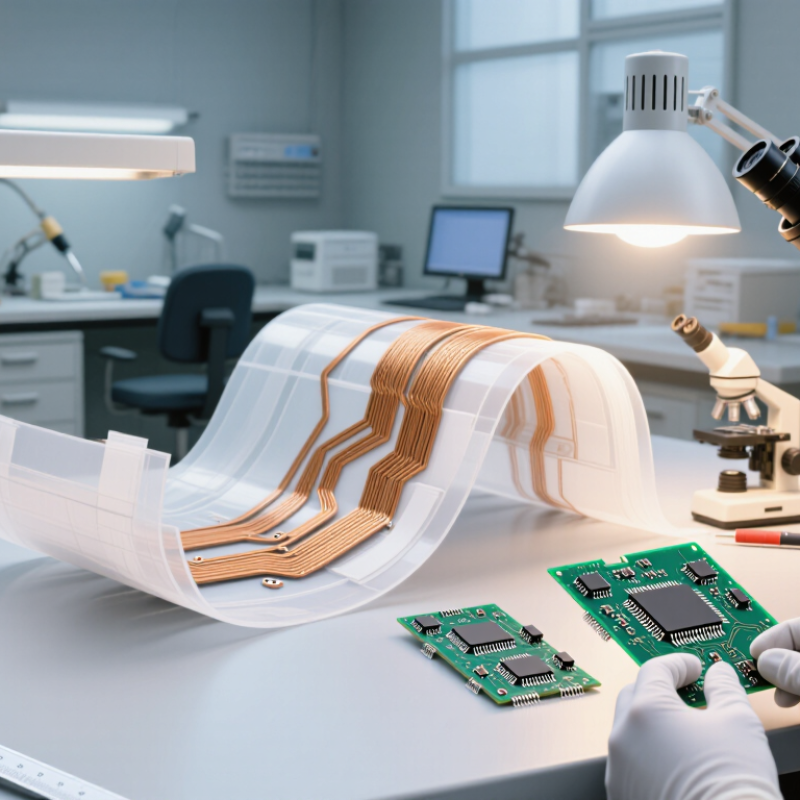
Before contacting a PET flexible circuit manufacturer, define what the circuit must do and where it will operate. Record the signal type, voltage, current, trace width, spacing, and connector location. Specify the circuit’s finished dimensions, PET film thickness, copper thickness, and minimum bend radius. Will it flex once during installation or repeatedly in service? That distinction changes material and testing needs.
Small details matter.
Describe the real operating conditions, not just the ideal ones. Note temperature range, humidity, exposure to oils or cleaning agents, and any adhesive or lamination steps. PET can suit low-temperature flexible designs, but its thermal limits must match your assembly process. A common planning mistake is treating “flexible” as a complete specification. It isn’t.
Grand View Research estimated the global flexible printed circuit board market at USD 20.8 billion in 2023, reflecting broad demand across compact electronics. That figure is market context, not proof that a design will fit your application. Share drawings, a sample layout, expected annual volume, and inspection criteria with prospective manufacturers. If a requirement is uncertain, label it as an open question; guessing early can create costly redesigns.
A PET flexible circuit can look simple on a drawing and still fail at a tight bend. Ask manufacturers how they review trace width, spacing, PET thickness, adhesive choice, and bend radius together. Request a design-for-manufacturing review, not just a price. Ask for proof.
Look for practical evidence: sample circuits, prototype records, and inspection steps for alignment and conductor continuity. A capable team should explain how it handles tooling, material variation, and changes between prototype and production. Small details matter. Ask how it controls registration when copper patterns meet connector pads, and how it checks circuits after lamination. If answers stay vague, that is useful information too.
Production capacity matters, but repeatability matters more. Request sample inspection reports and ask how defects are recorded and corrected. Confirm that the manufacturer can support the quantities and tolerances your design actually needs. A factory may show impressive equipment, yet offer little detail on process control. I would not treat one successful sample as enough; it can be tempting to do so. Compare several samples and ask what changed between runs. Look for clear communication about limitations, lead times, and design adjustments before approving a production order.
Choosing a PET flexible circuit manufacturer starts with the film itself. Ask for the PET grade, thickness tolerance, and material traceability. Check whether the supplier can explain how film, copper, adhesive, and coverlay work together. A clean sample matters, but so does consistency across production lots. Look for clear records, not just confident assurances.
Testing should reflect the circuit’s actual use. Request results for continuity, insulation resistance, peel strength, and dimensional stability. For circuits that flex repeatedly, ask how bend tests are performed and what failure criteria apply. Test conditions matter: bend radius and cycle count can change the result. One bend test cannot predict every installation. Real use varies.
Review certification documents carefully. Confirm the certificate is current, covers the relevant manufacturing site, and applies to the work being quoted. A quality-management certification can show that processes are controlled, but it does not prove every circuit will meet your design needs. Paper is not proof. Ask for inspection records, sample reports, and the supplier’s process for handling failed units. This review takes time, and I would not skip it just because a quote looks attractive.
A PET flexible circuit supplier should be judged by how clearly it handles prototypes, not by a low sample quote alone. Ask whether it offers single-piece samples, small pilot runs, and production tooling, and what changes between each stage. For a prototype, request the PET grade, copper or printed conductor process, adhesive details, and minimum bend radius. Also confirm that the process temperature suits PET; a design that works on paper may distort during processing. Small detail, big headache.
Lead times need a written breakdown. Separate engineering review, material sourcing, tooling, fabrication, and inspection, then ask which steps run in parallel. Request recent on-time delivery performance and the assumptions behind the quoted date. Deloitte’s 2024 Manufacturing Industry Outlook reported that 86% of surveyed executives saw smart-factory solutions as a future competitiveness driver. That broad manufacturing finding is not a PET-circuit benchmark, but it supports asking how suppliers track work in progress and production bottlenecks.
Capacity should be demonstrated with comparable jobs, not a maximum monthly number. Ask for available line hours, typical weekly output, current utilization, and the largest PET panel or roll they can process. Check whether inspection and electrical testing can keep pace with fabrication. Ask for evidence. A supplier may have impressive equipment yet lack spare capacity during a rush. I would also ask what happens when a prototype needs one layout revision; that answer often reveals more than a polished capacity sheet.
When choosing a PET flexible circuit manufacturer, compare the full cost, not only the quoted unit price. Ask whether tooling, test fixtures, sample revisions, and packaging are included. For a prototype, request a line-item quote and a written schedule for design review, fabrication, and testing. A low quote can become expensive if changes trigger unclear fees. Small details matter.
Communication is part of process control. McKinsey’s 2021 B2B Pulse found that 70% of surveyed decision-makers were willing to spend more than $50,000 through remote or self-service channels. That finding is not specific to circuits, but it supports clear digital updates and accessible technical contacts. Ask how the supplier reports material substitutions, impedance concerns, and failed bend tests. Request a sample weekly status update. Does it name an owner and next action? A fast reply is useful; a precise reply is better.
Ongoing support should cover more than shipment tracking. Ask how engineering questions, yield changes, and repeat orders are handled after approval. Deloitte’s 2023 Global CPO Survey discusses supplier collaboration as a procurement priority, reinforcing the value of agreed review points. Set expectations for response times, corrective-action reports, and revision control before production starts. No scorecard is perfect. A missed update may reveal more than a polished sales presentation.
Suggested evaluation weights for comparing manufacturers
This example framework allocates the most weight to technical capability and quality systems, while also considering pricing transparency, communication, and ongoing support. The percentages are suggested starting points, not survey results; adjust them to match your project requirements.
„Thanks to the LUVIR technology, the solder resist process could be switched directly from the previously used mask exposure to direct exposure. As an outstanding digital solution on the market, this technology has been able to demonstrate fast process times and superior quality on our certified conventional ink in production. This allowed us to fully digitize the solder mask process at low cost – without process or ink adjustments. An excellent benefit to our production in Rot am See.“
Ralf Göhringer (Head of Production WE Rot am See)
I would definitely recommend the Limata machine and team for a future company purchase
Michael Greenaway
Compunetics Inc.
“The Limata ldi has been amazing!! Best thing we did was buy this machine”
Richard Brady
GM
Circuitlabs
“Since 2019, we have been running the Limata X1000 LDI system (including LUVIR for solder mask imaging) in daily production as an addition to our current process with film. The machine was capable of properly exposing Taiyo PSR-4000 BN (DI) solder mask types on normal to high-copper boards using a new and unique direct imaging process. The machine operating interface is very user friendly which allowed for a quick technical training curve. The pre-registration processing reduced several seconds of production time at every print. Limata support and service staff is incomparable. They supported our team every step of the way at basically any time of the day or night, with literally, an immediate response time, customizing the software interface to best fit our Operations and needs.
We have exposed more than 8,000 prints since end of October, on various solder mask colors and some resist film panels. Limata, has proven to be very capable and innovative. They are a strong contender in the industry.
We have very much enjoyed this project, and working with the team!
Thank you Limata for the continued support and being a part of our growth.”
Bill Sezate
Vice President, GM
Summit Interconnect
As a replacement to our current contact exposure process with film, the LIMATA X2000 system including LUVIR-Technology was capable of properly exposing non-LDI solder mask types using a direct imaging process. The machine offers cutting edge software with a very intuitive operating interface which allowed for quick technician training curve. The dual drawer system combined with pre-registration processing reduced several seconds of production time at every machine cycle. Limata support and service staff is world class. They added software patches to keep production running at shortest possible response times, customized the software interface to best fit our in-house Operations system, and even wrote a step-by-step machine processing manual. As a result of the project, we have exposed more than 16,000 times on various product types and solder mask brands/colors. Limata, in a very short timeframe as a company, has definitely shown they are truly innovative and will be challenging the industry of direct imaging for the top spot.
Kevin Beattie
Process Engineer
TTM Technologies
Forest Grove Division
