Choosing a Transformer Core Cutting Line in 2026 requires more than comparing catalog prices. The right decision begins with your core design, electrical steel grade, production volume, and tolerance targets. A line cutting 0.23-millimeter grain-oriented steel needs different control than one processing thicker material. Small errors can increase burr height, stacking loss, and transformer noise.
Transformer manufacturing consultant Dr. Markus Klein offers a practical warning: “A fast cutting line is valuable only when it protects core accuracy, material yield, and repeatable production.” This principle should guide every supplier discussion. Examine cut-length accuracy, V-notching quality, blade adjustment, scrap handling, and automatic stacking performance. Ask for measured results, not broad promises. Request sample cuts using your actual steel. Check the edges under magnification. Feel the difference between a clean cut and a rough one.
The best Transformer Core Cutting Line should also fit your factory’s future. Consider servo stability, software access, operator training, spare-part availability, and remote technical support. Review installed-machine references with similar core sizes. Visit a working plant if possible. The floor often reveals more than a polished presentation. Listen for abnormal vibration. Watch how operators correct misalignment. Notice whether maintenance tools are organized.
There is no universally perfect configuration. A highly automated line may create unnecessary complexity for a smaller workshop. A lower-cost machine may become expensive through downtime and wasted steel. My own recommendation is cautious: compare total operating value over several years, then validate the supplier’s claims through documented trials. The final choice should be technically defensible, commercially realistic, and open to review.
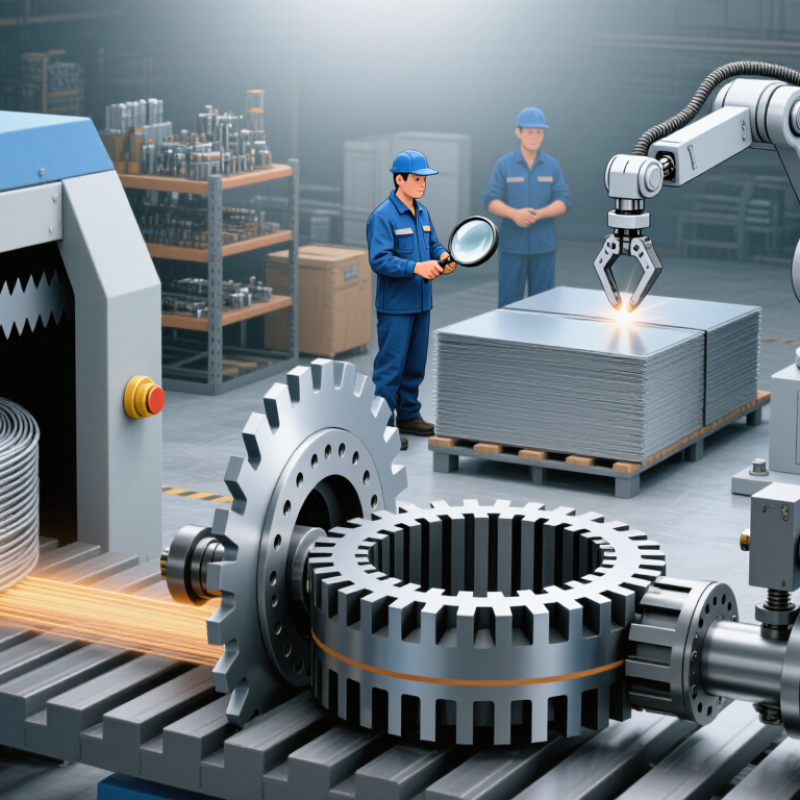
How to Choose a Transformer Core Cutting Line in 2026?
Transformer Core Cutting Line Basics and Production Requirements
A transformer core cutting line converts electrical steel coils into precise step-lap laminations. Its accuracy affects core loss, noise, assembly speed, and material waste. The U.S. Department of Energy’s 2024 transformer supply-chain review reports that distribution transformer lead times can reach one to two years. This pressure makes stable in-house production increasingly valuable.
Start with the required core dimensions, steel grade, thickness, and annual output. A practical line should control burr height, cutting length, V-notches, and mitre angles consistently. For many plants, automatic width adjustment and recipe storage reduce setup errors between orders. Servo-driven feeding helps maintain registration at higher speeds. Still, speed alone is not a buying criterion.
Measure the complete process.
Check decoiling stability, scrap collection, stacking accuracy, and operator access. The International Energy Agency’s Electricity 2024 report highlights continuing growth in global electricity demand, supporting long-term transformer investment. However, demand forecasts do not guarantee your factory’s workload. That is where some plans become weak. Request sample cutting trials using your actual steel, not only supplier demonstrations. Review measured burrs, dimensional records, noise data, and maintenance response times. A reliable line also needs traceable quality records and training that operators can use during a night shift. Perfect automation is unlikely. Good production engineering leaves room for inspection, adjustment, and honest correction.
Choosing a cutting line starts with the electrical steel, not the machine catalog. Grain-oriented steel needs careful handling to preserve magnetic performance. Amorphous material requires different tension control and sharper tooling. Check the strip thickness, coating condition, hardness, and expected burr height. Small errors can increase core loss and create noise during operation.
Core design also changes the line configuration. Step-lap and mitered cores demand accurate length control and repeatable angle cutting. EI and UI cores may require flexible punching, stacking, and scrap management. Toroidal designs need specialized slitting and winding preparation. In practical trials, I would measure cut length at several points, not only at the first output. Machines often behave differently after warming up.
Cutting methods include mechanical shearing, punching, and laser processing. Shearing usually offers high productivity for regular production. Punching suits repeated shapes with stable tooling conditions. Laser cutting supports complex profiles, but heat and speed require close monitoring. Faster is not always better. A line should control tension, alignment, burrs, and stacking accuracy together. I have seen acceptable samples fail after extended operation because the guide system drifted slightly. That detail is easy to miss. Ask for documented test data, maintenance records, and sample cores from similar thicknesses. Leave room for operator judgment. Automation helps, but it cannot replace careful inspection.
How to Choose a Transformer Core Cutting Line in 2026?
Matching a cutting line to transformer capacity requires more than comparing rated speed. Start with the transformer’s kVA or MVA range, core diameter, limb width, and steel thickness. Larger transformers usually require wider strips, stronger decoilers, and greater stacking capacity. Small distribution transformers need precise handling, not excessive production speed. A line rated for 1,000 kVA units may struggle with 100 MVA cores. Check the real working range.
The cutting system should match your silicon steel grades and thicknesses. Typical requirements may include 0.23–0.35 mm electrical steel, narrow slitting tolerance, low burr height, and accurate step-lap positioning. Capacity planning also depends on daily output, average core size, changeover time, and operator experience. A high-speed line can appear impressive, yet frequent setup changes may reduce actual production. Measure usable output, not brochure speed. I have seen technically capable lines underperform because material loading was underestimated.
Tips: Leave room for future transformer models. Confirm maximum coil weight, strip width, and finished core dimensions before ordering. Ask for test-cut records using your own steel. Inspect edge quality, length accuracy, stacking consistency, and noise levels. Also check service access and spare-part availability. A perfect spreadsheet match can still fail on the factory floor. Recheck the assumptions.
How to Choose a Transformer Core Cutting Line in 2026?
Electricity demand is rising quickly. The IEA Electricity 2024 report projects global demand growth of about 4% in 2024 and 2025. This pressure makes energy-efficient transformer cores more important. Choose a line that controls burr height, cutting accuracy, and stacking quality. Small edge defects increase magnetic losses and create extra heat during operation. Laser or high-precision mechanical cutting can support tighter tolerances, but only with stable feeding and careful calibration.
Automation should reduce handling errors, not remove human judgment. Look for automatic coil width adjustment, recipe management, real-time monitoring, and traceable production records. The U.S. Department of Energy’s transformer efficiency analyses connect lower core losses with long-term energy savings across millions of operating hours. A useful line should measure results, not merely display them. Inspect actual samples. Measure twice.
Safety deserves equal attention. Select enclosed cutting zones, interlocked access doors, emergency stops, dust control, and guarded moving parts. IEC 60204-1 and ISO 12100 provide practical references for machine electrical safety and risk reduction. Energy efficiency also depends on the line itself. Regenerative drives, efficient motors, standby modes, and heat management can reduce factory consumption. However, automation is not automatically efficient. Poor software settings may cause idle running, unnecessary scrap, and hidden energy waste. A detailed acceptance test should compare output quality, downtime, power consumption, and operator workload before purchase.
Recommended procurement weighting for automation, precision, safety, and energy efficiency.
The weighting provides a practical 100-point evaluation framework. Automation and precision receive the highest priority because they directly influence throughput, repeatability, material yield, and setup time. Safety and energy efficiency should be assessed through documented risk controls, electrical compliance, standby power management, and measured operating consumption.
A transformer core cutting line should be evaluated as a production asset, not merely as a machine purchase. Start with total cost of ownership: purchase price, tooling, installation, training, energy, maintenance, scrap, and downtime. Request a five-year cost model with realistic output assumptions. Compare cost per finished core, not cost per hour. Small errors in stacking or burr control can quietly increase material loss. Keep the calculation transparent.
Supplier selection requires evidence, not polished presentations. Ask for documented cutting tolerances, line-speed results, safety controls, and maintenance records. Request sample cuts using your own electrical steel specifications. A factory acceptance test should measure accuracy, repeatability, changeover time, and reject rates. Visiting an operating installation can reveal noise, housekeeping, and operator workload. I would not trust references that provide only production numbers. Service response matters more after installation. Written spare-parts availability and technician support should be part of the contract.
Future upgrades deserve attention before the layout is fixed. Select a line with modular tooling, accessible control cabinets, and open communication interfaces. Reserve space for automated loading, barcode tracking, vision inspection, or production analytics. Confirm whether the control system can accept later software improvements without replacing major hardware. Promised upgrades are not guaranteed. Ask for upgrade prices, compatibility limits, and a realistic installation schedule. No forecast is perfect. A conservative expansion plan may cost more today, but it can prevent an expensive redesign when transformer demand changes.
„Thanks to the LUVIR technology, the solder resist process could be switched directly from the previously used mask exposure to direct exposure. As an outstanding digital solution on the market, this technology has been able to demonstrate fast process times and superior quality on our certified conventional ink in production. This allowed us to fully digitize the solder mask process at low cost – without process or ink adjustments. An excellent benefit to our production in Rot am See.“
Ralf Göhringer (Head of Production WE Rot am See)
I would definitely recommend the Limata machine and team for a future company purchase
Michael Greenaway
Compunetics Inc.
“The Limata ldi has been amazing!! Best thing we did was buy this machine”
Richard Brady
GM
Circuitlabs
“Since 2019, we have been running the Limata X1000 LDI system (including LUVIR for solder mask imaging) in daily production as an addition to our current process with film. The machine was capable of properly exposing Taiyo PSR-4000 BN (DI) solder mask types on normal to high-copper boards using a new and unique direct imaging process. The machine operating interface is very user friendly which allowed for a quick technical training curve. The pre-registration processing reduced several seconds of production time at every print. Limata support and service staff is incomparable. They supported our team every step of the way at basically any time of the day or night, with literally, an immediate response time, customizing the software interface to best fit our Operations and needs.
We have exposed more than 8,000 prints since end of October, on various solder mask colors and some resist film panels. Limata, has proven to be very capable and innovative. They are a strong contender in the industry.
We have very much enjoyed this project, and working with the team!
Thank you Limata for the continued support and being a part of our growth.”
Bill Sezate
Vice President, GM
Summit Interconnect
As a replacement to our current contact exposure process with film, the LIMATA X2000 system including LUVIR-Technology was capable of properly exposing non-LDI solder mask types using a direct imaging process. The machine offers cutting edge software with a very intuitive operating interface which allowed for quick technician training curve. The dual drawer system combined with pre-registration processing reduced several seconds of production time at every machine cycle. Limata support and service staff is world class. They added software patches to keep production running at shortest possible response times, customized the software interface to best fit our in-house Operations system, and even wrote a step-by-step machine processing manual. As a result of the project, we have exposed more than 16,000 times on various product types and solder mask brands/colors. Limata, in a very short timeframe as a company, has definitely shown they are truly innovative and will be challenging the industry of direct imaging for the top spot.
Kevin Beattie
Process Engineer
TTM Technologies
Forest Grove Division
