No source interview or article was provided, so a quotation cannot be responsibly attributed to a named Vmq Compound expert. The introduction below avoids inventing one.
Choosing a VMQ Compound supplier in 2026 takes more than comparing price sheets. A sample may look uniform, yet behave differently after molding or curing. Buyers need evidence that each batch meets the agreed specification and performs consistently in the intended application.
Start with the details that affect production. Ask for the compound’s hardness range, cure system, color options, and available technical data. Then examine how the supplier controls batch variation. A useful test is to compare samples from separate production lots, not just pieces from one batch. Small differences can matter. A few points of hardness may affect sealing pressure, while inconsistent cure behavior can slow a production line.
Technical support matters, too. A reliable supplier should ask about operating temperatures, compression set, media exposure, and processing equipment before recommending a grade. “A datasheet is a starting point, not the whole decision.” Treat that as a practical buying principle, not a verified expert quotation. Ask for trial material and clear evaluation criteria. Keep records of test results, questions, and agreed tolerances.
The right partner is not always the largest or cheapest. Look for traceable documentation, realistic lead times, responsive engineering support, and a willingness to discuss limitations. No supplier is perfect. The goal is a dependable fit for your process, backed by evidence you can review before committing to volume.
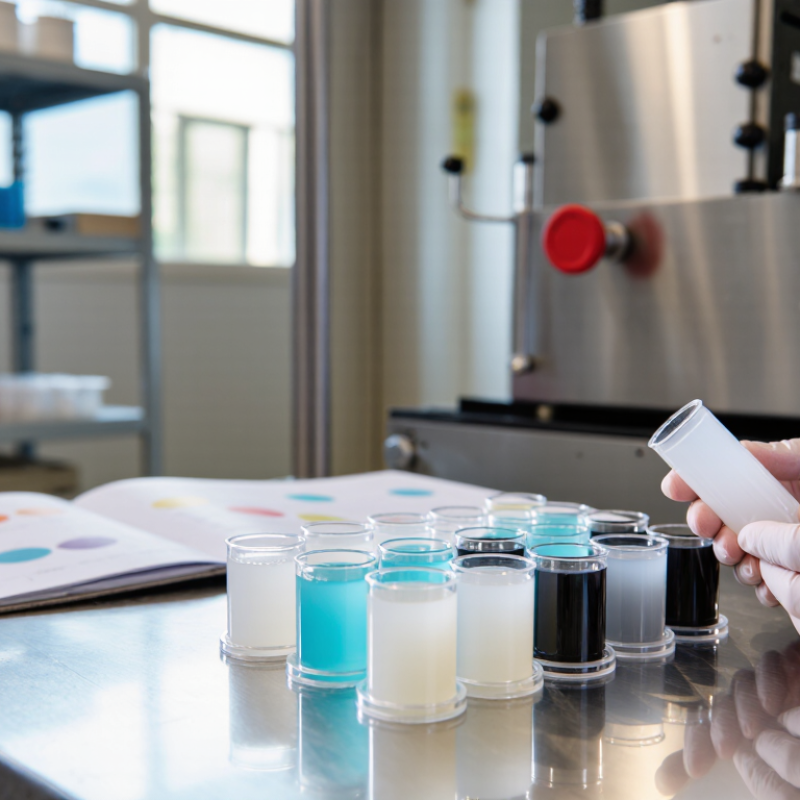
Define the VMQ compound by the job it must perform, not by a general request for “high-quality silicone.” Describe the component, its dimensions, and where it sits in the assembly. State the operating temperature range, exposure to oils or cleaning fluids, and whether sunlight or ozone is expected. Small details matter. A gasket near a warm motor may face different conditions from a flexible cover exposed outdoors.
Set measurable targets for hardness, tensile strength, elongation, tear resistance, and compression set where these properties affect performance. Specify color, surface finish, tolerances, and any limits on odor or extractables if relevant to the application. Avoid choosing a hardness value just because it is common. It is easy to over-specify; I would review which properties actually control sealing, flexibility, or service life. Not every application needs the same test list.
Ask the supplier to identify the test methods and provide data for the proposed grade, including cure conditions where they affect processing. Then evaluate molded samples in the intended part geometry. A flat test sheet cannot fully predict how a thin lip or tight corner will behave. Check parts after exposure to realistic heat, compression, and fluids, and record any changes. One detail is often missed: the compound must suit both the finished component and the manufacturing process.
How to Choose a VMQ Compound Supplier in 2026?
Identify Suppliers with Relevant Technical Capabilities
A capable VMQ supplier should do more than offer a hardness range. Ask how its team adjusts formulation for compression set, tear strength, heat aging, and low-temperature flexibility. Request test reports that state the cure method, specimen thickness, and test conditions. ASTM D412 covers tensile properties, while ASTM D395 addresses compression set. These details help you compare results fairly. Numbers can mislead.
Grand View Research estimated the global silicone market at USD 20.9 billion in 2023 and forecast a 6.7% compound annual growth rate through 2030. This broad market figure signals expanding demand, not proof that any supplier can meet your application needs. Check whether the supplier can provide batch traceability, repeatable test data, and technical support during trial molding. For a seal used near a hot motor, ask for heat-aging results at a relevant temperature and duration. A polished data sheet alone is not enough.
Tips: Send suppliers the same drawing, operating temperatures, and performance targets. Compare their proposed tests and ask what happens when a batch misses specification. If answers are vague, pause. I would also request a small trial batch; lab results do not always predict production behavior.
A VMQ compound should arrive with a traceable lot number and a certificate of analysis, not just a generic specification sheet. Compare Shore A hardness, tensile strength, elongation, and compression set against your actual design requirements. Ask which methods were used, such as ASTM D2240 for hardness or ASTM D395 for compression set. Test results should identify the batch and test conditions. Numbers matter.
The ISO Survey 2022 recorded 1,265,216 ISO 9001 certificates worldwide across industries. That scale makes certification a useful screening check, but it does not prove that a particular VMQ batch meets your needs. Request recent batch records, change-control procedures, and evidence of testing consistency. A supplier’s neat-looking data sheet is not enough; I would still verify the figures against samples from production lots.
Regulatory evidence must match the intended application and destination market. Ask for current declarations covering relevant REACH or RoHS requirements, plus food-contact or medical-use evidence where applicable. ECHA’s June 2023 Candidate List contained 235 entries of substances of very high concern, so old declarations can quickly become inadequate. Check document dates and formulation scope. This part is easy to overlook. For critical uses, request applicable extraction or migration test reports, and confirm that the tested compound is the one being supplied.
Supplier qualification checklist for VMQ (silicone rubber) compounds. Use the suggested weights to compare suppliers against your product specification and intended application.
| Assessment Area | Suggested Weight | What to Assess | Evidence to Request | Practical Acceptance Guidance |
|---|---|---|---|---|
| Material identity and traceability | 10% | Confirm the material is a VMQ silicone compound and that each production lot can be traced to its manufacturing and inspection records. | Technical data sheet, lot-specific certificate of analysis (CoA), batch identification system, and written raw-material traceability procedure. | Require consistent product identification, lot numbers, and retention of records. Check that the CoA refers to the supplied lot rather than only showing typical values. |
| Hardness and key physical properties | 15% | Review Shore A hardness, tensile strength, elongation at break, and tear strength against the requirements for the part. | Recent test reports with test method, specimen details, conditioning, measured results, and specification limits. | Set agreed limits for the selected grade before qualification. ASTM D2240 is commonly used for durometer hardness; ASTM D412 is commonly used for tensile properties. Do not compare results without checking test conditions and specimen preparation. |
| Compression set and sealing performance | 15% | Assess resistance to permanent deformation where the compound will be used in gaskets, seals, or other compressed parts. | Compression-set data stating the test method, temperature, duration, specimen, and recovery period. | ASTM D395 and ISO 815-1 are commonly used methods. Define application-specific limits and test conditions; there is no single compression-set limit suitable for every VMQ grade or service environment. |
| Heat aging and service-temperature suitability | 10% | Evaluate how heat exposure affects hardness, tensile strength, elongation, appearance, and sealing function. | Before-and-after aging results, exposure conditions, and the method used to measure property changes. | ASTM D573 is commonly used for heat-aging tests on rubber. Specify the temperature and duration based on the intended service conditions, and assess the results against the finished-part requirements. |
| Application-specific environment resistance | 8% | Check suitability for the actual exposure, such as low temperatures, weathering, water, oils, cleaning agents, or repeated sterilization. | Relevant test reports or documented application history covering the specific fluid, temperature range, exposure time, and service conditions. | Request testing for the actual environment rather than relying on a general “chemical resistant” claim. VMQ performance can vary with formulation and exposure conditions. |
| Cure behavior and processing consistency | 10% | Assess whether the compound can be processed consistently using the intended molding or extrusion equipment and cure system. | Processing guidance, cure-rheometer data where applicable, recommended cure conditions, and results from a production-representative trial. | Agree on a trial plan using the intended process. Confirm acceptable flow, cure behavior, demolding, surface quality, and finished-part dimensions; verify that processing recommendations match the compound supplied. |
| Lot-to-lot consistency and quality controls | 8% | Review production controls, inspection frequency, handling of nonconforming material, and consistency of delivered batches. | Quality-management documentation, sample CoAs from multiple lots, test and calibration records, and corrective-action procedures. | Compare multiple lots against the same agreed specification. Treat unexplained variation, missing lot data, or changes to test methods as matters requiring clarification. |
| Regulatory and market requirements | 10% | Identify the rules and customer requirements relevant to the finished article and its intended use, including food-contact, medical, electrical, or chemical restrictions where applicable. | Current, material-specific declarations and supporting test or migration data where required; information on applicable substances and limitations of use. | For repeated-use rubber articles in the United States, assess applicable requirements under 21 CFR 177.2600 for the finished article and intended conditions of use. For EU food-contact uses, assess applicable requirements including Regulation (EC) No 1935/2004 and good-manufacturing-practice rules. Confirm the exact scope; a general compliance statement alone may not establish suitability for every use. |
| Change control and supply continuity | 4% | Check how the supplier communicates changes to formulation, manufacturing site, raw materials, testing, or product specification. | Written change-notification policy, complaint-response process, lead-time information, and business-continuity arrangements. | Agree on advance notification and approval requirements for changes that could affect product performance, regulatory status, or qualification. Confirm realistic lead times and escalation contacts. |
| Total suggested evaluation weight | 100% | Adjust the weighting to reflect the part’s function, risk level, processing method, and market requirements. | ||
Qualification note: Test methods and regulatory requirements may have multiple editions or application-specific conditions. Agree on the applicable edition, specimen preparation, test conditions, and acceptance limits in writing before comparing results or approving a compound.
A VMQ compound supplier should be judged on repeatability, not a polished sample alone. Ask for the formulation range, hardness tolerance, color options, and available testing. Can the supplier adjust compression set or tear strength without changing the cure process unpredictably? Request a small trial batch, then compare its cure behavior and finished-part dimensions with the approved sample. A sample is easy. Repeating it is harder.
Production capacity needs evidence. Ask for monthly output, mixer and curing capacity, current utilization, and how production is scheduled during maintenance. Grand View Research’s 2024 silicone elastomers market report estimated a global market value of about US$8.52 billion in 2023 and forecast 7.2% annual growth through 2030. That signals expanding demand, not guaranteed supplier capacity. Delivery reliability deserves the same scrutiny. The World Bank’s 2023 Logistics Performance Index assessed logistics across 139 economies, including shipment timeliness and tracking. Request the supplier’s own on-time delivery records, lead-time history, and contingency plan for material shortages. Check whether quoted lead times include testing and packing. A spreadsheet can look precise; real orders sometimes do not. Ask for dated records, and leave room to question gaps.
A VMQ compound supplier should be judged by more than a neat data sheet. Request samples from a clearly identified production lot, not only a specially prepared laboratory batch. Record the lot number, storage conditions, and date received. Then test the material using methods suited to its intended part. Hardness, tensile strength, elongation, and compression set can reveal different performance limits. Heat aging may matter for seals exposed to warm equipment. Small details matter. A clean test result is useful, but it does not prove every delivery will behave the same way.
Ask the supplier to explain how sample results connect to routine production checks. During an audit, review batch records, test equipment calibration, material storage, and procedures for handling out-of-specification results. Look for evidence, not confident promises. For example, compare several lot reports and check whether measured values stay within agreed limits. A brief production-area visit can also show whether labels remain readable and different compounds are kept distinct. Audits have limits, too. A polished visit may not show an ordinary busy shift, so request follow-up records or a remote review of recent batches. One sample can mislead. Keep your own evaluation notes, including failures and unanswered questions, before approving a supplier.
Verify Supplier Performance Through Samples and Audits
This proposed evaluation framework gives the greatest weight to sample testing and production audits. These are suggested priorities, not market-wide supplier statistics; adjust them to your application and agreed product specification.
„Thanks to the LUVIR technology, the solder resist process could be switched directly from the previously used mask exposure to direct exposure. As an outstanding digital solution on the market, this technology has been able to demonstrate fast process times and superior quality on our certified conventional ink in production. This allowed us to fully digitize the solder mask process at low cost – without process or ink adjustments. An excellent benefit to our production in Rot am See.“
Ralf Göhringer (Head of Production WE Rot am See)
I would definitely recommend the Limata machine and team for a future company purchase
Michael Greenaway
Compunetics Inc.
“The Limata ldi has been amazing!! Best thing we did was buy this machine”
Richard Brady
GM
Circuitlabs
“Since 2019, we have been running the Limata X1000 LDI system (including LUVIR for solder mask imaging) in daily production as an addition to our current process with film. The machine was capable of properly exposing Taiyo PSR-4000 BN (DI) solder mask types on normal to high-copper boards using a new and unique direct imaging process. The machine operating interface is very user friendly which allowed for a quick technical training curve. The pre-registration processing reduced several seconds of production time at every print. Limata support and service staff is incomparable. They supported our team every step of the way at basically any time of the day or night, with literally, an immediate response time, customizing the software interface to best fit our Operations and needs.
We have exposed more than 8,000 prints since end of October, on various solder mask colors and some resist film panels. Limata, has proven to be very capable and innovative. They are a strong contender in the industry.
We have very much enjoyed this project, and working with the team!
Thank you Limata for the continued support and being a part of our growth.”
Bill Sezate
Vice President, GM
Summit Interconnect
As a replacement to our current contact exposure process with film, the LIMATA X2000 system including LUVIR-Technology was capable of properly exposing non-LDI solder mask types using a direct imaging process. The machine offers cutting edge software with a very intuitive operating interface which allowed for quick technician training curve. The dual drawer system combined with pre-registration processing reduced several seconds of production time at every machine cycle. Limata support and service staff is world class. They added software patches to keep production running at shortest possible response times, customized the software interface to best fit our in-house Operations system, and even wrote a step-by-step machine processing manual. As a result of the project, we have exposed more than 16,000 times on various product types and solder mask brands/colors. Limata, in a very short timeframe as a company, has definitely shown they are truly innovative and will be challenging the industry of direct imaging for the top spot.
Kevin Beattie
Process Engineer
TTM Technologies
Forest Grove Division
