In today's fast-paced manufacturing landscape, the demand for efficiency and flexibility is paramount. Collaborative Robot Palletizers are emerging as essential tools for businesses aiming to optimize their operations. According to a report from MarketsandMarkets, the global collaborative robotics market is projected to reach $12.3 billion by 2025, with palletizing being one of the key applications driving this growth. This surge indicates that companies must carefully evaluate their options to remain competitive.
Selecting the right Collaborative Robot Palletizer can significantly impact productivity and labor costs. With automation, businesses can reduce manual labor by up to 40%, as highlighted in a recent study by the International Federation of Robotics. However, not all robots are created equal. Factors such as load capacity, integration capabilities, and ease of use must be considered. Flaws in choice can result in increased downtime and reduced ROI. Understanding your specific requirements is vital.
Investing in a Collaborative Robot Palletizer can offer substantial benefits, yet it’s crucial to reflect on potential pitfalls. It’s important to analyze the support and resources available from manufacturers. Many companies underestimate the importance of ongoing training and maintenance. By being mindful of these aspects, businesses can make more informed decisions, ultimately enhancing their operational efficiency.
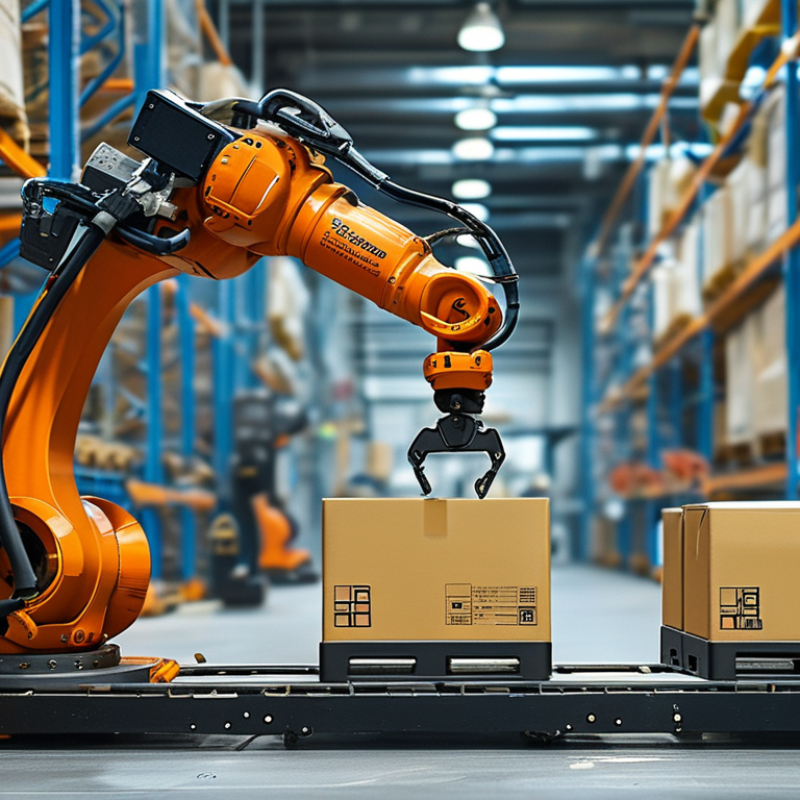
Collaborative robot palletizers represent a significant advancement in automation technology. Understanding their fundamentals is crucial for any business looking to integrate them into its operations. These systems are designed to work alongside human labor, enhancing productivity without replacing the workforce. According to a report from the International Federation of Robotics, the collaborative robot market is expected to grow at a compound annual growth rate (CAGR) of 35% from 2023 to 2027. This rise indicates their increasing importance across various industries.
When exploring collaborative robot palletizers, businesses should consider key features such as payload capacity, reach, and ease of programming. Industry research shows that the average palletizing cycle time can be reduced by 25% when using these robots. However, organizations must also evaluate how these systems will integrate with existing processes. Compatibility challenges can arise, leading to a need for staff retraining or additional software solutions.
Moreover, while collaborative robots offer numerous benefits, they aren't a one-size-fits-all solution. Some organizations may find limited applications due to specific operational constraints. Identifying these limitations is essential to avoid frustration down the line. Ultimately, a thoughtful approach to selecting a collaborative robot palletizer can make a significant difference in productivity and operational efficiency.
Evaluating your business needs for automation solutions is crucial in today's competitive market. Begin by assessing your current production processes. Identify bottlenecks and areas for improvement. Consider factors such as seasonal fluctuations and labor costs. Are your employees overwhelmed during peak seasons? A collaborative robot palletizer could ease that burden.
Next, delve into your specific palletizing needs. Determine the weight and dimensions of the products you handle. Consider the variety of packages you use. Is the robot adaptable for different shapes and sizes? This flexibility can significantly affect productivity. It's essential to engage with your team during this evaluation. Their insights on daily operations can highlight areas where automation could drive efficiency.
Finally, understand the long-term implications of choosing an automation solution. Will it scale with your business growth? Assess the potential return on investment. Consider the training required for staff to work alongside robots. Sometimes, employees may resist change or fear job displacement. Open discussions about these concerns can lead to a more thoughtful integration process. Reflections on these aspects can help you choose wisely.
When selecting a collaborative robot palletizer, key features can significantly influence your choice. One crucial aspect is payload capacity. Many collaborative robots can handle between 5 to 20 kg, fitting various product types. However, understanding your specific needs is vital. A mismatch between payload and product weight can lead to inefficiencies.
Another essential feature is ease of programming. User-friendly interfaces and intuitive programming logic simplify deployment. According to a recent industry report, nearly 70% of companies prefer robots that require minimal coding. This preference highlights the importance of selecting a system that your team can quickly learn and adapt to.
Safety features also play a significant role. Collaborative robots must operate alongside human workers without safety cages. Look for models equipped with advanced sensors to detect human presence. Data from the International Federation of Robotics indicates that companies prioritizing safety see a 25% reduction in workplace accidents. Ultimately, evaluating these specifications ensures that you choose the best collaborative robot palletizer for your operational needs.
| Feature | Description | Importance |
|---|---|---|
| Payload Capacity | The maximum weight the robot can handle effectively. | High |
| Speed | Operation speed during palletizing tasks. | Medium |
| Ease of Programming | How user-friendly the programming interface is. | High |
| Safety Features | Incorporated safety systems to protect operators. | Very High |
| Compatibility | Ease of integrating with existing equipment and systems. | High |
| Footprint | The amount of floor space the robot will occupy. | Medium |
| Maintenance Requirements | How often the robot needs servicing or parts replacement. | Medium |
| Support and Training | Availability of customer support and training resources. | High |
Choosing the right collaborative robot palletizer involves careful consideration. Different models offer various features that can impact productivity. For instance, some robots excel in handling diverse product sizes while others focus on speed. When comparing brands, examine the payload capacity, cycle time, and ease of programming. Each aspect plays a significant role in your operational efficiency.
User experience is vital. Robots that are user-friendly can reduce downtime and training costs. Look for models with intuitive interfaces. This feature can streamline the onboarding process for your team. Consider the maintenance requirements as well. Some units may demand more frequent service, impacting your overall costs.
Reflect on your specific needs. Your choice must align with your production goals. Are you prioritizing speed or versatility? Engage with industry peers to gain insights. Their reflections on real-life applications can highlight potential issues that aren't apparent in technical specifications. The right collaborative palletizer should not only meet current demands but also adapt to future challenges.
When evaluating the cost and ROI of a collaborative robot palletizer, it’s essential to analyze initial and ongoing expenses. The purchase price is just one piece. Consider installation, maintenance, and operational costs. Understanding these factors helps you avoid overspending. Calculate how quickly you can recover your investment. Typically, businesses see ROI within one to three years.
Factor in future scalability. Will the robot adapt as your production needs increase? A model that works well today may struggle to keep up later. Look for features like software updates and compatibility with new technology. Investing in a scalable solution can save you money long-term.
Look for case studies of similar businesses. Learn from their experiences to inform your decisions. Start small; pilot tests can provide valuable insights. Always assess your unique operational needs before committing too fully. Adjusting to automation can take time. Being cautious is also a part of strategic planning in this rapidly evolving field.
„Thanks to the LUVIR technology, the solder resist process could be switched directly from the previously used mask exposure to direct exposure. As an outstanding digital solution on the market, this technology has been able to demonstrate fast process times and superior quality on our certified conventional ink in production. This allowed us to fully digitize the solder mask process at low cost – without process or ink adjustments. An excellent benefit to our production in Rot am See.“
Ralf Göhringer (Head of Production WE Rot am See)
I would definitely recommend the Limata machine and team for a future company purchase
Michael Greenaway
Compunetics Inc.
“The Limata ldi has been amazing!! Best thing we did was buy this machine”
Richard Brady
GM
Circuitlabs
“Since 2019, we have been running the Limata X1000 LDI system (including LUVIR for solder mask imaging) in daily production as an addition to our current process with film. The machine was capable of properly exposing Taiyo PSR-4000 BN (DI) solder mask types on normal to high-copper boards using a new and unique direct imaging process. The machine operating interface is very user friendly which allowed for a quick technical training curve. The pre-registration processing reduced several seconds of production time at every print. Limata support and service staff is incomparable. They supported our team every step of the way at basically any time of the day or night, with literally, an immediate response time, customizing the software interface to best fit our Operations and needs.
We have exposed more than 8,000 prints since end of October, on various solder mask colors and some resist film panels. Limata, has proven to be very capable and innovative. They are a strong contender in the industry.
We have very much enjoyed this project, and working with the team!
Thank you Limata for the continued support and being a part of our growth.”
Bill Sezate
Vice President, GM
Summit Interconnect
As a replacement to our current contact exposure process with film, the LIMATA X2000 system including LUVIR-Technology was capable of properly exposing non-LDI solder mask types using a direct imaging process. The machine offers cutting edge software with a very intuitive operating interface which allowed for quick technician training curve. The dual drawer system combined with pre-registration processing reduced several seconds of production time at every machine cycle. Limata support and service staff is world class. They added software patches to keep production running at shortest possible response times, customized the software interface to best fit our in-house Operations system, and even wrote a step-by-step machine processing manual. As a result of the project, we have exposed more than 16,000 times on various product types and solder mask brands/colors. Limata, in a very short timeframe as a company, has definitely shown they are truly innovative and will be challenging the industry of direct imaging for the top spot.
Kevin Beattie
Process Engineer
TTM Technologies
Forest Grove Division
