Choosing the right Compressor Room Cooler is essential for any facility focused on efficiency and reliability. Expert James Anderson, a leading HVAC engineer, emphasizes, "The right cooler can significantly enhance equipment life and reduce energy costs." This statement points to the importance of making informed decisions in this area.
Compressor Room Coolers serve a crucial role in maintaining optimal temperatures for compressors. A well-chosen system can prevent overheating and ensure consistent performance. This equipment not only affects compressor lifespan but also influences overall operational costs.
However, selecting the best cooler can be challenging. The market offers various options, each with unique features and specifications. Some choices may not fit your specific needs, leading to wasted resources. Reflecting on your requirements can clarify what is truly necessary for your setup.
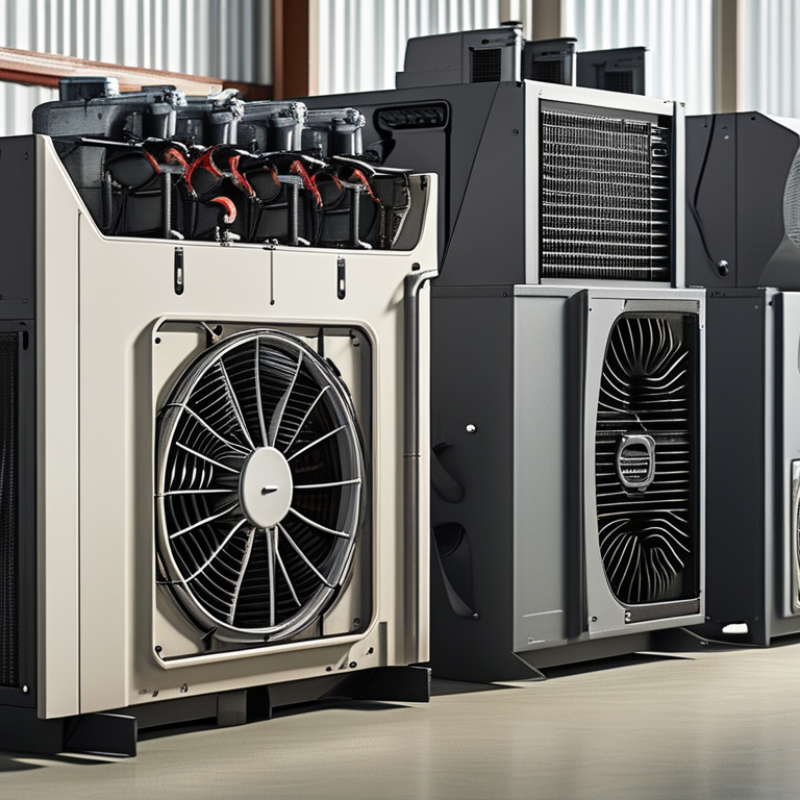
When selecting a compressor room cooler, understanding various factors is crucial. The cooler’s capacity should align with the heat generated by the equipment it serves. A study by the International Institute of Refrigeration indicates that appropriate sizing can improve energy efficiency by up to 30%. Calculating the total heat load, including ambient temperatures and compressor outputs, is necessary for optimal performance.
Another critical aspect is airflow management. A well-ventilated cooler significantly reduces the risk of overheating. According to industry reports, effective airflow can extend equipment lifespan by 20%. Consider the design of the cooler and its ability to distribute air uniformly. Units that lack this feature often experience uneven cooling, leading to potential failures and costly downtime.
Energy efficiency also cannot be overlooked. The U.S. Department of Energy suggests investing in units with high energy efficiency ratings, as they can reduce operational costs significantly over time. However, high upfront costs may prompt reflection on budget constraints versus long-term savings. Balancing these factors requires careful thought and planning, ensuring you select a cooler that fits both current and future needs.
When it comes to compressor room coolers, understanding the types available is crucial for making informed choices. The most common types include air-cooled, water-cooled, and evaporative coolers. Each type has its own benefits and drawbacks. According to a 2021 industry report, air-cooled systems are popular due to their easy installation and low maintenance. However, they may be less efficient in high-temperature environments.
Water-cooled systems, on the other hand, typically provide better temperature control. A study from the International Institute of Refrigeration noted that these systems can enhance efficiency by up to 30% in some conditions. Yet, they require a proper water source and regular maintenance to avoid corrosion and scaling issues. This can be a downside for some businesses.
Evaporative coolers represent another option. They use water evaporation to cool air, making them effective in low-humidity areas. However, their performance can suffer in humid climates. While they consume less energy, their installation needs careful planning. The decision process may benefit from consultation with professionals who have experience in this area. Each cooler type requires consideration of room size, climate, and operational demands. This complexity can lead to analysis paralysis for some business owners—a common pitfall in such decisions.
When selecting a compressor room cooler, size and capacity are critical factors. The cooler must fit your compressor room's dimensions. Measure the space accurately. Some facilities underestimate the required space. It's essential to account for airflow and maintenance access. A cramped environment can lead to overheating and reduce efficiency.
The capacity of the cooler should match the heat generated by your equipment. Calculate the heat load in BTUs. This ensures the cooler can handle the thermal output effectively. Oversizing can waste energy, while undersizing can lead to system failure. Watch for signs of inadequate cooling, such as buzzing sounds or fluctuating temperatures. These indicators often suggest that your cooler is not adequately managing the heat produced.
Analyzing these aspects requires experience and attention to detail. Be prepared to revise your initial assumptions based on actual performance data. Consider consulting with experts if necessary. Reliable recommendations can guide you toward a more informed decision, ensuring your compressor room remains efficient and functional. Demonstrating awareness of your unique requirements can also highlight potential areas of improvement.
| Dimension | Recommended Value | Description |
|---|---|---|
| Room Size | 500 - 1000 sq. ft. | Ideal for small to medium compressor rooms. |
| Cooling Capacity | 10,000 - 20,000 BTU | Sufficient cooling for most compressor operations. |
| Airflow Rate | 800 - 1200 CFM | Ensures proper ventilation and heat dissipation. |
| Noise Level | Less than 70 dB | Quieter operation for a more comfortable work environment. |
| Power Supply | 220V - 240V Single Phase | Standard voltage for most industrial applications. |
| Temperature Range | 50°F - 100°F | Maintains compressor efficiency and performance. |
When selecting a cooler for your compressor room, energy efficiency ratings play a vital role. Energy Star ratings are essential markers of efficiency. They provide insights into how much power the cooler consumes. Understanding these ratings helps assess long-term savings on your energy bill. Higher ratings usually mean lower operational costs, but the initial investment might be higher.
Operational costs also include maintenance and repair. Regular maintenance can prevent costly breakdowns. An efficient cooler may require less frequent repairs, but not all models are created equal. Some might be energy-efficient yet have higher maintenance needs. Researching different models allows you to weigh their energy performance against potential upkeep costs.
Finding balance is crucial. Sometimes, a cheaper option could lead to higher costs later. Energy-efficient models might require a higher upfront cost but save money over time. The decision requires careful consideration of overall expenses. Investing time in understanding energy ratings can lead to better long-term choices for your needs.
This chart displays the energy efficiency ratings of different compressor room coolers based on their operational costs and energy consumption. Higher efficiency ratings indicate better performance and cost savings over time.
When selecting a cooler system for your compressor room, reliability is crucial. A dependable cooling system ensures consistent performance. Look for units with a proven track record. Regular maintenance can prevent unexpected breakdowns. This not only saves money but also enhances operational efficiency.
Consider the materials used in the cooler's construction. High-quality components often result in greater durability. Be aware that some systems require more frequent servicing than others. It's important to understand the manufacturer's recommendations for maintenance. Overlooking these can lead to costly repairs down the line.
Evaluate your specific cooling needs. The size of your compressor room plays a significant role. A cooler that is too small will struggle to maintain the right temperature. Conversely, an oversized unit can lead to inefficiencies. Ensure that the installation is done professionally, as improper setup can affect longevity. A system that runs optimally will provide reliable service for years. Reflections on past experiences can guide better choices in the future.
„Thanks to the LUVIR technology, the solder resist process could be switched directly from the previously used mask exposure to direct exposure. As an outstanding digital solution on the market, this technology has been able to demonstrate fast process times and superior quality on our certified conventional ink in production. This allowed us to fully digitize the solder mask process at low cost – without process or ink adjustments. An excellent benefit to our production in Rot am See.“
Ralf Göhringer (Head of Production WE Rot am See)
I would definitely recommend the Limata machine and team for a future company purchase
Michael Greenaway
Compunetics Inc.
“The Limata ldi has been amazing!! Best thing we did was buy this machine”
Richard Brady
GM
Circuitlabs
“Since 2019, we have been running the Limata X1000 LDI system (including LUVIR for solder mask imaging) in daily production as an addition to our current process with film. The machine was capable of properly exposing Taiyo PSR-4000 BN (DI) solder mask types on normal to high-copper boards using a new and unique direct imaging process. The machine operating interface is very user friendly which allowed for a quick technical training curve. The pre-registration processing reduced several seconds of production time at every print. Limata support and service staff is incomparable. They supported our team every step of the way at basically any time of the day or night, with literally, an immediate response time, customizing the software interface to best fit our Operations and needs.
We have exposed more than 8,000 prints since end of October, on various solder mask colors and some resist film panels. Limata, has proven to be very capable and innovative. They are a strong contender in the industry.
We have very much enjoyed this project, and working with the team!
Thank you Limata for the continued support and being a part of our growth.”
Bill Sezate
Vice President, GM
Summit Interconnect
As a replacement to our current contact exposure process with film, the LIMATA X2000 system including LUVIR-Technology was capable of properly exposing non-LDI solder mask types using a direct imaging process. The machine offers cutting edge software with a very intuitive operating interface which allowed for quick technician training curve. The dual drawer system combined with pre-registration processing reduced several seconds of production time at every machine cycle. Limata support and service staff is world class. They added software patches to keep production running at shortest possible response times, customized the software interface to best fit our in-house Operations system, and even wrote a step-by-step machine processing manual. As a result of the project, we have exposed more than 16,000 times on various product types and solder mask brands/colors. Limata, in a very short timeframe as a company, has definitely shown they are truly innovative and will be challenging the industry of direct imaging for the top spot.
Kevin Beattie
Process Engineer
TTM Technologies
Forest Grove Division
