Choosing the right Cooling Equipment for your business can be challenging. Many factors come into play, including efficiency, size, and cost. A well-chosen system ensures a comfortable environment for employees and customers. Proper cooling equipment also protects sensitive products and technology, thus increasing reliability.
Understanding your specific needs is crucial. Evaluate the space that requires cooling. An industrial facility demands different equipment compared to a small retail store. You may face issues like fluctuating temperatures or inadequate airflow. These problems can hurt productivity. Consulting with experts can lead to better-informed decisions, saving both time and money.
Consider energy efficiency as a critical factor. High-efficiency models can reduce long-term costs. However, initial investments might be higher. Balance immediate budgets with future savings. Explore warranties and maintenance services to ensure reliability. The right cooling equipment not only enhances comfort but also promotes overall business health.
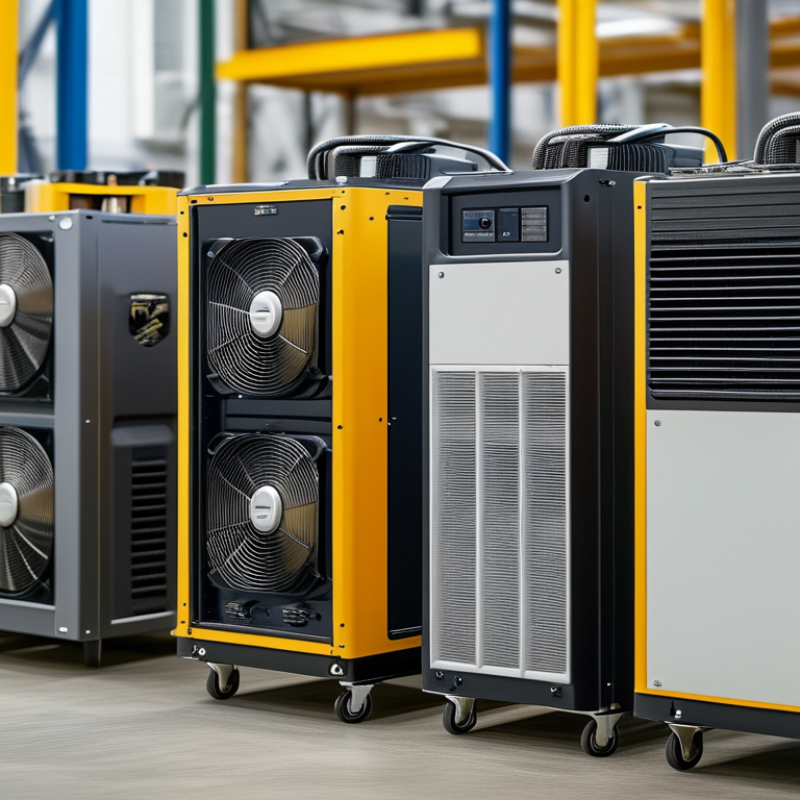
Understanding your business’s cooling needs is crucial for optimal performance. Every industry has unique temperature requirements. For example, the food industry often demands strict temperature controls. According to the Food Safety and Inspection Service, maintaining proper temperatures can reduce foodborne illnesses by 20%. This highlights the importance of choosing the right cooling equipment.
Evaluating your space is a necessary step. Warehouses might need powerful systems due to large volumes of goods. In contrast, small offices may require only simple air conditioning units. A report from the International Energy Agency shows that improper cooling can increase energy consumption by up to 30%. Businesses should assess their layout and size to make informed decisions.
Humidity levels also play a critical role in cooling choices. High humidity can lead to mold growth. A study by the Environmental Protection Agency states that indoor humidity should stay between 30% and 50% for comfort and health. This can guide businesses in selecting specialized equipment. Inadequate cooling can affect productivity, highlighting the need for thorough assessments.
Choosing the right cooling equipment is crucial for any business relying on climate control. Different types of cooling systems exist, each with unique advantages. Understanding these options can help achieve optimal efficiency and cost savings.
Air conditioning units are common. They provide consistent cooling but may not be energy efficient. A report from the International Energy Agency highlights that air conditioning accounts for a significant portion of global energy use. In contrast, evaporative coolers require less energy to operate and work well in drier climates. However, their effectiveness decreases in high humidity.
Refrigeration systems are vital for food and beverage industries. They maintain product safety and quality. Research shows that businesses can reduce energy costs by 15-30% with modern, efficient refrigeration units. While these systems have initial costs, the long-term savings are considerable. It's essential to weigh upfront expenses against future savings.
Choosing the right cooling equipment requires careful consideration of climate, business needs, and budget. Evaluating options based on energy efficiency and operational costs can reveal the best solution for your specific requirements. This ensures that your cooling system supports your overall business goals without compromising efficiency.
Choosing cooling equipment for your business involves careful consideration of energy efficiency and cost implications. Energy-efficient systems save money in the long run. They lower utility bills and reduce greenhouse gas emissions. Businesses should look for equipment with a high seasonal energy efficiency ratio (SEER) or energy efficiency ratio (EER). These metrics indicate how much cooling is produced per unit of energy consumed.
While energy efficiency is crucial, initial costs can be daunting. Sometimes, the most efficient systems require higher upfront investments. It’s essential to balance purchase price with long-term savings. Conducting a life-cycle cost analysis can help. This analysis compares costs over the equipment's lifespan, revealing potential savings.
Another aspect to consider is maintenance. More efficient systems often have unique components needing specialized care. If not properly maintained, they can lose efficiency, increasing costs. Reflecting on the need for regular maintenance can improve your decision-making. Consider your operational structure and whether you have the resources to support such systems.
| Equipment Type | Energy Efficiency Rating | Initial Cost ($) | Annual Energy Cost ($) | Expected Lifespan (Years) | Total Cost of Ownership ($) |
|---|---|---|---|---|---|
| Central Air Conditioning | SEER 16 | 3200 | 450 | 15 | 4100 |
| Portable Air Conditioner | EER 12 | 500 | 350 | 5 | 2300 |
| Evaporative Cooler | N/A | 1200 | 150 | 10 | 3000 |
| Chilled Beams | N/A | 7000 | 400 | 20 | 8600 |
When choosing cooling equipment for your business, space and installation requirements play a crucial role. Assessing the available space is essential. Measure the dimensions of your area accurately. Consider obstructions like columns or ductwork. Determining proper airflow circulation is vital. A poorly positioned unit may lead to inefficient cooling and increased energy costs.
Installation requirements also influence your choice. Check if your building can accommodate the equipment's size and ventilation needs. Some systems require more extensive ductwork than others. Think about power access and drainage as well. Inadequate planning can lead to unexpected delays and expenses during installation.
Don't forget about local regulations or codes that may apply. Each region has specific guidelines for installing cooling systems. Overlooking these can result in fines or necessary modifications. Reflect on these considerations carefully. Investing time in understanding the space and installation requirements can save significant headaches later.
When selecting cooling equipment for your business, the reliability of suppliers is crucial. Researching their support services can save you time and money. Look for suppliers with a solid track record in your industry. Check reviews and testimonials from other businesses. These insights reveal strengths and weaknesses.
Tips: Verify the warranty coverage offered by suppliers. A longer warranty indicates confidence in their products. Additionally, consider their responsive customer service. Quick responses can ease concerns during an emergency.
Effective communication is vital. Ask potential suppliers about their support channels. Do they offer phone support, email responses, or online chat? Evaluate their average response times. It's not uncommon to find suppliers that appear accessible but fail to deliver when needed. Developing a relationship with a reliable supplier can greatly enhance your business’s operational efficiency.
The chart above compares the efficiency ratings (SEER) of different types of cooling equipment suitable for businesses. Higher SEER ratings indicate better energy efficiency, which can help reduce operational costs.
„Thanks to the LUVIR technology, the solder resist process could be switched directly from the previously used mask exposure to direct exposure. As an outstanding digital solution on the market, this technology has been able to demonstrate fast process times and superior quality on our certified conventional ink in production. This allowed us to fully digitize the solder mask process at low cost – without process or ink adjustments. An excellent benefit to our production in Rot am See.“
Ralf Göhringer (Head of Production WE Rot am See)
I would definitely recommend the Limata machine and team for a future company purchase
Michael Greenaway
Compunetics Inc.
“The Limata ldi has been amazing!! Best thing we did was buy this machine”
Richard Brady
GM
Circuitlabs
“Since 2019, we have been running the Limata X1000 LDI system (including LUVIR for solder mask imaging) in daily production as an addition to our current process with film. The machine was capable of properly exposing Taiyo PSR-4000 BN (DI) solder mask types on normal to high-copper boards using a new and unique direct imaging process. The machine operating interface is very user friendly which allowed for a quick technical training curve. The pre-registration processing reduced several seconds of production time at every print. Limata support and service staff is incomparable. They supported our team every step of the way at basically any time of the day or night, with literally, an immediate response time, customizing the software interface to best fit our Operations and needs.
We have exposed more than 8,000 prints since end of October, on various solder mask colors and some resist film panels. Limata, has proven to be very capable and innovative. They are a strong contender in the industry.
We have very much enjoyed this project, and working with the team!
Thank you Limata for the continued support and being a part of our growth.”
Bill Sezate
Vice President, GM
Summit Interconnect
As a replacement to our current contact exposure process with film, the LIMATA X2000 system including LUVIR-Technology was capable of properly exposing non-LDI solder mask types using a direct imaging process. The machine offers cutting edge software with a very intuitive operating interface which allowed for quick technician training curve. The dual drawer system combined with pre-registration processing reduced several seconds of production time at every machine cycle. Limata support and service staff is world class. They added software patches to keep production running at shortest possible response times, customized the software interface to best fit our in-house Operations system, and even wrote a step-by-step machine processing manual. As a result of the project, we have exposed more than 16,000 times on various product types and solder mask brands/colors. Limata, in a very short timeframe as a company, has definitely shown they are truly innovative and will be challenging the industry of direct imaging for the top spot.
Kevin Beattie
Process Engineer
TTM Technologies
Forest Grove Division
