Choosing the right Energy Storage System is crucial for both residential and commercial applications. With the rise of renewable energy sources, the need for effective energy storage has never been more prominent. These systems help manage energy supply and demand efficiently. They ensure that power is available even during outages or low production periods.
Different Energy Storage Systems offer unique benefits and drawbacks. Battery technologies, such as lithium-ion or lead-acid, vary in efficiency, lifespan, and cost. Understanding your energy needs is essential for making an informed choice. Factors like usage patterns, available space, and budget all play a significant role.
However, navigating the options can be overwhelming. Many users find themselves confused by technical jargon or misled by marketing claims. It's important to approach this decision critically. Not every system will fit every need perfectly. By examining your specific requirements and consulting with experts, you can find the solution that enhances your energy strategy effectively.
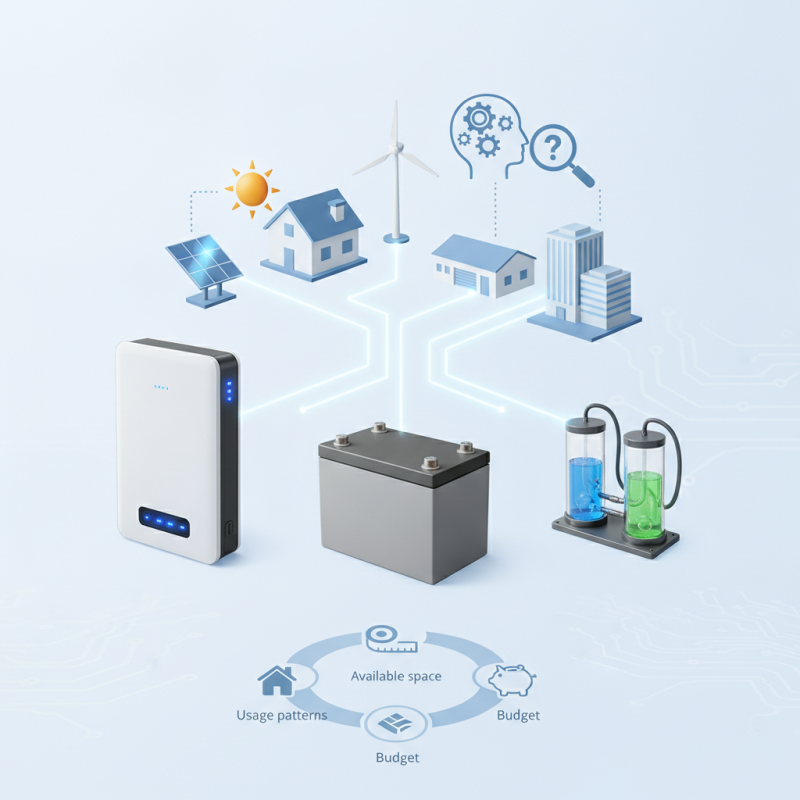
When considering energy storage systems, it's crucial to understand the different types available. Lithium-ion batteries are popular due to their efficiency and compact size. They work well for residential solar setups and electric vehicles. However, they can be expensive and may require careful management of charge cycles.
Lead-acid batteries offer a more affordable alternative. These batteries are widely used and easily accessible. They are reliable but have a shorter lifespan and lower energy density than newer technologies. Maintenance can be an issue, requiring regular checks on fluid levels and connections.
Another emerging option is solid-state batteries. They promise greater safety and higher capacity. Yet, they are still in development and might be cost-prohibitive currently. Understanding these options helps in making informed decisions. Reflecting on needs, priorities, and budget is essential. The right choice can significantly impact energy efficiency and cost savings in the long term.
When looking into energy storage systems, it's crucial to assess your specific needs. Analyze your average energy consumption. Consider daily and seasonal usage patterns. Identify peak demand times. This understanding will guide you toward the right solution.
Evaluate your lifestyle as well. Do you have electric vehicles? Will you use stored energy during outages? Maybe you prioritize sustainability. Each factor influences your decision. Balancing these needs with available technologies can be challenging.
It's important to reflect on potential limitations as well. What if your energy needs change? Expanding a system might be complicated. Additionally, consider costs and warranty details. These practical aspects can significantly affect your overall satisfaction. Choosing an energy storage system requires careful thought and evaluation of personal circumstances.
Choosing the right energy storage system requires careful consideration. Start by assessing your energy needs. Calculate your daily consumption. Think about peak usage times. Understanding your demands will guide you in selecting the right capacity for your system.
Battery chemistry is another critical aspect. Lithium-ion and lead-acid batteries have distinct attributes. Lithium-ion batteries offer longer lifespans and higher efficiency. Meanwhile, lead-acid options may be less expensive upfront but often lack performance. Reflect on your long-term goals before deciding.
Here are some tips. Look at the system's efficiency rating. A higher rating means less energy loss. Consider the installation space as well; some systems require more room. Also, don't ignore warranties. A good warranty indicates reliability and manufacturer confidence. An informed choice will lead to lasting benefits.
Selecting the right energy storage system involves thoroughly evaluating cost, efficiency, and performance. Each storage option has its unique advantages and drawbacks. For instance, lithium-ion batteries are popular due to their high energy density and efficiency, but they can be costly. This expense might not suit everyone's budget. Alternatively, lead-acid batteries are more affordable, but their efficiency and lifespan may fall short.
When examining performance, consider the discharge rate. Some systems can release energy quickly, while others may take longer. This plays a crucial role in applications requiring instant power. Assessing the round-trip efficiency helps, too. Systems that deliver higher efficiency mean less energy wasted during storage and retrieval, impacting your overall savings.
Cost is not just about upfront expenses. Maintenance and replacement costs over time are vital. Reflect on this long-term aspect before investing. Energy storage systems should align with your specific needs, whether for home use or larger applications. This approach ensures you choose a system that fits your lifestyle and financial reality.
When evaluating energy storage systems, the environmental impact is a crucial factor. Batteries often use materials that can be harmful if not properly managed. Lithium extraction, for example, can lead to significant ecological disruption. Assessing the lifecycle of these materials is essential. Understanding sourcing, usage, and disposal helps gauge the overall footprint.
Longevity is another critical aspect of energy systems. A longer-lasting system reduces the need for replacement, which in turn minimizes waste. However, not all systems offer the same durability. Some may require more frequent maintenance, raising operational costs. Analyzing performance data helps clarify expected lifespans and maintenance needs.
Investing time in research is non-negotiable. Seek insights from industry reports or academic studies. Not all information is clear-cut. Some claims about longevity and environmental impact may lack full transparency. Finding reliable sources is vital to make educated decisions. The balance between environmental responsibility and practical longevity remains challenging yet essential for sustainable energy solutions.
„Thanks to the LUVIR technology, the solder resist process could be switched directly from the previously used mask exposure to direct exposure. As an outstanding digital solution on the market, this technology has been able to demonstrate fast process times and superior quality on our certified conventional ink in production. This allowed us to fully digitize the solder mask process at low cost – without process or ink adjustments. An excellent benefit to our production in Rot am See.“
Ralf Göhringer (Head of Production WE Rot am See)
I would definitely recommend the Limata machine and team for a future company purchase
Michael Greenaway
Compunetics Inc.
“The Limata ldi has been amazing!! Best thing we did was buy this machine”
Richard Brady
GM
Circuitlabs
“Since 2019, we have been running the Limata X1000 LDI system (including LUVIR for solder mask imaging) in daily production as an addition to our current process with film. The machine was capable of properly exposing Taiyo PSR-4000 BN (DI) solder mask types on normal to high-copper boards using a new and unique direct imaging process. The machine operating interface is very user friendly which allowed for a quick technical training curve. The pre-registration processing reduced several seconds of production time at every print. Limata support and service staff is incomparable. They supported our team every step of the way at basically any time of the day or night, with literally, an immediate response time, customizing the software interface to best fit our Operations and needs.
We have exposed more than 8,000 prints since end of October, on various solder mask colors and some resist film panels. Limata, has proven to be very capable and innovative. They are a strong contender in the industry.
We have very much enjoyed this project, and working with the team!
Thank you Limata for the continued support and being a part of our growth.”
Bill Sezate
Vice President, GM
Summit Interconnect
As a replacement to our current contact exposure process with film, the LIMATA X2000 system including LUVIR-Technology was capable of properly exposing non-LDI solder mask types using a direct imaging process. The machine offers cutting edge software with a very intuitive operating interface which allowed for quick technician training curve. The dual drawer system combined with pre-registration processing reduced several seconds of production time at every machine cycle. Limata support and service staff is world class. They added software patches to keep production running at shortest possible response times, customized the software interface to best fit our in-house Operations system, and even wrote a step-by-step machine processing manual. As a result of the project, we have exposed more than 16,000 times on various product types and solder mask brands/colors. Limata, in a very short timeframe as a company, has definitely shown they are truly innovative and will be challenging the industry of direct imaging for the top spot.
Kevin Beattie
Process Engineer
TTM Technologies
Forest Grove Division
