Choosing the right Hot Air Brush can transform your hair routine. Different hair types demand different approaches. A suitable hot air brush enhances your style while minimizing damage.
When exploring your options, consider your hair's texture and thickness. If you have fine hair, look for a lightweight model. For thick or curly hair, a powerful brush with larger barrels is ideal. It's crucial to select a brush designed for your specific needs.
Many people overlook the importance of heat settings. A versatile hot air brush offers adjustable temperatures. This feature allows for personalized styling experiences, catering to varying hair sensitivities. Reflect on what your hair really needs. Not every brush will work wonders for you. Testing different models can lead to unexpected insights.
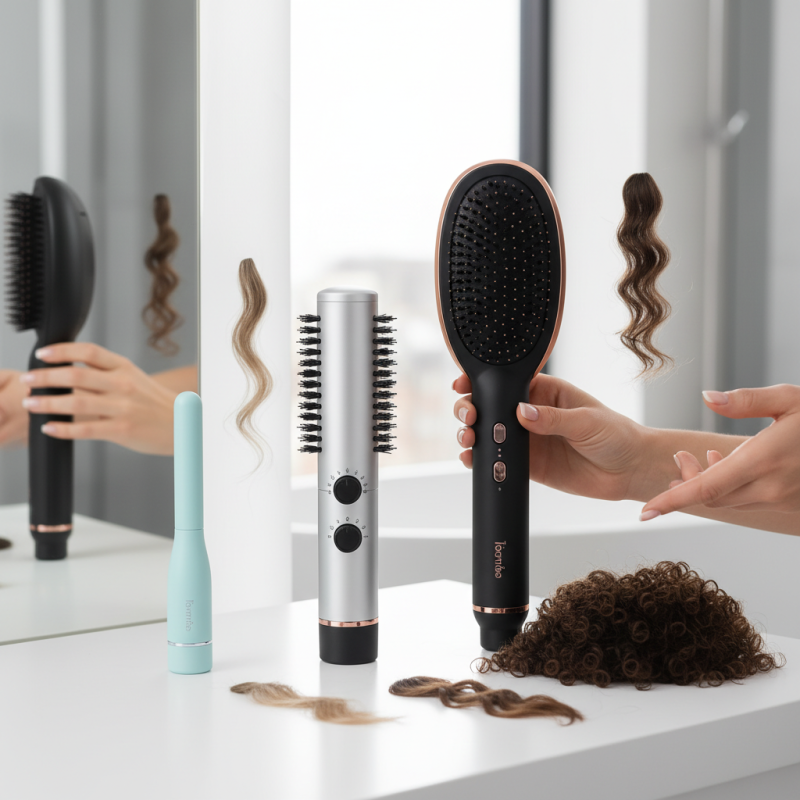
When it comes to choosing a hot air brush, understanding your hair type is crucial. Different hair textures require specific care and styling tools. For example, fine hair often struggles with volume. A hot air brush with a smaller barrel can create lift without weighing hair down. Those with wavy hair might need a brush that smooths while enhancing their waves. The right choice makes a significant difference.
Curly hair can pose a challenge. A brush with mixed bristles can help define curls and reduce frizz. It’s essential to choose a tool that respects the natural curl pattern. Heat settings are vital as well. Lower heat is better for delicate textures, while coarser hair may require higher settings to achieve lasting results. Experimenting with different tools can lead to unexpected insights.
Assessing your hair's response is important. What works for someone else might not suit you. Pay attention to how your hair behaves after using a particular brush. Adjustments might be necessary. Over time, you'll develop a better understanding of what truly works for you. This journey can highlight your hair's unique characteristics, leading to improved styling outcomes.
When choosing a hot air brush, several key features can enhance your styling experience. First, consider the barrel size. A larger barrel is suitable for long, thick hair. It creates soft waves and volume. For shorter hair, a smaller barrel works better. It helps achieve tighter curls and more defined styles.
Next, look for adjustable heat settings. Different hair types require different temperatures. Fine hair may need lower heat, while thicker hair often benefits from higher temperatures. This customization allows for safer styling. Additionally, Ionic technology can reduce frizz and enhance shine. It’s essential for achieving a smooth finish.
Don't overlook bristle type. Natural bristles can provide a gently polished look, while nylon bristles may offer better grip for thick hair. Some hot air brushes combine both for versatility. However, pay attention to the weight and design. A lightweight model is easier to handle. It will prevent strain during longer styling sessions. Finally, remember that everyone's hair is different. Experimentation might be necessary to find what works best for you. Don’t hesitate to adjust your routine based on your hair's unique needs.
Choosing the right hot air brush involves understanding the various sizes and shapes available. These factors significantly impact your styling results. A round brush is excellent for creating volume and curl. It lifts your roots, helping to add bouncy waves. Conversely, a paddle brush works well for sleek and straight looks. It provides control for precision styling, perfect for longer hair.
Tips: Consider your hair length when selecting the brush shape. Shorter hair may benefit from a smaller diameter for better maneuverability. Additionally, think about your styling goals. If you frequently sport waves, a round brush is ideal. For a straight finish, opt for flatter designs.
Different bristle materials can also affect the outcome. Nylon bristles provide a firmer grip, while natural bristles are gentler on hair. Experimenting with various brushes may lead you to unexpected results. Finding the best tool can take time. Remember, trial and error are part of the process. Embrace the learning curve as you refine your technique.
Choosing the right heat settings for your hot air brush is essential for achieving healthy, stylish hair. Different hair types react uniquely to heat, which can lead to damage if not handled properly. Fine hair typically requires lower temperatures to prevent breakage. Setting your brush to a lower heat ensures a gentle approach, allowing you to style without compromising your hair’s integrity.
On the other hand, coarse or curly hair generally benefits from higher heat settings. These hair types often need more intensity to achieve smoothness and definition. However, it's crucial to monitor the heat level closely, as excessive heat can result in dryness and frizz. You might think you need the highest setting for the best results, but this approach can backfire. A medium heat might often provide just enough styling power without the risks associated with high heat.
Experimenting with different settings can be a game-changer. You may not get it right on the first try, and that’s perfectly okay. Finding what works best for your unique hair situation takes patience and practice. Keep a heat diary to track what settings give the best results. This might reveal insights into your hair's needs that you hadn’t considered before. It's about bringing out the best in your hair while maintaining its health.
This chart illustrates the recommended heat settings for different hair types. Fine hair typically requires a lower heat setting to prevent damage, while thick hair can tolerate higher temperatures for effective styling.
When it comes to maintaining your hot air brush, regular care is key. After each use, make sure to clean the brush thoroughly. Hair products and dust can accumulate, affecting performance. Use a soft brush or cloth to wipe down the barrel and bristles. This simple step can prevent buildup and extend the life of your tool.
Storing your hot air brush properly is equally important. Avoid tossing it into a drawer or leaving it in a damp bathroom. Instead, keep it in a cool, dry place. Consider using a heat-resistant mat for temporary storage after use. This can prevent damage to both the brush and your countertops.
Inspect the cord regularly for any signs of wear and tear. A damaged cord can pose safety risks. If you notice any fraying, it might be time to seek professional help or consider replacement. Taking these precautions ensures that your hot air brush serves you well for years. Remember, even small oversights in care can lead to bigger issues down the road.
| Hair Type | Recommended Hot Air Brush Features | Maintenance Tips | Expected Lifespan (Years) |
|---|---|---|---|
| Fine Hair | Lightweight, lower heat settings, ionic technology | Clean brush bristles regularly, avoid overusing heat | 2-3 |
| Thick Hair | Higher heat settings, large barrel size, strong motor | Store in a cool place, regularly unplug when not in use | 3-5 |
| Curly Hair | Multi-purpose, various barrel sizes, heat protection | Use a heat protectant, clean after every use | 2-4 |
| Straight Hair | Smooth barrel, blow-dry and style functionality | Inspect cord for damage, avoid water | 4-6 |
„Thanks to the LUVIR technology, the solder resist process could be switched directly from the previously used mask exposure to direct exposure. As an outstanding digital solution on the market, this technology has been able to demonstrate fast process times and superior quality on our certified conventional ink in production. This allowed us to fully digitize the solder mask process at low cost – without process or ink adjustments. An excellent benefit to our production in Rot am See.“
Ralf Göhringer (Head of Production WE Rot am See)
I would definitely recommend the Limata machine and team for a future company purchase
Michael Greenaway
Compunetics Inc.
“The Limata ldi has been amazing!! Best thing we did was buy this machine”
Richard Brady
GM
Circuitlabs
“Since 2019, we have been running the Limata X1000 LDI system (including LUVIR for solder mask imaging) in daily production as an addition to our current process with film. The machine was capable of properly exposing Taiyo PSR-4000 BN (DI) solder mask types on normal to high-copper boards using a new and unique direct imaging process. The machine operating interface is very user friendly which allowed for a quick technical training curve. The pre-registration processing reduced several seconds of production time at every print. Limata support and service staff is incomparable. They supported our team every step of the way at basically any time of the day or night, with literally, an immediate response time, customizing the software interface to best fit our Operations and needs.
We have exposed more than 8,000 prints since end of October, on various solder mask colors and some resist film panels. Limata, has proven to be very capable and innovative. They are a strong contender in the industry.
We have very much enjoyed this project, and working with the team!
Thank you Limata for the continued support and being a part of our growth.”
Bill Sezate
Vice President, GM
Summit Interconnect
As a replacement to our current contact exposure process with film, the LIMATA X2000 system including LUVIR-Technology was capable of properly exposing non-LDI solder mask types using a direct imaging process. The machine offers cutting edge software with a very intuitive operating interface which allowed for quick technician training curve. The dual drawer system combined with pre-registration processing reduced several seconds of production time at every machine cycle. Limata support and service staff is world class. They added software patches to keep production running at shortest possible response times, customized the software interface to best fit our in-house Operations system, and even wrote a step-by-step machine processing manual. As a result of the project, we have exposed more than 16,000 times on various product types and solder mask brands/colors. Limata, in a very short timeframe as a company, has definitely shown they are truly innovative and will be challenging the industry of direct imaging for the top spot.
Kevin Beattie
Process Engineer
TTM Technologies
Forest Grove Division
