Choosing the right Nickel Alloy Castings for your project can be challenging. These materials are widely used in various industries due to their exceptional resistance to corrosion and high-temperature strength. The selection process involves considering factors like alloy composition, mechanical properties, and application requirements.
Understanding the specific needs of your project is vital. Each application might require different characteristics from Nickel Alloy Castings. Look at the working environment and the stress the component will endure. This knowledge helps ensure that the selected casting meets performance expectations. Proper research can lead to more informed decisions.
Always consult industry experts when you are unsure. Expertise can guide you in recognizing any potential limitations of various alloys. Remember, even small details can impact the overall quality and effectiveness of the castings you choose. Balancing these elements will ultimately lead to a successful project outcome.
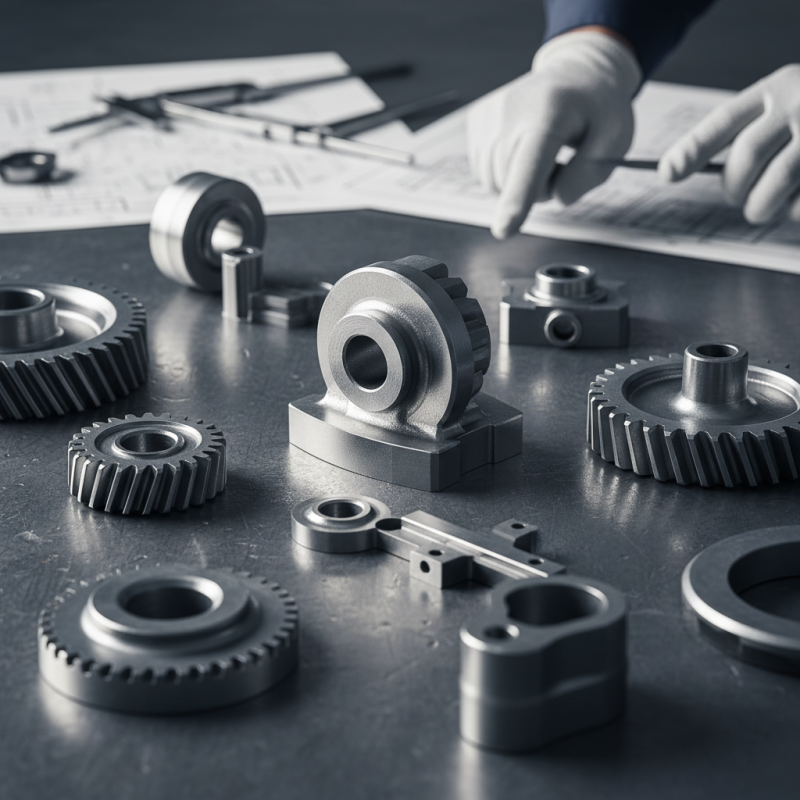
Nickel alloys are versatile materials known for their durability and resistance to corrosion. They are often used in harsh environments, making them ideal for various industrial applications. Understanding the key properties of nickel alloys can help in choosing the right casting for your project.
These alloys typically exhibit excellent mechanical strength and thermal stability. They can withstand significant heat and pressure, which is crucial for high-performance applications. Their ability to resist oxidation adds to their longevity, reducing maintenance costs over time. However, selecting the right alloy requires careful consideration of specific environmental conditions and mechanical requirements.
Tips: Always evaluate the specific stresses your project will face. It’s important to consider factors like temperature and exposure to corrosive substances. Additionally, consult with materials experts. They can provide insights based on experience and technical knowledge.
Another aspect to consider is the machinability of nickel alloys. Some are easier to work with than others. It’s beneficial to assess your manufacturing processes. You want an alloy that balances performance and workability. Reflect on your project’s needs to determine the most suitable casting.
The market for nickel alloy castings is experiencing notable growth. Increased demand comes from various sectors, particularly aerospace and automotive. These industries require strong, durable materials, making nickel alloys a favored choice. However, supply chain issues can alter availability. Producers often face challenges in sourcing raw materials. This fluctuation can lead to price volatility.
Current trends suggest a rising interest in eco-friendly processes. Manufacturers are exploring sustainable practices in their production. The adoption of advanced technologies promises to enhance efficiency. Still, integrating these methods is not without hurdles. Each step requires careful planning and investment.
End users must stay informed about these market dynamics. Understanding supply challenges can help in making better purchasing decisions. It’s crucial to align project requirements with market realities. Not all suppliers can meet high expectations consistently. Balancing quality and cost will remain a key consideration moving forward.
This chart displays the demand and supply analysis of nickel alloy castings from 2020 to 2023. The data points represent the annual market demand and supply in metric tons.
Nickel alloy castings are crucial in several industries due to their remarkable properties. They offer resistance to corrosion, high temperatures, and wear. This makes them ideal for applications in aerospace, marine, and chemical processing. Knowing where these alloys excel can help you choose the right one for your project.
In the aerospace sector, nickel alloy castings withstand extreme conditions. They provide the strength needed for engines and airframes. Marine applications also benefit greatly. Nickel alloys prevent rust and maintain integrity in salty environments. In chemical processing, they resist aggressive chemicals, ensuring safety and durability.
Tips for choosing the right alloy include understanding your specific needs. What environment will the casting face? High temperatures or corrosive substances? Conduct thorough testing to validate performance. This step is often overlooked and could save costs down the line. Additionally, consult with experts who can guide you based on their experience. Their insights can steer you away from common pitfalls. Reflecting on your project's unique requirements is key to making a wise choice.
When assessing the quality of nickel alloy castings, specific evaluation metrics play a crucial role. Start with visual inspection. Examine the surface finish for any defects like cracks or inclusions. A clean, smooth surface often indicates good casting practices. Look for consistency in the color and texture, as these can hint at the alloy's composition and processing.
Mechanical properties are also paramount. Check the tensile strength and hardness data provided by the manufacturer. These metrics reflect how well the alloy performs under stress. If this information isn't readily available, it's a sign to dig deeper. Testing these properties in a lab setting can guarantee that they meet your project requirements.
Tip: Always request certification documents. These documents verify that the nickel alloy castings meet industry standards. This can shed light on their reliability in critical applications. Also, considering environmental factors affecting your project is essential. High temperatures or corrosive conditions can influence alloy performance.
Keep in mind that not all castings are created equal. Some may pass initial inspections but fail in practical applications. Regularly assess both mechanical and visual qualities throughout the lifespan of your project. This iterative process can highlight areas needing refinement and improve overall results.
When considering nickel alloy castings, understanding cost factors is crucial. The price can vary significantly based on factors like material grade, casting method, and volume requirements. For instance, high-performance nickel alloys such as INCONEL or MONEL usually demand a premium. Industry reports indicate that raw material prices have increased by over 10% in the past year, impacting overall costs.
The casting process itself also plays a role in pricing. Investment casting tends to be more expensive than sand casting due to its complex procedures. A study by the Nickel Institute notes that investment casting can be up to 50% more costly compared to traditional methods. Project specifications, including tolerances and surface finishes, further complicate cost structures, making it essential to provide detailed requirements upfront.
Volume can significantly affect unit prices. Bulk purchasing often lowers costs per unit, yet high upfront investment may be a hurdle. Smaller projects may face inflated unit costs due to lower economies of scale. It’s vital to analyze both immediate costs and long-term value. Careful consideration of these factors leads to better financial decisions regarding nickel alloy castings.
| Casting Type | Material Composition (%) | Estimated Price ($/lb) | Applications |
|---|---|---|---|
| Nickel Alloy 625 | Ni: 58, Cr: 20, Mo: 8 | $12 | Chemical processing, aerospace |
| Nickel Alloy 718 | Ni: 52.5, Cr: 19, Mo: 3 | $10 | Aerospace, turbine engines |
| Nickel Alloy C276 | Ni: 57, Cr: 15, Mo: 15 | $11.5 | Pulp and paper, environmental |
| Nickel Alloy B2 | Ni: 65, Mo: 29 | $9 | Chemical storage tanks |
„Thanks to the LUVIR technology, the solder resist process could be switched directly from the previously used mask exposure to direct exposure. As an outstanding digital solution on the market, this technology has been able to demonstrate fast process times and superior quality on our certified conventional ink in production. This allowed us to fully digitize the solder mask process at low cost – without process or ink adjustments. An excellent benefit to our production in Rot am See.“
Ralf Göhringer (Head of Production WE Rot am See)
I would definitely recommend the Limata machine and team for a future company purchase
Michael Greenaway
Compunetics Inc.
“The Limata ldi has been amazing!! Best thing we did was buy this machine”
Richard Brady
GM
Circuitlabs
“Since 2019, we have been running the Limata X1000 LDI system (including LUVIR for solder mask imaging) in daily production as an addition to our current process with film. The machine was capable of properly exposing Taiyo PSR-4000 BN (DI) solder mask types on normal to high-copper boards using a new and unique direct imaging process. The machine operating interface is very user friendly which allowed for a quick technical training curve. The pre-registration processing reduced several seconds of production time at every print. Limata support and service staff is incomparable. They supported our team every step of the way at basically any time of the day or night, with literally, an immediate response time, customizing the software interface to best fit our Operations and needs.
We have exposed more than 8,000 prints since end of October, on various solder mask colors and some resist film panels. Limata, has proven to be very capable and innovative. They are a strong contender in the industry.
We have very much enjoyed this project, and working with the team!
Thank you Limata for the continued support and being a part of our growth.”
Bill Sezate
Vice President, GM
Summit Interconnect
As a replacement to our current contact exposure process with film, the LIMATA X2000 system including LUVIR-Technology was capable of properly exposing non-LDI solder mask types using a direct imaging process. The machine offers cutting edge software with a very intuitive operating interface which allowed for quick technician training curve. The dual drawer system combined with pre-registration processing reduced several seconds of production time at every machine cycle. Limata support and service staff is world class. They added software patches to keep production running at shortest possible response times, customized the software interface to best fit our in-house Operations system, and even wrote a step-by-step machine processing manual. As a result of the project, we have exposed more than 16,000 times on various product types and solder mask brands/colors. Limata, in a very short timeframe as a company, has definitely shown they are truly innovative and will be challenging the industry of direct imaging for the top spot.
Kevin Beattie
Process Engineer
TTM Technologies
Forest Grove Division
