Choosing the right Outrunner Motors for your projects can be challenging. According to Dr. Emily Carter, a leading expert in electric motor technology, “The choice of motors affects the overall efficiency of any project.” Her insights shed light on the intricate balance between performance and application.
Outrunner Motors are popular due to their high torque and efficiency. When selecting a motor, consider your project’s specific needs. Factors like weight, size, and intended use play critical roles. A lightweight motor might suit drones well, but heavier models may benefit vehicles. Each choice carries consequences for performance.
It is easy to get lost in specifications and forget practical applications. Reflecting on your project goals is essential. While data sheets provide details, real-world testing showcases performance. Not every motor will meet expectations, and reevaluating choices could lead to better results. Outrunner Motors can be a great asset when chosen wisely.
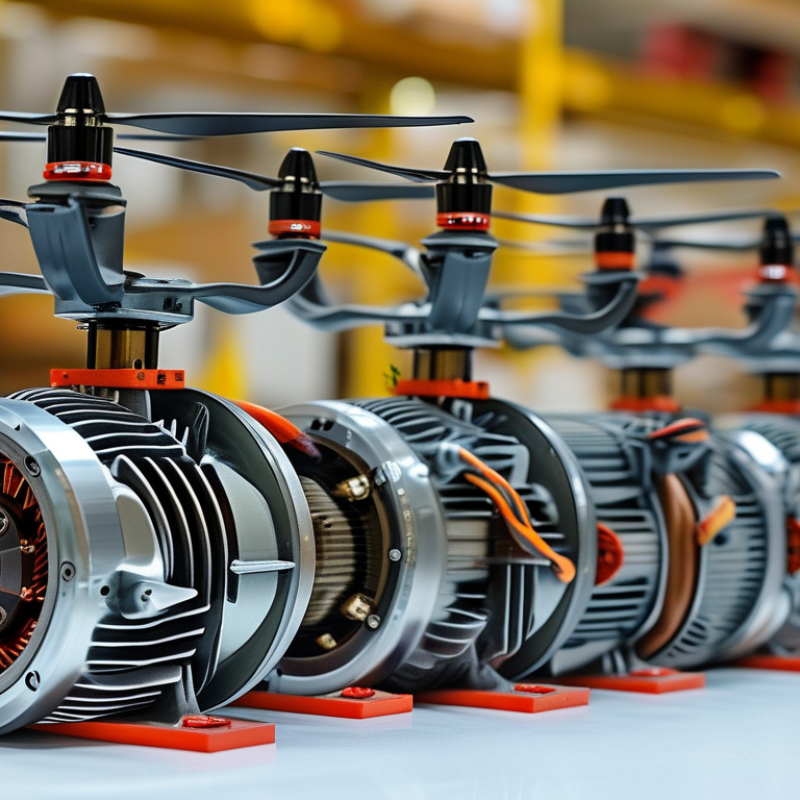
Outrunner motors are a type of brushless motor, widely used in various applications, including drones and electric vehicles. Their design features a rotor that rotates outside of the stator, allowing for high efficiency and increased power-to-weight ratios. This makes them a popular choice among hobbyists and professionals alike.
When selecting an outrunner motor, consider the motor's specifications. Pay attention to the voltage, current rating, and maximum RPM. These factors will determine how well the motor performs in your specific project. The correct motor can enhance efficiency and prolong the life of your device.
Tips: Always match the motor with the right ESC (Electronic Speed Controller). This pairing can affect your motor’s performance significantly. Test different configurations; this can inform better choices in future projects. Do not overlook heat management; overheating can lead to performance loss or damage.
Remember, experimentation is key. Sometimes, what seems like a minor detail can lead to unsatisfactory results. Keep track of your findings to refine your approach in subsequent projects. Embrace the learning process, and don’t hesitate to revisit your choices as new insights emerge.
When selecting outrunner motors for various projects, understanding key specifications is essential. The first thing to consider is the motor’s KV rating. This value indicates the RPM per volt. A higher KV rating results in faster speeds, which can be beneficial in applications like drones. Conversely, a lower KV is often preferred for higher torque needs. According to industry reports, motors with KV ratings ranging from 1000 to 3000 are most commonly used in hobbyist drones.
Another important specification is the maximum current draw. This metric indicates how much current the motor can handle under load. Exceeding this limit can lead to overheating and eventual failure. A good practice is to choose motors with a maximum current rating that exceeds your expected usage by at least 20%. Furthermore, efficiency is another critical factor. Motors typically demonstrate efficiency ratings around 80-95%. Selecting a highly efficient motor can extend battery life, which is crucial for long-duration projects.
Lastly, weight plays a pivotal role in performance. A lightweight motor enhances the overall efficiency of an aircraft or vehicle. Many outrunner motors weigh between 200 to 500 grams, and this range suits various applications. However, lighter motors might compromise torque and durability. Therefore, balancing weight with power requirements is vital for optimal performance.
| Specification | Value | Notes |
|---|---|---|
| Motor Type | Outrunner | Common for RC applications |
| KV Rating | 1000 KV | Revolutions per volt |
| Max Current | 40A | Current limit during operation |
| Voltage Range | 11.1V - 22.2V | Typical for LiPo batteries |
| Weight | 250g | Lightweight for better performance |
| Shaft Diameter | 5mm | Standard diameter for propellers |
| Efficiency | 85% | Percentage of energy converted into thrust |
| Recommended Prop Size | 10x4.7 inches | Ideal propeller for this motor |
When selecting outrunner motors for your projects, it’s essential to understand the various types available. Generally, there are brushless outrunner motors, coreless outrunner motors, and hybrid designs. Brushless outrunner motors are popular due to their efficiency and torque. Reports indicate that they can achieve efficiencies of up to 90%. Coreless designs, on the other hand, offer reduced weight and improved responsiveness, making them ideal for sensitive applications.
Tips: Look for motors with a high power-to-weight ratio. This can significantly impact your project's overall performance. Ensure the motor's specifications align with your project's demands.
Different outrunner motor types often serve varied purposes. For example, lightweight coreless motors cater to drone enthusiasts needing agility. In contrast, robust brushless designs work well in industrial settings. A study from the Electric Engine Society shows that properly matched outrunner motors can improve overall system efficiency by 20%.
When choosing a motor, evaluate the operating environment and load requirements. Overestimating your needs can lead to wasted energy and increased costs. Balancing power and efficiency is key, and it may take time to find the perfect match for your project.
When evaluating the performance metrics of outrunner motors, focus on key factors. These include efficiency, torque, and RPM (revolutions per minute). Each metric plays a crucial role in how well a motor will perform in your specific project.
Efficiency is paramount. Higher efficiency means less energy wasted as heat. A well-designed motor should convert a significant portion of electrical energy into mechanical energy. Look for data sheets that provide efficiency curves for different loads. Torque is also critical. It affects how quickly your project can start and stop. A motor with higher torque output may be necessary for demanding applications. RPM determines your motor's speed. A motor with a broad RPM range will provide more versatility in different tasks.
Tips: Consider the weight of your project when selecting a motor. Heavier loads may require more power. Additionally, think about cooling systems. Overheating can reduce motor lifespan and efficiency. Don't hesitate to test different motors to find the best match. Often, real-world testing yields insights that specifications cannot show. Embrace the process, as it may lead you to unexpected solutions.
Installing and maintaining outrunner motors requires a careful approach. Begin by ensuring the motor is well-supported with an appropriate mount. Use vibration-dampening materials to reduce noise and increase longevity. It’s essential to keep the motor clean. Dust and debris can impact performance. Regularly check for wear and tear. If you notice any unusual noises or performance drops, investigate immediately.
When wiring the motors, pay attention to connections. Poor connections can lead to overheating. Use heat-shrink tubing for insulation. Regularly inspect the wires for fraying or damage. While maintaining your outrunner motor, don't ignore the bearings. Lubricate them appropriately. However, avoid over-lubrication, which can attract dirt. Each project may pose unique challenges, highlighting the importance of ongoing learning and adaptation in motor maintenance.
This chart compares the performance metrics of outrunner motors. The data includes torque in Nm, RPM, efficiency percentage, and weight in kg, which are essential factors to consider when selecting the best outrunner motor for your projects.
„Thanks to the LUVIR technology, the solder resist process could be switched directly from the previously used mask exposure to direct exposure. As an outstanding digital solution on the market, this technology has been able to demonstrate fast process times and superior quality on our certified conventional ink in production. This allowed us to fully digitize the solder mask process at low cost – without process or ink adjustments. An excellent benefit to our production in Rot am See.“
Ralf Göhringer (Head of Production WE Rot am See)
I would definitely recommend the Limata machine and team for a future company purchase
Michael Greenaway
Compunetics Inc.
“The Limata ldi has been amazing!! Best thing we did was buy this machine”
Richard Brady
GM
Circuitlabs
“Since 2019, we have been running the Limata X1000 LDI system (including LUVIR for solder mask imaging) in daily production as an addition to our current process with film. The machine was capable of properly exposing Taiyo PSR-4000 BN (DI) solder mask types on normal to high-copper boards using a new and unique direct imaging process. The machine operating interface is very user friendly which allowed for a quick technical training curve. The pre-registration processing reduced several seconds of production time at every print. Limata support and service staff is incomparable. They supported our team every step of the way at basically any time of the day or night, with literally, an immediate response time, customizing the software interface to best fit our Operations and needs.
We have exposed more than 8,000 prints since end of October, on various solder mask colors and some resist film panels. Limata, has proven to be very capable and innovative. They are a strong contender in the industry.
We have very much enjoyed this project, and working with the team!
Thank you Limata for the continued support and being a part of our growth.”
Bill Sezate
Vice President, GM
Summit Interconnect
As a replacement to our current contact exposure process with film, the LIMATA X2000 system including LUVIR-Technology was capable of properly exposing non-LDI solder mask types using a direct imaging process. The machine offers cutting edge software with a very intuitive operating interface which allowed for quick technician training curve. The dual drawer system combined with pre-registration processing reduced several seconds of production time at every machine cycle. Limata support and service staff is world class. They added software patches to keep production running at shortest possible response times, customized the software interface to best fit our in-house Operations system, and even wrote a step-by-step machine processing manual. As a result of the project, we have exposed more than 16,000 times on various product types and solder mask brands/colors. Limata, in a very short timeframe as a company, has definitely shown they are truly innovative and will be challenging the industry of direct imaging for the top spot.
Kevin Beattie
Process Engineer
TTM Technologies
Forest Grove Division
