Choosing the right Self Drilling Screw for your project can be challenging. Self drilling screws are essential fasteners in construction and manufacturing. They save time by eliminating the need for pre-drilled holes. However, not all self drilling screws are created equal.
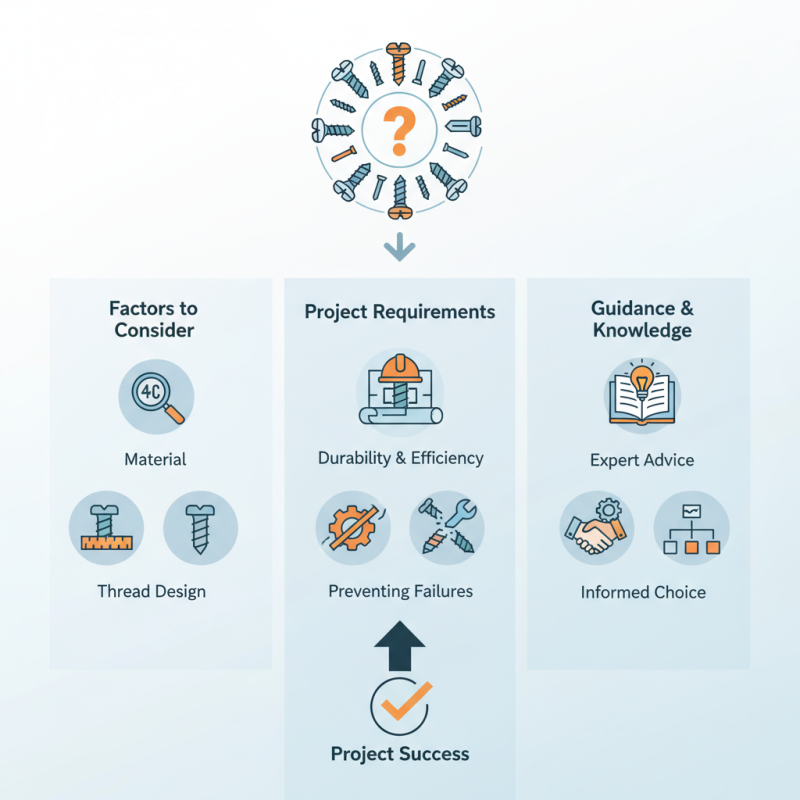
Consider specific factors that affect performance. The material of the screw, its length, and the thread design play crucial roles. A well-chosen screw enhances durability and efficiency. You may need to reflect on your project’s requirements. An inappropriate screw can lead to failures, resulting in costly repairs.
Expert advice is valuable when selecting self drilling screws. Consult professionals or guides to deepen your understanding. Knowledge of screw types can improve your decision-making. Making an informed choice can greatly impact the success of your project.
Self-drilling screws are an essential fastener used in various construction and DIY projects. Understanding their design and functionality helps ensure their effective use. These screws possess a unique tip that drills into materials, eliminating the need for pre-drilling holes. This feature saves time and effort, especially in thick or dense materials. They are particularly useful in metal-to-metal applications or when working with wood and composites.
Their design varies, with different thread patterns available for specific applications. Fine threads offer better gripping power in lighter materials. Coarse threads are great for heavier loads, providing stronger retention. The head style also matters. Options include pan, flat, and hex heads, allowing users to choose based on aesthetic and structural needs. However, some may overlook the importance of the correct size and type, leading to improper installations.
One common mistake is using self-drilling screws in unsuitable materials. For instance, using them in extremely hard substances can cause breakage. Additionally, over-tightening can strip the material or damage the screw. These issues highlight the complexity of choosing the right fastener. Therefore, thorough research and understanding of project requirements are crucial for success.
Choosing the right material for self-drilling screws is crucial. The choice impacts not just performance but longevity. According to a report by the Fastener Quality Act, using the correct material can enhance screw performance by up to 40%. For many projects, steel variants are the go-to choice due to their strength and durability. However, soft steel may not hold up in corrosive environments.
Stainless steel screws can offer resistance to rust. This property is vital for outdoor projects or areas with high humidity. For applications exposed to harsh chemicals, you might consider specialized coatings. These coatings can prevent corrosion, extending the screw's life. On the other hand, aluminum is lighter and might be suitable for specific uses, despite being less durable.
Material selection is not always straightforward. Sometimes, what works in theory fails in practice. Common oversights include using screws without considering the substrate. Each material behaves differently under stress and environmental changes. Industry data indicate that improper material can lead to a failure rate of over 25% in critical projects. Understanding these nuances is vital for successful outcomes.
Choosing the right size and length for self-drilling screws is crucial for your project’s success. A screw that is too long can penetrate more than intended, causing damage. Conversely, a screw that is too short won't hold materials together effectively. Consider the thickness of the materials you will join. Measure precisely to ensure a perfect fit.
When determining screw size, think about its diameter. A thicker screw provides more holding strength. However, going too thick can split the material. Different projects may require different screw types, so take time to assess your needs. Remember that using the right screw can prevent future problems.
Tips: Always test a few screws on a scrap piece. This can reveal any issues with length or holding power. Also, keep in mind the material being used; harder materials may need different screws than softer ones. If you are unsure, consult a professional. Their expertise can save time and resources.
This chart illustrates the recommended screw lengths based on different material thicknesses typically encountered in various projects. Selecting the appropriate screw size is crucial for ensuring a strong and secure fastening.
When selecting self-drilling screws, the coating plays a critical role in durability. A variety of coatings are available, each providing unique benefits. For instance, zinc plating offers basic rust protection, ideal for indoor applications. However, its effectiveness diminishes over time, especially in moist environments.
On the other hand, ceramic and epoxy coatings provide enhanced resistance to corrosion. They are particularly useful for outdoor projects or in harsh conditions. Consider your project’s specific environment when choosing the coating. It can sometimes be challenging to assess how coatings hold up in the long term. Regular reviews of your projects can help identify potential failures due to inadequate coatings.
Remember, the aesthetic aspect of the coating might also matter. A more decorative finish may be attractive but might not ensure the best performance. It’s important to balance visual appeal with functionality. Always reflect on your choices and consider how different coatings can impact the longevity of your project.
| Screw Type | Material | Coating Type | Corrosion Resistance | Recommended Applications |
|---|---|---|---|---|
| Self-Drilling Phillips | Stainless Steel | Zinc Plated | High | Outdoor Applications |
| Self-Drilling Hex | Carbon Steel | Galvanized | Moderate | Metal Structures |
| Self-Drilling Torx | Alloy Steel | Black Oxide | Low | Indoor Applications |
| Self-Drilling PZ | Stainless Steel | Clear Zinc | Moderate | Wood and Metal Combinations |
When selecting a self-drilling screw for your project, environmental factors and specific applications play a key role. For outdoor use, consider corrosion resistance. Stainless steel offers good durability in wet conditions. In dry environments, carbon steel can suffice but may rust over time. The climate impacts wear and tear, so it's vital to assess these conditions.
Tips: Always evaluate the potential for moisture exposure. If your project needs adequate protection, opt for screws treated with protective coatings. Zinc plating is common for moderate protection. For harsher conditions, look for high-performance coatings designed for long-lasting use.
Next, consider the material being joined. Different substrates require different screw types. Softwood is forgiving, while metal may need a sturdier option. The thickness of the material also affects screw length. A screw that is too long can split wood. One that is too short may not provide a secure hold. Ensure to balance length and type for the best strength.
Tips: Test a few screws on scrap material before finalizing your choice. This can help identify issues before they arise. Don't overlook head styles; they influence the ease of installation and hold strength.
„Thanks to the LUVIR technology, the solder resist process could be switched directly from the previously used mask exposure to direct exposure. As an outstanding digital solution on the market, this technology has been able to demonstrate fast process times and superior quality on our certified conventional ink in production. This allowed us to fully digitize the solder mask process at low cost – without process or ink adjustments. An excellent benefit to our production in Rot am See.“
Ralf Göhringer (Head of Production WE Rot am See)
I would definitely recommend the Limata machine and team for a future company purchase
Michael Greenaway
Compunetics Inc.
“The Limata ldi has been amazing!! Best thing we did was buy this machine”
Richard Brady
GM
Circuitlabs
“Since 2019, we have been running the Limata X1000 LDI system (including LUVIR for solder mask imaging) in daily production as an addition to our current process with film. The machine was capable of properly exposing Taiyo PSR-4000 BN (DI) solder mask types on normal to high-copper boards using a new and unique direct imaging process. The machine operating interface is very user friendly which allowed for a quick technical training curve. The pre-registration processing reduced several seconds of production time at every print. Limata support and service staff is incomparable. They supported our team every step of the way at basically any time of the day or night, with literally, an immediate response time, customizing the software interface to best fit our Operations and needs.
We have exposed more than 8,000 prints since end of October, on various solder mask colors and some resist film panels. Limata, has proven to be very capable and innovative. They are a strong contender in the industry.
We have very much enjoyed this project, and working with the team!
Thank you Limata for the continued support and being a part of our growth.”
Bill Sezate
Vice President, GM
Summit Interconnect
As a replacement to our current contact exposure process with film, the LIMATA X2000 system including LUVIR-Technology was capable of properly exposing non-LDI solder mask types using a direct imaging process. The machine offers cutting edge software with a very intuitive operating interface which allowed for quick technician training curve. The dual drawer system combined with pre-registration processing reduced several seconds of production time at every machine cycle. Limata support and service staff is world class. They added software patches to keep production running at shortest possible response times, customized the software interface to best fit our in-house Operations system, and even wrote a step-by-step machine processing manual. As a result of the project, we have exposed more than 16,000 times on various product types and solder mask brands/colors. Limata, in a very short timeframe as a company, has definitely shown they are truly innovative and will be challenging the industry of direct imaging for the top spot.
Kevin Beattie
Process Engineer
TTM Technologies
Forest Grove Division
