Choosing the right waterjet cutting machinery can be daunting. According to industry expert John Smith, "The right equipment can make or break your project." The waterjet cutting industry offers various machines with unique features. Understanding the specifics of each type can be overwhelming.
Your needs will dictate the choice. Each project may require different cutting speeds, pressures, and materials. For instance, some applications need precision cutting for metal, while others focus on softer materials. Assessing these factors is crucial.
Reflecting on your production goals is also important. Remember that more expensive doesn’t always mean better. It's easy to get lost in flashy features and ignore basic needs. Prioritize what your project genuinely requires. Focus on the right balance between quality and cost in waterjet cutting machinery.
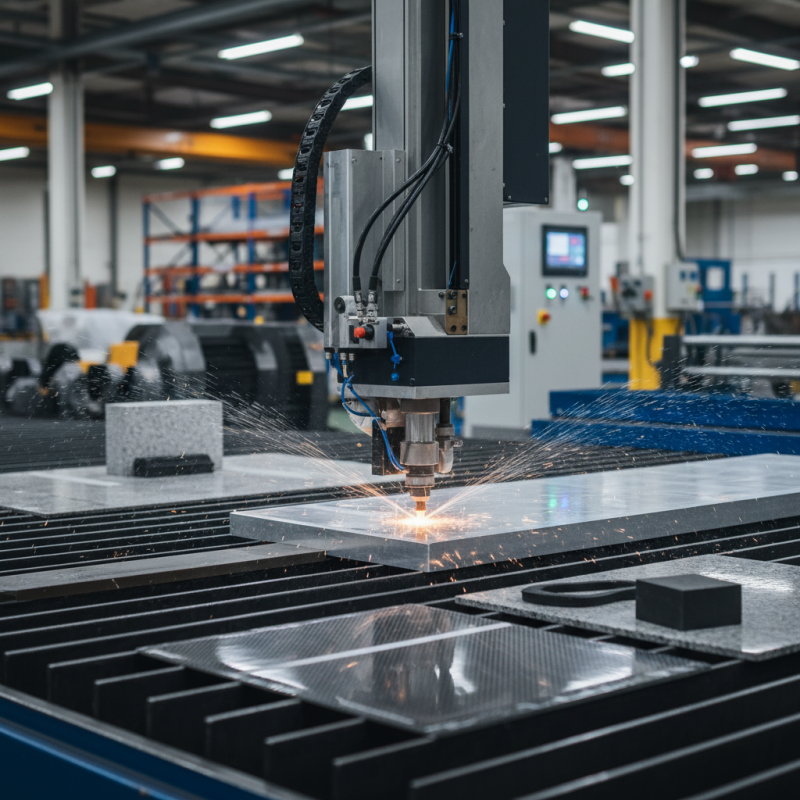
Waterjet cutting technology has transformed various industries. It uses high-pressure water mixed with abrasives to cut materials efficiently. This method can handle a wide range of materials, from metals to glass and stone. Reports indicate that the global waterjet cutting machine market is projected to grow at a CAGR of 7.5% from 2021 to 2028. This growth reflects its increasing adoption due to versatility and precision.
The applications of waterjet cutting are vast. It is widely used in aerospace, automotive, and manufacturing sectors. For example, in aerospace, it can cut lightweight materials without compromising their integrity. Its capability to create intricate designs is often unmatched. However, there is a learning curve. Operators may face challenges in settings such as thickness tolerance and abrasive wear.
Investing in waterjet machinery requires careful consideration of specific needs. Some may overlook maintenance costs or the right abrasive selection. Choosing between pure water and abrasive waterjets also necessitates reflection on project demands. Ultimately, understanding the technology's strengths and limitations is key to maximizing its potential.
| Feature | Description | Considerations |
|---|---|---|
| Cutting Pressure | Measured in psi, higher pressures allow cutting of thicker materials. | Evaluate material thickness and type for pressure requirements. |
| Nozzle Size | Different sizes affect cutting speed and precision. | Choose based on desired cut quality and speed. |
| Control System | The software that runs the machine, affecting ease of use. | Look for user-friendly interfaces and advanced features. |
| Material Compatibility | Ability to cut various materials like metal, glass, and stone. | Select a machine that suits your material needs. |
| Machine Size | Overall dimensions of the machine, affecting shop space. | Measure workspace and plan for future expansion if necessary. |
| Maintenance Requirements | Frequency and types of maintenance needed for optimal operation. | Check support options and service availability. |
Choosing the right waterjet cutting machinery can be overwhelming. There are various key factors to consider. First, you need to think about the materials you’ll be cutting. Waterjet technology works well on metals, stone, glass, and more. Each material has different thickness requirements. Make sure the machine you choose can handle your specific materials effectively.
Another important aspect is the size and footprint of the machine. If you have limited space, you must factor that in. A larger machine may offer more capabilities, but it might not fit your workshop. Additionally, assess the desired precision and speed. Higher precision typically comes with higher costs. Balancing quality with your budget is crucial.
Don’t forget to evaluate user-friendliness. A complex machine might be hard to operate, affecting productivity. Training requirements can also increase costs. Lastly, consider technical support and maintenance. You may face challenges in finding parts or getting help when needed. Reflecting on these factors will lead to better decision-making.
When selecting waterjet cutting machinery, understanding performance metrics is vital. Pressure and flow rates directly impact cutting efficiency and material compatibility. Typically, pressures range from 30,000 to 90,000 PSI in advanced systems. Higher pressure leads to faster cutting speeds and cleaner edges. However, not every application requires maximum pressure.
Flow rate is another key metric, measured in gallons per minute (GPM). A standard waterjet can have flow rates of 0.6 to 3.0 GPM. The right flow rate affects the thickness of materials you can cut. If you’re working with thicker materials, consider a system with a higher GPM. A report from the Waterjet Cutting Association indicates that only about 30% of users optimize these metrics fully. This reveals a gap in knowledge that requires attention.
**Tips:**
Assess your most common materials. Then, match them with the right pressure and flow rates. Not all jobs need the same settings. Too high pressure may cause unnecessary wear on components. Balancing these metrics can enhance both efficiency and longevity of the machinery.
When selecting waterjet cutting machinery, material compatibility is crucial. Different materials respond uniquely to waterjet cutting techniques. For instance, abrasive waterjets excel in cutting complex shapes in metals, glass, and stone. In fact, studies show that over 80% of manufacturers prefer waterjet technology for versatile cutting needs.
Compatibility with materials impacts the geometry and precision. Materials like titanium and stainless steel require specific nozzles and pressures. A report from the Waterjet Technology Association indicated that improper adjustments can reduce cutting accuracy by up to 30%. That's significant, especially in high-stakes industries like aerospace and automotive.
Additionally, softer materials like plastic and rubber may not require high-pressure systems. However, using a high-caliber machine could lead to excessive wear and tear. This mismatch can result in additional costs and maintenance downtime. Finding the right balance in machinery for specific materials is essential but often overlooked. Reflecting on these details can lead to better investment decisions in waterjet technology.
When selecting waterjet cutting machinery, understanding the cost dynamics is essential. The initial investment can be sizable. Prices vary widely based on features and capabilities. It's crucial to evaluate what you truly need versus what is offered. Sometimes, advanced features increase the cost without significant benefits for smaller projects.
Long-term operational costs deserve careful consideration. Maintenance and energy consumption can add up quickly. Regular upkeep not only prolongs the machine's life, but it also ensures consistent performance. Look for machines known for their reliability. This can save money in the long run.
Tips: Always factor in maintenance costs during budgeting. Consider energy efficiency while assessing machine specs. A low initial cost might result in higher expenses later. Don't overlook the benefits of training operators to reduce downtime. Investing in staff can improve productivity and efficiency.
This chart compares the initial investment costs versus long-term operational costs associated with waterjet cutting machinery. The data reflects average figures based on various models suitable for different industrial needs.
„Thanks to the LUVIR technology, the solder resist process could be switched directly from the previously used mask exposure to direct exposure. As an outstanding digital solution on the market, this technology has been able to demonstrate fast process times and superior quality on our certified conventional ink in production. This allowed us to fully digitize the solder mask process at low cost – without process or ink adjustments. An excellent benefit to our production in Rot am See.“
Ralf Göhringer (Head of Production WE Rot am See)
I would definitely recommend the Limata machine and team for a future company purchase
Michael Greenaway
Compunetics Inc.
“The Limata ldi has been amazing!! Best thing we did was buy this machine”
Richard Brady
GM
Circuitlabs
“Since 2019, we have been running the Limata X1000 LDI system (including LUVIR for solder mask imaging) in daily production as an addition to our current process with film. The machine was capable of properly exposing Taiyo PSR-4000 BN (DI) solder mask types on normal to high-copper boards using a new and unique direct imaging process. The machine operating interface is very user friendly which allowed for a quick technical training curve. The pre-registration processing reduced several seconds of production time at every print. Limata support and service staff is incomparable. They supported our team every step of the way at basically any time of the day or night, with literally, an immediate response time, customizing the software interface to best fit our Operations and needs.
We have exposed more than 8,000 prints since end of October, on various solder mask colors and some resist film panels. Limata, has proven to be very capable and innovative. They are a strong contender in the industry.
We have very much enjoyed this project, and working with the team!
Thank you Limata for the continued support and being a part of our growth.”
Bill Sezate
Vice President, GM
Summit Interconnect
As a replacement to our current contact exposure process with film, the LIMATA X2000 system including LUVIR-Technology was capable of properly exposing non-LDI solder mask types using a direct imaging process. The machine offers cutting edge software with a very intuitive operating interface which allowed for quick technician training curve. The dual drawer system combined with pre-registration processing reduced several seconds of production time at every machine cycle. Limata support and service staff is world class. They added software patches to keep production running at shortest possible response times, customized the software interface to best fit our in-house Operations system, and even wrote a step-by-step machine processing manual. As a result of the project, we have exposed more than 16,000 times on various product types and solder mask brands/colors. Limata, in a very short timeframe as a company, has definitely shown they are truly innovative and will be challenging the industry of direct imaging for the top spot.
Kevin Beattie
Process Engineer
TTM Technologies
Forest Grove Division
