Choosing among China’s top Handheld Tyre Inflator suppliers requires more than comparing prices. A reliable supplier should demonstrate practical manufacturing experience, stable quality control, and clear product documentation. Look for suppliers offering tested pressure gauges, durable air hoses, secure battery systems, and heat-resistant motors. These details matter when inflating a warm tyre beside a highway.
David Bennett, former AAA repair systems manager, has stated, “Correct tire pressure protects handling, braking, and tire life.” His point explains why supplier selection should focus on accuracy, not attractive packaging alone. A Handheld Tyre Inflator may look impressive online, yet its gauge could become unreliable after repeated use. Ask for calibration records, test reports, battery-cycle information, and sample units before placing a large order.
Supplier communication also reveals operational maturity. Can the factory explain its motor protection system? Does it provide replacement parts and clear warranty terms? Can it maintain consistent performance across different production batches? These questions deserve direct answers. Quietly, they expose weak suppliers.
Certifications can support trust, but certificates should be verified and matched to the actual model. A copied document proves little. Buyers should inspect factory capability, product samples, packaging strength, and delivery records. Experience has taught many importers an uncomfortable lesson: the cheapest quote is rarely the cheapest final cost. Delayed shipments, inaccurate gauges, and poor after-sales support can erase the original saving. No supplier is perfect. The goal is to identify measurable reliability, admit remaining risks, and choose a partner prepared to improve.
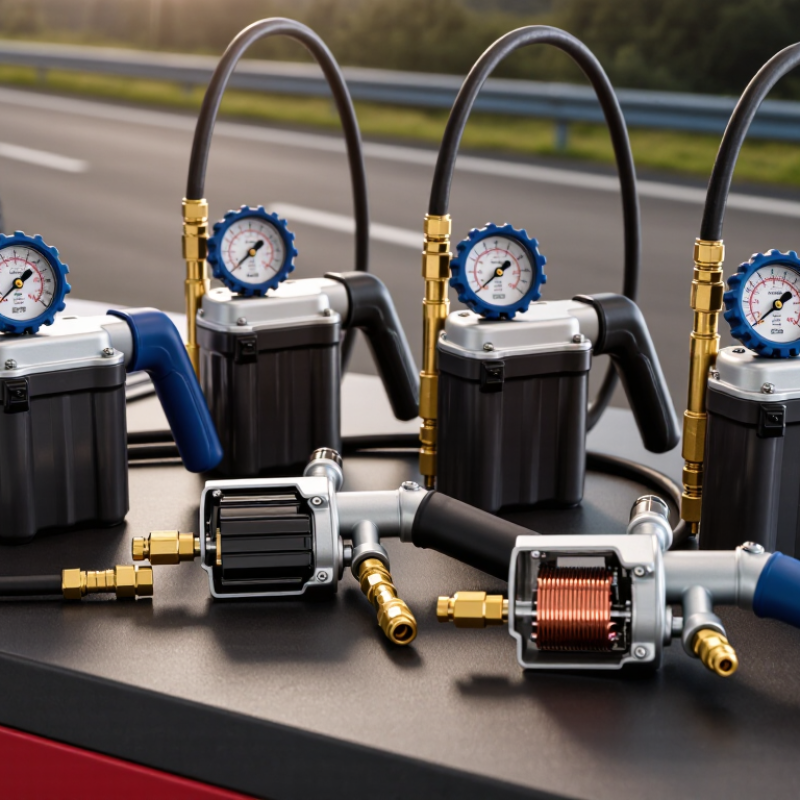
A reliable handheld tyre inflator supplier should prove performance beyond attractive product photos. During sample checks, measure pressure accuracy with a calibrated gauge, not only the built-in display. Test the unit on several tyre sizes, from a small scooter tyre to a passenger-car tyre. Watch the motor temperature after repeated inflation cycles. It matters.
Practical details reveal manufacturing quality. Check whether the supplier uses protected lithium batteries, durable valve connectors, clear instructions, and a hose that bends without cracking. Ask for production records, inspection standards, and traceable batch numbers. Independent test reports can support claims about safety, charging, and pressure control. Factory communication also deserves attention. Technical answers should be specific, not copied from a catalogue. A dependable team explains noise levels, charging time, spare parts, and warranty procedures clearly.
A polished sample can still hide weak assembly. I once found a loose connector after a short vibration test. That small fault changed the evaluation. Suppliers should welcome failure analysis and corrective action instead of defending every defect. Confirm pilot orders before committing to large volumes. Review packaging strength, delivery consistency, and after-sales response in real situations. Some suppliers promise everything too quickly. That is a warning sign. Reliability grows from repeatable testing, honest limits, and evidence that remains consistent from sample production to shipment.
Choosing among China’s top handheld tyre inflator suppliers requires more than comparing maximum pressure. Product specifications reveal real performance.
The U.S. Department of Energy reports that correct tyre pressure can improve fuel economy by up to 3%. Therefore, compare pressure accuracy first. A dependable inflator should show readings within approximately ±1 PSI. Confirm whether testing follows a recognized calibration procedure. Maximum pressure can mislead. Most passenger vehicles need far less than 50 PSI. Flow rate also matters; around 20–35 litres per minute is practical for regular car tyres. A low flow rate may leave you waiting beside a dark roadside.
Battery capacity needs careful checking. Suppliers should state voltage, watt-hours, charging time, and tested inflation cycles. Ask for results using a defined tyre size, not an impressive laboratory claim. A 2,000 mAh battery means little without its voltage. Look for thermal protection, automatic shut-off, a flexible hose, and a readable display. Noise data helps too, especially near homes or during night travel.
NHTSA’s tyre-pressure research found roughly one in four vehicles had at least one tyre inflated 25% below its recommended pressure. That makes dependable emergency performance important. In supplier audits, request duty-cycle data, drop-test details, operating-temperature ranges, and sample inspection records. I still see buyers overlook connector quality. It is a small part, but a weak connector can stop the entire unit. IP ratings are useful, though some suppliers present them without independent verification. Ask for test reports, calibration records, and after-sales replacement terms before ordering.
Choosing China’s top handheld tyre inflator suppliers requires more than comparing online prices. Quality begins with repeatable design, stable assembly, and honest performance data. Request production samples from different batches, not one carefully selected unit. Measure inflation time, pressure accuracy, battery endurance, noise, and heat after repeated use. Ask for calibration records and incoming inspection standards. A reliable supplier should explain failures clearly, not hide them behind attractive packaging. Small details matter. Check connector fit, hose flexibility, display readability, and whether the unit restarts reliably after low-voltage protection.
Certifications need careful verification. Ask for current certificates, issuing-body details, product scope, and matching model numbers. A certificate covering a factory does not automatically cover every inflator. Review reports for electrical safety, battery transport, electromagnetic compatibility, and material compliance where relevant. Confirm test dates and laboratory accreditation. Documents can look convincing. They can still be incomplete. An experienced buyer should compare certificate data with the actual sample, label, battery pack, and charger. I have seen evaluations focus heavily on paperwork while overlooking inconsistent pressure readings. That is a costly lesson.
Manufacturing capacity should be checked on the shop floor, preferably through a live video audit or independent inspection. Look for component traceability, controlled assembly stations, aging tests, final inspection records, and trained quality staff. Ask for monthly output, current utilization, backup equipment, and peak-season plans. Capacity claims are easy to inflate. Verify them against staffing and shipment history. Request a small pilot order with defined acceptance criteria before scaling. Keep written records of defects and corrective actions. No supplier is perfect. A supplier willing to show weaknesses may be more dependable than one promising zero problems.
Recommended procurement weighting for comparing supplier quality, certifications, and manufacturing capacity
The evaluation model gives the greatest weight to product quality and reliability, followed by certification compliance and manufacturing capacity. Buyers should verify test records, applicable product safety documentation, production-line controls, capacity evidence, and traceability before approving a supplier.
When comparing handheld tyre inflator suppliers in China, price should not stand alone. Request a quotation for the same specifications, such as pressure range, battery capacity, hose length, and display type. A unit priced at 18 dollars may become 24 dollars after packaging, testing, freight, and import charges. Ask for a detailed cost sheet. It exposes hidden differences.
Minimum order quantity affects both cash flow and product risk. Many suppliers offer lower prices for larger orders, but excess inventory can weaken your budget. For a first purchase, request a small trial order or paid samples. Check inflation speed, noise, heat, charging time, and pressure accuracy. Real testing matters. A sample may perform well, yet production quality can vary. This is an issue worth questioning.
Customization can include colors, logo placement, packaging, adapters, and instruction manuals. Confirm whether tooling fees apply and whether artwork changes create extra costs. Keep written approval records for every revision. Delivery estimates should include production time, inspection, export handling, and shipping. Ask for a shipment schedule with clear milestones. A supplier promising seven-day delivery may exclude testing or peak-season delays. That promise needs careful review. Choose communication quality as part of reliability. Fast replies are useful, but precise replies are better.
Choosing among China’s top handheld tyre inflator suppliers requires a repeatable process, not attractive product photos.
Define your target market, pressure range, power source, battery capacity, noise limit, and expected order volume.
A simple specification sheet prevents vague promises. Keep it practical.
Contact several suppliers and request company registration details, factory photographs, production capacity, and recent quality records.
A polished video is not proof. Ask for a working sample, then test inflation time from 30 to 36 PSI, gauge accuracy, auto shut-off, heat buildup, noise, and battery performance.
Record each result in the same table. Small differences become important during bulk purchasing.
Review the supplier’s quality-control process before discussing the final price.
Ask who checks incoming components, motor performance, charging safety, and packaging strength.
Confirm the warranty period, spare-parts policy, replacement process, and response time in writing.
Check whether product documents match the requirements of your destination market.
I would also request a pre-shipment inspection, even when the sample performs well. My first screening can be too narrow, and a good sample may hide inconsistent production.
Compare MOQ, lead time, payment terms, inspection arrangements, and communication quality. The cheapest quotation often leaves expensive questions unanswered.
„Thanks to the LUVIR technology, the solder resist process could be switched directly from the previously used mask exposure to direct exposure. As an outstanding digital solution on the market, this technology has been able to demonstrate fast process times and superior quality on our certified conventional ink in production. This allowed us to fully digitize the solder mask process at low cost – without process or ink adjustments. An excellent benefit to our production in Rot am See.“
Ralf Göhringer (Head of Production WE Rot am See)
I would definitely recommend the Limata machine and team for a future company purchase
Michael Greenaway
Compunetics Inc.
“The Limata ldi has been amazing!! Best thing we did was buy this machine”
Richard Brady
GM
Circuitlabs
“Since 2019, we have been running the Limata X1000 LDI system (including LUVIR for solder mask imaging) in daily production as an addition to our current process with film. The machine was capable of properly exposing Taiyo PSR-4000 BN (DI) solder mask types on normal to high-copper boards using a new and unique direct imaging process. The machine operating interface is very user friendly which allowed for a quick technical training curve. The pre-registration processing reduced several seconds of production time at every print. Limata support and service staff is incomparable. They supported our team every step of the way at basically any time of the day or night, with literally, an immediate response time, customizing the software interface to best fit our Operations and needs.
We have exposed more than 8,000 prints since end of October, on various solder mask colors and some resist film panels. Limata, has proven to be very capable and innovative. They are a strong contender in the industry.
We have very much enjoyed this project, and working with the team!
Thank you Limata for the continued support and being a part of our growth.”
Bill Sezate
Vice President, GM
Summit Interconnect
As a replacement to our current contact exposure process with film, the LIMATA X2000 system including LUVIR-Technology was capable of properly exposing non-LDI solder mask types using a direct imaging process. The machine offers cutting edge software with a very intuitive operating interface which allowed for quick technician training curve. The dual drawer system combined with pre-registration processing reduced several seconds of production time at every machine cycle. Limata support and service staff is world class. They added software patches to keep production running at shortest possible response times, customized the software interface to best fit our in-house Operations system, and even wrote a step-by-step machine processing manual. As a result of the project, we have exposed more than 16,000 times on various product types and solder mask brands/colors. Limata, in a very short timeframe as a company, has definitely shown they are truly innovative and will be challenging the industry of direct imaging for the top spot.
Kevin Beattie
Process Engineer
TTM Technologies
Forest Grove Division
