Energy costs can hide in plain sight: a compressor cycling after hours, an overloaded circuit, or lights left on in an empty room. Iot Devices For Energy Monitoring can reveal these patterns by measuring consumption and sending useful data to a dashboard. But readings are only helpful when the devices fit the site and the decisions people need to make.
A clamp-on sensor may suit a panel where installation time is limited, while a smart plug can track a single appliance. Small errors matter. Poor sensor placement, weak Wi-Fi, or unclear reporting can make good data difficult to trust. Device specifications deserve attention, but so do practical details such as measurement accuracy, supported protocols, setup requirements, and ongoing costs.
This guide presents seven tips for choosing energy-monitoring devices with those realities in mind. It considers what you need to measure, how systems connect, whether data is easy to interpret, and how a setup might expand later. It also covers security, compatibility, and vendor support—areas that are easy to overlook during a quick purchase. No single device is right for every building. A careful choice starts with actual energy-use questions, not a long feature list, and leaves room to reassess once real readings arrive.
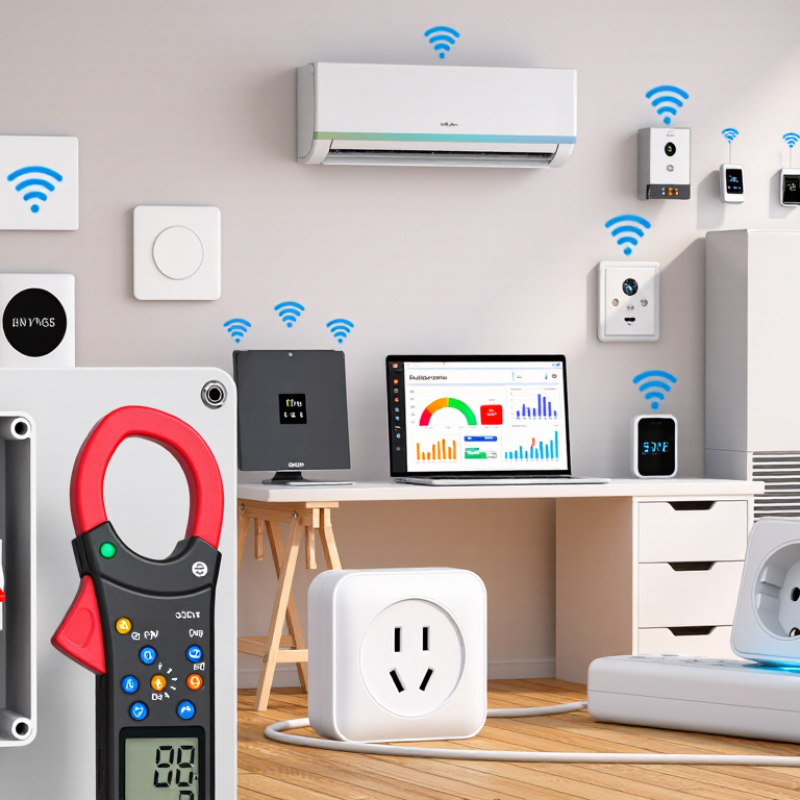
Buildings use about 30% of global final energy, according to the International Energy Agency. That figure gives energy monitoring real weight, but it does not tell you where a particular building wastes power. Set a clear goal before choosing IoT devices. Do you need to spot overnight HVAC use, compare floor-by-floor consumption, or catch sudden equipment spikes? A specific question helps determine which meters, sensors, and reporting intervals you actually need.
Start with the building’s existing electrical layout and operating schedule. A small office may need circuit-level readings, while a large site could require meters across several panels. Check that devices can measure the loads that matter, including lighting, heating, cooling, and plug-in equipment. Reliable timestamps are important, too; a chart with mismatched clock settings can hide when demand rises. Keep the first deployment manageable. One test floor is often more useful than dozens of sensors installed without a plan.
Think about who will act on the readings. A facilities manager may need a clear alert when a fan runs after hours, not another dashboard full of unexplained numbers. Store only the data needed for the goal, and confirm that devices keep reporting through ordinary network interruptions. Real buildings are messy. Sensor placement can be imperfect, and early readings may reveal that your original assumptions were wrong. That is useful information, not a reason to ignore the data.
An energy meter should fit the load, not just the panel. A main feeder with steady demand has different needs from a small pump that cycles all day. Check the circuit type, expected current range, phase count, and whether current transformers are required. If a meter is oversized, light-load readings may be less useful. Too small, and it may be exposed to currents beyond its rated range.
For transformer-operated meters, IEC 62053-22 defines accuracy classes for active-energy measurement, including 0.1S, 0.2S, and 0.5S. The class indicates permitted error under specified test conditions. It does not promise the same accuracy across every installation. Match the meter’s class to the monitoring goal, then check that the current transformers have a suitable ratio and accuracy. A poor CT match can undermine a precise meter. Small details matter.
During installation, verify CT direction, phase pairing, wiring, and the meter’s configured ratio. Compare readings with a trusted reference at both typical and low load, where practical. Record the conditions; a brief check is easy to forget. Variable-speed drives and other nonlinear loads can also affect measurement, so review the meter’s stated performance for the signals present. Accuracy is a system property, not a label on the meter.
When comparing IoT energy-monitoring devices, check the sampling rate against the equipment you need to understand. A meter that records every fifteen minutes may show daily patterns, but it can miss a motor’s brief startup surge. Faster sampling captures short changes and helps diagnose unusual loads. It also creates more data and may increase network traffic. Match the interval to the question: tracking monthly consumption rarely needs second-by-second readings. For troubleshooting, it might.
Storage matters just as much. Ask whether readings remain on the device during an internet outage, how long they are retained, and whether you can export them in a usable format. A small buffer can protect a day of measurements; it cannot replace a clear backup plan. Check protocol compatibility with your meters, gateways, and existing monitoring software. Devices using common protocols can be easier to integrate, but matching protocol names alone does not guarantee that every data point will transfer correctly. Test one device with your actual setup before buying several. That extra step can feel tedious. It may still prevent hours of chasing missing readings. One trade-off is easy to overlook: the highest sampling rate is not automatically the best choice.
An energy monitor can reveal sensitive usage patterns and connect directly to building networks. NISTIR 8259A provides six cybersecurity capabilities to assess; it is a baseline, not a guarantee.
Start with device identification. Each meter should have a distinct identity, so operators can tell one panel from another. Ask how configuration changes are restricted and recorded. Shared passwords or undocumented settings can turn routine maintenance into a security blind spot. Small details matter.
Check whether data is protected while stored and transmitted, and whether access to network, software, and physical interfaces is limited. Confirm that software updates can be authenticated and installed safely. Ask how long updates will be available.
Cybersecurity state awareness matters too: can the device report failed logins, outdated software, or unusual behavior? Request clear documentation and test these features on a sample unit before deployment. A checklist helps, but it cannot prove every device will behave safely in your facility. I would also revisit the assessment after network changes; that step is easy to overlook when meters seem to work.
An IoT energy monitor is only valuable if its savings exceed its full ownership cost. Include sensors, gateways, installation, connectivity, calibration, software fees, replacements, and staff time. A low-cost meter can become expensive when readings need manual cleanup or the device cannot connect to existing systems. The U.S. Environmental Protection Agency’s 2012 analysis of ENERGY STAR Portfolio Manager data found that buildings benchmarking energy use for three or more years reduced consumption by an average of 2.4% annually. That is useful context, not a promise: savings vary with building conditions and operational changes.
Set a baseline before installation, using at least 12 months of utility and meter data where possible. Record weather, occupancy, operating hours, and production; a warmer winter or an empty office can distort comparisons. Then compare normalized energy use after deployment, and price verified savings against lifecycle costs. The International Performance Measurement and Verification Protocol provides established guidance for defining baselines and accounting for adjustments. Keep the calculation visible: show the original readings, adjustments, and assumptions. Do not assume every lower bill proves the device worked. It may reveal a fault, but savings can disappear if sensors drift, data go missing, or staff ignore alerts. Include those risks in the payback estimate, even when the spreadsheet looks less attractive.
„Thanks to the LUVIR technology, the solder resist process could be switched directly from the previously used mask exposure to direct exposure. As an outstanding digital solution on the market, this technology has been able to demonstrate fast process times and superior quality on our certified conventional ink in production. This allowed us to fully digitize the solder mask process at low cost – without process or ink adjustments. An excellent benefit to our production in Rot am See.“
Ralf Göhringer (Head of Production WE Rot am See)
I would definitely recommend the Limata machine and team for a future company purchase
Michael Greenaway
Compunetics Inc.
“The Limata ldi has been amazing!! Best thing we did was buy this machine”
Richard Brady
GM
Circuitlabs
“Since 2019, we have been running the Limata X1000 LDI system (including LUVIR for solder mask imaging) in daily production as an addition to our current process with film. The machine was capable of properly exposing Taiyo PSR-4000 BN (DI) solder mask types on normal to high-copper boards using a new and unique direct imaging process. The machine operating interface is very user friendly which allowed for a quick technical training curve. The pre-registration processing reduced several seconds of production time at every print. Limata support and service staff is incomparable. They supported our team every step of the way at basically any time of the day or night, with literally, an immediate response time, customizing the software interface to best fit our Operations and needs.
We have exposed more than 8,000 prints since end of October, on various solder mask colors and some resist film panels. Limata, has proven to be very capable and innovative. They are a strong contender in the industry.
We have very much enjoyed this project, and working with the team!
Thank you Limata for the continued support and being a part of our growth.”
Bill Sezate
Vice President, GM
Summit Interconnect
As a replacement to our current contact exposure process with film, the LIMATA X2000 system including LUVIR-Technology was capable of properly exposing non-LDI solder mask types using a direct imaging process. The machine offers cutting edge software with a very intuitive operating interface which allowed for quick technician training curve. The dual drawer system combined with pre-registration processing reduced several seconds of production time at every machine cycle. Limata support and service staff is world class. They added software patches to keep production running at shortest possible response times, customized the software interface to best fit our in-house Operations system, and even wrote a step-by-step machine processing manual. As a result of the project, we have exposed more than 16,000 times on various product types and solder mask brands/colors. Limata, in a very short timeframe as a company, has definitely shown they are truly innovative and will be challenging the industry of direct imaging for the top spot.
Kevin Beattie
Process Engineer
TTM Technologies
Forest Grove Division
