Choosing a Mirror Finish Stainless Steel Sheet is not just a matter of selecting the shiniest sample. The right choice depends on where the sheet will be used, how it will be handled, and what its reflection needs to show. A wall panel in a quiet lobby faces different demands from a kitchen splashback touched every day. Look closely at the sample under direct and angled light. Check for haze, fine polishing lines, and reflections that appear wavy near the edges. Small marks matter. They may stand out more after installation.
This introduction uses an illustrative quotation from a fictional finishing specialist, Maya Chen: “A mirror finish is only as good as the surface it reveals—and the care taken to protect it.” This is an original line, not a verified quotation. For a real purchase, confirm the specified grade, thickness, finish description, protective film, and inspection criteria with the supplier. Ask for a full-size sample when appearance is critical; a small swatch can hide distortion. Also consider cleaning methods and expected contact, since fingerprints and scratches can quickly change the look. Even a polished sheet has limits. A thoughtful choice balances reflection, durability, fabrication needs, and maintenance, rather than relying on shine alone.
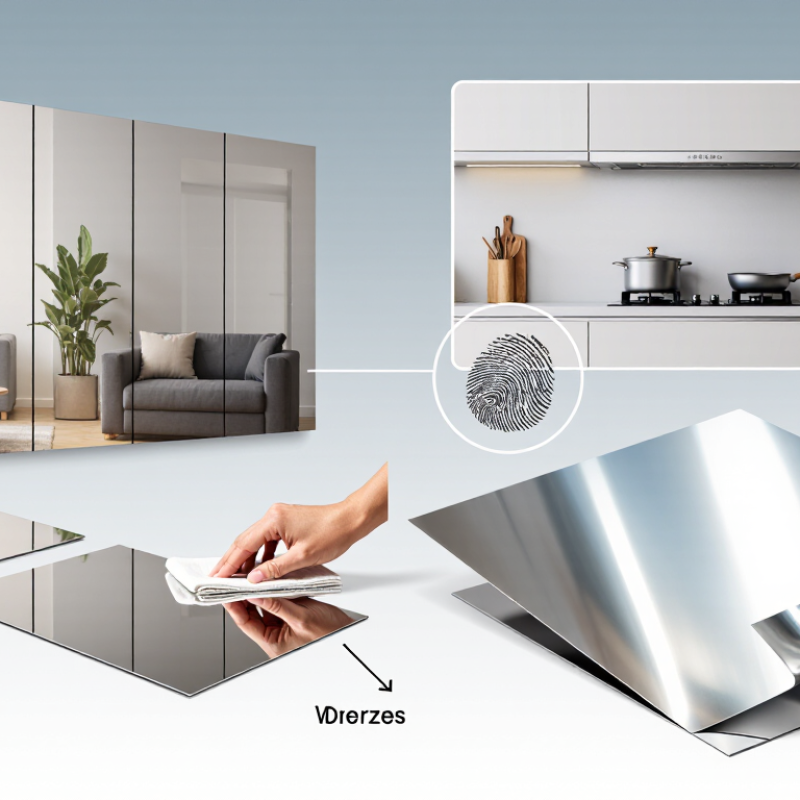
Start with the environment, not the shine. A mirror finish can suit lift interiors, wall panels, food-service counters, or decorative trim, but each setting puts different demands on the sheet. Note whether it will face rain, cleaning chemicals, salt spray, fingerprints, or frequent contact. These details help determine the stainless steel grade and thickness. A bright indoor panel may perform well with one specification, while a coastal exterior needs closer attention to corrosion resistance. There is no universal best grade.
Define the physical demands, too. Measure the panel size, support spacing, and any bends or cutouts. Thin sheet can look flat in a small sample yet show waviness across a wide wall. That detail is easy to miss. Check how the reflective surface will appear under actual lighting, since overhead LEDs can reveal distortion and handling marks. Ask for the finish description, protective-film details, and a sample large enough to inspect. Test a sample. If the sheet will be welded or formed, confirm that the chosen finish and grade suit the process; fabrication can alter appearance or require refinishing. I would avoid choosing by polish alone. Compare the written requirements with the finished part, and record any tolerance or appearance expectations before ordering.
Mirror finish does not make stainless steel corrosion-proof. Choose the grade for the actual exposure, then specify the polish. ASTM A240 composition tables list Type 304 with 18–20% chromium and 8–10.5% nickel. It suits many indoor uses, including decorative wall panels and counters. For coastal air, pool surroundings, or frequent salt exposure, Type 316 is often a safer choice. ASTM A240 lists 2–3% molybdenum in 316; that addition improves resistance to chloride-related pitting. It does not eliminate risk. Type 430, with 16–18% chromium and little nickel, can work in dry interiors, but deserves caution where moisture or salts linger.
Consider cleaning routines, too. Fingerprints, trapped water, and harsh cleaners can mark a polished surface, while scratches may stand out under bright lighting. The Nickel Institute’s stainless-steel selection guidance emphasizes matching alloy choice to service conditions; a grade name alone cannot predict performance. For a project near the sea, request the mill test certificate and confirm the exact grade and finish. I would still test a sample on site. Real cleaning habits are easy to underestimate.
Tips: Match the grade to chloride exposure, not appearance. Specify the finish direction, protect sheets during installation, and rinse away salt deposits regularly. Small details matter.
How to Choose Mirror Finish Stainless Steel Sheet
Choose a Mirror Finish and Reflectivity Level
A mirror finish is not a single, guaranteed reflectivity value. ASTM A480/A480M describes No. 8 as a highly reflective, mirror-like finish, but does not specify one universal reflectance percentage. That distinction matters. Two sheets can both look bright under showroom lights yet reflect differently in a hallway or beside a window.
Match the finish to the viewing conditions. For decorative panels, inspect a sample beside the actual lighting; ceiling spots can reveal waviness that soft daylight hides. For optical or measurement-sensitive uses, request a measured reflectance value, test geometry, and wavelength from the supplier. ASTM E430 provides a standardized method for measuring gloss on high-gloss surfaces, while gloss is not identical to reflectance. Easy to miss. Ask for both measurements when appearance and light reflection affect performance. Also check the viewing angle: a crisp image from straight on may blur toward the sheet’s edge. I would not choose from a finish label alone. A small sample can still mislead if its polishing direction or lighting differs from the installed panel.
Choose a finish based on the reflectivity you need. These indicative visible-light reflectance values are approximate; actual results vary with alloy, surface condition, and measurement method.
A No. 8 mirror finish provides the highest reflectivity among the finishes shown. For precise specifications, request reflectance measurements for the exact sheet and application.
How to Choose Mirror Finish Stainless Steel Sheet
Thickness affects stiffness, weight, and how clearly the sheet shows handling marks. Thin panels suit light cladding, but can ripple over uneven supports. Heavier sheet resists flexing, though cutting and forming may need more force. Mirror surfaces reveal small dents quickly. Samples can mislead. Check flatness and reflectivity under the lighting used at the installation site.
Sheet size should suit the finished panel and the available fabrication equipment. Allow room for trimming, edge finishing, and polishing; confirm actual tolerances with the supplier. ASTM A480/A480M covers dimensional tolerances for stainless plate, sheet, and strip. World Stainless reported 58.4 million tonnes of global crude stainless steel production in 2023, 4.6% above 2022. This industry figure shows the material’s broad use, but does not replace project-specific sizing checks.
Fabrication compatibility matters as much as appearance. Ask whether the selected grade and thickness can be sheared, bent, or welded without unacceptable distortion. Tight bends may mark the reflective face, so discuss bend radius and protective film before production. Chloride exposure may call for a more corrosion-resistant grade than a dry indoor setting. That is easy to overlook. Make a trial piece with the intended tools, then inspect it from several angles; a flawless showroom sample may not predict the finished part.
When choosing mirror finish stainless steel sheet, verify more than its shine. Ask the supplier to state the finish grade and inspection method, since “mirror” can describe different levels of reflectivity. View a sample under bright, diffuse light and tilt it slowly. Look for waves, pinholes, scratches, and cloudy patches. Small marks matter. Check the sheet while it is flat, too; reflections can look smooth at an angle but distorted head-on. Protective film may conceal defects, so inspect the surface after a small, agreed section is uncovered.
Request material test reports that match the sheet’s heat or batch number. Confirm the stated grade, thickness, and relevant chemical and mechanical properties. Certificates support material traceability, but they do not prove the finish is flawless. Ask how surface quality is recorded and what happens if a delivered sheet falls outside the agreed criteria. Supplier capability matters: check whether they can maintain your required tolerances, cut sizes, edge condition, and protective packaging. A sample is useful, but it may not represent every production run. That is easy to overlook.
Tips: Compare samples under the same lighting. Record acceptable scratch and waviness limits in writing. Ask for photos of packed sheets before dispatch, especially for large or highly reflective panels. Inspect a few sheets from the shipment, not just the top one.
„Thanks to the LUVIR technology, the solder resist process could be switched directly from the previously used mask exposure to direct exposure. As an outstanding digital solution on the market, this technology has been able to demonstrate fast process times and superior quality on our certified conventional ink in production. This allowed us to fully digitize the solder mask process at low cost – without process or ink adjustments. An excellent benefit to our production in Rot am See.“
Ralf Göhringer (Head of Production WE Rot am See)
I would definitely recommend the Limata machine and team for a future company purchase
Michael Greenaway
Compunetics Inc.
“The Limata ldi has been amazing!! Best thing we did was buy this machine”
Richard Brady
GM
Circuitlabs
“Since 2019, we have been running the Limata X1000 LDI system (including LUVIR for solder mask imaging) in daily production as an addition to our current process with film. The machine was capable of properly exposing Taiyo PSR-4000 BN (DI) solder mask types on normal to high-copper boards using a new and unique direct imaging process. The machine operating interface is very user friendly which allowed for a quick technical training curve. The pre-registration processing reduced several seconds of production time at every print. Limata support and service staff is incomparable. They supported our team every step of the way at basically any time of the day or night, with literally, an immediate response time, customizing the software interface to best fit our Operations and needs.
We have exposed more than 8,000 prints since end of October, on various solder mask colors and some resist film panels. Limata, has proven to be very capable and innovative. They are a strong contender in the industry.
We have very much enjoyed this project, and working with the team!
Thank you Limata for the continued support and being a part of our growth.”
Bill Sezate
Vice President, GM
Summit Interconnect
As a replacement to our current contact exposure process with film, the LIMATA X2000 system including LUVIR-Technology was capable of properly exposing non-LDI solder mask types using a direct imaging process. The machine offers cutting edge software with a very intuitive operating interface which allowed for quick technician training curve. The dual drawer system combined with pre-registration processing reduced several seconds of production time at every machine cycle. Limata support and service staff is world class. They added software patches to keep production running at shortest possible response times, customized the software interface to best fit our in-house Operations system, and even wrote a step-by-step machine processing manual. As a result of the project, we have exposed more than 16,000 times on various product types and solder mask brands/colors. Limata, in a very short timeframe as a company, has definitely shown they are truly innovative and will be challenging the industry of direct imaging for the top spot.
Kevin Beattie
Process Engineer
TTM Technologies
Forest Grove Division
