Choosing Pet Polyester Film for global sourcing requires more than comparing price per kilogram. The right grade must match the application, converting process, climate, and delivery route. A film that performs well in a dry factory may behave differently after ocean transport, humidity exposure, or long warehouse storage.
Dr. S. K. Niyogi, a recognized polyester-film specialist, stated, “Film selection begins with the end use, not the supplier’s brochure.” This principle remains practical. Buyers should examine thickness tolerance, tensile strength, elongation, haze, gloss, heat shrinkage, coefficient of friction, and surface treatment. Corona-treated film may improve ink adhesion, but its effectiveness can decline during storage. Small details matter.
Ask for technical data sheets, recent test reports, product samples, and reel photographs. Confirm core size, winding direction, roll width, splice policy, minimum order quantity, and packaging protection. A supplier’s quality certificate is useful, but it is not a complete factory audit. Request evidence of batch control and traceability.
The first assumption may be wrong.
A cheaper grade can create higher costs through wrinkles, poor adhesion, rejected rolls, or delayed customs clearance. Global sourcing also requires realistic lead-time planning, including production, inspection, inland transport, and port handling. There is no universal Pet Polyester Film specification. The best choice balances performance, consistency, technical support, and total landed cost. Careful buyers leave room for testing, revision, and occasional failure. That honesty often prevents larger sourcing mistakes.
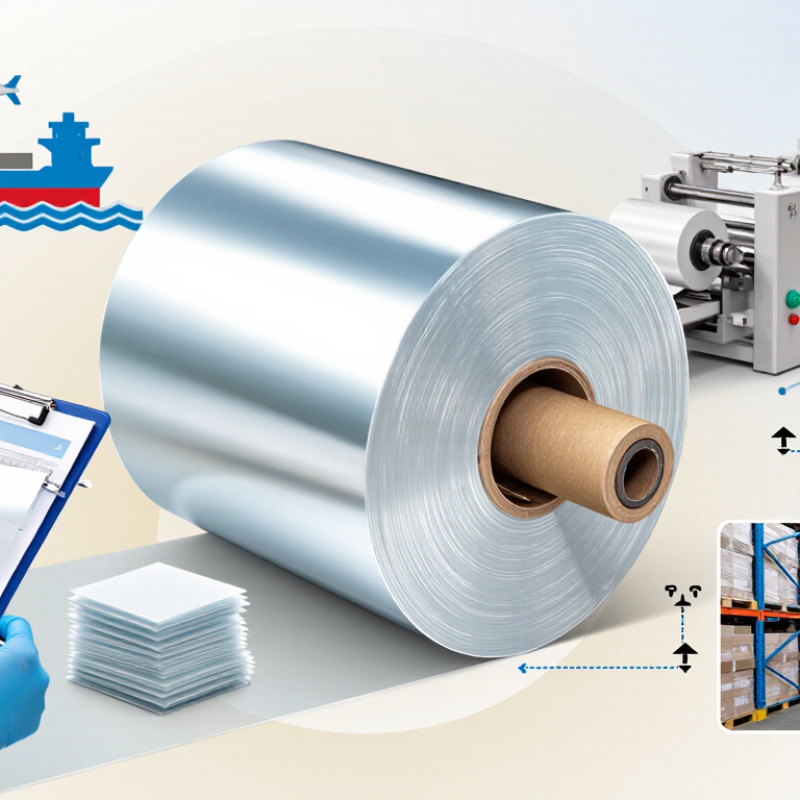
How to Choose PET Polyester Film for Global Sourcing?
PET film selection begins with grade, thickness, and density. Common thicknesses range from 12 to 250 μm. Standard grades suit labels and flexible packaging. Heat-stabilized grades support higher processing temperatures. Electrical grades require tighter insulation performance. Always request the technical datasheet and recent test report.
At 1.39 g/cm³, PET has a useful conversion advantage. A 50 μm film weighs about 69.5 g/m² before coatings. The calculation is thickness × density. However, additives, coatings, and voids can change the measured result. Test density under ISO 1183 or ASTM D1505. Smithers’ 2024 PET film market analysis identifies packaging, electrical, and industrial uses as major demand areas. The OECD Global Plastics Outlook reports that global plastic production reached 460 million tonnes in 2019, while only 9% of plastic waste was recycled. This makes material declarations and end-of-life data important during sourcing.
Tips: Compare thickness tolerance, haze, tensile strength, and shrinkage beside price. Ask suppliers for samples from different production lots. Check whether “50 μm” means nominal or guaranteed thickness. I sometimes find density listed without test conditions. That is not enough. Request the method, temperature, and batch number. Small details often expose larger sourcing risks.
Select the film grade according to the required thickness, dimensional stability, clarity, barrier performance, and end-use requirements. PET polyester film typically ranges from 12–250 μm, with a nominal density of approximately 1.39 g/cm³.
The chart compares representative PET film thicknesses used across lightweight packaging, labeling, electrical insulation, industrial, and specialty applications. Density remains approximately 1.39 g/cm³ across the thickness range.
How to Choose PET Polyester Film for Global Sourcing?
For global sourcing, PET polyester film should be selected through measured performance, not appearance alone. A tensile strength of 150–250 MPa under ISO 527 provides a useful comparison range. However, the number needs context. Film thickness, specimen direction, testing speed, and conditioning can change the result. Machine direction and transverse direction may also perform differently. A supplier should report these details with each test certificate.
In practical purchasing, I would request recent data from several production lots. Check the average value, not only the strongest sample. Ask whether testing used the correct ISO 527 specimen and controlled temperature and humidity. A film near 150 MPa may suit light packaging or insulation, while applications involving tension may require a higher margin. Higher strength alone does not guarantee better performance. Excessive stiffness can complicate forming, sealing, or cutting. I have seen specifications copied between suppliers without confirming the actual thickness. That is a mistake worth challenging.
Tips: Define the required tensile direction and thickness. Request elongation data beside tensile strength. Compare at least three lots. Keep reserve samples for independent testing. If results vary widely, investigate processing conditions before approving the material. A low-cost film can become expensive after unstable converting, and that risk is easy to underestimate.
| Film Type / Sourcing Use | Nominal Thickness (µm) | Tensile Strength MD (MPa) | Tensile Strength TD (MPa) | Elongation at Break MD / TD (%) | Haze (%) | Thermal Shrinkage 150°C, 30 min (%) | Recommended Matching Priority |
|---|---|---|---|---|---|---|---|
| General-purpose clear BOPET Packaging, lamination, labels | 12–50 | 180–220 | 190–235 | 100–140 / 80–120 | ≤2.0 | 1.0–3.0 / 0.5–2.0 | Balance tensile strength, optical clarity, and converting cost. |
| High-strength BOPET Industrial laminates, strapping, demanding converting | 23–100 | 220–250 | 225–250 | 90–125 / 75–105 | ≤2.0 | 0.5–2.0 / 0.3–1.5 | Prioritize minimum tensile strength and dimensional stability. |
| Electrical-grade PET film Insulation, motor and transformer components | 25–100 | 190–230 | 200–240 | 90–130 / 80–115 | ≤3.0 | 1.0–3.0 / 0.5–2.0 | Check dielectric requirements, thickness tolerance, and heat-aging performance separately. |
| Matte or coated PET film Printing, decorative surfaces, release and overlamination | 25–125 | 150–210 | 160–225 | 90–140 / 80–125 | 2.0–8.0 | 1.0–4.0 / 0.5–2.5 | Match surface energy, coating adhesion, gloss or haze, and printability. |
| Heat-stabilized PET film High-temperature labels, insulation and technical parts | 25–125 | 170–220 | 180–235 | 85–125 / 75–110 | ≤3.0 | ≤1.0 / ≤0.8 | Prioritize low shrinkage, dimensional stability, and service-temperature limits. |
When sourcing PET polyester film globally, surface treatment deserves early attention. Corona treatment raises surface energy and improves ink, coating, and adhesive wetting. For many applications, specify a treatment level above 38 dyn/cm. Water-based inks often need around 40–44 dyn/cm, while demanding adhesive systems may require higher values. ASTM D2578-17 and ISO 8296:2003 provide recognized methods for measuring film wetting tension. The Flexible Packaging Association’s 2024 industry report valued U.S. flexible packaging sales at approximately 40 billion dollars in 2023. Consistent film performance therefore affects large converting operations.
Ask suppliers to state the minimum treatment value, not only the average. Request test results by roll, production date, and film side. A practical purchase specification might require at least 38 dyn/cm after 24 hours, with a tighter target near 42 dyn/cm for difficult inks. Treat both sides separately. One side may be printable, while the reverse side remains suitable for lamination.
Corona levels can decline during storage. Heat, humidity, additives, and slip migration may accelerate the loss. Dyne pens are useful for screening, but they do not prove final adhesion. Check ink rub resistance, coating uniformity, and peel strength after conditioning. I have seen acceptable dyne readings fail during converting trials. The number is not magic. A 2024 Smithers flexible-packaging outlook also highlights the industry’s pressure for reliable, high-speed converting, yet real factory conditions remain messier than laboratory tests. Specify performance, not merely a surface number.
Choosing PET polyester film for global sourcing requires more than comparing thickness, clarity, and price. Compliance documents should match the exact grade, coating, adhesive, and intended use. An attractive certificate can still be irrelevant.
Ask for the applicable ASTM specification or test method, not a vague ASTM statement. ASTM may address tensile strength, dimensional stability, haze, thickness, or other performance properties. Confirm the laboratory, method revision, sample identification, and test date. For industrial film, connect each result to your drawings and operating conditions.
Often skipped. RoHS verification should cover restricted substances in the film and every added layer. Request a current test report and a material declaration with traceable batch details.
REACH review should identify relevant substances of very high concern and explain applicable communication duties. Do not rely on an old declaration.
For food-contact use, the risk assessment becomes more specific. Check the destination market, food type, temperature, contact time, and single or repeated use. Migration testing must reflect the finished article, including inks, coatings, and laminates.
Ask for a food-contact declaration, supporting test conditions, and change-control commitments. I have seen teams approve film before checking the adhesive. That mistake can invalidate an otherwise acceptable structure.
Review production samples, retain them, and link them to purchase orders and lot numbers. Small formulation changes can matter.
How to Choose PET Polyester Film for Global Sourcing?
A reliable PET film comparison starts with usable yield, not the lowest quoted price. Ask each supplier for roll width, thickness tolerance, core size, and net weight. Then estimate how many saleable sheets or slit rolls each master roll can produce. A lower-priced film may create more trim waste or rejected areas. That difference can quietly erase the savings. Request recent inspection records, sample rolls, and test data for tensile strength, haze, and dimensional stability. Numbers matter. So does consistency.
MOQ should match your trial capacity and production rhythm. A supplier offering a large MOQ may reduce unit cost but increase storage pressure and cash exposure. Check whether the quoted lead time includes coating, slitting, inspection, and export booking. Weather, port congestion, and holiday closures can disrupt optimistic schedules. Compare Incoterms carefully. FOB, CIF, and DDP assign different responsibilities for freight, insurance, customs, and risk transfer. They are not interchangeable price labels. A spreadsheet can still mislead.
Tips: Compare landed cost, not unit price. Ask for yield assumptions in writing. Add buffer days to lead time. Confirm whether rejected rolls can be replaced or credited. I would also test one production batch before making a large commitment; laboratory results alone may miss handling problems on your actual line.
„Thanks to the LUVIR technology, the solder resist process could be switched directly from the previously used mask exposure to direct exposure. As an outstanding digital solution on the market, this technology has been able to demonstrate fast process times and superior quality on our certified conventional ink in production. This allowed us to fully digitize the solder mask process at low cost – without process or ink adjustments. An excellent benefit to our production in Rot am See.“
Ralf Göhringer (Head of Production WE Rot am See)
I would definitely recommend the Limata machine and team for a future company purchase
Michael Greenaway
Compunetics Inc.
“The Limata ldi has been amazing!! Best thing we did was buy this machine”
Richard Brady
GM
Circuitlabs
“Since 2019, we have been running the Limata X1000 LDI system (including LUVIR for solder mask imaging) in daily production as an addition to our current process with film. The machine was capable of properly exposing Taiyo PSR-4000 BN (DI) solder mask types on normal to high-copper boards using a new and unique direct imaging process. The machine operating interface is very user friendly which allowed for a quick technical training curve. The pre-registration processing reduced several seconds of production time at every print. Limata support and service staff is incomparable. They supported our team every step of the way at basically any time of the day or night, with literally, an immediate response time, customizing the software interface to best fit our Operations and needs.
We have exposed more than 8,000 prints since end of October, on various solder mask colors and some resist film panels. Limata, has proven to be very capable and innovative. They are a strong contender in the industry.
We have very much enjoyed this project, and working with the team!
Thank you Limata for the continued support and being a part of our growth.”
Bill Sezate
Vice President, GM
Summit Interconnect
As a replacement to our current contact exposure process with film, the LIMATA X2000 system including LUVIR-Technology was capable of properly exposing non-LDI solder mask types using a direct imaging process. The machine offers cutting edge software with a very intuitive operating interface which allowed for quick technician training curve. The dual drawer system combined with pre-registration processing reduced several seconds of production time at every machine cycle. Limata support and service staff is world class. They added software patches to keep production running at shortest possible response times, customized the software interface to best fit our in-house Operations system, and even wrote a step-by-step machine processing manual. As a result of the project, we have exposed more than 16,000 times on various product types and solder mask brands/colors. Limata, in a very short timeframe as a company, has definitely shown they are truly innovative and will be challenging the industry of direct imaging for the top spot.
Kevin Beattie
Process Engineer
TTM Technologies
Forest Grove Division
