Choosing the right Cooling Tower for your project is crucial. Cooling towers play a vital role in various sectors, from industrial applications to HVAC systems. According to the U.S. Department of Energy, up to 30% of energy use in commercial buildings can be attributed to HVAC systems, emphasizing the need for efficient cooling solutions.
The selection process involves numerous factors. It includes heat rejection rates, water quality, and project specifications. A report by the Cooling Technology Institute states that the efficiency of cooling towers can vary by as much as 25%. This variance can significantly impact operational costs and environmental performance.
A well-chosen cooling tower not only ensures reliable performance but also enhances system longevity. However, the complexity of choices can be overwhelming. Misjudgments can lead to insufficient cooling capacity or excessive water use. Exploring options requires a thorough understanding of both project needs and tower specifications. It's essential to engage with experts in the field during this selection process.
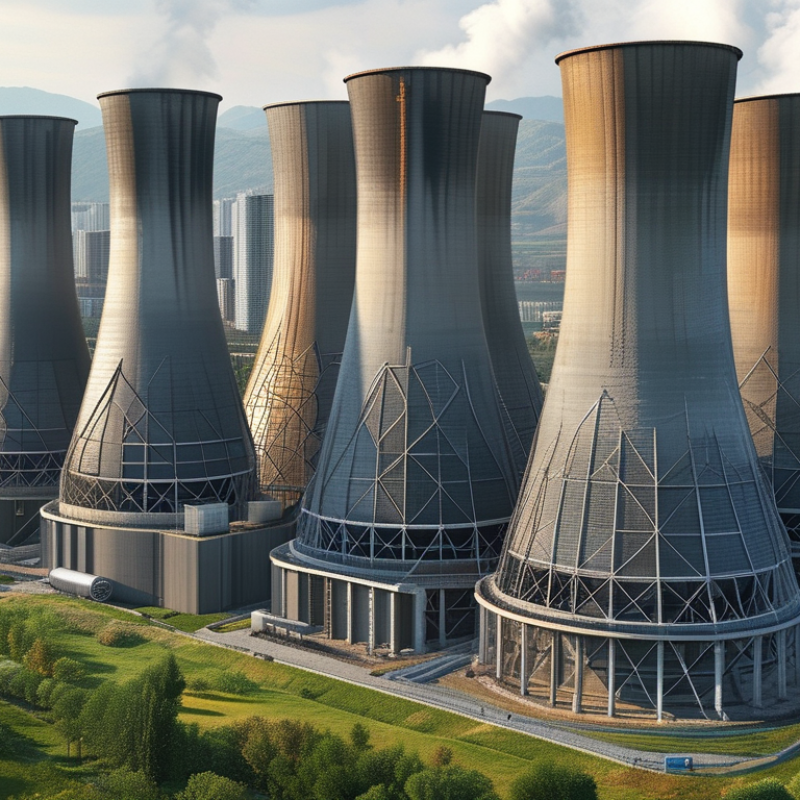
Understanding cooling requirements is essential for project success. Proper calculations can prevent inefficiencies. According to industry reports, up to 30% of energy consumption in cooling systems can be attributed to poorly selected equipment. This highlights the importance of tailored solutions.
Evaluating factors such as water flow rate and ambient conditions is critical. For instance, a recent study showed that the cooling load can vary by as much as 40% depending on location. This variance affects the choice of materials and operational costs. Detailed analysis on these parameters ensures that the cooling tower is adequately sized, thus avoiding over- or under-sizing.
Documentation from industry experts often emphasizes the need for comprehensive assessments. Ignoring specific project details might result in costly adjustments later. For example, a facility with high humidity levels requires different considerations than one in arid areas. Balancing design and operational needs demands expertise. Optimal performance relies on making informed decisions based on accurate project data.
When selecting the right cooling tower for your project, understanding the various types is crucial. There are primarily three categories: open-loop, closed-loop, and hybrid cooling towers. Open-loop towers, which rely on evaporation, are commonly used due to their efficiency in cooling water. However, they may require more maintenance due to water quality issues. Closed-loop towers, on the other hand, minimize evaporation and are better suited for sensitive environments.
Consider your site's specific requirements. The climate, space availability, and the system's cooling needs can all affect your choice. For instance, if space is limited, a compact hybrid tower might be the best option. However, these systems can be more complex, requiring thorough evaluation. Evaluate energy efficiency ratings, as well, since this can significantly impact operating costs.
When choosing, remember the importance of water quality. High mineral content can lead to scaling and reduced efficiency. Assess the local regulations about water usage and discharge. Each cooling tower type has its pros and cons, and understanding them helps optimize performance and costs.
Here are a few insights to keep in mind: prioritize maintenance and functionality. Think about the potential for future expansion or changes in your system's needs. It's wise to consult with professionals who can provide insight on installations and maintenance plans tailored to your specific project.
| Cooling Tower Type | Key Features | Efficiency Rating | Ideal Applications |
|---|---|---|---|
| Open Circuit | Cost-effective, simple operation, high evaporation rate | 75-85% | Industrial processes, HVAC systems |
| Closed Circuit | Reduced water consumption, minimal contamination | 85-90% | Power generation, food processing |
| Hybrid | Combines open and closed systems, versatile, energy-efficient | 80-95% | Versatile applications, commercial buildings |
| Natural Draft | Uses natural convection, low operational cost | 70-80% | Large-scale processes, power plants |
When selecting the right cooling tower, energy efficiency and sustainability stand out as key considerations. According to the U.S. Department of Energy, heating and cooling represent nearly 50% of energy use in commercial buildings. A cooling tower can significantly affect this statistic. Choosing an energy-efficient model can lead to savings of up to 30% on operational costs.
Sustainability factors cannot be overlooked. The global trend is towards greener technologies. Research from the Global Buildings Performance Network indicates that improving energy efficiency can reduce greenhouse gas emissions by up to 70% in commercial buildings. Selecting materials with low environmental impact is essential. Options like recycled steel or environmentally friendly coatings can enhance the sustainability profile of the cooling tower.
Additionally, ensure the lifetime cost of ownership is part of your evaluation. Installation and maintenance costs matter. An energy-efficient cooling tower may have a higher upfront cost. However, lower operational costs make it a wise long-term investment. Balance immediate needs with future savings and environmental impact. Every project has its unique challenges and opportunities for improvement.
When selecting a cooling tower, maintenance and operational costs are crucial. A cooling tower’s efficiency greatly impacts long-term expenses. High maintenance costs can negate initial savings. Regular upkeep is essential to ensure optimal performance, and this often means scheduling routine inspections and servicing.
Consider the type of materials used in the cooling tower. Corrosion-resistant materials can reduce long-term costs. Additionally, the design of the tower influences accessibility for maintenance work. Ensuring easy access can significantly lower labor costs over time. While a more complex design may seem efficient, it may lead to higher repair bills.
Evaluate your facility’s specific needs. Larger projects may require more robust towers. Understand the trade-offs between upfront investments and future expenses. Regular monitoring is also vital for managing operational costs efficiently. Look for energy-saving features; they may require upfront investment but can offer substantial savings in the long run.
When selecting a cooling tower supplier, it's crucial to evaluate their experience in the industry. The cooling tower market is projected to reach $3.5 billion by 2025, reflecting growing demand for energy-efficient solutions. Look for suppliers with a proven track record in your specific application area. Their history can indicate reliability and a commitment to quality.
Installation options should also be carefully considered. A well-planned installation can enhance efficiency and longevity. According to industry reports, improperly installed cooling towers can lose up to 25% of their operational capacity. Hence, choose suppliers who provide comprehensive installation services, including site assessments and post-installation support.
Here are some important points to keep in mind. Check for certifications that ensure safety and operational standards. Ensure that the supplier can offer customizable solutions depending on your project size and needs. Engage with past clients to gauge satisfaction and reliability. Balancing cost and performance is vital; the cheapest option might not always yield the best results in the long run.
„Thanks to the LUVIR technology, the solder resist process could be switched directly from the previously used mask exposure to direct exposure. As an outstanding digital solution on the market, this technology has been able to demonstrate fast process times and superior quality on our certified conventional ink in production. This allowed us to fully digitize the solder mask process at low cost – without process or ink adjustments. An excellent benefit to our production in Rot am See.“
Ralf Göhringer (Head of Production WE Rot am See)
I would definitely recommend the Limata machine and team for a future company purchase
Michael Greenaway
Compunetics Inc.
“The Limata ldi has been amazing!! Best thing we did was buy this machine”
Richard Brady
GM
Circuitlabs
“Since 2019, we have been running the Limata X1000 LDI system (including LUVIR for solder mask imaging) in daily production as an addition to our current process with film. The machine was capable of properly exposing Taiyo PSR-4000 BN (DI) solder mask types on normal to high-copper boards using a new and unique direct imaging process. The machine operating interface is very user friendly which allowed for a quick technical training curve. The pre-registration processing reduced several seconds of production time at every print. Limata support and service staff is incomparable. They supported our team every step of the way at basically any time of the day or night, with literally, an immediate response time, customizing the software interface to best fit our Operations and needs.
We have exposed more than 8,000 prints since end of October, on various solder mask colors and some resist film panels. Limata, has proven to be very capable and innovative. They are a strong contender in the industry.
We have very much enjoyed this project, and working with the team!
Thank you Limata for the continued support and being a part of our growth.”
Bill Sezate
Vice President, GM
Summit Interconnect
As a replacement to our current contact exposure process with film, the LIMATA X2000 system including LUVIR-Technology was capable of properly exposing non-LDI solder mask types using a direct imaging process. The machine offers cutting edge software with a very intuitive operating interface which allowed for quick technician training curve. The dual drawer system combined with pre-registration processing reduced several seconds of production time at every machine cycle. Limata support and service staff is world class. They added software patches to keep production running at shortest possible response times, customized the software interface to best fit our in-house Operations system, and even wrote a step-by-step machine processing manual. As a result of the project, we have exposed more than 16,000 times on various product types and solder mask brands/colors. Limata, in a very short timeframe as a company, has definitely shown they are truly innovative and will be challenging the industry of direct imaging for the top spot.
Kevin Beattie
Process Engineer
TTM Technologies
Forest Grove Division
