Choosing the right High Pressure Hydroform Press can significantly impact your production efficiency. This crucial decision often involves balancing various factors, such as your production volume, material types, and desired outcomes. Understanding these elements ensures you select a press tailored to your specific needs.
High Pressure Hydroform Presses come in various sizes and capabilities. Knowing your requirements will help avoid costly mistakes. It’s essential to assess your production goals and the complexity of the parts you wish to create. Different presses excel in unique areas, making it vital to do thorough research.
Additionally, consulting with experts can provide valuable insights. Seek advice from manufacturers and industry professionals experienced in High Pressure Hydroform technology. Their expertise can guide you in making an informed choice. However, remember that advice may vary; weigh it against your distinct business context. Balancing these considerations can lead to a more successful investment in your production capabilities.
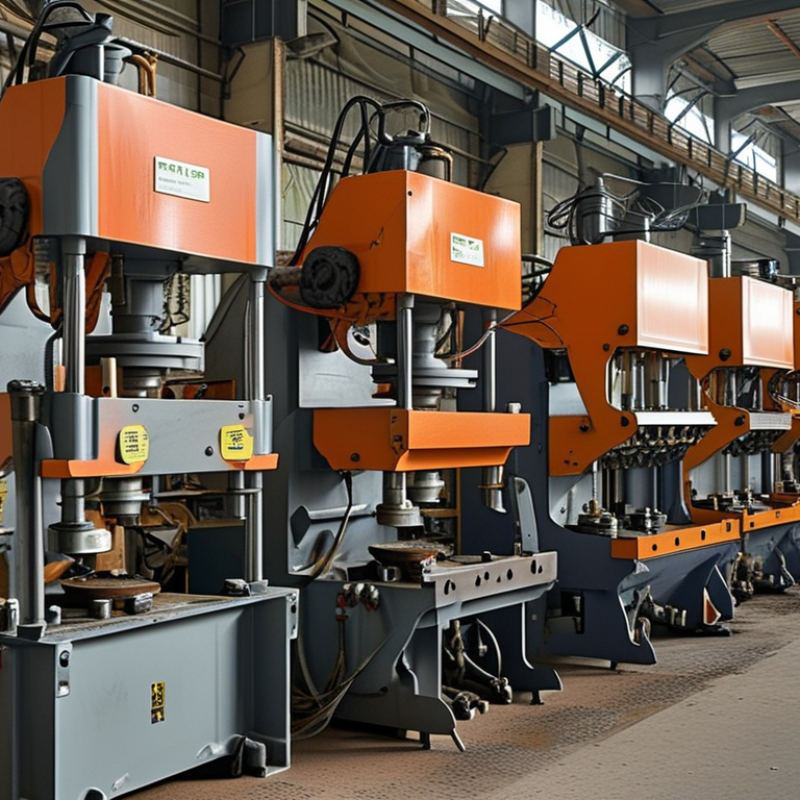
Choosing the right high pressure hydroform press requires careful consideration of several key factors. One major aspect is the material you intend to work with. Different materials may require different pressures and tooling methods. Understanding your material characteristics will help you select a press that meets your specific needs effectively.
Also, consider the press's capacity. It is vital to choose a machine that aligns with your production scale. A press that is too small may hinder production efficiency. Conversely, being over-equipped could lead to unnecessary costs. Assess your production requirements carefully to avoid such pitfalls.
Tips for selection include evaluating safety features and ease of use. A complex machine may require extensive training, slowing down your operation. Look for user-friendly controls and clear manuals to ensure smoother workflows. Remember, it’s also crucial to think about future scalability. Will your demands increase? Opt for a press that can grow with your business needs. Taking time to weigh these factors will ultimately lead to a more informed decision.
When exploring hydroform presses, understanding the varieties available in the market is essential. Different designs serve distinct functions. Some presses cater to specific materials, such as aluminum or steel. Others are more versatile, accommodating multiple materials. This variety allows manufacturers to tailor their operations according to specific production needs.
Hydroform presses typically fall into categories based on their mechanism. There are those with pneumatic systems, which are great for lighter applications. Others employ hydraulic systems, ideal for heavier tasks. Selecting the right type depends on your production volume and the complexities of your projects. Certain presses might seem appealing but could fall short in performance or efficiency.
It's crucial to consider your facility's space. Larger presses require more room, while smaller models may suit tighter spaces. Additionally, examine your budget. Some presses may promise exceptional capabilities but are costly to maintain. Always weigh the long-term benefits against initial investment. A thoughtful approach will lead to a better fitting equipment choice.
| Type of Hydroform Press | Pressure Rating (psi) | Material Compatibility | Typical Applications | Price Range (USD) |
|---|---|---|---|---|
| Standard Hydroform Press | 20,000 - 30,000 | Aluminum, Steel | Automotive parts, Aerospace components | $30,000 - $50,000 |
| Heavy-Duty Hydroform Press | 30,000 - 50,000 | High-strength Steel, Titanium | Heavy machinery, Military applications | $60,000 - $100,000 |
| Lightweight Hydroform Press | 10,000 - 20,000 | Aluminum, Plastic | Consumer products, Medical devices | $20,000 - $40,000 |
| Custom Hydroform Press | Varies | Various | Specialized applications | $80,000 - $150,000 |
When selecting a high-pressure hydroform press, understanding material compatibility is essential. Different materials, such as aluminum, steel, and titanium, exhibit varying responses to hydroforming processes. A recent industry report highlighted that aluminum components can see up to 50% weight reduction while maintaining strength. This capacity is crucial for industries like automotive and aerospace, where weight savings can enhance fuel efficiency.
The forming capabilities of hydroform presses vary greatly. They can produce intricate shapes with high precision and reduced tooling costs. However, limitations exist. For instance, complex geometries may require extensive testing to avoid material failure. Studies show that about 30% of initial prototypes require redesign due to unforeseen material behavior during the forming process.
Choosing the right press involves careful consideration of these factors. It's advisable to consult with experts who understand the nuances of hydroforming technologies. Investigating case studies from similar applications can provide insights into the material behavior under pressure. Always evaluate the trade-offs of different materials against your specific needs. This approach will help in achieving optimal results while minimizing waste and production costs.
When selecting a high pressure hydroform press, understanding press specifications is crucial. Pressure ratings dictate the force applied during the forming process. A higher pressure rating generally means better material deformation capabilities. However, it is essential to match the pressure to the material being processed. Not all materials require maximum pressure. For example, softer metals can be shaped effectively at lower pressures.
Stroke length is another key specification to consider. It determines how deeply the press can form materials. A longer stroke length allows for more complex shapes and deeper forming. Yet, too long a stroke can lead to inefficiencies in cycle time. Evaluate your specific project needs to find the optimal length.
Choosing the right specifications often requires careful analysis. Factors such as production volume, material types, and desired outcomes play significant roles in decision-making. Balancing these needs while considering the press's capabilities can be challenging. Understanding the nuances of pressure ratings and stroke lengths can help guide your choice, ensuring that the selected hydroform press effectively meets your requirements.
Choosing the right high pressure hydroform press requires careful consideration of the manufacturer's reputation and after-sales support. A survey conducted by the Manufacturing Institute found that 69% of manufacturers prioritize supplier reliability over cost. This highlights the importance of selecting a reputable manufacturer with a proven track record in the hydroforming industry.
When evaluating manufacturers, look for those with industry certifications. These can indicate a commitment to quality and innovation. Many established manufacturers adhere to ISO 9001 or similar standards, which can assure you of their reliability. Additionally, consider the availability of customer support. A reliable after-sales service can be critical. According to recent data, 57% of users experienced machine downtime due to inadequate support. This can lead to significant production delays and financial losses.
Engaging with previous customers can provide insights into their experiences with the manufacturer. Not all manufacturers maintain transparency in their operations; some may have hidden issues, such as delayed response times or insufficient parts availability. Data from market analysis indicates that companies with robust after-sales service retain approximately 65% of their customers, compared to 43% for those without. Investing time in this evaluation can prevent future regrets. Understanding these aspects ensures that your choice of hydroform press aligns with your operational needs and expectations.
„Thanks to the LUVIR technology, the solder resist process could be switched directly from the previously used mask exposure to direct exposure. As an outstanding digital solution on the market, this technology has been able to demonstrate fast process times and superior quality on our certified conventional ink in production. This allowed us to fully digitize the solder mask process at low cost – without process or ink adjustments. An excellent benefit to our production in Rot am See.“
Ralf Göhringer (Head of Production WE Rot am See)
I would definitely recommend the Limata machine and team for a future company purchase
Michael Greenaway
Compunetics Inc.
“The Limata ldi has been amazing!! Best thing we did was buy this machine”
Richard Brady
GM
Circuitlabs
“Since 2019, we have been running the Limata X1000 LDI system (including LUVIR for solder mask imaging) in daily production as an addition to our current process with film. The machine was capable of properly exposing Taiyo PSR-4000 BN (DI) solder mask types on normal to high-copper boards using a new and unique direct imaging process. The machine operating interface is very user friendly which allowed for a quick technical training curve. The pre-registration processing reduced several seconds of production time at every print. Limata support and service staff is incomparable. They supported our team every step of the way at basically any time of the day or night, with literally, an immediate response time, customizing the software interface to best fit our Operations and needs.
We have exposed more than 8,000 prints since end of October, on various solder mask colors and some resist film panels. Limata, has proven to be very capable and innovative. They are a strong contender in the industry.
We have very much enjoyed this project, and working with the team!
Thank you Limata for the continued support and being a part of our growth.”
Bill Sezate
Vice President, GM
Summit Interconnect
As a replacement to our current contact exposure process with film, the LIMATA X2000 system including LUVIR-Technology was capable of properly exposing non-LDI solder mask types using a direct imaging process. The machine offers cutting edge software with a very intuitive operating interface which allowed for quick technician training curve. The dual drawer system combined with pre-registration processing reduced several seconds of production time at every machine cycle. Limata support and service staff is world class. They added software patches to keep production running at shortest possible response times, customized the software interface to best fit our in-house Operations system, and even wrote a step-by-step machine processing manual. As a result of the project, we have exposed more than 16,000 times on various product types and solder mask brands/colors. Limata, in a very short timeframe as a company, has definitely shown they are truly innovative and will be challenging the industry of direct imaging for the top spot.
Kevin Beattie
Process Engineer
TTM Technologies
Forest Grove Division
