Choosing the right Hydraulic Swing Actuator involves understanding specific needs and industry standards. The hydraulic swing actuator industry has seen significant growth, projected to reach $1.2 billion by 2025. According to industry expert Dr. Sarah Thompson, “Selecting the correct actuator can significantly enhance operational efficiency.”
Actuators serve various applications, from heavy machinery to robotics. Often, users overlook compatibility issues with existing systems. A bespoke actuator can boost performance. However, many fail to consider the hydraulic fluid type, which affects longevity and efficiency.
The decision-making process may seem straightforward. Yet, a tailored approach often reveals flaws in initial choices. Ensuring the actuator’s specifications align with operational demands is crucial. Balancing technical details with practical applications can lead to better results and increased productivity.
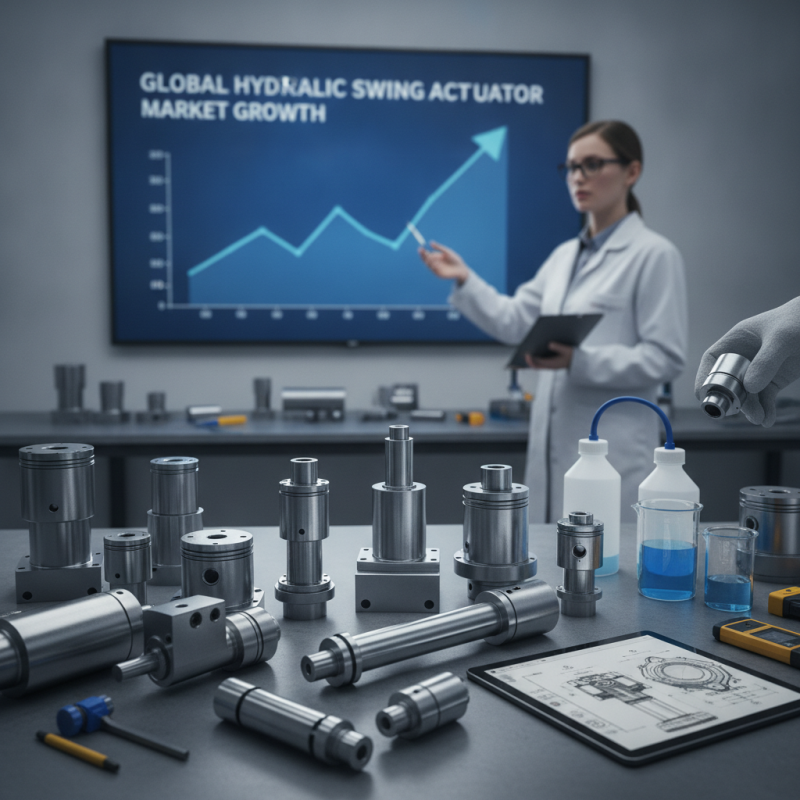
Hydraulic swing actuators play a vital role in various applications, providing efficient motion control in machinery. They are commonly used in automated systems, construction equipment, and heavy machinery. Understanding their functions is crucial for selecting the right actuator. For instance, these devices convert hydraulic fluid pressure into rotational motion, enabling operators to control angles with precision.
Data from industry reports indicate that 40% of equipment failures arise from improper actuator selection. A thorough analysis of load requirements and operational conditions is critical. Many hydraulic swing actuators are designed for specific weight limits and torque capacities. Choosing an actuator with insufficient power can lead to inefficiency and increased wear on machinery. Some applications, like heavy-duty cranes, require robust actuators that can handle extreme stress.
User feedback highlights the importance of thorough research. Many users found that real-world performance sometimes deviated from specifications. Understanding pressure ratings and flow requirements can mitigate this. Engineers should also consider environmental factors. Temperature changes can affect hydraulic fluid properties. For instance, a temperature drop could cause fluid viscosity to increase, leading to slower response times. Balancing these elements is essential for optimal performance.
When selecting a hydraulic swing actuator, several key technical specifications play a crucial role in meeting your application requirements. One of the primary specifications is the force output. This determines how much weight the actuator can effectively move. Understanding your project's load is essential for optimal performance.
Another important factor is the stroke length. This indicates the distance the actuator can travel during operation. It’s vital to match the stroke length with the specific requirements of your equipment. A mismatch can lead to inefficiencies.
Furthermore, consider the actuator's response time. In applications requiring precise control, a fast response time can significantly enhance overall performance. Look into the actuator's maximum operating pressure as well. Understanding these technical aspects can guide you towards choosing the right actuator for your needs.
When selecting a hydraulic swing actuator, assessing load capacity is crucial. Load capacity determines how much weight the actuator can handle effectively. Overloading an actuator can lead to failures or reduced lifespan. Often overlooked, this factor impacts both performance and safety. Consider the maximum load your application requires, and ensure the actuator exceeds that requirement.
Performance metrics play a significant role in choosing the right actuator. Look for specifics like speed, efficiency, and response time. A faster actuator may seem better, but it might not always suit your needs. An actuator with slower speeds could provide better control for certain applications. Understand the environment as well; some actuators perform well in harsh conditions while others do not.
It’s essential to evaluate both load capacity and performance together. A mismatch can lead to operational issues. Also, remember that specifications alone might not tell the full story. Real-world testing can reveal hidden flaws. Take the time to reflect on your unique requirements to find the best fit. Balancing capacity and performance is key to effective actuator selection.
When selecting a hydraulic swing actuator, environmental conditions play a crucial role. These conditions can significantly influence the actuator's performance and lifespan. Factors like temperature, humidity, and exposure to corrosive elements must be evaluated. For example, high humidity can lead to rust and deterioration in non-coated actuators. Conversely, extreme temperatures may affect the fluid viscosity and overall efficiency.
Tips: Assess the local climate. If the environment is harsh, consider actuators with protective coatings. Also, evaluate if insulation is necessary for temperature extremes.
Corrosive environments demand special attention. Industries near water bodies or chemical plants should choose actuators made from corrosion-resistant materials. This choice ensures reliability and longevity. Humidity levels can affect seals and internal components.
Tips: Use an actuator with IP ratings suitable for moisture exposure. Consult with engineers for guidance on material selection. Remember, the right actuator can save costs long-term.
This chart displays the importance score of various environmental conditions to consider when selecting a hydraulic swing actuator. The factors included are corrosion resistance, operating temperature, pressure rating, duty cycle, and mounting space. Each factor is scored on a scale from 1 to 10, indicating its significance in the selection process.
When selecting a hydraulic swing actuator, understanding cost-effectiveness and lifespan is crucial. Different models offer varied performance and durability. It’s important to evaluate not just the purchase price but also long-term operational costs. A lower upfront cost may lead to higher maintenance expenses, impacting overall value.
Actuators made from robust materials tend to have longer lifespans. Look for options that are resistant to wear and tear. Regular maintenance can significantly extend service life. Neglecting this can result in premature failure and costly repairs. Think about where and how often these actuators will be used; more extreme conditions may require higher-quality models.
Tips: Always assess the warranty provided. A longer warranty can indicate confidence in the product’s durability. Research user reviews for insights on lifespan from real-world applications. Don’t solely rely on manufacturer claims; consumer experiences can reveal hidden costs and issues. Selecting the right actuator isn’t just about initial investment—it's about making a decision that pays off over time.
| Actuator Model | Cost (USD) | Lifespan (Years) | Max Load Capacity (lbs) | Efficiency (%) |
|---|---|---|---|---|
| Model A | $500 | 10 | 1500 | 85 |
| Model B | $600 | 12 | 1800 | 90 |
| Model C | $700 | 15 | 2000 | 88 |
| Model D | $550 | 11 | 1600 | 84 |
| Model E | $650 | 14 | 1700 | 86 |
„Thanks to the LUVIR technology, the solder resist process could be switched directly from the previously used mask exposure to direct exposure. As an outstanding digital solution on the market, this technology has been able to demonstrate fast process times and superior quality on our certified conventional ink in production. This allowed us to fully digitize the solder mask process at low cost – without process or ink adjustments. An excellent benefit to our production in Rot am See.“
Ralf Göhringer (Head of Production WE Rot am See)
I would definitely recommend the Limata machine and team for a future company purchase
Michael Greenaway
Compunetics Inc.
“The Limata ldi has been amazing!! Best thing we did was buy this machine”
Richard Brady
GM
Circuitlabs
“Since 2019, we have been running the Limata X1000 LDI system (including LUVIR for solder mask imaging) in daily production as an addition to our current process with film. The machine was capable of properly exposing Taiyo PSR-4000 BN (DI) solder mask types on normal to high-copper boards using a new and unique direct imaging process. The machine operating interface is very user friendly which allowed for a quick technical training curve. The pre-registration processing reduced several seconds of production time at every print. Limata support and service staff is incomparable. They supported our team every step of the way at basically any time of the day or night, with literally, an immediate response time, customizing the software interface to best fit our Operations and needs.
We have exposed more than 8,000 prints since end of October, on various solder mask colors and some resist film panels. Limata, has proven to be very capable and innovative. They are a strong contender in the industry.
We have very much enjoyed this project, and working with the team!
Thank you Limata for the continued support and being a part of our growth.”
Bill Sezate
Vice President, GM
Summit Interconnect
As a replacement to our current contact exposure process with film, the LIMATA X2000 system including LUVIR-Technology was capable of properly exposing non-LDI solder mask types using a direct imaging process. The machine offers cutting edge software with a very intuitive operating interface which allowed for quick technician training curve. The dual drawer system combined with pre-registration processing reduced several seconds of production time at every machine cycle. Limata support and service staff is world class. They added software patches to keep production running at shortest possible response times, customized the software interface to best fit our in-house Operations system, and even wrote a step-by-step machine processing manual. As a result of the project, we have exposed more than 16,000 times on various product types and solder mask brands/colors. Limata, in a very short timeframe as a company, has definitely shown they are truly innovative and will be challenging the industry of direct imaging for the top spot.
Kevin Beattie
Process Engineer
TTM Technologies
Forest Grove Division
